Rishi sunak

Can the Tories come up with a tax offer in time?

Last summer, all the Tory party could talk about was tax. It was at the heart of the leadership contest and the dividing line between Liz Truss and Rishi Sunak. The then foreign secretary promised to move fast and bring in deficit-financed tax cuts; the former chancellor said this would end in tears and instead pledged fully funded cuts over six years. Neither plan saw the light of day. All talk of tax cuts was suspended after Truss’s mini-Budget, when the premise of her borrow-and-spend agenda was tested to destruction. Since then, tax has become a difficult topic to bring up. Even within Tory circles, calls to cut tax are usually met with a pointed question: did you forget what happened last time?
What Andrew Bailey’s eyebrows can tell us about the NatWest scandal

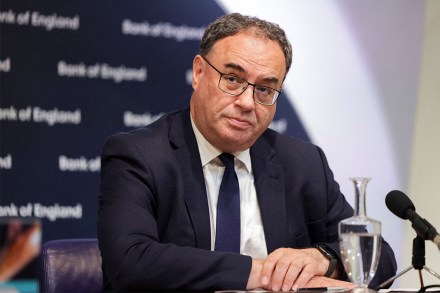
Enough said about the fall of Dame Alison Rose; more than enough about the second coming of Nigel Farage. But one question remains: what happened to the Governor’s eyebrows? In former times, the fate of errant bank chiefs was unequivocally a matter for the Bank of England. Careers were sunk or salvaged by a twitch of the governor’s supercilia. When Bob Diamond of Barclays was under fire in 2012 after the rate-fixing scandal and the Barclays board tried to save him by offering the head of chairman Marcus Agiusinstead, the then governor, Mervyn King, ordered Agius to unresign and fire Diamond – while the chancellor George Osborne denied any part, saying it wasn’t his job to decide who ran Britain’s banks. Not so nowadays.

Portrait of the Week: NatWest, fires in Greece and Twitter’s new look 

Home Dame Alison Rose resigned as the chief executive of the NatWest group, which owns Coutts bank. She had been the source of a BBC report that Nigel Farage’s account at Coutts had been closed because it no longer met the bank’s financial requirements. Dame Alison also apologised to Mr Farage for ‘deeply inappropriate’ comments in a Coutts dossier on him which showed his account had been closed because of his political views. Her resignation came only after No. 10 had expressed ‘significant concerns’ about her remaining as the board wanted. The volume of goods sold by Unilever fell by 2.5 per cent in the first half of the year, but sales measured by price grew by 9.4 per cent. A fire destroyed more than 40 businesses on an industrial estate at Baldock, Herts.

Will Sunak and Starmer now ditch their green promises?

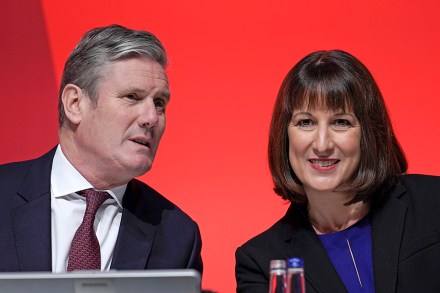
Where do the by-election results leave Rishi Sunak and Keir Starmer? The Labour leader had been hoping for a victory parade but his party’s failure to secure Uxbridge – with the Tories clinging on by under 500 votes – has led to Labour unrest. Rather than tour the media studios with a single message that Labour are on the cusp of power following their decisive victory in Selby, both Starmer and his deputy Angela Rayner used broadcast interviews to take aim at Sadiq Khan. The pair cited Ulez – ultra low emission zones – as why they lost, and suggested it shows what happens when politicians don’t listen to voters, something of which Khan ought to take note. Ulez became a cost of living issue.

Labour’s reality check

Rishi Sunak goes into the summer holidays in the same position he began the year: 20 points behind in the polls. In other ways it feels as if his premiership has gone backwards. Mortgage rates have risen above the levels they were under Liz Truss. The Tory psychodrama of the Boris Johnson era has led to two of the three by-elections taking place this week. Little progress has been made on Sunak’s ‘five priorities’ – the junior doctor strikes show no sign of abating and the Rwanda scheme is held up in the courts. ‘At this point Keir Starmer could probably announce backing for freedom of movement and still scrape in,’ says one downbeat minister.

Don’t write off Rishi

Were I sure this was about me alone, I’d hardly bother to mention it: but I may be typical of quite a few others. If so, it’s a touch too early for the Tories to abandon hope. Last Saturday I wrote in the Times about Sir Keir Starmer, suggesting he lacks the voice or personal command of a prime minister who will need to bully the left into division lobbies and knock warring heads together within his party. Some 900 online readers responded beneath that column. A few agreed with me but the overwhelming majority simply raged against the present government, not a few suggesting that anything would be better than this.

Rishi’s Tory rating turns negative

As the average mortgage rate for a five-year fixed deal rises to 6 per cent, Rishi Sunak can find little relief in his personal approval ratings. ConservativeHome has published its monthly cabinet league table in which the Prime Minister's support among Tory members has hit its lowest level since he entered 10 Downing Street. Sunak at least has plenty of company in the red – he is one of a record nine cabinet ministers to find themselves with sub-zero approval ratings. These ministers include his deputy Oliver Dowden, Chancellor Jeremy Hunt, Levelling Up secretary Michael Gove and Therese Coffey. Sunak is now on -2.7, compared to a positive rating of 21.6 in June, but is still doing better than some of his predecessors. Boris Johnson previously hit -33.

Rishi Sunak needs to turn his attention to mental health

Will the government meet its NHS target? Health Secretary Steve Barclay was asked about this when he did the broadcast round this morning, arguing that even though there were record waiting numbers, the government had successfully reduced the longest waits. But as Fraser wrote this week in his Telegraph column, Rishi Sunak is having to face up to the chance that he might miss this (and most of his other) five ‘priorities’ which he said the British people should judge him against at the next election. But voters might be paying a little less attention to another area of care where things are visibly going backwards: mental health.

PMQs: Rishi whirs like a supercomputer

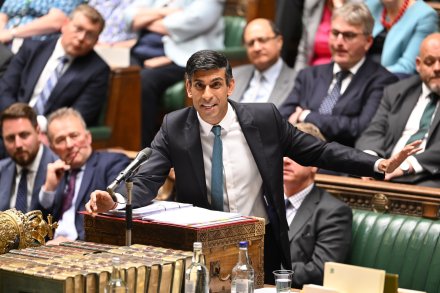
‘Hold your nerve.’ Rishi’s ill-judged advice to voters last Sunday was perhaps his worst blunder yet. At PMQs it came up half a dozen times. Sir Keir Starmer made the first attempt but he was too verbose to inflict real damage. ‘Rather than lecturing others on holding their nerve why not locate his?’ He exposed Rishi’s confused housing policy and asked if any credible expert believes that the government will reach its house-building target this year. Rishi wriggled deftly and chucked out a few helpful statistics. ‘More homes are meeting our “decent homes” standard, the housing supply is up 10 per cent... and first-time buyers are at a 20-year high.

‘We’ve got to hold our nerve’: Rishi Sunak’s BBC interview

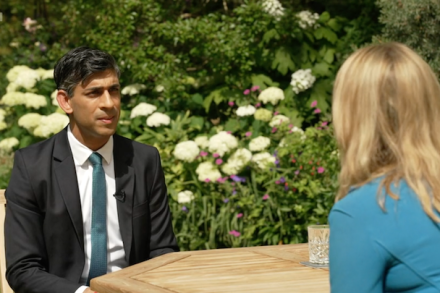
As mortgage rates surge and a new Opinium poll finds Labour’s lead has jumped to 18 points, Rishi Sunak appeared on Laura Kuenssberg’s BBC show to insist that his plan is the right one. The interview was pre-recorded in the Downing Street garden yesterday, with Sunak commenting on the – now failed – attempted coup by Russian mercenary leader Yevgeny Prigozhin and previewing his government’s long-term NHS workforce plan. However, the main portion of the at times, scrappy interview was spent on inflation and the consequences for mortgage holders.

Judge Dredd: the prescience of a 45-year-old comic strip

In 1977, an enduring character was created for the pages of the IPC comic 2000 AD: Judge Dredd, lawman of the future, the most visible symbol of police procedure – a helmeted, black-clad, motorbike-riding policeman patrolling the streets of Mega-City One, a vast metropolis stretching along the eastern coast of the US, whose remit also allows him – as his honorific implies – to be an on-the-spot judge, jury and, when the occasion demands, executioner. The occasion often demands it. It is interesting that the two longest- running human cartoon characters in Great Britain represent opposite poles of the psyche. Their names both begin with D, for some reason or none. Dennis the Menace is all about anarchy; Dredd very much not so.

Rishi’s US charm offensive

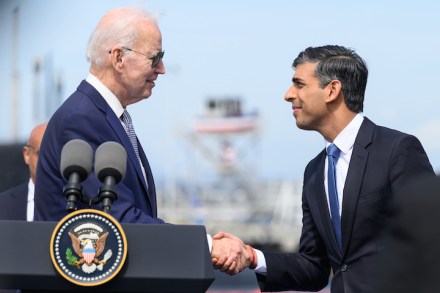
As Rishi Sunak faces concern at home that his five priorities are slipping out of reach, he is flying to Washington tonight for another foray on the world stage. The Prime Minister will spend two days in the USA where he will meet President Joe Biden for his first bilateral in America (and the fifth since he entered No. 10). While Boris Johnson made his dislike of the phrase ‘special relationship’ well known, Sunak has no such qualms – though one government aide suggests that it still may not appear in his lexicon: the Prime Minister prefers instead to refer to America as the UK’s greatest ally.

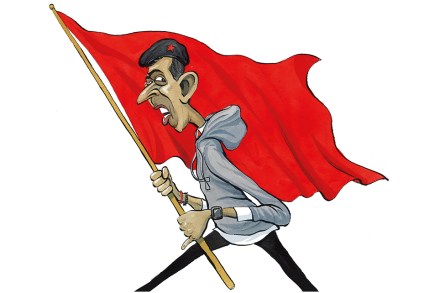
Red Rishi: the Prime Minister’s political makeover

What kind of conservative is Rishi Sunak? This time last year, there was a clear answer: he was a fiscal hawk who was worried about how much the government had to borrow to fund the Covid crisis. As chancellor, he was always fighting with the prime minister over high spending. When Sunak tried to raise the national insurance rate, he did so partly to send his party an important message: the borrowing and spending has to stop. Now Sunak is in No. 10 and Boris Johnson isn’t around to demand more spending. There has been a Budget and a list of priorities – and Sunak’s agenda is starting to emerge. It includes a tax burden not just higher than any time in the 1970s, but any time in postwar history. A record proportion of the workforce are paying the higher rate of tax.

My northern honours list

Exciting news arrives. The Prime Minister, Rishi Sunak, has let it be known that he wants more northerners nominated for honours, as part of the ‘levelling up’ programme to which this government is so deeply committed. This will change every-thing and I foresee a Conservative majority at the next election of at least 200. I thought that as The Spectator’s north of St Albans correspondent I should identify some of the brilliant northerners who will shortly be in receipt of OBEs, MBEs, knighthoods and what have you.

The rise of private healthcare could finish off the NHS

The number of Britons turning to private healthcare has risen by a third since the pandemic. The figures from the Private Healthcare Information Network aren’t a surprise: they show that there were more ‘self-pay’ admissions for treatment in 2022 than in any other year the organisation has data for. If long waiting lists remain, then a two-tier healthcare system will become normalised In all, 272,000 people paid for their own treatment (rather than having it financed by insurance).

Is Sunak heading for a showdown over Rwanda?

When the Prime Minister first assembled his cabinet, the most controversial appointment was Suella Braverman as Home Secretary. She had only just left the role under Liz Truss after she admitted sending an official document from a personal email account. But when Truss fell, Braverman called for Rishi Sunak rather than a Boris Johnson restoration. She was back in the Home Office after less than a week. ‘It’s either stop the boats or leave the ECHR,’ says one senior Tory Some suspected a grubby deal between the two, but Sunak had plenty of reasons to want Braverman back. While critics accuse her of harbouring unsubtle leadership ambitions, her place in the cabinet keeps an important part of the Tory coalition on side – even if it comes with downsides.

How Rishi Sunak should react to the Ely riot

‘There’s a lot of societal issues in Ely,’ said an anonymous caller to BBC Radio Wales the morning after the recent riots in that Cardiff suburb. ‘Motorbikes going up and down constantly. Open drug-dealing going on in broad daylight, that the police are aware of, and nothing gets done about it. Children in Ely – dare I say it? – probably don’t have aspirations. They only see what’s around them. There are young children going to school wearing Rolexes and rolling around on £6,000 e-bikes that their parents haven’t bought for them. So where’s the money coming from? There’s so many things at play that it’s shocking... things will start coming to the surface that would make a lot of people on both sides of the fence hang their heads in shame.

There is such thing as a stupid question

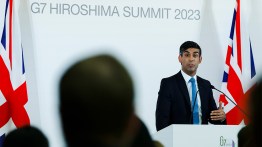
Some people seem to make a career of being ashamed (or at least claiming to be ashamed) of their country. Personally I don’t feel it – apart from when I see journalists from the BBC, ITV or Sky questioning our political leaders while they are abroad. Then a great wave of revulsion and national shame surges within me. It happened last weekend when Rishi Sunak was at the G7 summit in Japan. These meetings of the world’s leading economies are pretty important affairs, so much so that major media organisations fly journalists out to cover them. But as Sunak and his hosts stood to answer questions about the summit, what did the best sleuths from the BBC and ITV see fit to quiz him about? Why, Suella Braverman and her speeding awareness course.

Tories’ thoughts are turning to defeat

Ever since Rishi Sunak became Prime Minister, his aides have worried that May would be the month of mutiny. His mandate over the party has always been weak, since he lost the summer’s leadership race to Liz Truss. He was also certain to preside over heavy losses in the local elections, so the aftermath of that defeat was seen as the ideal time for a rebel to strike. As if to tempt fate, Sunak invited more than 200 Tory MPs for drinks in the No. 10 garden on Monday night. He attempted to lift spirits with jokes at Keir Starmer’s expense. ‘He was meant to be writing a book about his ideas for Britain,’ Sunak said. ‘But – and I’m not making this up – he has had to return the advance to the publisher because he couldn’t come up with any.

What if Rishi fails to deliver all five pledges?

When Rishi Sunak delivered his five key pledges at the start of January, the latest data we had for the inflation rate was for last November. It was up 10.7 per cent on the year, having fallen from a peak of 11.1 per cent the month before. Everyone thought this was the start of a fast and spectacular fall, with virtually all forecasts showing a welcome decline in the rate of inflation. Off the back of those forecasts, the Prime Minister oozed confidence when he promised to ‘halve inflation’ by the end of this year. Speaking to an audience in Stratford, Sunak promised that an ‘ease’ to the cost-of-living crisis and greater ‘financial security’ was on its way.