Renoir

In defense of Renoir’s pretty pictures

From our US edition

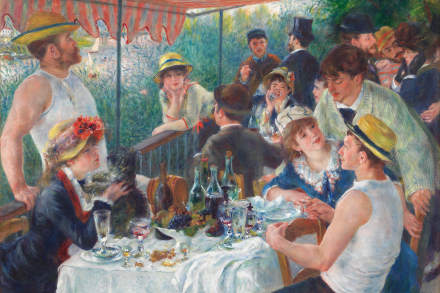
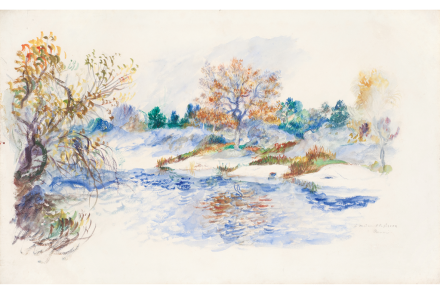
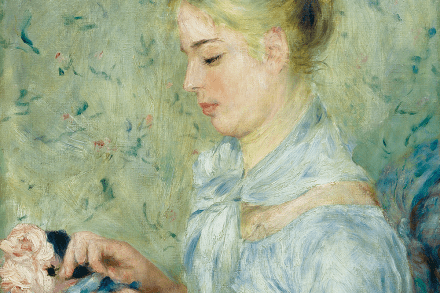
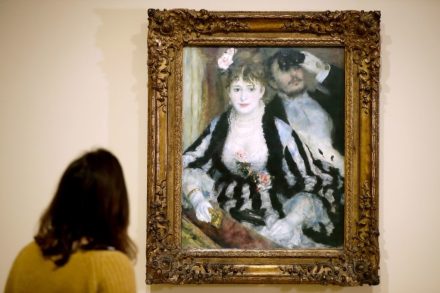
Those who think it’s chic to dismiss Renoir have a rethink coming, courtesy of the absorbing, highly informative exhibit Renoir Drawings, now on view in New York. Not so long ago, the idea of ousting Pierre-Auguste Renoir (1841-1919) from the canon of western art sparked a movement of sorts. “RENOIR SUCKS AT PAINTING,” proclaimed a protester’s sign at the Museum of Fine Arts in Boston in 2015. The performance artist Max Geller had organized the demonstration to condemn Renoir as a purveyor of “treacle.” His female nudes objectified women, it charged; even when clothed, they smiled and blushed too prettily. Indeed, Renoir’s work held value only for the unsophisticated and its popularity represented the triumph of the cliché.

renoir

The greatest paintings are always full of important unimportant things

Goya to Impressionism: Masterpieces from the Oskar Reinhart Collection, at the Courtauld, consists of a selection of 25 absorbing paintings chosen from 207. I was disappointed but not surprised that one of the greatest paintings in the world, Pieter Bruegel the Elder’s ‘Die Anbetung der Könige im Schnee’ (The Adoration of the Kings in the Snow, 1563), didn’t make the journey from Winterthur in Switzerland. Too precious to put at risk. There is no requirement for a collector to accumulate thematically consistent paintings. Whim, availability, opportunism, taste, connoisseurship, pleasure, accident, catholicity all play their part. The Oskar Reinhart collection is gloriously heterogeneous, a series of bonnes bouches.

The splendour and squalor of Venice

Hard by the Rialto, in a densely packed and depressingly tacky quarter of Venice, the church of San Giovanni Cristosomo houses one of Giovanni Bellini’s most luminous and exquisite paintings. ‘I Santi Cristoforo, Girolamo e Ludovico di Tolosa’ is known to locals as ‘the Burger King Bellini’, after the fast food outlet opposite the church door. In any other city, the picture’s exquisite handling of light and complex mingling of Christian piety with Renaissance Neo-platonism would grant it a museum of its own, but in Venice its principal spectators are weary tourists in line for a Whopper. Martin Gayford’s paean to Venice as ‘a huge, three-dimensional repository of memory’ is constantly alert to such anomalies.

The force of nature that drove Claude Monet

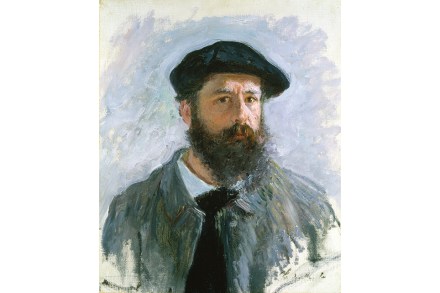
There have been some really good biographies of artists over recent years and what distinguishes the best of them is their sense of context and a lucid prose free from the jargon of the art historian. In the end, of course, any work of art has to be able to stand by itself, but for Jackie Wullschläger her appreciation of Monet’s paintings has been immeasurably deepened by her sense of the man behind them. ‘My approach,’ she writes, ‘stems from the belief that painters transform the raw material of experience into art’, and that material, both the familiar external events and, more illuminatingly, the inner man, is what she gives us here.

Renoir and the foolishness of chronological snobbery

From our US edition

Peter Schjeldahl’s essay 'Renoir’s Problem Nudes' in The New Yorker has already attracted some portion of the contempt and ridicule it deserves. Here is my modest contribution to that task. According to Schjeldahl, Renoir 'sparks a sense of crisis.' 'Who doesn’t have a problem with Pierre-Auguste Renoir?' he asks in his opening gambit. Can we have a show of hands on that? Pace Schjeldahl, Renoir is such an immensely popular because his painting is essentially celebratory; he looked upon the world with an oeil bienveillant, glorying in its sumptuousness. There is great intensity in some of Renoir’s portraits, but very little melancholy. The dominant mood is festive: a happy, sociable sensuousness.

renoir