Religion

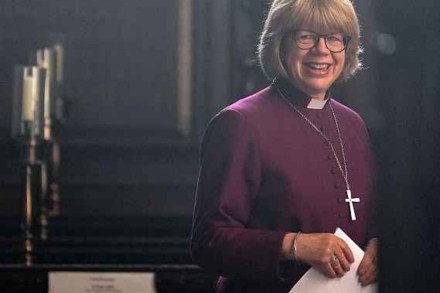
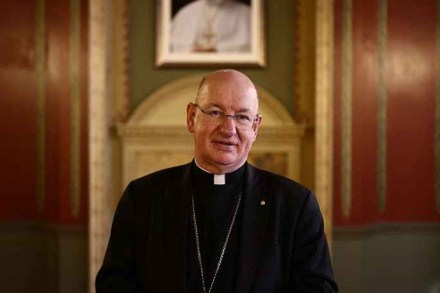
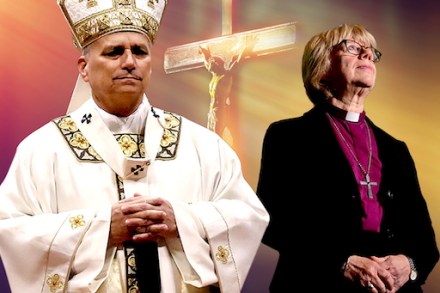
Americans should feel uneasy about the new Archbishop of Washington

For an eighty-eight-year-old man who has spent only five days in the United States and doesn’t speak English, Pope Francis is a surprisingly partisan observer of American politics. For most of his life he was, like a typical Argentinean, viscerally but vaguely anti-American. By the time he became pope in 2013, he and the Democratic Party had embraced the ideology of the globalist left. And so they forged an alliance — one the Pope may soon regret, now that Republicans in the White House and on Capitol Hill are beginning to grasp the scale of the Vatican’s corruption. In 2016, Francis gave his blessing to the Hillary Clinton campaign’s Catholic front organizations, motivated not just by their shared obsession with anti-racism and climate change but contempt for Donald Trump.

Archbishop
Rome

Rome is ready for its close-up

Rome Like a Parioli matron shedding her curlers, pins and hairnet in anticipation of a major family celebration, Rome’s monuments are emerging from shrouds of cladding and scaffolding ready for their close-up. The angels and river gods of the Ponte Sant’ Angelo and the Piazza Navona shine as blinding white as the day they emerged from Bernini’s workshop. The ancient granite basins of the Piazza Farnese fountains shimmer with an ethereal bluish light. The big occasion is the Papal Jubilee year of 2025, expected to draw a whopping 32 million visitors. That’s more than ten times Rome’s population, and half as many visitors again as in a normal year. If you’re planning a visit, do it soon before the city is entirely swallowed by crowds.

Will science lead us back to God?

After generations of treating the universe as mere matter to be bent to our will, it seemed inevitable that the future of humanity would be to merge with machines. Billionaires and tech utopians now predict a near future in which the human mind itself might be “downloaded” or transferred into a digital realm, allowing us to overcome death itself by slipping the bonds of our physical existence altogether. Modern-day prophets like Yuval Noah Harari proclaim that we have embarked on a second industrial revolution, though the product this time will not be machines or vehicles or powerful new weapons but human beings themselves. There’s a certain logic to this way of thinking.

science
Peterson

Wrestling with Jordan Peterson

Jordan Peterson is one of those curious figures who has, thanks to the mysterious operations of the internet, been thrust into the limelight, willingly or not. While he has become a locus of hatred for certain left-wingers, thanks to his implacable attitude toward “woke” phenomena, in reality his supposedly controversial advice amounts to little more than that young people should work hard and take responsibility for their actions. Even the bolshiest socialist couldn’t really disagree. His 12 Rules for Life is a bestseller on both sides of the Atlantic, and he has a large and adoring fanbase.

A prayer in Ukraine

By the summer of 2024, Kyivans could joke that there was no way the Russian army could take their city now — they’d never get through the downtown traffic. The simple normality of urban congestion, crawling through grand boulevards in the shadows of buildings that, with fresh coats of paint, would suggest a Wes Anderson vision of Mitteleuropa, could lull a visitor into thinking he could be in any capital on the old Orient Express route. So, too, would the world-class Fenix restaurant, run by a celebrity chef and festooned with Chihuly-inspired decor. It was between the salmon tartare eclair and the rabbit ravioli that I heard for the first time, face-to-face, what it’s like to be persecuted for worshipping God in the wrong way.

ukraine
la varna

A pilgrimage to St. Francis’s holy sanctuary at La Verna

Beneath a stunning Della Robbia Crucifixion a lone candle burns on the floor of the Holy Stigmata Chapel in the sanctuary of La Verna. The immense tranquility belies the astonishing events that occurred in 1224 on this rocky outcrop in central Italy’s Umbrian hills. The chapel marks the spot where, two years before his death, Saint Francis, retreated to fast and pray with two of his brother friars. After some weeks, Francis saw a six-winged Seraphim, apparently crucified, who appeared and imposed the five wounds of Christ’s Passion on his body — in paintings the angel appears to be “lasering” St. Francis, who is often depicted as a sort of Franciscan version of Willem Dafoe getting it at the end of the film Platoon — including the nails protruding. Heady stuff.

Chicken soup for the souls: a feast for the dead

It’s indisputable. Food & Drink is The Spectator’s most important section. Ask yourself this: if you hadn’t eaten in days, would you have the slightest interest in perusing the deft political analysis, elevating cultural commentary and scintillating wit to be found the rest of the magazine? Without food, the only reading worth bothering with is Preparation for Death. As starvation sets in, only the two inevitables remain — Death and Taxes — and what need to worry about taxes? Tombstones have no mailboxes, shrouds no pockets. For over a millennium, November has been the month of the dead. The eleventh has been dedicated to fallen soldiers ever since World War One; but All Souls’ Day goes back much farther.

Souls

Catherine Nixey’s Heresy is a joy to read

What people tend to forget about Jesus Christ is that he killed children. As a five-year-old, Jesus was toddling through a village when a small boy ran past, knocking his shoulder. Taking it like any five-year-old would, Jesus shouted after him "you shall not go further on your way," at which point the boy fell down dead. Later, when the boy’s parents admonished Joseph and Mary for failing to raise their son properly, Jesus blinded them. Something to bear in mind next time you ask yourself: "What would Jesus do?" If this story is unfamiliar, that is because it doesn’t appear in any of the Bible’s traditional Gospels.

Heresy

A new and compelling study of the life of the iconic rebel Nat Turner

In 1831, while the slave rebel leader Nat Turner sat in jail awaiting trial in Southampton County, Virginia, he was visited by a local lawyer named Thomas Gray. Turner spoke at length to Gray, who subsequently published his record of their conversations. At one point Turner said he had been visited many years before by the spirit. “What do you mean by the spirit?” Gray asked. “The Spirit that spoke to the prophets in former days,” Turner replied. Gray was unmoved by Turner’s claims of divine inspiration and concluded that he was a “gloomy fanatic” moved to mass murder by religious delusions.

Turner
devil

Devil in the detail

When I was offered the chance to review two new books about the Devil, I thought, “what fun!” I wouldn’t describe myself as a particularly diabolical person, but as someone whose deep love of Paradise Lost has made me, as good old William Blake didn’t quite put it, “of the devil’s party while very much knowing it,” I rubbed my hands together in glee at the prospect of getting down and dirty with Old Nick. Not, you understand, that my purely literary interest can begin to compare to the “Satanic Panic” outbreak that gripped the imaginations of middle America in the late 1980s and 1990s. “Satanic cults! Every hour, every day, their ranks are growing!

Donald Trump ‘the anointed one’ at the Road to Majority Conference

Donald Trump spoke at the Faith and Freedom Coalition on Saturday, with a few speakers deeming him “the anointed one.” Trump spoke for approximately one hour and twenty-five minutes. The coalition slotted multiple hype-men right before he appeared, including Republican governor Kristi Noem. The former president hit all his usual talking points — the economy, the border and immigration, Joe Biden, Ukraine, Israel, his cute "tic-tac" trick — and made sure to mention the Ten Commandments, and said, “We answer to God in heaven,” not to political leaders. There were at least two impressive instances in which Trump expertly responded to the inclinations of the crowd.

faith freedom donald trump

An incisive memoir of life in the cloisters

Bishop Fulton J. Sheen, the immaculately Brylcreemed megastar of the golden age of Catholic television and radio evangelism in the United States, famously hated hearing the confessions of nuns. Doing so, Sheen is reported to have said, was “like being stoned to death with popcorn.” Despite this, Sheen — at one point broadcasting to over 30 million Americans — found himself hearing a lot of nuns’ confessions in his later career. He was reduced to this, alongside what was rather euphemistically referred to as his “international cassette tape ministry,” having fallen foul of the archbishop of New York, the doughty Cardinal Spellman.

Cloistered

‘Maybe I have the healing I need’: speaking to Father Paul Wierichs

It used to be you had to get in close to hear Father Paul Wierichs speak. For two years the former FBI chaplain couldn’t talk above a whisper. Now he is a little louder, but very hoarse; though he still struggles to swallow you can at least hear his voice. Bell’s Palsy keeps him from moving the left side of his face, and he has a difficult time seeing out of that eye. His scalp is bandaged where the doctors removed a growth. There’s cancer in his prostate, too. He’s still held onto a good amount of hair for his age and his troubles — but he expects to lose it to surgeries by the end of the month. “I wore my collar on 9/11,” Father Paul recalled on a frozen January morning in Queens. “I had to throw them out, because they were covered in dust.

Wierichs
Dalí

The divine Dalí and his ‘Christ’

I arrived in the city of Figueres early one January morning to visit one of the most popular, and bizarre, art museums in the world, the Teatre-Museu Gala Salvador Dalí. It houses a dreamlike picture that, for the first time since it left over seventy years ago, has made a temporary return journey to Spain. Originally simply titled “The Christ,” the 1951 canvas depicting the giant figure of a man on a cross, shown at an overhead angle hovering over a moody seascape, was painted by the most famous son of Figueres, Salvador Dalí. Through April 30, it forms the centerpiece of a show exploring its creation, history, local connections and symbolism.

Easter

How eggs became the symbol of Easter

Thirty feet in the air off a northern Canadian highway stands the giant Vegreville Easter egg, rotating gently in the wind. The egg is eighteen feet wide, nearly twenty-five long and designed to turn with the breeze like a weathervane. It is decorated in a traditional Ukrainian pysanka pattern with thousands of gold, black and white aluminum triangles, for the egg is an homage to the Ukrainian immigrants who settled the area long ago. It is a technical feat: the tile- cutting technology developed to produce the mosaic on the egg’s curved surface was later used to tile the exterior of the Space Shuttle. Whatever day of the year you may spy it, it is undeniably an Easter egg.

America’s professor: the afterlife of C.S. Lewis

In the summer of 1955, an unusual meeting took place. Billy Graham visited the writer and academic C.S. Lewis in Lewis’s rooms at Magdalene College, Cambridge. It was unusual because leading British academics typically avoided Southern Baptist revivalists. But rather than encountering a fussy, prim don, Graham found a kind, intelligent scholar who was very happy to spend the afternoon with him. Later, Graham admitted he was intimidated by Lewis, but the English professor quickly dispelled any anxiety, probably by offering Graham a cup of tea. Graham’s impact on American religious culture, for good or ill, is unquestioned, but it is difficult to imagine what that same culture would look like without the works of C.S. Lewis.

lewis

Spooky season’s religious revival

One of the most anticipated films to hit theaters this October is The Exorcist: Believer, a direct sequel to one of the greatest horror movies of all time, The Exorcist, which is celebrating its fiftieth anniversary this year. Coincidentally, the original film’s director, William Friedkin, passed away just a couple of months ago. In the wake of Friedkin’s death, Matthew Walther reexamined The Exorcist in a guest essay for the New York Times. He posited that the film hinges on the acknowledgment of supernatural evil and the use of longstanding Catholic theology and tradition in defeating it.

Will Orthodox Judaism accept female rabbis?

Bracha Jaffe, an American-Israeli, spent decades working in tech, focusing on software development and raising her family in Israel. But following a midlife career shift and a move to New York, she now also works as an assistant rabbi at the Hebrew Institute of Riverdale, a large Orthodox synagogue in the Bronx. Every day, she plays a key role guiding congregants during life cycle events, such as births and deaths. She teaches classes and visits the sick. “I think it’s still true that when someone says ‘Rabbi,’ what comes to mind is an older male, perhaps with a white beard,” she says. With her blonde bob, ever-present smile and warm demeanor, Jaffe is a far cry from this stereotype.

orthodox judaism

Knock at the Cabin is a better-than-average Shyamalan film

The thing about a new M. Night Shyamalan movie is that, going in, one never knows whether it’ll be “one of the good ones.” Few directors have quite as uneven a track record: in the wake of the much-loved The Sixth Sense, Unbreakable, Signs, and The Village, Shyamalan helmed a string of disasters, culminating in the big-budget catastrophe that was 2013’s After Earth. On the other hand, 2016’s Split and 2019’s Glass were both great. Knock at the Cabin falls somewhere in the middle. The film centers on a gay couple, Andrew and Eric (Ben Aldridge and Jonathan Groff, respectively), and their adopted daughter Wen (Kristen Cui), who are forced to confront a nightmare scenario. Holed up in a lonely cabin in the forest, they are accosted by a quartet of heavily armed outsiders.

‘Hail Satan’: a Virginia town at war over After School Satan Club

Chesapeake, Virginia  If you're looking for a Christmas display to rival Clark Griswold's 25,000 twinkling incandescent lights, the Chesapeake City Hall is a good place to start. The building lights up each year for its "Deck the Hall" event, a drive-through light display featuring candy cane-wrapped trees, glittering snowflakes and City Hall itself glowing red and green. The decorations were so bright I had a difficult time reading the signs that would point me to the Chesapeake Public Schools building. Luckily, it only took a few more turns before I saw two parking lots full of cars and a line of people sprawling down the block. The crowd wasn't there to take in the beautiful Christmas lights.

after school satan club