Radio

China wants robots to look after the elderly

An AI data centre – imagine a factory of buzzing wires and computing equipment cooled by industrial fans – can consume as much power as a city. It has been estimated that, not too long from now, we’ll require 92 cities’ worth of extra power just to meet the demands of artificial intelligence. Ergo, the heat is on – but so, it is said, is a new cold war. On Radio 4 last week, Misha Glenny was exploring how the rapid evolution of technology is shaping the rivalry between the US and China. It turns out that the race for pre-eminence – in AI, at least – is as close

Stop talking rubbish about Radio 3

‘Listen to this drivel’ is not the combination of words a radio presenter longs to see in reference to their exertions, but it’s what The Spectator associate editor Damian Thompson had to say about me on X recently. I’d provoked Thompson’s ire by telling people what was coming up that morning in my Radio 3 programme, Essential Classics, in a one-minute video delivered with a somewhat unserious tone. Thompson did later apologise for being rude but declared: ‘It’s just awful to hear the new house style of Radio 3.’   Thompson joins other Spectator writers who have their collective underwear in a twist about the style of presentation on Radio 3. Michael Henderson thinks the network is ‘peopled by presenters who might feel more comfortable on a pick ’n’ mix

How to listen for alien life

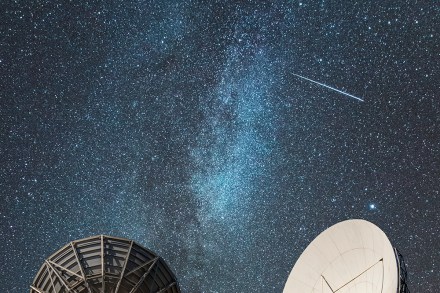
For more than 60 years, scientists have been on the stealthiest stakeout in history. Using state-of-the-art listening devices, they’ve tapped into thousands of homes, waiting patiently for their targets to reveal their presence, and ultimately been rewarded with silence. If this covert activity were occurring in our own country, one might have become impatient and simply walked up and knocked down the door. But the targets are not living in our country, or even on our planet or in our solar system. Our persons of interest are aliens. This is Seti: the Search for Extraterrestrial Intelligence, focused on life on planets orbiting other suns. So far, we’ve found no sign

We don’t need to see radio DJs’ faces

In a week in which embarrassing and damaging revelations about past misdemeanours are very much in vogue, let me reveal one of my own. When I was seven years old, I wrote in to Jim’ll Fix It. My request was to play a giant Wurlitzer organ, preferably the one in the Blackpool Empress Ballroom. To my retrospective relief, Savile didn’t respond to my letter. But I did purchase a second-hand, two-tier Hammond organ when I was at university, which I played as part of an acid jazz group. No tapes of our band’s songs or gigs survive I am delighted to state. I was reminded of my rather strange and atavistic early

Booze now has its own Rest is History-style podcast

Intoxicating History is the perfect title for drinks expert Henry Jeffreys and food critic Tom Parker Bowles’s new podcast. Its theme is alcohol, but its contents are predominantly historical, which is good news if, like me, you are quick to apply the word ‘bore’ to any man who talks about wine for more than eight minutes. The first episodes came out before Christmas but they have been gathering momentum since Dry January. Today’s drinking culture, which has spawned this bizarre annual group sacrifice, has an interesting pedigree. Europeans have apparently been on their guard against boozing Englishmen for nearly a millennium. The Portuguese were certainly left in no doubt as

Our verdict on the new In Our Time presenter

Melvyn Bragg’s first ever intro to In Our Time in 1998 clocked in at 21 seconds. Misha Glenny, meanwhile, took one minute and four seconds to get through his. The initial public reaction to Glenny taking over from Bragg was positive. The prevailing sentiment was ‘thank Christ it isn’t Stephen Fry’. But now you felt as though you could hear two million people shouting ‘Get on with it!!’ at the radio as he stressed and elongated virtually every syllable. John Stuart Mill and his wife had been labouring over ‘On Liberty together for soooome yeeaarrss’. Then we were away. And he’s all right, thank God. With In Our Time, there

Three cheers for Poems on the Underground

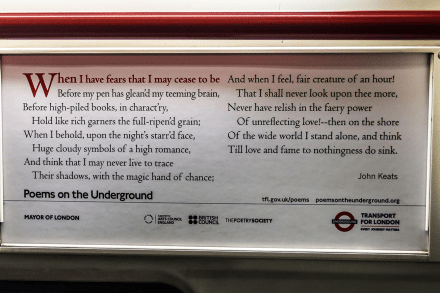
The idea for Poems on the Underground was thought up by a New Yorker 40 years ago this month. This may surprise you, given that the posters are synonymous with London. But then again, the creative possibilities of a transport system tend to be lost on its native commuters. Judith Chernaik, a lecturer in English literature, had recently relocated to the capital when she fell in love with the Tube: ‘Compared to New York it’s bliss – clean, safe and fast, too… if things are working of course.’ Ozymandias was soon riding the lines from Aldwych with Robert Burns In As You Like It, Orlando goes around the Forest of

Prisons must prioritise mental health

What is prison for? I’ve wondered that a lot, these past five years. In February 2020, just a few days after the UK left the European Union, and as scientists worked to agree an official name for the ‘new coronavirus’, I was sentenced to 45 months in prison for a fraud I’d committed in 2014. During my time inside I discovered a system that did almost everything badly and didn’t seem to know its own purpose. Meanwhile our jails remain a mystery to those who haven’t been there. Since my release I’ve written and spoken to help people understand our prison system. I believe there is a better way of

Was Queen Victoria's doctor the first psychoanalyst?

Queen Victoria began to experience dark visions after giving birth to her second child. Concerned that she might have inherited the madness of her grandfather, George III, Prince Albert summoned her doctor. Robert Ferguson was not the obvious man for this scenario – he was an obstetrician – but the doughty queen had heard that he ‘paid much attention to mental disease’, and willingly consulted him. It wasn’t until 2009 that the precise nature of Victoria’s ‘mental disease’ came to light. Dr Ferguson’s diaries, formerly kept in private hands, came up for auction that year and entered the collection of the Royal College of Physicians. Their contents made for sad

Condoms in 18th-century painting

Waldemar Januszczak and Bendor Grosvenor’s art podcast has returned after nearly five years. It is, says Januszczak, ‘the podcast they could not stop – but they did have a jolly good try’. What happened? It isn’t clear; there are teases that it revealed too much, which is anyway a good ploy for attracting listeners. ‘Subversive’ is not the first word that springs to mind when tuning in to the two unlikely chums. Their regular feature, ‘Shocking News from the Artworld’, is more Apollo than Nigel Dempster. For example: Christie’s has closed the digital art department that dealt in NFTs, the crypto tokens going the way of the dodo. And Gabriele

Who's afraid of Virginia Woolf? The BBC, it seems

‘What a lark!’ I thought to myself as I rose on a hot June morning to listen to a documentary on Mrs Dalloway. A century has passed since Clarissa bought flowers for her midsummer party, and Radio 4 has commissioned a three-parter, with actress Fiona Shaw presenting. ‘What a plunge!’ The first programme had been playing for all of two minutes before my hopes began to wilt like a delphinium. ‘Her face adorns tote bags and internet memes,’ says Shaw of Woolf in the preamble, which sounds as though it has been lifted directly from the series pitch to the BBC. ‘I’ll be asking what… Virginia Woolf has to say

The best radio at the moment is on the BBC World Service

Online viewings of Conclave increased threefold following the death of Pope Francis last month. At least some of the traffic was rumoured to have come from the Vatican itself. This raises many questions, but the most pertinent for me this week is, what did the cardinals think of the carpets? Do they really have coffee machines in their rooms like Tremblay? Minibars like Bellini? Their peace spoiled by the sounds of a lift shaft as in the case of long-suffering Lawrence? If any of these details passed you by, it’s worth watching the film again. In fact, after listening to an interview with the production designer, to be broadcast on

‘I’ve seen controllers come and go’: Radio 3's Michael Berkeley interviewed

A few years ago I had a panic-stricken phone call from a female friend. ‘Help!’ she wailed. ‘Remind me what classical music I like. I think I’m going to be a guest on Private Passions.’ I could understand her anxiety. The programme, which celebrated its 30th birthday this month, is BBC Radio 3’s lofty version of  Desert Island Discs. Eminent writers, scientists, artists and businessmen, plus the occasional book-plugging celeb, explain how music – mostly but not exclusively classical – is, well, one of their private passions. Even if, as in the case of my friend, it isn’t. It’s an honour to be asked on the show, which is presented

Impeccable history of the free market – and from the BBC too

The launch of Radio 4’s Invisible Hands series has been both blessed and cursed by timing. It tells the story of Britain’s ‘free market revolution’, just as President Donald Trump overhauls the free trade consensus of the past 40 years and world leaders grapple with how to respond. The problem is the hypotheticals posed at the start of the first episode – that free market capitalism ‘might be in crisis’; that ‘the global free market might be under threat’ – are already out of date. It’s settled. Free trade is out, tariffs are in. Welcome to the trade wars. The world could do worse than look to the ‘Invisible Hands’

Perfection: The Rest is Classified reviewed

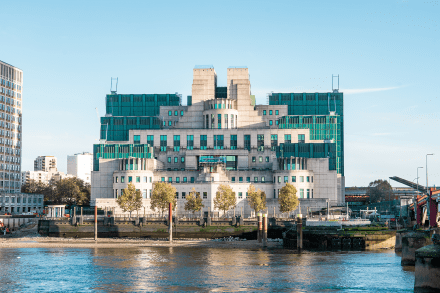
Interviewing for MI6 sounds to have been even scarier a century ago than it must be today. Candidates would enter an office to find a man with a ‘large intelligent head’ seated behind a desk and absorbed in paperwork. Everything would appear normal until he picked up a penknife and stabbed his own leg. A prospective agent who flinched at the sight might do himself out of the job. It is brilliant: carefully crafted, closely scripted, immaculately edited and best of all perfectly cast Rather like one of those rumoured Oxbridge interviews (candidates for a fellowship at All Souls were reportedly served a cherry pie at dinner to test what

I just don't get P.G. Wodehouse

I have a confession to make, which may upset many readers. Having only a passing acquaintance with his books, I’ve long experienced a faint allergic reaction to the works of P.G. Wodehouse. It is, I think, to do with the mannered, heavily whimsical nature of his world; the circumlocutory sentences; the ‘right-ho’s and ‘dash it’s and choreographed mix-ups; and the inexplicably passionate adoration of his many fans, among whom I count a number of my family and friends. But before dismissing something that so many intelligent people hold in high esteem, it’s worth considering whether I’ve missed a trick. And so, in the hope that enthusiasm is contagious, I’ve been

The comedy genius of John Shuttleworth

There is a certain comic archetype that is particularly British. The likes of Pooter, Mainwaring, Hancock, Fawlty and Brent are in a tradition – going back to Falstaff, perhaps further – of hopelessly optimistic yet socially oblivious dreamers. One such character is John Shuttleworth, created and played by Graham Fellows. For the uninitiated, John Shuttleworth is a retired security guard and aspiring singer-songwriter from Sheffield who lives with his dinner lady wife and two children, Darren and Karen. He performs mainly at hospices and drop-in centres, often for no more than his travel money. His career is inexpertly managed by his next-door neighbour with whom John enjoys a generally warm,

Soothing and glorious: Fashion Neurosis reviewed

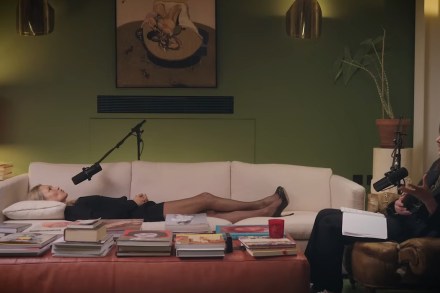
Sometimes the mind needs to take a break. And I can’t think of a better stopping-off place than the soothing, gloriously bonkers discussions on the Fashion Neurosis podcast, hosted by the British fashion designer Bella Freud. Its premise is that Freud, daughter of Lucian and great-grand-daughter of Sigmund, encourages guests to recline on her couch and talk over any and every aspect of their relationship to fashion. Her mellifluous, affirming manner is much more soft soap than wire wool, but this is not territory that requires a Robin Day, and the concept proves a surprisingly fruitful route into family history, personal stories and high-grade gossip. The pool of guests is

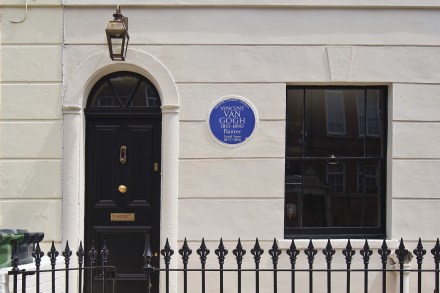
It's moving to think how happy Van Gogh was in Brixton

When a phrase really takes off in the political sphere, you will recognise it by the frequency with which it crops up on the Today programme. Many years ago, I noticed that politicians had begun using the line ‘it’s not rocket science!’ when attacking the alleged inability of their opponents to get even the basics right. It had a muscular, common-sense ring to it, which they clearly relished, and it spread like norovirus through a cruise ship. How times have changed. Where once we had politicians who never stopped talking about rocket science, the ascent of Elon Musk in the US has brought us a rocket scientist who never stops

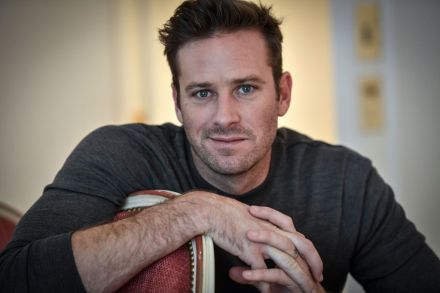
A feel-good classic: The Armie HammerTime Podcast reviewed

Relive with me and enjoy again the downfall of Armand Douglas Hammer. If you remember, Hammer’s Hollywood career had been going as smoothly as anything: there was his 2010 breakthrough playing the Winklevoss twins in The Social Network, his turn as Leonardo DiCaprio’s no. 2 in Clint Eastwood’s J. Edgar, the 2018 Golden Globe for Call Me By Your Name. By 2020 he was a GQ cover star: ‘Soul seeker. Scene stealer. Leading man.’ And cannibal, allegedly. In January 2021 an anonymous Instagram account called @houseofeffie posted screenshots supposedly showing Hammer’s texts to a woman. ‘Thinking of holding your heart in my hand and controlling when it beats,’ the message