Racism

Black families suffered after white college kids used George Floyd to dismantle society

Five years ago, we watched a man die under the knee of a police officer. The footage of George Floyd gasping for breath wasn’t just horrifying – it was galvanizing. For a brief moment, America stood still, and it felt like we all agreed: this was wrong. This shouldn’t have happened. And something needed to change. But instead of coming together, we fell apart. What should’ve been a rare moment of national consensus turned into yet another front in the culture war. The left veered toward revolution, and the right veered toward denial. And somewhere in the wreckage of hashtags, riots, cable news rants, and billion-dollar DEI schemes, the real moral clarity of that moment was lost. Let’s start with the obvious: what happened to George Floyd was a tragedy.

George Floyd

Poll: college-educated women end friendships over politics

New polling data shows what you may already suspect: your experience of losing friends since the 2024 election of Donald Trump is absolutely real – if very divided depending on your political tribe. When national pollster Cygnal offered me the opportunity to suggest a question or two for their latest national survey, it was a chance to put to the test the experience of many Americans I know: in the past six months, they’ve lost at least one friend over the result of the 2024 election. The direction of lost friends seemed very politically consistent in my experience, but anecdotes aren’t data, and knowing more people on the right than the left, it’s possible this personal experience was skewed. It turns out that it isn’t.

poll

Is Shiloh Hendrix the new Luigi Mangione?

When a white mom called a black kid the N-word the immediate expectation was that she’d be canceled, possibly arrested. It was not that just a few days later she would have $700,000 in the bank.Shiloh Hendrix accused a five-year-old Somali boy of rummaging through her diaper bag in Rochester, Minnesota, last week. “Did you call that child the N-word,” a man who filmed her asked. “Yeah,” Shiloh snarled back, “if he’s gonna act like one.”She didn’t back off. She repeated the accusation, then turned on the man filming her with a string of insults. The video quickly went viral. But Shiloh didn’t follow the usual playbook of hunkering down to weather the online storm. She fought back. On GiveSendGo, Shiloh painted herself as the victim.

shiloh hendrix

Joe Biden recalls ‘colored kids’ to be hero of their struggle

In his first public remarks since leaving office, Joe Biden recalled – without a hint of self-awareness – the moment from his childhood he first saw “colored kids” on a bus going by.” It was, in his telling, a pivotal experience, one that sparked his youthful sense of outrage growing up in Scranton, Pennsylvania.Let’s stop right there.At best, the speech – billed as his first major intervention since Donald Trump took office – reveals how deeply stuck in the past Biden’s racial worldview really is. At worst, it’s an embarrassing reminder that the Democratic Party continues to view black voters, especially black men, not as equals or thinkers, but as props in white liberal moral storytelling.As a black conservative, I've heard this record before.

colored kids

Marriage, motherhood and money: Show Don’t Tell, by Curtis Sittenfeld, reviewed

From our UK edition

Show Don’t Tell, a collection of 12 short stories by the American writer Curtis Sittenfeld, explores marriage, sex, money, racism, literature and friendship from the 1990s to the present. There is a fine line here between memoir and fiction, with many of the female protagonists being Midwestern, bookish Democrats – quite like Sittenfeld herself. In the eponymous story, Ruthie, a writer, dismisses the notion that ‘women’s fiction’ is perceived as giving off ‘the vibe of ten-year-old girls at a slumber party’. She reflects on internalised misogyny: ‘It took a long time, but eventually I stopped seeing women as inherently ridiculous.

Whatever happened to the Panther Den Show?

“The laughter of children is like the blossoming of a flower,” wrote French poet Charles Baudelaire. “It is the joy of receiving, the joy of breathing, the joy of opening out, the joy of contemplation, of living, of growing. It is the joy of a plant.” Conservatives and most right-wingers have a hard time understanding laughter, I’d vouch, especially the laughter of children – by which I mean the laughter of zoomers and their even younger peers, Generation Alpha. But laughter is an increasingly powerful political tool, one that has the ability to mobilize the young even as it confounds and confuses older generations. Today’s conservative establishment ignores laughter at its peril. Laughter is a vital force propelling the right to new success. Just look at Donald Trump.

panther den

Nazis, killer dogs and weird sex: Empty Wigs, by Jonathan Meades, reviewed

From our UK edition

Jonathan Meades is, you might say, a baroque artist in a mannerist age. Whereas today’s younger and more widely feted writers think small – a Brooklyn sublet, a Camden Town love nest, the cracked mirror of the self – Meades goes big. And not just in physical terms (Empty Wigs tips the scales at nearly 3lb), but in scope. Where his contemporaries’ prose can be affectless and somehow skinless (a Paris Review interviewer said of Rachel Cusk, with apparent admiration, that her writing ‘feels contemporary, swift and “clean”’), Meades piles on the style, packing in metaphors, coinages and allusions until the crystals can’t take it, swooping between social classes, doing the police in different voices.

The pursuit of love letters: My Search for Warren Harding, by Robert Plunket, reviewed

From our UK edition

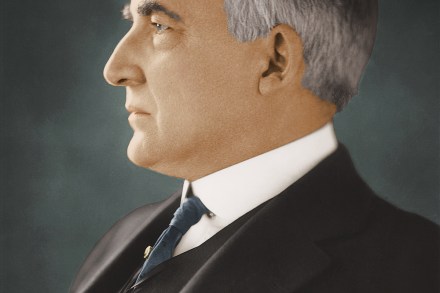
There is something wonderful about a novel being rescued from obscurity. Robert Plunket’s My Search for Warren Harding was first published in 1983, given a few decent reviews and then disappeared. Occasionally admirers – including rather influential ones like Amy Sedaris and Larry David – would lend a weathered copy to friends, insisting they read it. And so here we are. Elliot Weiner, a third-rate academic (in fact the word ‘academic’ barely seems to apply), hears that Rebekah Kinney, a former mistress of Warren G. Harding, president of the United States from 1921 to 1923, is living in a decrepit mansion in Los Angeles.

Bad vibrations: Lazarus Man, by Richard Price, reviewed

From our UK edition

Richard Price’s tenth novel follows four characters in the wake of a tenement building collapse in Harlem that kills six people and leaves others missing. Detective Mary Roe is on a mission to find a missing resident whose wife was among the dead. Royal Davis is a funeral home director hoping to drum up much-needed business from the tragedy, going so far as to dispatch his young son to hand out business cards at the site. Felix Pearl is a freelance photographer searching for meaning as he documents the aftermath. The titular resurrected man is Anthony Carter, a 42-year-old former schoolteacher, six months clean of a cocaine addiction that has cost him his job and relationship with his wife and stepdaughter.

Wagner’s Ring is a mythic mishmash

From our UK edition

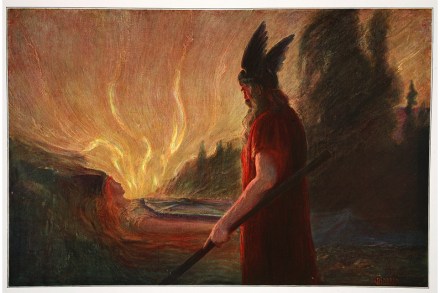
Wagner’s Ring is an ambitious cycle of four operas relating world history from Primal Swirl to End of Days. It took 26 years to write, takes 15 hours to perform, a double-size orchestra to play and a specially built opera house to stage. Michael Downes, the director of music at St Andrews University, places the fons et origo of the epic in Wagner’s frustration as a kapellmeister, when he wrote, unsolicited, to his boss the King of Saxony, proposing a total revamp of the royal music scene. No reply was forthcoming. A second proposal was also blanked. Furious, Wagner flung himself into the Dresden uprising of 1848, financing the manufacture of hand grenades and giving bloodthirsty speeches from the barricades.

Not for the faint-hearted: She’s Always Hungry, by Eliza Clark, reviewed

From our UK edition

Eliza Clark’s first novel, Boy Parts, centred on a self-destructive woman taking explicit photographs of men. Her second, Penance, was about a journalist constructing a ‘definitive account’ of a seaside murder. Last year she was named one of Granta’s best young novelists; but she has now produced a sadly uneven short story collection. These 11 tales do not hang together thematically, aside from a broad emphasis on the corporeal. The good ones are full of brio: ‘The Shadow Over Little Chitaly’ is composed entirely of hilarious reviews of a takeway that offers Chinese food alongside pizza. The feedback is bizarre from the start: the first mentions that the restaurant is 125 miles away and the customer complains that they rang 117 times for a refund.

Is America ready for its first DEI president?

Nobody ever talks about this anymore, but there was a time when Democrats were floating Kamala Harris as a potential Supreme Court pick. Shortly after the death of Antonin Scalia, the Los Angeles Times published an article about how she may be on Barack Obama’s shortlist. Speculation reached a “fever pitch,” they reported. Harris said she was flattered by the consideration, even as she declined the opportunity. That’s a footnote in American history that’s worth revisiting, now that Election Day is almost here. Imagine the kind of people who would tell us, with a straight face, that Kamala Harris should replace Antonin Scalia on the Supreme Court. On the one hand, you have one of the leading legal minds in all of American history.

dei

Panning for music gold: The Catchers, by Xan Brooks, reviewed

From our UK edition

They were known as song catchers: New York-based chancers with recording equipment packed in the back of the van, heading south in search of hill country music that could make the record company (and, relatively, the recorder) rich. The singer would get a flat fee of $30. Among themselves, over a beer, the catchers called it panning for gold, diving for pearls, trapping fireflies in a jar. Their territory was the far beyond, where ‘people played banjos and fiddles, washboards and dulcimers… Songs poured through the hills like migrating salmon.

How claims of cultural appropriation scuppered an acclaimed new ballet

From our UK edition

On 14 March 2020 I was at Leeds Grand Theatre for the première of Northern Ballet’s Geisha. The curtains swung open on fishermen flinging out their nets, geisha, samurai, 19th-century Japanese village folk, followed by the sudden appearance of American sailors. It was in essence a Japanese Giselle: the tale of a geisha, spurned by her American lover, who dies of grief, and whose restless spirit returns from the grave. Far from being offended, the Japanese Embassy offered their official imprimatur It was a unique production. Many of the dancers at Northern Ballet are Japanese, Chinese or Korean and this was an east Asian story.

Glamour or guilt? The perils of marketing the British country house

From our UK edition

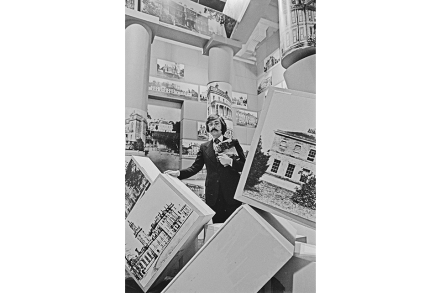
The most angst-ridden sub-category of the very rich – admittedly a lucky bunch to start with – must surely contain those who have inherited a British country house, along with the exhortation to keep it up. Imagine the anxiety of knowing that one is custodian of a large, crumbling pile of distinguished architecture, stuffed with meaningful antiquities and perpetually besieged by damp, dry rot and taxes. For those of us who are already reliably paralysed by small-scale admin, it would be enough to drive you to drink or worse. In contrast, the landed gentry who survive best in this modern terrain must be energetic, ruthless and ingenious; in all probability possessing similar characteristics to those which propelled their ancestors to social prominence in the first place.

Falsifying history can only increase racial tension

From our UK edition

For many years the academic sociologist Frank Furedi has been among the strongest conservative voices in the front line of the culture wars. The target of his latest book is the systematic campaign to discredit the history of the West in the interest of a modern political agenda. The vandalising of statues, the ‘decolonisation’ of institutions and curricula, the recasting of museums and the rearrangement of libraries are all symptoms of something more fundamental. Furedi argues that historical memory is the foundation of western identity and culture. The object of the campaigners is to discredit the West’s ideals and achievements.

Why Britain riots

From our UK edition

33 min listen

This week: The Spectator’s Gus Carter was in Rotherham and Birmingham in the days after the riots. Locals tell Gus that ‘violent disorder isn’t acceptable but people from down south don’t know what it’s like up here’. A retired policeman in Birmingham adds that ‘it’s just yobs looking for an excuse – and yobbos come in all sorts of colours’. You can hear Gus’ report on the podcast. (02:25)  Next: Gus and Lara take us through some of their favourite pieces in the magazine, including Flora Watkins’ notes on ragwort and Isabel Hardman’s review of Swimming Pretty: The Untold Story of Women in Water.

Why Britain riots

From our UK edition

Riotous summers seem to occur in Britain with about the same frequency as sunny ones: roughly every decade. Sometimes it’s Afro-Caribbeans protesting (Brixton in 1981), sometimes Asians (Oldham in 2001). The white working classes rioted over the poll tax in 1990 and in Southport this year. The riot in Harehills, Leeds, last month was precipitated by social services removing children from a Roma couple. Whatever sparks the unrest, what all riots have in common is that they involve mindless destruction. Rioters smash and burn their own communities and opportunists descend, trying to exploit the situation for political ends. Fake news and misinformation abound.

The irrepressible musical gift of Huddie Ledbetter

From our UK edition

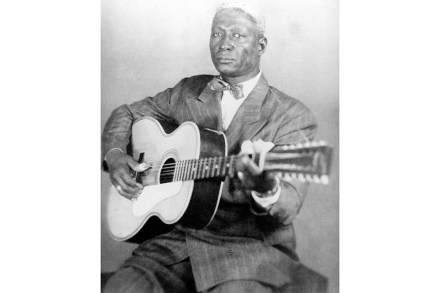
Huddie Ledbetter, better known by the prison moniker Lead Belly, was a musical genius born in the southern United States just as Jim Crow laws were starting to bite. He fell foul of an unapologetically racist legal system and ended up serving on a chain gang in 1915, later doing time in state penitentiaries in Texas (1918-25), Louisiana (1930-34) and at Rikers Island in New York (1939). Sheila Curran Bernard takes as her focus the years 1933 to 1935 when, after years of imprisonment, Ledbetter took an academic, John Lomax, to be his manager and organise his entrance into the larger musical world of northern America.

Is anti-white racism tearing America apart?

From our UK edition

53 min listen

Freddy Gray speaks to Jeremy Carl, Senior Fellow at the Claremont Institute. They discuss his book, The Unprotected Class: how anti-white racism is tearing America apart. They also cover affirmative action, and where America goes from here.  Watch this episode on Spectator TV.