Racism

Why were 80,000 Asians suddenly expelled from Uganda in 1972?

From our UK edition

The mantelpieces of many an Asian family in Leicester and London, it is said, sport two framed photographs. One is of Idi Amin, the African dictator who expelled them from Uganda; the other is of Edward Heath, the prime minister who allowed them in. ‘This double gratitude,’ writes Lucy Fulford, ‘says thanks for throwing us out and thanks for taking us in.’ Asians filled teddy bears with jewellery and baked diamonds into snacks taken aboard their last flights out If the expulsion from ‘the Pearl of Africa’ of 80,000 Asians was the most traumatic experience of their lives, many also retro-actively recognise it as the best thing that ever happened.

Our academics are attacking the whole concept of knowledge

From our UK edition

The first problem about decolonisation is the word itself. Colonisation is the process of establishing control over a foreign territory and its indigenous inhabitants, by settlement, conquest or political manipulation. But decolonisation? It has come to mean much more than the reversal of that process. Today, it refers to an altogether wider agenda, whose central objective is to discredit or downgrade the cultural achievements of the West. Objective truth and empirical investigation are mere western constructs. They are optional ideas which need have no weight beyond the western societies which invented them. But the West has imposed them on the rest of the world by a process akin to the colonial conquests of the past four centuries.

Black Britons betrayed

From our UK edition

In this frustrating book, Tomiwa Owolade sets out to establish that American attempts to identify and deal with issues of race are irrelevant to those of Britain. His basic case is that even if it might exist in America, structural racism based on colour is not found in Britain, and he criticises a significant number of people of colour, on both sides of the Atlantic, who’ve argued that it is. He believes that looking at the lived experience of people should be the starting point; and that the lived experience of black Britons is determined by nationality (and class) more than it is by race. That’s fair.

Why the media despises country music

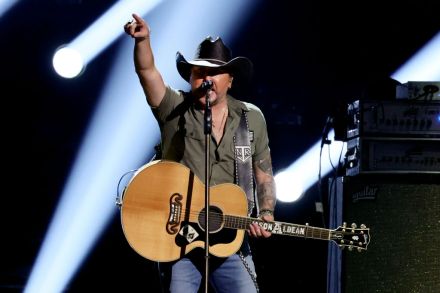
Cuss out a cop, spit in his faceStomp on the flag and light it upYeah, ya think you’re toughWell, try that in a small townSee how far ya make it down the roadAround here, we take care of our own That’s a sampling of the lyrics to “Try That in a Small Town,” the new Jason Aldean single that led left-wing Twitter trolls to try to “cancel” the country music star. Critics claimed the song was racist, particularly because the music video was filmed in front of the Maury County Courthouse in Tennessee (which was the site of a lynching back in 1927) and features news clips of BLM and antifa riots.

Kwame Kwei-Armah’s embarrassing update of Love Thy Neighbour: Beneatha’s Place, at the Young Vic, reviewed

From our UK edition

Beneatha’s Place, set in the 1950s, follows a black couple who encounter racial prejudice when they move to a predominately white suburb. The location is Nigeria but it might as well be the USA because most of the characters, both black and white, are American. (The Young Vic has strong links with America, and a transfer to Broadway may be under discussion.) The script by Kwame Kwei-Armah is inspired by the British sitcom Love Thy Neighbour, which aired five decades ago. This misunderstood show was pretty progressive for the 1970s, and it examined the conflict between two thick white bigots living next door to an intelligent and sophisticated couple from the Caribbean.

Je suis Karen

As I creep into my mid-twenties something is changing. I’m not quite young enough to be carefree, I pay my bills and taxes on time and worry about the noise pollution level in the area I’m looking to move to. I’ve swapped my six-inch heels for practical sneakers, and I tut at teenagers causing a commotion on the subway. All of which led a friend to accuse me of becoming “something of a Karen.” The charge is a serious one these days. You see, Karen is no longer a playful term used to describe your entitled aunt who complains about slow service in a restaurant, flipping her asymmetrical bob in irritation. To call someone a Karen in 2023 is to wade waist-deep into the culture wars. At some point over the last few years, the word became more than a tongue-in-cheek jibe.

karen

American Medical Association: BMIs are… racist?

The American Medical Association just announced its adoption of a head-scratching new policy that seems to be aimed not so much at improving people’s health, but at appearing sensitive and “woke.” The new policy is “aimed at clarifying how body mass index can be used as a measure in medicine.” BMI, apparently, has a “problematic history” because it “does not account for differences across race/ethnic groups, sexes, genders and age-span.” “BMI,” explains the Centers for Disease Control site (for now — they may not be up to “woke” speed just yet), “is a simple, inexpensive and noninvasive surrogate measure of body fat.

The New Yorker: Latinos can be white supremacists, too

The New Yorker has come to the profound revelation that crazy, evil people who carry out heinous crimes hold crazy, evil beliefs to justify their crimes. Such people, the New Yorker has apparently now realized, can be of different races. But no matter what, the most common motivating cause is white supremacy, regardless of the perp's race — and it’s all America’s fault. In his piece on “the rise of Latino white supremacy,” New Yorker columnist Geraldo Cadava writes about how Mauricio Garcia, the mass shooter who killed eight people at a mall in Allen, Texas, before being killed by an off-duty police officer, expressed white-supremacist views in a diary and online — and because of this, “many were shocked that he was Latino.

latinos white supremacy new yorker

The Karens of Uber get their DEI chief suspended

Karens are, to use a leftist term, “problematic.” In use as a pejorative for four or five years now, “Karen” appropriates a common Generation X girl’s name to refer to an entitled middle-aged woman who demands exceptional treatment, undeserved deference and unearned “privilege” to make her way through life or to express power through unwarranted concern for others. Karens are generally believed to be middle-class or slightly above, sport an unsmiling no-nonsense mien and favor a pert bob hairdo that stylists now routinely call the “speak-to-the-manager,” after a request Karens commonly make when they encounter disappointment.

uber bo young lee

The last days of Splash Mountain

Crowds lined up to say au revoir to a Southern California landmark — not Route 66, or the elementary school operating out of the remains of the Ambassador Hotel, where an assassin shot RFK. They were gathering for the month-long funeral of the Disneyland water ride Splash Mountain. Since 1989, visitors have ridden boats up a mountain, past the animatronic Brer Rabbit escaping the briar patch, bumping into Brer Bear and Brer Fox, who kidnap him. As they toss the bunny off a cliff and down a river, the ride’s riverboats fall down the mountain after him. Miraculously, both Brer Rabbit and the log-flume passengers survive. The survival is never explained, but visitors rarely notice because they’re enraptured by the grand finale rendition of “Zip-a-dee-doo-da.

Splash Mountain

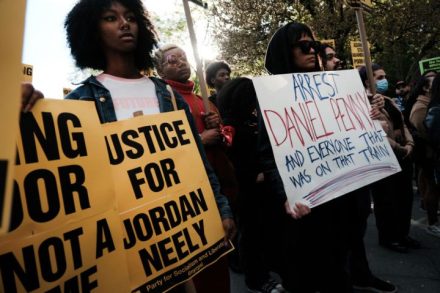
Daniel Penny and the problem with have-a-go heroes

From our UK edition

I have always liked the phrase ‘have-a-go hero’. It sums up a certain type of person who can emerge from nowhere and coat their name with honour. One thinks, for instance, of John Smeaton, the baggage handler who was having a fag outside Glasgow airport in 2007 when two jihadis tried to blow the place up. After a couple of explosions, Smeaton, Alex McIlveen and others ran to find out what was up and, finding one of the terrorists on fire, proceeded to kick the guy in the nuts. Indeed, so hard did McIlveen kick the guy that he himself tore a tendon. But Smeaton, McIlveen and others rightly became folk heroes. Smeaton memorably warned off any future terrorists by telling an interviewer ‘Glasgow doesn’t accept this. This is Glasgow. We’ll set about ye’.

The National Audubon Society considers canceling itself

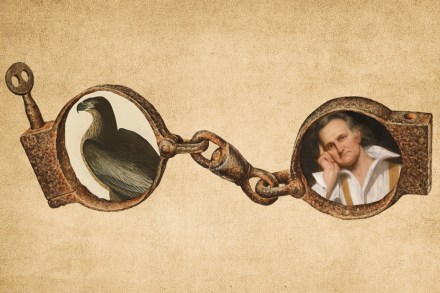
How thoroughly has diversity, equity and inclusion penetrated the sciences? “To the core!” at least if the recent travails of the National Audubon Society are any indication. For over two years, a woke storm has roiled the Society over whether it should purge its namesake, John James Audubon, from its title. After a year-long review, the Society’s Board of Directors recently announced its decision: Audubon’s name will stay. The Society’s CEO, Elizabeth Gray, defended the decision on the sensible grounds that, for whatever his faults, Audubon remains a pivotal figure in the history of science in our once young republic. His legacy includes establishing ornithology as the burgeoning field that it is today, which draws both on professional experts and passionate amateurs.

audubon

Do James Bond’s would-be censors have a point?

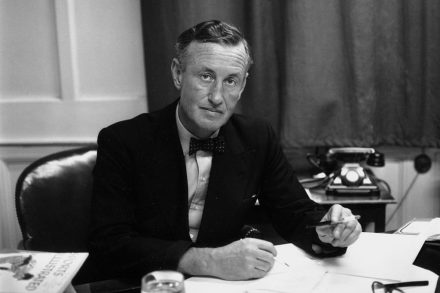
James Bond may have battled the nefarious forces of SMERSH, SPECTRE and other international terror organizations, but surely he has never faced quite so implacable a foe as the sensitivity reader. Following in the footsteps of Roald Dahl, the wholesale revision of whose books led to international outrage, Ian Fleming’s Bond novels, which have been re-released to mark the seventieth anniversary of the first publication of Casino Royale, have undergone their own exercise in alteration. But is it an egregious travesty à la Dahl, or — whisper it — might someone have had an idea arising from nobler motives?

bond

Inside the legal fight for a race-neutral America

Four billion dollars in debt relief for black farmers only. Special stipends for Black, “Latinx” and Native American entrepreneurs. Minority- and women-owned restaurants prioritized for pandemic recovery funds. School admissions policies designed to reduce the number of whites and Asians. Racial preference programs have become ubiquitous in American society. When was the last time you filled out an official form without being asked to disclose your race? In the name of ending racism, we have been divided and labeled according to vague and outdated racial classifications that are then used to benefit certain groups at the expense of others. Is there hope for a more race-neutral America?

race-neutral
white privilege

The trouble with ‘white privilege’

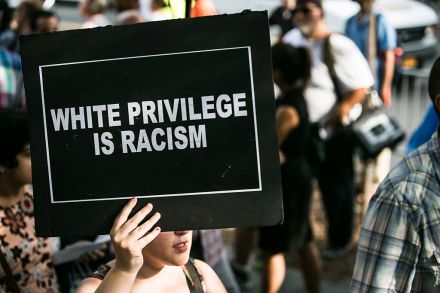
This article is an excerpt from Kenan Malik's new book, Not So Black and White: A History of Race from White Supremacy to Identity Politics. In 1935, while writing his masterpiece Black Reconstruction in America, W.E.B. Du Bois pondered the question of why, in the wake of the Civil War, there had not developed working-class solidarity across racial lines. “The South, after the war,” he observed, “presented the greatest opportunity for a real national labor movement which the nation ever saw or is likely to see for many decades.” Yet, he lamented, “the labor movement, with but few exceptions, never realized the situation.

Ron DeSantis is right to reject the new AP racial grievance course

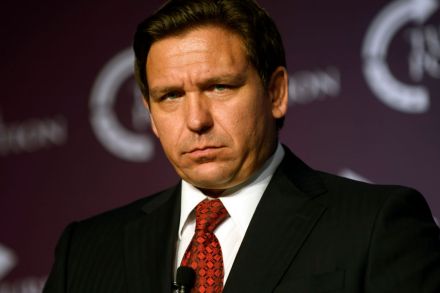
Check the liberal reaction to Florida Governor Ron DeSantis’s January decision to block a new Advanced Placement course on African-American studies in the state’s high schools and you would think the Sunshine State was reinstituting Jim Crow. The Washington Post’s Karen Attiah — always one to jump at the chance to spew rhetorical fireworks when it comes to all things race — accused DeSantis of normalizing “anti-blackness” and “making institutional anti-blackness lawful again.” CNN’s John Blake asserted that DeSantis's move “echoes similar decisions made by fascist dictators,” including Vladimir Putin.

Does your mass shooting suit my worldview?

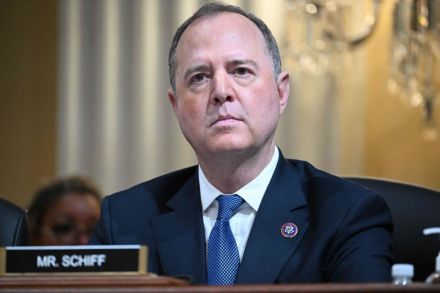
In the wake of Saturday’s horrific shooting at a Lunar New Year celebration in the heavily Asian neighborhood of Monterey Park, California, Democratic lawmakers sprang into action, speculating that the violence may have been racially motivated. Hours later it emerged that the shooter was himself also Asian. The frequency of mass killings in this country is harrowing. But Cockburn finds such tragedies are made all the more gruesome when politicians so often jump ahead of the facts, ascribing motivations or reasons to the violence that are politically beneficial to them or fit their ideological framework. Representative Adam Schiff, for example, pegged “bigotry towards AAPI individuals as a possible motive.

monterey

The Katie Porter scandal everyone is ignoring

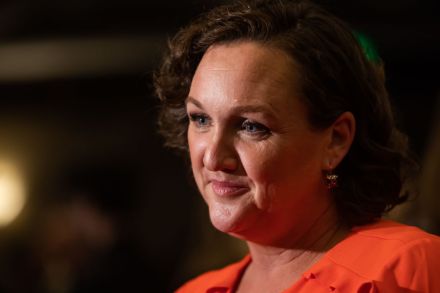
Katie Porter, darling of the liberal media, is having a rough couple of weeks. The California congresswoman has recently been accused of: firing an employee who allegedly gave her Covid; using racist language, and fostering a hostile workplace. These are explosive allegations to be levied against a high-profile Democrat, yet the general public would never have heard of any of them were it not for an anonymous Instagram account that did the job of the entire DC press corps. “Rep. Katie Porter fires staffer after both test positive for COVID,” Dear White Staffers posted last week, sharing Signal messages purporting to be from Porter’s now-former staffer where the congresswoman berated her employee. “Well you gave me Covid,” Porter’s messages read.

katie porter

The alt-right are contrarian phonies

Why is an alt-right pundit all of a sudden best buds with the artist formerly known as Kanye West? Many have found themselves fascinated and revolted over Ye’s strange new career as a high-profile antisemite. Those familiar with the contours of the contemporary right, including the far-right, are not surprised to see white nationalist Nick Fuentes jumping onboard the Ye train. Those unfamiliar with the openly racist online host have been shocked to learn he exists, has some kind of audience, and has formed an alliance of sorts with arguably the most famous black man in America. This all makes sense when you understand how these people think.

Debunking the grievance industry in our schools

City Journal last month released a survey that asked eighteen-to-twenty-year-olds whether they had been taught six concepts related to critical race theory. These included: “America is a systemically racist country,” “White people have white privilege,” “White people have unconscious biases that negatively affect non-white people," “America is built on stolen land,” “America is a patriarchal society,” and “Gender is an identity choice.” Each of these was answered in the affirmative by a majority of participants, of whom more than 80 percent attended public schools. That’s curious given that public educators and their defenders in corporate media have been claiming for years that CRT is not taught in schools.