Racism

The Biden admin is socially engineering your workplace

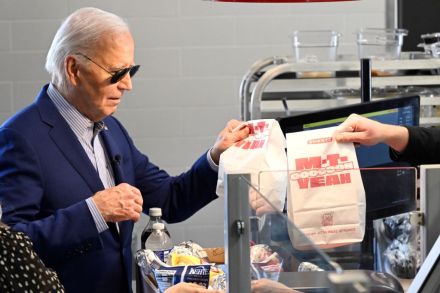
Do you currently enjoy a workplace environment that is free of violent criminals? Is your work bathroom reserved for members of the same sex as you? You might not enjoy those commonsense benefits for much longer. The Biden administration is flexing the bureaucratic state’s muscle to force businesses to comply with its progressive worldview. Last month, the Biden administration’s Equal Employment Opportunity Commission announced that it was suing Sheetz, a popular gas station and convenience store chain in the mid-Atlantic, for alleged racially discriminatory hiring practices. Sheetz is a great American success story. It was opened by Bob Sheetz in 1950 in Altoona, Pennsylvania, and is still owned by the Sheetz family to this day.

Don’t write off Hofesh Shechter – his new work is uniquely haunting

From our UK edition

In 2010, when his thrillingly edgy and angry Political Mother delivered modern dance a winding punch right where it hurt, I had high hopes for Hofesh Shechter. Here was an outsider with the courage to make his own rules and engage dance with real-world issues (he had served a traumatising period in the Israeli army) rather than blindly following the fashionable goddess Pina Bausch down the rabbit hole of postmodern irony. He wasn’t interested in playing games. But success has taken his edge off and what has followed has largely been disappointing. Trapped by a limited choreographic vocabulary, Shechter has repeated himself, relying too hard on the brute effect of mere chaos and failing to find sharper images in which to express his rage and anxieties.

Coleman Hughes on neo-racism, US election, and The View

From our UK edition

47 min listen

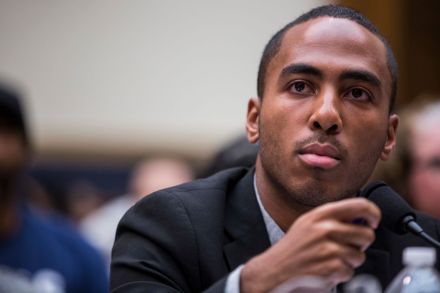
Freddy Gray speaks to writer, podcaster and musician Coleman Hughes. His latest book The End of Race Politics, The: Arguments for a Colorblind America promotes Martin Luther King's teachings for a colourblind society. On the podcast they discuss Coleman's recent appearance on The View; whether Coleman thinks Trump is racist and how the Israel-Gaza war exposed the failings of US universities.

Coleman Hughes’s case for a colorblind future

Claudine Gay would have you believe that her resignation as president of Harvard University was because of her identity. The scandal, in her and her allies’ eyes, was that — as she wrote in a New York Times op-ed — she was “a Black woman selected to lead a storied institution.” Never mind that her allies wouldn’t say the same if black academics they don’t like, like Thomas Sowell or John McWhorter, were involved in a similar scandal; their lens is always a racial one. But the colorblind response would throw all this aside.

hughes

Progressives vs. bigots: How I Won a Nobel Prize, by Julius Taranto, reviewed

From our UK edition

This is the kind of comic novel I greatly admire, because it makes me feel so anxious and wrong-footed. I laughed wholeheartedly until an inner voice chided, in a contradictory fashion, ‘that’s not supposed to be funny’ and ‘can’t you see it’s a joke?’ Given that the book is about that very modern set of dilemmas, my admiration for Julius Taranto’s work is even greater. The novel’s protagonist is Helen, a graduate student, who explains her field in the opening sentence: ‘The Rubin Institute had nothing to do with high-temperature superconductors, so I cannot say I had spent much time thinking about it.’ Her supervisor has been offered a position at the prestigious university, the catch being it is known colloquially as Rape Island.

Being curious about race does not make you racist

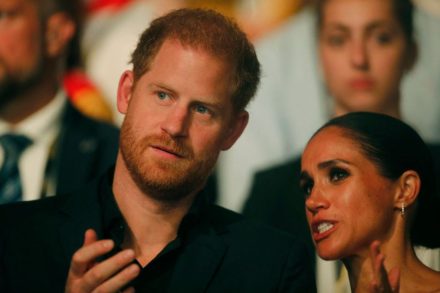
When you exist in a mixed-race family like I do — black dad, white Jewish mom, Asian uncle, Latino ex-husband — race is something that’s hard to escape. We talk about our similarities, explore our differences and consider how the experiences of one generation might be similar or different for the next. Race is somehow always on our tongues. But that doesn’t necessarily make my family racist. Nor does it make the royal family racist either.  Back in March 2021 during Oprah Winfrey’s sit-down with the Duke and Duchess of Sussex, I was horrified by their now infamous exchange over the alleged concern by unnamed Windsors about the skin color of the Sussexes’ first kid. We all know what supposedly went down.

race

Vivek is right: America is devolving into tyranny

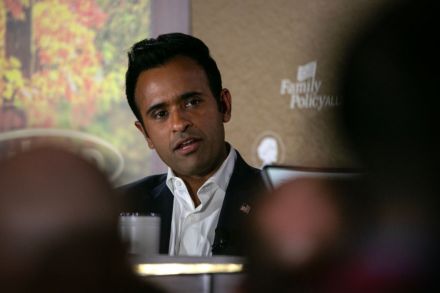
Many commentators (including yours truly) have pointed out that America is divided more now than it has been since the late 1850s and the run up to the Civil War. But as usual, I may have understated the case.  That, anyway, is what Vivek Ramaswamy would say. In a remarkable, just-published interview with Tom Klingenstein, Ramaswamy several time insists that we are not in a pre-war situation. It’s worse than that. “We are,” he insists, “absolutely in a war with the fate of the country at stake.” Hyperbolic? I don’t think so. The war, he acknowledges, could and likely will get worse. But we can already see the troops deployed and the battle lines drawn.

vivek ramaswamy

Cancel culture comes for two new victims

A couple of weeks ago my husband and I plopped on the couch for a quiet evening in and turned on the new Netflix comedy special Natural Selection by Matt Rife. We were both vaguely aware of Rife because he’s posted some videos of his crowd work that have gone viral on social media. Young women in particular seem to like him because he can be quite charming on stage and will openly flirt with female audience members (Gen Z would describe Rife’s charisma as “rizz,” I think). The set was fine but not super memorable, so I was caught by surprise when I recently saw an article on BuzzFeed explaining that Rife’s fans were furious with him over a joke he made regarding domestic violence.

Why does the left hate white women?

All of my ladies out there who read this newsletter are probably familiar with the food blog “Half Baked Harvest.” Tieghan Gerard, the thirty-year-old founder and owner of the blog, has posted a cozy and delicious recipe nearly every single day since 2012, inspiring women everywhere to dust off their crockpots and grease their baking pans. Fellas, if the woman in your life suddenly decided to try her hand at pumpkin cinnamon rolls or made white chicken chili for game day, there’s a good chance she snagged the recipe from Half Baked Harvest. Gerard has millions of loyal followers and naturally this has led to criticism from bitter, jealous losers. The New York Times recently managed to snag an interview with Gerard (no, Tieghan, run!

white women nyt

Prejudice in Pennsylvania: The Heaven & Earth Grocery Store, by James McBride, reviewed

From our UK edition

If chicken soup is balm for the soul, then James McBride’s eighth book, set in 1930s Chicken Hill, a neighbourhood in a small town in Pennsylvania that is home to Jewish, black and other immigrant people, is its literary equivalent. There is something nourishing about The Heaven & Earth Grocery Store, a warm story about the power of community in the face of prejudice that both salutes the American dream while exposing it as a sham. Like much of McBride’s previous work, which includes four other novels, a biography of James Brown and his 1996 memoir, A Black Man’s Tribute to His White Mother, about his Jewish mother, Ruth, The Heaven & Earth Grocery Store tackles race and religion via the prism of McBride’s own family’s history.

What lies behind the obsession with race transforming universities?

The first problem about decolonization is the word itself. Colonization is the process of establishing control over a foreign territory and its indigenous inhabitants, by settlement, conquest or political manipulation. But decolonization? It has come to mean much more than the reversal of that process. Today, it refers to an altogether wider agenda, whose central objective is to discredit or downgrade the cultural achievements of the West. Objective truth and empirical investigation are mere western constructs. They are optional ideas which need have no weight beyond the western societies which invented them. But the West has imposed them on the rest of the world by a process akin to the colonial conquests of the past four centuries.

decolonization

The shrinking lifespan of the college president

Twenty-five years ago I published an essay titled “Dogfish.” It was not about the little sharks that skim along the bottom of the Atlantic and Pacific coasts and only rarely end up on the American dinner table. It was rather a fanciful way to draw attention to the brevity of the average tenure of the college president. Back then the average president served 6.7 years. The spotted dogfish, by contrast, was believed to live almost three times as long. A lot has changed in the intervening quarter century. For one thing, it is now believed that the natural lifespan of the dogfish is thirty-five to forty years, though some say eighty.  Meanwhile the average term of a college president has shrunk to 5.9 years.

college president

The sorry state of Supreme

It would have happened on a Thursday, as it does every Thursday. Crowds of young men and teen boys would have lined up outside stores around the globe, in hopes of buying the latest drop from Supreme — the pugnacious streetwear brand which rose from New York skater shop to global multibillion-dollar fashion colossus and sold to fashion conglomerate VF Corporation for $2.1 billion in December 2020. Even if you don’t care about skating or streetwear, you would instantly recognize a white T-shirt slapped with their logo; a red box, with “Supreme” in Futura Heavy Oblique font inside. Celebrities love Supreme, the stylish (Hailey Bieber, A$AP Rocky, Kanye West) and the stylish-wannabes (Justin Bieber, Travis Scott, Jaden Smith).

supreme

Melissa Kite, Nigel Biggar and Matt Ridley

From our UK edition

24 min listen

This week Melissa Kite mourns the Warwickshire countryside of her childhood, ripped up and torn apart for HS2, and describes how people like her parents have been treated by the doomed project (01:15), Nigel Biggar attempts to explain the thinking behind those who insist on calling Britain a racist country, even though the evidence says otherwise (06:38) and Matt Ridley enters a fool’s paradise where he warns against being so open-minded, that you risk your brain falling out (13:01). Produced and presented by Linden Kemkaran.

Kendi gonna Kendi

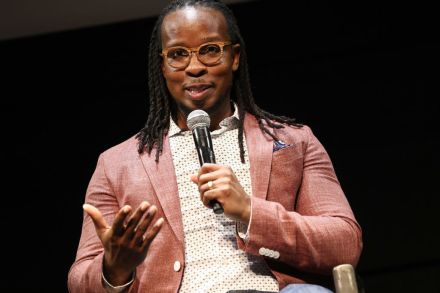
Ibram X. Kendi has done as he promised. In 2020, freshly anointed as the director of Boston University’s new Center for Antiracist Research (CAR), Kendi announced his intention to “transform how racial research is done.” Previously, “research” had been understood to involve collecting data, analyzing trends and gathering new insights through the careful application of sustained thought. But these expectations were hallmarks of white supremacy. This week, as allegations of wanton mismanagement emerge from Kendi’s staff, it appears that what it means to do “racial research” has indeed been transformed: it now entails taking vast sums of other people’s money, then using it to produce almost nothing. And in this, Kendi is an expert.

Hasan Minhaj’s race-filled fantasies

With all the focus on Russell Brand, it’s easy to forget that another comedian made headlines — for all the wrong reasons — last week. Two days before the world came crashing down on Brand, the New Yorker’s Clare Malone wrote a devastating piece on Hasan Minhaj.  Minhaj, according to the brilliant expose, has a history of fabricating narratives. What’s particularly disturbing is that his tall tales all appear to have a unifying theme: race. More specifically, racism directed towards him, an Asian American and Muslim American, and his loved ones. Much of the New Yorker piece focuses on Minhaj’s 2022 Netflix standup special, The King’s Jester, which was marketed as a biographical account of his formative years.

Why were 80,000 Asians suddenly expelled from Uganda in 1972?

From our UK edition

The mantelpieces of many an Asian family in Leicester and London, it is said, sport two framed photographs. One is of Idi Amin, the African dictator who expelled them from Uganda; the other is of Edward Heath, the prime minister who allowed them in. ‘This double gratitude,’ writes Lucy Fulford, ‘says thanks for throwing us out and thanks for taking us in.’ Asians filled teddy bears with jewellery and baked diamonds into snacks taken aboard their last flights out If the expulsion from ‘the Pearl of Africa’ of 80,000 Asians was the most traumatic experience of their lives, many also retro-actively recognise it as the best thing that ever happened.

Our academics are attacking the whole concept of knowledge

From our UK edition

The first problem about decolonisation is the word itself. Colonisation is the process of establishing control over a foreign territory and its indigenous inhabitants, by settlement, conquest or political manipulation. But decolonisation? It has come to mean much more than the reversal of that process. Today, it refers to an altogether wider agenda, whose central objective is to discredit or downgrade the cultural achievements of the West. Objective truth and empirical investigation are mere western constructs. They are optional ideas which need have no weight beyond the western societies which invented them. But the West has imposed them on the rest of the world by a process akin to the colonial conquests of the past four centuries.

Black Britons betrayed

From our UK edition

In this frustrating book, Tomiwa Owolade sets out to establish that American attempts to identify and deal with issues of race are irrelevant to those of Britain. His basic case is that even if it might exist in America, structural racism based on colour is not found in Britain, and he criticises a significant number of people of colour, on both sides of the Atlantic, who’ve argued that it is. He believes that looking at the lived experience of people should be the starting point; and that the lived experience of black Britons is determined by nationality (and class) more than it is by race. That’s fair.

Why the media despises country music

Cuss out a cop, spit in his faceStomp on the flag and light it upYeah, ya think you’re toughWell, try that in a small townSee how far ya make it down the roadAround here, we take care of our own That’s a sampling of the lyrics to “Try That in a Small Town,” the new Jason Aldean single that led left-wing Twitter trolls to try to “cancel” the country music star. Critics claimed the song was racist, particularly because the music video was filmed in front of the Maury County Courthouse in Tennessee (which was the site of a lynching back in 1927) and features news clips of BLM and antifa riots.