Press

Now that everyone’s a journalist, anyone can be sued

From our UK edition

Trying to count posts on the web is like trying to number grains of sand on a beach. In June 2012, a data management company called Domo attempted the fool’s errand nevertheless. It calculated that, every minute, the then 2.1 billion users uploaded 48 hours of YouTube video, shared 684,478 pieces of content on Facebook, published 27,778 new posts on Tumblr and sent about 100,000 tweets. Its figures were not exhaustive and they were out of date in an instant, but for a moment they captured the explosion of self-expression the net has brought.
Spectator letters: Press regulation, heroic Bulgarians and the case for Scotch on the rocks

From our UK edition

Beyond the law Sir: In your leading article of 28 June you make the point that the hacking trial demonstrates why political oversight of press regulation, not press regulation by politicians, would be an unnecessary ‘draconian step’ because ‘hacking is already against the law’. Later you compare the illegal but honourable behaviour of Andy Coulson with that of Damian McBride, who ‘broke no law but behaved criminally’. In doing so you weaken the earlier argument. Regulation of the press should not solely be focused on illegal activity; rather it is to ensure that the press does not behave in a way analogous to that you criticise McBride for.

Baghdad notebook: “Things were better in Saddam’s time”

From our UK edition

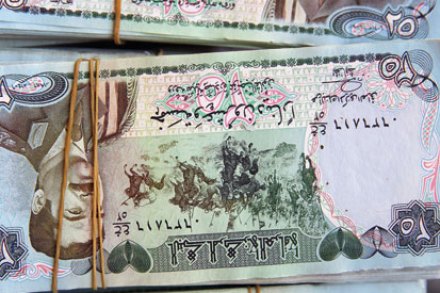
In the passport queue at Baghdad airport, my heart sinks. This place vies with Cairo for the title of most venal airport in the Middle East. Our luggage is minutely examined by the Mukhabarat, or secret police, then customs. Early morning becomes mid-afternoon. Our papers (scrupulously in order) lie unattended on a desk. Eventually, a customs man, with a large moustache and belly hanging over his belt, waddles over. ‘We cannot stamp these today,’ he says. ‘We will have lunch now, and then we will sleep. Come back tomorrow. Or the next day.’ Our bags are moved into a room piled high with luggage seized from other TV crews: flak jackets, lights, someone’s camera and editing gear. ‘How much?’ asks our fixer, wearily.

At the Chiltern Firehouse, smugness should be on the menu

From our UK edition

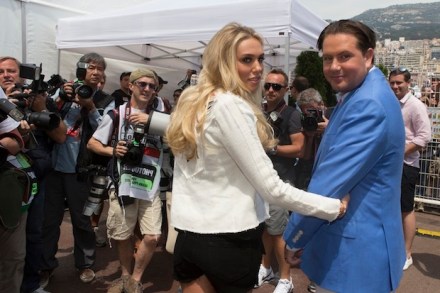
Here then is Gatsby’s house, after an invasion by the Daily Mail. It is called the Chiltern Firehouse. It is a restaurant in a newly opened hotel in a Victorian Gothic former fire station in Marylebone, a proud and grimy district in total denial about its shocking levels of air pollution. The building has a fairytale intensity, with red brick turrets; it is a Roald Dahl prison repointed to its extremities by the man who made the Chateau Marmont in LA. The chef is Nuno Mendes, formerly of Viajante. But what else? Ah — now we are sucked into a wind tunnel of paps and buzz; like so much nonsense, this is media-led, the media having so little to do that they must write about the Chiltern Firehouse. In this, I am complicit.

Ed Miliband’s problem isn’t his image. It’s us

From our UK edition

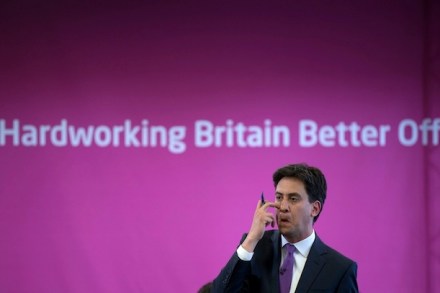
[audioplayer src="http://traffic.libsyn.com/spectator/TheViewFrom22_26_June_2014_v4.mp3" title="Fraser Nelson and Isabel Hardman discuss whether Labour should let Miliband be Miliband" startat=934] Listen [/audioplayer]That bacon bap earlier this month was not the cause of Ed Miliband’s unpopularity. Ed Miliband’s unpopularity was the cause of the bacon bap. Scant comfort this will give the Labour leader and his fabled ‘advisers’, but they can stop worrying about food-related photographic gaffes because once the world is out to get you, the world will get you, and if they don’t get you one way they’ll get you another. Sooner or later Mr Miliband will have to eat, and sooner or later a shutter will click as he opens his mouth.

Since when has Steve Coogan stood against censorship?

From our UK edition

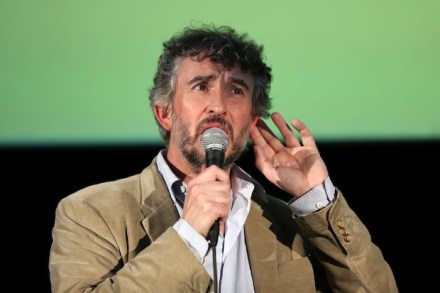
[audioplayer src="http://traffic.libsyn.com/spectator/TheViewFrom22_19_June_2014.mp3" title="Paul Staines from Guido Fawkes and Evan Harris of Hacked Off debating Steve Coogan's involvement with Index" startat=1508] Listen [/audioplayer]I have looked everywhere. I have Googled, and asked around. But I can find no evidence that Steve Coogan has ever taken the trouble to defend freedom of speech at home or abroad. I promised myself I would never again mock ‘luvvies’ in politics after I saw Tim Minchin, Dave Gorman, Robin Ince and Dara Ó Briain give up their time to help Index on Censorship’s campaign against Britain’s repressive libel laws. Steve Coogan did not stand alongside them.

Peter McKay’s diary: Is Kate and William’s Scottish trip a pro-union initiative?

From our UK edition

Having dampened local republican ardour during their recent tour of New Zealand and Australia, the Duke and Duchess of Cambridge visit thinking-about-breaking-away Scotland next week. They’ll tour Glenturret Distillery near Crieff, Perthshire, next Thursday, to ‘bottle their own Glenturret whisky’, if you please. Sounds like a pro-union royal initiative, but what will First Minister Alex Salmond have to say? He claims he’d like the Queen to continue as Scotland’s head of state, although some of his supporters disagree.

Sajid Javid’s first move as Culture Secretary has been to defend press freedom.

From our UK edition

When Maria Miller was Culture Secretary, her aides kindly invited me to a consultation to give my thoughts about government's involvement in press regulation. I declined, saying that there should be no involvement at all so there was not much to discuss. It seems that her successor agrees. In an interview with The Times, his first since being appointed to the Cabinet, Sajid Javid has drawn a line under this sorry and deeply illiberal chapter in our country's history.  This is his first serious move since taking the job as Culture, Media & Sport Secretary, and it's very welcome. He tells The Times: 'The press is hugely important and freedom of speech is a cornerstone of our democracy. I’m proud of the press . . .

Tory MPs turn on Maria Miller – and Dave

From our UK edition

Maria Miller is losing friends, fast. Furious briefing over the last 24 hours has seen a host of Tory MPs withdraw their support for the embattled Culture Secretary - and question the judgment of the Prime Minister. One ‘senior minister, speaking on condition of anonymity’, twisted the knife in the Telegraph: ‘In my view she has clearly behaved in a way that is incompatible with what she should be doing as a Cabinet minister. The decision to keep her on undermines the Prime Minister because he has talked about a new kind of politics.’ That outburst was followed by another Tory MP, who told the Evening Standard: ‘It’s ghastly, it’s just making us look all the same. It is setting back the reputation of parliament and MPs.

Spectator letters: Bereaved parents against press regulation, and a defence of Tony Benn

From our UK edition

Why we need a free press Sir: As bereaved parents and (to borrow from some signatories of last week’s advertisement) victims of public authority abuse we wholly oppose adoption of the politically endorsed Royal Charter of Press Regulation. The European Court of Human Rights ruled that Christopher, our mentally ill son, had been denied his right to life as a result of failures by the prison service, the police and the NHS. Our experience was that, in the aftermath of our son’s death, the primary objective of the public authorities involved was to protect themselves from criticism because of those failures rather than to achieve justice for our son.

When is a scandal not a scandal?

From our UK edition

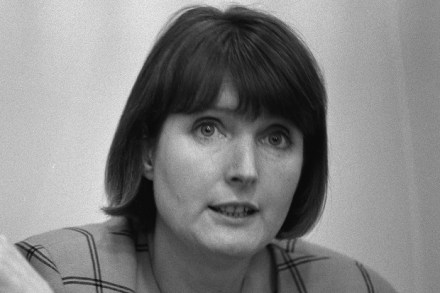
When it involves metropolitan left-wingers, says the Daily Mail. For a week, it has been exposing how Harriet Harman and Patricia Hewitt – or “Hat and Pat” as the London left of the early 1980s knew them – committed the National Council for Civil Liberties to the cause of helping the Paedophile Information Exchange. The Mail showed that while at the NCCL (now Liberty) * Hewitt described PIE in glowing terms as ‘a campaigning/counselling group for adults attracted to children’; * The NCCL lobbied Parliament for the age of sexual consent to be cut to ten – if the child consented and ‘understood the nature of the act’.

Writers tend to the Left because they have imagination, not compassion

From our UK edition

I apologise for writing a blogpost about a tweet, which can look a bit like over-analysis, but I was intrigued by a couple of things that writer Graham Linehan wrote last week. Writers tend to the left because writers tend to have compassion. The nasty party has none so the BBC will never be just right for them. — Graham Linehan (@Glinner) February 7, 2014   Also, reality has a left-wing bias, and writers tend to deal with the real world. — Graham Linehan (@Glinner) February 7, 2014   He was responding to some complaints about bias on the BBC, and as Linehan has written some brilliant television comedy, his opinion is listened to.

Imagine the uproar if a Tory minister proposed a “do-it-yourself” NHS?

From our UK edition

Consider these two stories. In the first the government approves new proposals to overhaul hospital outpatient care. For once there isn't even much of a pretence that this will improve healthcare. It's simply a question of saving money. Assuming the new proposals are implemented, many outpatients who had hitherto enjoyed (or endured) hospital appointments will be told to stay at home. Indeed they will be advised to "treat themselves". What contact they have with a consultant will be of the "virtual" kind. Perhaps a quick telephone call if they are lucky. More likely, they will be told to download an app to their phone which will tell them how to manage their condition or affliction. In other words, a DIY NHS. Or, if you prefer, some real privatisation.

How the MPs’ expenses scandal proved the wisdom of Alain de Botton

From our UK edition

Whenever I’m tempted to pretend to be nicer so that fewer people hate me, I remember my old friend Alain de Botton. Alain is a genuinely delightful fellow — charming, considerate, wise, modest — but this has made no difference to the degree with which, in some quarters, he remains intensely loathed. This saddens me. There are certainly occasions when I find his utopianism naive, twee, mockable. And, yes, I suppose it’s easy to be jealous of a handsome man with a beautiful wife and a comfortable life which seems to involve nothing harder than pondering philosophically, writing bestsellers and being on TV a lot.

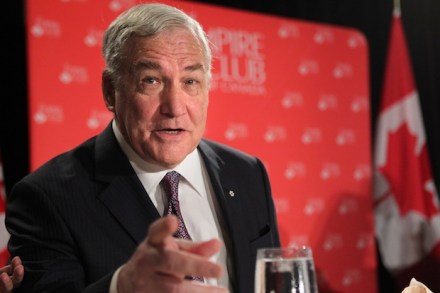
Conrad Black’s diary: Why I won’t join the campaign against Rob Ford

From our UK edition

When visiting Britain and Australia last November, I discovered that the mayor of Toronto, Robert Ford, is now the world’s best-known Canadian. He has acknowledged the occasional use of cocaine and, overall, the response to his foibles has been welcome. The world has been astounded to learn that not all English-speaking Canadians are whey-faced, monosyllabic Americans-on-Prozac. They might also learn that the contiguous metropolitan area of Toronto — now home to about seven million — has a very high standard of living and a low crime rate and is one of the world’s more impressive modern cities. The mayor is an ample and florid man who describes himself as ‘350 pounds of fun’, but he departed from Canadian tradition with his candour.

Being assaulted nearly put me on trial

From our UK edition

Way back in the late 1990s, I spent a lot of time in court. What happened, see, was that in the wee small hours of a drunken Edinburgh morning, my friend Jonny and I took a shortcut home through the disused railway tunnel that runs under Holyrood Park. I’d been through it many times, being enraptured with the magic of abandoned urban spaces and, perhaps more to the point, stupid, but never before had it contained a gang of pissed-up youths on a rampage. This time it did, and they put us in hospital. Various arrests followed pretty swiftly.

How we beat Napoleon

From our UK edition

It feels the height of ingratitude to blame Jane Austen for anything, but it probably is her fault that most people seem to think that the only impact that the Napoleonic War had on British life was to bring Mr Wickham and the militia into the lives of the Bennet girls.

The new press Royal Charter must be ignored

From our UK edition

The foxes have voted, and after careful deliberation concluded that they should be in charge of the chicken coop. No one should be surprised by the outcome of tonight's Privy Council meeting: a group of politicians, masquerading as the voice of crown, has just approved a Royal Charter which gives them power to set the terms under which the press operates in Britain. The decision was taken in secrecy and the newspapers are suing. It's a royal mess, but one with a very clear solution. This new Royal Charter does not force newspapers to join. It's a bizarre new club, looking for members. It must now be ignored.

British journalists lock each other up and throw away the key

From our UK edition

In the past few days, my colleagues on the Guardian have been publishing stories of national and international significance – indeed, if truth be told, they have been publishing them for most of the autumn. The international scoop was that America’s National Security Agency tapped Angela Merkel’s mobile phone (along with the phones of many more world leaders). As the shock of the revelation has sunk in, most observers have grasped that the shrug-of-the-shoulder explanation that 'spies spy', doesn’t really work in this instance. Spies in democratic countries are meant to be under democratic control. Elected politicians have few problems authorising surveillance on their country’s enemies.

Press Freedom: The state goes for everyone (and you have no right to be surprised)

From our UK edition

Britain's journalists ought to be asking themselves an unfamiliar question: what is the point of my life? If they have any knowledge of history, they ought to know that they are the custodians of a tradition of press freedom, which began with John Milton and the “Independents” who opposed both Charles I and the Presbyterian theocrats of the 1640s. The point of having freedom is to hang on to it. Although you would never guess that from imbecilic games the British media plays. Before I go further, I must acknowledge that you only have to say “press freedom” to see sneers appear on the wolfish lips of the media academics, who provide what intellectual backing the movement towards a state-supervised media possess. 'What does it mean?' they ask.