Press

What the papers say: Labour’s ‘thunderous hypocrisy’ on press regulation

From our UK edition

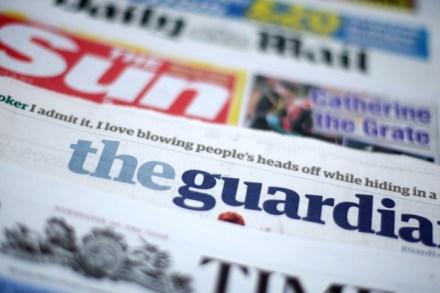
Press regulation - something of a political hot potato - is top of the agenda once again after Culture Secretary Karen Bradley announced the government was considering ditching plans for a follow-up Leveson inquiry. It's no surprise that this morning's newspapers have (almost all) welcomed the news. The Sun says David Cameron left behind a press regulation 'dog's dinner' for Theresa May. But the paper praises the efforts of the government to try and clear it up. It says Bradley's announcement of a consultation on Leveson 2 is an ideal opportunity for the media to make its voice heard and put forward the case against state interference.
The Spectator’s Notes | 11 August 2016

From our UK edition

Those who want to revive grammar schools are accused of ‘bring backery’ — the unthinking idea that the past was better. But many of their accusers suffer from the rigid mindset of which they complain. They say that grammar schools ‘condemned most children to failure at the age of 11’, and that, even at their peak, grammars catered for less than 20 per cent of the school population. Why assume that the return of grammars must re-create either of these things? Grammar schools grew up, historically, in different ways and at different times. Then, in the mid‑20th-century mania for uniformity, they were standardised and, in the later 20th-century mania for comprehensives, almost completely abolished.

Thank God for Sir Philip Green, the perfect modern hate figure

From our UK edition

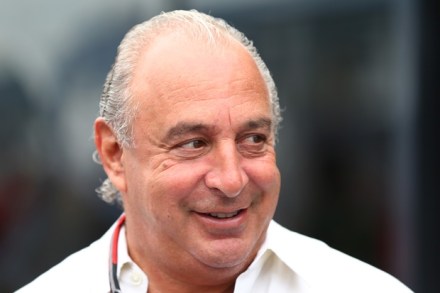
Good old Sir Philip Green. Where would we be without him? So often, those national hate figures let you down. That lady who put a cat in a bin in 2010, for example. Bit of a tragic loony, in the end. Likewise Tony Blair. Not this one. His diamond has no flaw, and we can all join in. He’s perfectly awful in every way. He looks the part, too. Rich-guy hair, of the sort most rich guys don’t deign to have any more. Nonexistent at the front, lacquered and far too long at the back. Brilliant. Clothes that don’t quite fit, because he clearly pays a stylist to tell him they do. Graydon Carter’s description of Donald Trump — ‘short-fingered vulgarian’ — fits him like, well, a glove. There is snobbery in the debasement of Sir Philip.

Bear baiting

From our UK edition

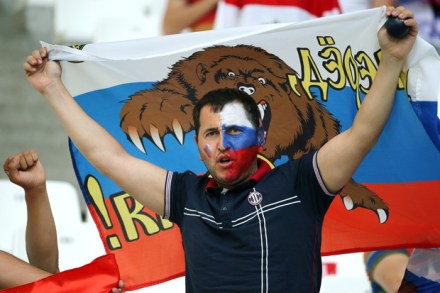
Oh those Russians. When they’re not beating up English football fans, they’re cheating at the Olympics. They occupy other countries and shoot down civilian airliners, then pretend it wasn’t them. They’re helping Assad win the Syrian civil war. They’re even driving up London house prices. There’s no infamy, apparently, of which Russians are not guilty. ‘OK — we did do all those things,’ admits a Moscow broadcaster friend, a little sheepishly. ‘But everyone else does them too! We’re the only ones to get punished, because everyone hates us.’ Since the annexation of Crimea in 2014, Russians have become the world’s official pariahs.

Fit to print

From our UK edition

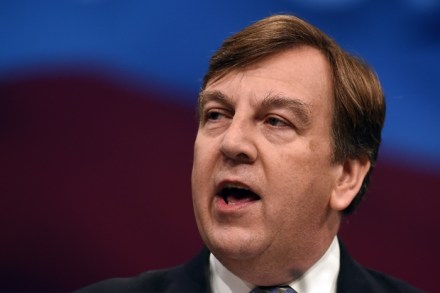
For weeks, Westminster has been full of rumours about the private life of a certain cabinet member. It was said he had started to visit a dominatrix in Earl’s Court but ended up falling in love with her and taking her to official functions. Like a Westminster remake of the film Pretty Woman, in fact, but with the Culture Secretary, John Whitting-dale, playing the part of Richard Gere. There was much comment in Parliament about this, and jokes about what London is coming to if an MP has to travel all the way to Earl’s Court for such services, when they used to be available a stone’s throw away from the Commons. And on it went. The story did not appear in the press for a simple reason: it was, in most part, an invention.

Cultivating the fourth estate

From our UK edition

Lord Palmerston is remembered today not for his foreign policy nor for his octogenarian philandering, but for his management of the press. He was the first prime minister to grasp that dealing with journalists was all about pragmatic negotiation and buttering people up. The deal between Palmerston and the newspapers was: ‘I’ll tell you something no one knows if you give me your support and a favourable report.’ It still works like that today. Most historians assume that Palmerston was the only Victorian prime minister to cultivate the fourth estate. Balfour loftily boasted that he never read the newspapers. But this was an affectation. As Paul Brighton shows in this new study, 19th-century prime ministers all had contacts with the press.

The Spectator’s Notes | 19 November 2015

From our UK edition

When Jeremy Corbyn says it is better to bring people to trial than to shoot them, he is right. So one might feel a little sorry for him as the critics attack his reaction to the Paris events. But in fact the critics are correct, for the wrong reason. It is not Mr Corbyn’s concern for restraint and due process which are the problem. It is the question of where his sympathies really lie, of what story he thinks all these things tell. Every single time that a terrorist act is committed (unless, of course, it be a right-wing one, like that of Anders Breivik), Mr Corbyn locates the ill as deriving from the behaviour of the West, especially the United States and Britain (and, where relevant, Israel).

Lord Leveson’s legacy could be the death of investigative journalism

From our UK edition

Later this year, or more probably in the spring of 2016, the following scene may play out on the steps of the High Court in London. An editor will appear before the cameras and say: 'I am instructing my reporters stop investigative journalism until the law is changed.' The naïve who have failed to educate themselves on the assault on press freedom in Britain will be more confused than outraged. How can this be, they will ask. They will be enlightened by the editor of – well, let’s say it’s my editor here at The Spectator, but it could just as easily be the editor of the Guardian, Observer, Private Eye or any other national or local newspaper or magazine. The court had vindicated the paper, he or she will explain.

Denmark’s free speech conference kept the spirit of Charlie Hebdo alive

From our UK edition

This has been a terrible year for free speech. In January, after the atrocities in Paris, the whole world was ‘Charlie’, for about an hour.  Then the violence and intimidation did the job they usually do (though we like to pretend otherwise) and by July even Charlie wasn’t Charlie anymore. So I was delighted earlier this year when the Free Press Society of Denmark asked me if I would be willing to come to Copenhagen this September to take part in a conference to commemorate the 10th anniversary of the original ‘cartoon crisis’.  I have spoken for this excellent group of doughty Danes before, and they have certainly shown more courage than the rest of the European media class combined.  Not that they don’t pay a price for their bravery.

The problem with Corbyn’s hatred of the media

From our UK edition

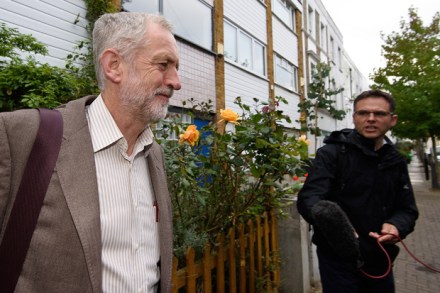
The new leader walks across a bridge, in the dark, while the journalist asks him questions. He’s not shouting, this journalist; not like Michael Crick would be, all smug of face while shrieking ‘Isn’t it true you’re a terrible dickhead?’ None of that. Even so, the leader says not a word. He stares ahead, face stony, furious and fixed. Clip-clop go his feet. For two minutes. There’s a video. For two actual minutes. WATCH: This is what happened when I tried to ask #Corbyn about shadow cabinet. He accuses me of "bothering" him. pic.twitter.com/uyqQdwXYu3 — Darren McCaffrey (@DMcCaffreySKY) September 14, 2015 This was Jeremy Corbyn, being trailed across Westminster Bridge by Sky News in the small hours of Monday morning.

Press night

From our UK edition

Sam Mendes once said there is no such thing as the history of British theatre, only the history of British press nights. That observation takes us closer to understanding the taboo that constrains journalists from reviewing the opening performance of a West End play. A dozen or so previews take place before the critics are invited in for a star-studded gala, or ‘press night’, which is fixed by the producer to make the show appear in its most seductive light. Newspapers are usually wary of censorship in any form, so their assent to this convention must be considered a great anomaly. The vanity of the lead actor is a significant element. A first night is usually full of hazards and mishaps as the cast acquaint themselves with the props, costumes, door-handles and so on.

Pedant’s revolt

From our UK edition

It used to be that the most annoying thing in academic life was political correctness. But a new irritant now threatens to supplant it: the scourge of correct politicalness. The essence of correct politicalness is to seek to undermine an irrefutable argument by claiming loudly and repetitively to have found an error in it. As with political correctness, which seeks to undermine arguments by declaring the person making them a bigot, correct politicalness originated in the US. But it now has its exponents here, too. Foremost among them is Jonathan Portes. Portes’s career recalls that of the character Kenneth Widmerpool in Anthony Powell’s Dance to the Music of Time.

This is Leveson’s legacy: a great new way for bullies to muzzle the press

From our UK edition

One of the fundamental principles of English common law is that you are innocent until proven guilty. And rightly so, for imagine how unfair it would be if any old loon with an axe to grind had only to lodge a trumped-up complaint with the relevant authorities in order to have you punished for no reason whatsoever. Actually, though, this cruel and capricious system exists in Britain.

Diary – 28 May 2015

From our UK edition

Martin Williams, former head of the government’s air quality science unit, has declared that the reason we have a problem with air pollution now is that ‘policy has been focused on climate change, and reducing CO2 emissions, to the exclusion of much else, for most of the past two decades. Diesel was seen as a good thing because it produces less CO2, so we gave people incentives to buy diesel cars.’ Yet another example of how the global warming obsession has been bad for the environment — like subsidising biofuels, which encourage cutting down rainforests; or windfarms, which kill eagles and spoil landscapes; or denying coal-fired electricity to Africa, where millions die each year from the effects of cooking over smoky wood fires. Greens are too hard on coal.

Washington Notebook | 7 May 2015

From our UK edition

This week has been all about the election, the US presidential election that is. It is 18 months away but already the race is sending out sparks and popping like a newly lit fire. On the one hand, there’s Hillary. She takes a trip by van across ‘the real America’ — a near-faultless launch of her campaign, everyone agrees, until she eats a meal in a fast food restaurant and forgets to tip. Then there’s the Republican field, heading for a dozen strong, but perhaps ending up whittled down to just Jeb Bush. This state of affairs caused one frustrated challenger to complain: ‘The presidency of the United States is not some crown to be passed between two families.’ The winner will spend around $2.5 billion getting elected.

It’s not Netanyahu’s fault that Jews in Europe are afraid

From our UK edition

Have you seen the prices for houses in Israel? Astronomical, mate. You wouldn’t believe it. An arid and perpetually embattled country which everyone has recently decided to hate, and with a bloody great big wall topped with razor wire running through the middle of it — I’d have expected the cost of a nice four-bed would be comparable to what you’d pay in Rwanda, say, or Myanmar. Not a chance. Down south, in Eilat, it’s millions and millions and millions of quid, just to be oven-basted by the extremist sun and then eaten by a shark. It’s not much better in the nicer parts of Tel Aviv, either, such as Jaffa — more than a million pounds for 150 square metres of living space, without a view of the torpid Med.

It’s rich of Cameron to joke about press conferences

From our UK edition

There were very few smiles at Downing Street this afternoon as a mustard clad Angela Merkel spoke of a 'moving moment'. Yet that steely resolve had to crack eventually and with the final question at her joint press conference with David Cameron, the German Chancellor's perma-frown turned into an impish grin for just a split second. Scolding ITV's Tom Bradby, Mrs Merkel announced that she 'never answered speculative questions' and she certainly would not be starting today, danke very much. 'I think the policy of not answering speculative questions will make all press conferences much shorter in the future', piped up David Cameron, seeing a chance to wrap things up. 'Another excellent German invention'.

The Spectator at war: Preachers of sedition

From our UK edition

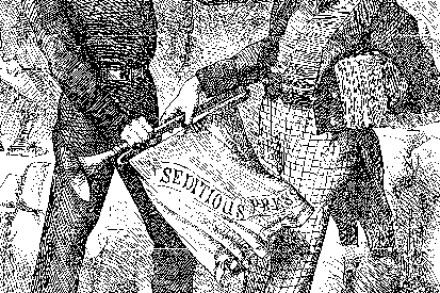
From The Spectator, 28 November 1914: If the press is to be muzzled, why do not the muzzling laws hold good in Ireland? It is against all common-sense to place Ireland in a privileged position — to give roving licences to any Irishmen who care to kill recruiting. Men have been arrested in England for spreading foolish false reports, which were not very much worse than the gossip of idiots. Why have the deliberate, callous preachers of sedition been allowed for so long to go untouched in Ireland?

Aristophanes on Mazher Mahmood

From our UK edition

Undercover journalist Mazher Mahmood, otherwise known as the Fake Sheikh, has been accused of dodgy dealing in luring the innocent to commit ‘crimes’ which he has then exposed to the press. The Athenians knew all about his sort. They called such people sukophantai (pl.), our ‘sycophants’, though the derivation of the word remains obscure, and it is not clear how it came to mean ‘toady’ in English. The sukophantês came into being as a result of legislation by the Athenian statesman Solon (c. 640–560 BC). Since there was no such thing as the police or a Crown Prosecution Service in the ancient world, it was important to find some way of bringing to book those who had harmed individual citizens.

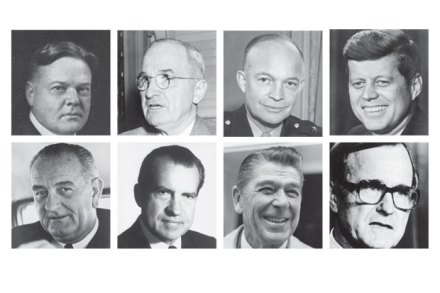
Bourbon from Bush, envy from Nixon… and running into Herbert Hoover: encounters with eight presidents

From our UK edition

I feel a bit of a fraud writing about the ‘presidents I knew’, since journalists do not really get to know the great figures they interview or shake hands with. Indeed the relationship between journalist and great personage is about as false as any relationship can be, since each is trying to make use of the other. So in all likelihood my dreamed relationship with President Herbert Hoover — which began and ended in 1933 when I was aged 11 and only lasted for about a minute — came nearer to being a genuine human relationship than all the other journalistic ones later — which included Harry Truman, Dwight Eisenhower, Jack Kennedy, Richard Nixon, LBJ, Ronald Reagan and George H.W. Bush. Quite a mouthful. My Hoover story — to the best of my childish memory — happened like this.