Press

Burnham’s unwillingness to face the media should worry us all

From our UK edition

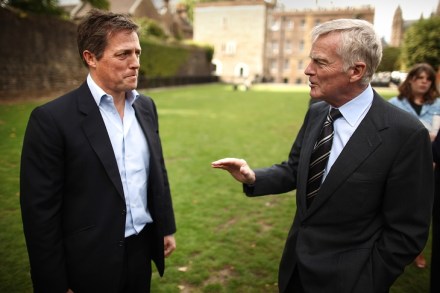
There are so many hopes invested in Andy Burnham’s premiership that disappointment is inevitable. In some cases, it is also desirable. The member for Makerfield has been co-opted by Labour’s soft left and communitarian right for their respective agendas. To govern will be to choose. But a particularly poisoned chalice has been proffered to the next prime minister, one he should dash from his lips. Of all the figures on the left who made the pilgrimage to Makerfield to campaign, the presence of Hugh Grant was most ominous. Perhaps the actor who played the prime minister in Love Actually with such élan was there to school our would-be premier on how to deal with obstreperous American presidents. But Hugh Grant is not just a more metrosexual Cary Grant.
The Washington Post is digging its own grave

It takes a master to untangle the web of drama being spun at the Washington Post these days. Fortunately, Cockburn knows a thing or two.  The recent drama concerns Sir William Lewis’s appointment as CEO, handpicked by owner Jeff Bezos, and the subsequent attempt by Lewis to dissuade journalists from covering his role in a long-running British phone hacking scandal (he denies any involvement), which supposedly contributed to the recent and abrupt departure of former editor Sally Buzbee. Add that to the earlier stories of Cameron Barr stepping down in 2023 as managing editor after nineteen years and the lawsuit filed by former Post journalist Felicia Sonmez in 2021, who went ham on her colleagues on Twitter and was subsequently fired.

washington post

Where are Uri Berliner’s defenders in the press?

Uri Berliner, an economics and business reporter for NPR, resigned his position on Wednesday morning. His resignation comes after he was handed a suspension by NPR, five days without pay, for a piece he wrote last week citing how the publicly-funded radio and publishing news organization has become a vessel for ideologically driven progressive activism. He cited people he hears from who have abandoned NPR’s traditional programming, which has found itself consumed by gender and race theory, with a splash of climate panic. Yet what was eerily noticeable was how silent Berliner’s colleagues in the media have been, clearly retaliating against him for speaking his mind, independently. Neither the NPR union nor SAG-AFTRA released statements.

Liz Truss’s American book tour

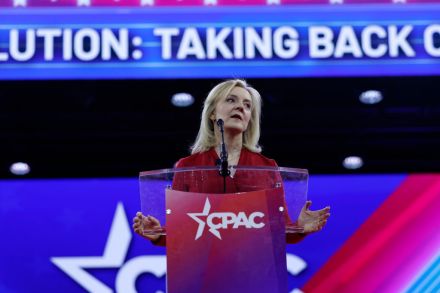
National Harbor, Maryland I’ve been visiting the United States for many years, but 2024 was my first time at the Conservative Political Action Conference in Maryland, where I spoke on the main stage, complete with American-style big hair. Compared to political events in the United Kingdom, people at CPAC take things to a whole new level: where else could you have a debate about the Constitution with a woman in a Statue of Liberty costume? Or meet a family of five in matching sweaters that each bear a letter to spell out “TRUMP?” The enthusiasm for the cause was infectious. And few speakers were more dazzling than the newly installed Argentinean president Javier Milei. I confess to bagging a front-row seat for his address.

CPAC

Jeremy Corbyn says he likes my journalism – so why does he want to muzzle the press?

From our UK edition

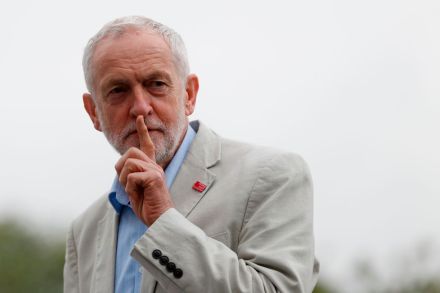
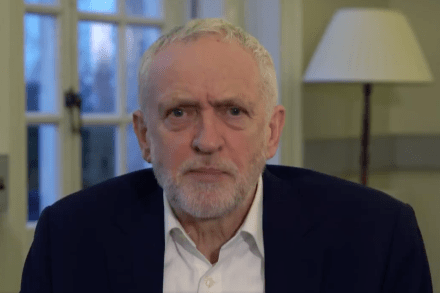
Any local reporter would be pleased to hear a leading politician stand up for public interest journalism. Jeremy Corbyn did just that in his speech on media reform yesterday. But let’s not forget that Labour – and Corbyn himself – are adamant supporters of Leveson 2. Make no mistake: this is a dangerous attempt to muzzle local newspapers and expose reporters like me to crippling and needless law-suits. The most worrying aspect of Leveson 2 is Section 40, which would force papers to pay legal costs for people suing them regardless of whether they won their case. This would make the work of journalists much more difficult.

The press regulation lobby represent the few, not the many

From our UK edition

Those pushing for press regulation claim to have the people on their side, and since the phone-hacking scandal, Hacked Off has posed as warriors for the victims of press intrusion, standing up to the big media barons. Today, MPs vote on amendments to the Data Protection Bill that would effectively force publications into state-backed regulation for the first time in 300 years. The amendments, tabled by Labour’s Tom Watson and Ed Miliband, would also kickstart the second part of the Leveson inquiry. Watson claims this is ‘for the many, not the few’. But if that's really the case, why are these plans being sneaked into obscure amendments to a dry-sounding piece of data legislation?

Jeremy Corbyn’s ‘change is coming’ warning to the press is chilling

From our UK edition

What a convenient inconvenience the row about Jeremy Corbyn's links with a Czechoslovakian agent is for the Labour leader. While the allegations that he was an informant during the Cold War may well be the 'nonsense' that he claims they are (they certainly don't seem to correlate with anything released at the end of that period), the way a number of newspapers have covered them has given him an opportunity to launch an attack on the press. In what tabloids might term a 'bizarre video rant', Corbyn said the newspapers had 'gone a bit James Bond' with these 'smears', before warning the 'media barons' that 'change is coming'.

A vote for the Tories is now a vote for a free press

From our UK edition

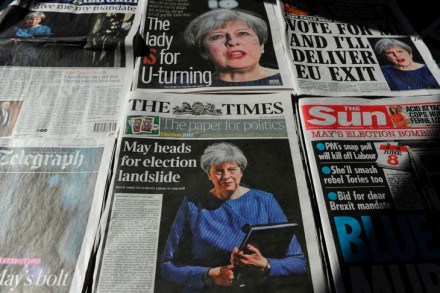
I have long campaigned against the activation of section 40 of the Crime and Courts Act, as well as a second Leveson inquiry which would have examined the culture, practices and ethics of the press, so I was delighted that the Conservative manifesto says that neither will happen. The Government held a consultation about this earlier this year and the wording in the manifesto is the first official response to that consultation. I hope that this now puts the matter to bed.  If section 40 of the Crime and Courts Act was activated it would have meant that any publication not a member of Impress, the press regulator largely funded by Max Mosley, would have had to pay all the costs in a libel case even if it successfully defended a claim.

The real BBC shocker: occasionally it isn’t biased

From our UK edition

There’s one thing that bothers me a lot about the letter sent by ‘more than 70’ MPs to the director-general of the BBC complaining about bias in its coverage of the Brexit debate. There are 650 MPs in the House of Commons, of whom 330 are Conservative. So does this mean that more than 570 of our elected representatives, including the vast majority of Tories, think the BBC is doing a bloody good job and is an exemplar of impartial reporting? If so, I suspect they have been secretly lobotomised — perhaps by members of the BBC’s impeccably fair and impartial editorial board. In the dead of night. Silently, without remorse. Chloroform, a hacksaw, a scalpel.

Diary – 2 March 2017

From our UK edition

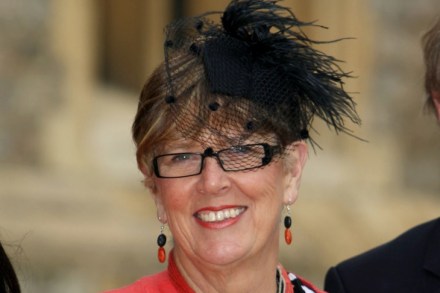
A fortnight ago I got a taste of what being far too famous might feel like. A leak that I’m a contender for the Mary Berry slot on The Great British Bake Off morphed into the fake news that I’d got the job. For 24 hours it was a lead story — then it was yesterday’s non-news. My daughter, Li-Da Kruger, has made me her plus-one on the maiden voyage of Viking Sky, the swankiest cruise ship imaginable, all spacious showers, leather handrails and the surreal experience of sitting in the hairdresser’s with a roiling sea of black water and white-topped waves rushing past. Li-Da was booked to show her documentary Belonging to the passengers as part of the cruise’s ‘enrichment programme’.

Pick

From our UK edition

I have long pondered the motive with which Michael Wharton, for long the author of the Daily Telegraph’s Peter Simple column, gave a memorable detail in his second volume of memories, A Dubious Codicil, about the habits of his rival Colin Welch: ‘He had a habit of picking his nose, occasionally tasting the extracted mucus or “bogey”, without any attempt to conceal himself, as most people would, behind a newspaper.’ Since they are both dead, I am unlikely to find out. But I have been piqued recently by another kind of pick, mostly relating to Donald Trump, and now spilling over into British affairs. The choice for one of his cabinet posts was widely called a pick, even by British correspondents.

From Tacitus to Justin Welby

From our UK edition

Many are still questioning the enthusiasm with which newspapers have implicated Archbishop Justin Welby, as a young man, in the abusive activities of a Christian camp leader for whom he was working. This line from the Daily Telegraph is typical: ‘Archbishop Welby is said to have gained much of his early grounding in Christian doctrine from the Iwerne holiday camps, where boys were recruited for John Smyth’s sadomasochistic cult.’ The Roman historian Tacitus (d. c.

Bad publicity

From our UK edition

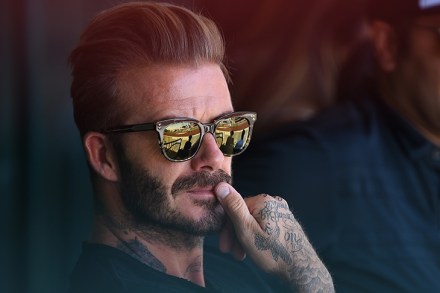
Whatever calamitous infelicities David Beckham did or did not email to his publicist, few will doubt that he has lived to rue the day. Nevertheless, I’ll bet teeth that he is pointing his ruing in the wrong direction: that he is tormented by the moment he pressed ‘send’ — but not similarly kicking himself for hiring a publicist in the first place. It will be left to thee and me to wonder what was the point.

What the papers say: Britain’s soaring EU budget bill shows Brexit can’t happen soon enough

From our UK edition

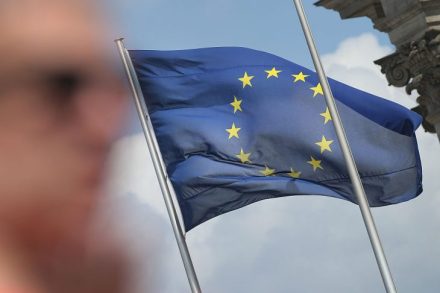
We’ve heard that Brexit could cost Britain billions in the form of a divorce bill from Brussels. But what is the price of staying in? That question is answered by the Daily Mail this morning which reveals Treasury estimates slipped out last week that the UK’s contribution to the EU will jump to £10.2bn in 2019 - up from £7.9bn this year. The numbers also show that if Britain is still in the EU by 2021-22, taxpayers will have to pay out £10.9bn to Brussels. For the Daily Mail this is proof that Brexit is the best course of action. ‘Doesn't this revelation, slipped out by the Treasury, show precisely why we're leaving in the nick of time?,’ the paper asks.

High life | 9 February 2017

From our UK edition

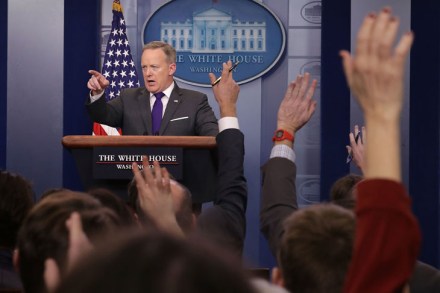
When I was young my recurring nightmare was that I would die and be reincarnated as a polo pony. I squeezed in lots of polo during the years I played, at least three matches per week, mostly in Paris, and I felt that polo ponies had the kind of deal the mass media are now handing Trump. I wasn’t mad about the people I played with either. Back then, in the Sixties and Seventies, fat businessmen who cantered hired good Argentines to carry the can, but picked up the cup after strolling around the field and yelling quite a lot. Well, now I’m over it, but have an even worse nightmare: that I might return as Trump’s White House press secretary, Sean Spicer, and have to face the outraged and hysterical so-called press corps every day.

‘Above all else, fun’

From our UK edition

Alexander Chancellor’s ‘Long Life’ is over; but it was not nearly long enough. I was feeling rather gloomy last Friday, having just had our old terrier put down, when I opened The Spectator and was immediately cheered up by the first paragraph of Alexander’s column. It was so typical of the way that he often looked at the world, and of his delightfully quirky sense of humour, that he should relate a children’s song to the new President of the United States. Recalling Nellie the elephant and her trumpety-trump, he wrote: ‘I’m hoping against hope that Donald Trumpety-Trump will also say goodbye to the circus in Washington and return to the jungle whence he came.

The ghastly truth

From our UK edition

Paul Johnson once wrote that the ability to say ‘really’ in 12 different ways was the birthright of every true Englishman, or woman. Really rather awkward. Really dreadful. Really good effort. Really went to town. I know him really well. Did she really mean that? I mean, really! One word, many meanings. ‘Ghastly’ is another thoroughly English word, in tone and application. Its meaning is implicit, rather than explicit. It’s a word shared by people of similar (that is to say, well-brought-up) backgrounds, which makes it all the more surprising that Tatler magazine, which likes to present itself as a guide for metropolitan smarties, has declared ghastly to be ‘unfashionable’.

There’s one day left to help defend press freedom

From our UK edition

Think of the scandals of the last two decades; think of who exposed them. That’s why we need to protect press freedom and why, if you haven’t already done so, you should email to register your objection to the notorious Section 40 of the Crime & Courts Act. The consultation ends at 5pm tomorrow. If activated, it would mean that publications who refuse to bend the knee to a state-sponsored regulator would pay the legal costs of anyone who sues them – right or wrong. When Tim Yeo was exposed by the Sunday Times, he sued – even though every word of their exposé was correct. The newspaper fought him because under the basic laws of justice, if the complainant is proved to be wrong, you don’t pay a thing.

Competition: write a response to the government’s ‘consultation’ on press freedom

From our UK edition

Since my blog about the new threat to press freedom yesterday, and the notorious Section 40 being consulted on by the government, responses have been coming in thick and fast. A few of you have copied me in to emails sent to Karen Bradley, the Culture Secretary, many of them rather brilliant. More importantly, I've been contacted by a software designer who has agreed to make a form that we can use to send a template response to the government's consultation. This leaves us with one question: what form of words? One form has been created, here. But all you really need to do is mention Section 40 and a new Leveson report and officials are obliged to record your response. Here are three responses.

The new battle for press freedom

From our UK edition

The fight for press freedom is back on – and it needs your help. The government is consulting on a draconian new law, the so-called Section 40, that could mean publications like The Spectator, who refuse to submit to Max Mosley's regulator, would have to pay the legal costs of anyone who wants to sue us, win or lose. We would be made a sitting duck for anyone who felt inclined to complain about anything. Take, for example, Camila Batmanghelidjh. She sent me a lawyers’ letter when Miles Goslett exposed the Kids Company scandal, and The Spectator became the only publication willing to call her out. It went no further as she had was a chancer and had no case – if she sued, she'd lose and would have to pay the costs. So she backed off.