Press

Will the Guardian and the Independent kill the Grand National?

From our UK edition

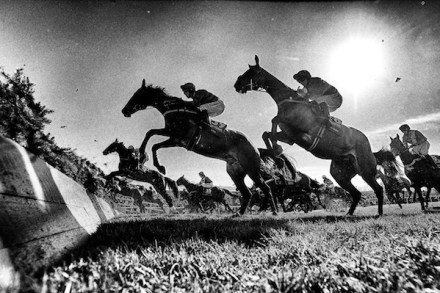
Over the past few years a new trend has emerged in British journalism. Our trade has become over-run with reporters or columnists who are not quite what they seem. They pretend to report objectively on events. In practice the true loyalty of these campaigning reporters or columnists is not just to their readers. Sometimes covertly, sometimes furtively, they also further the agendas of political parties and interest groups. This confusion of loyalties is a notorious problem at Westminster, but is now spreading beyond the political desks of national newspapers. Last weekend’s reporting of the Grand National was a very troubling example of the muddling of categories between straightforward reporting and campaigning journalism.
All the Iron Ladies

From our UK edition

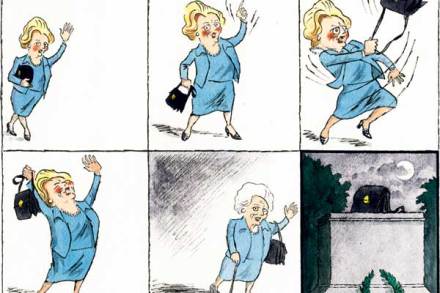
The day Mrs Thatcher became Leader of the Opposition was a nightmare. Her victory over Mr Heath meant that I had to do a cartoon featuring her for the next day’s Daily Telegraph. But her arrival had been so swift that I barely knew who she was, and had almost no idea what she looked like. I had a problem. I don’t remember getting the photographs from her file in the picture library to draw from. My memory begins as I sat at my desk and looked through them. They were all close-ups of her teeth and upper gums, bared in smiles, under various pantomime ugly-sister hats. In those days, all Tory women wore peculiar hats most of the time. I did not have enough to go on. I struggled for hours to draw her likeness and I still feel the pain of my failure.

Julie Burchill, trannies and the free press

From our UK edition

If anybody doubts that free speech would be in danger after Leveson it is worth remembering what it is already like in this country. A couple of months back Julie Burchill wrote a column in the Observer about transsexuals. It was a response to complaints by transsexuals about a piece by a friend of Burchill’s, Suzanne Moore. In a glorious broadside of a column Burchill referred to the complainants as, among much else, ‘dicks in chicks' clothing’ and ‘a bunch of bed-wetters in bad wigs’. The results were endless further complaints and a junior government minister – Lynne Featherstone – calling publicly for Burchill and the editor of the Observer to lose their jobs over the column.

Leveson: Don’t be frightened by the state

From our UK edition

If David Cameron had any sense, he would stand up in the Commons and say “I am withdrawing the Royal Charter. The law officers have assured me that Lord Justice Leveson, though a fine judge in many respects, did not understand the Human Rights Act. He failed to see that the courts would almost certainly find that his plans to force newspapers and websites to join his regulator by hitting them with punitive fines were unlawful in practice. My problem is that too many in Parliament cannot see it either. “There is a madness here in Westminster; a fanaticism which I, as a traditional Tory, find distasteful. I do not like officials in the Department of Culture Media and Sport drawing up lists of who must submit to censorship – the Angling Times, no, Hello!

‘Small-scale’ bloggers hear the chimes of freedom

From our UK edition

Bloggers of the United Kingdom rejoice - an exemption from the all-new press controls looks to be on the way. We are waiting today to see if any of the amendments tabled on Friday will pass but the Financial Times reports (£) that cross-party talks over the weekend will result in a successful amendment on blogging: 'Tri-party talks took place over the weekend to agree a wording for an amendment to the crime and courts bill which will be discussed in the House of Lords on Monday.' At some point, that is. The amendments are being considered in the Lords right now but there has been no sign of anything from the government.

It’s down to the House of Lords to save the bloggers

From our UK edition

On Monday, Parliament will decide the future of blogging in this country. As the government's press regulation proposals stand, blogs big and small would come under the new press regulator. This would make bloggers liable for significant compensation sums (aka exemplary damages), fees for joining the regulator as an ‘associated member’ (newspapers join as full members) as well as for increased legal costs. While the proposals could send bloggers rogue, to host their sites abroad and out of Parliament's jurisdiction, others who can’t face the hassle may decide to close down. The problem stems from Leveson’s lack of concern for (or understanding of) the Internet. His report devoted just one page to the Internet.

Dreaming of systems so perfect that no one will need to be good

From our UK edition

I have a piece in this morning's Wall Street Journal (Europe) on our new press regulations titled 'We have the newspapers we deserve': 'I have just finished studying a diagram aimed at explaining Britain's new press laws. After having a lie-down, one single line keeps running through my head. Oddly enough it isn't 'recognition appointments panels,' 'regulatory appointments panels' or even 'standards and compliance arms,' memorable though all these are. 'The line is from T.S. Eliot, who almost eight decades ago derided those people who spend their days 'dreaming of systems so perfect that no one will need to be good.'' The whole piece is here.

Do politicians know what they’re doing with the Royal Charter?

From our UK edition

I witnessed my first-ever PMQs last week. It was, as my friend and Spectator colleague Isabel Hardman told me, not a raucous a PMQs as can usually be. Yet for me, it seemed a pretty lively parliamentary debate and — at the risk of sounding hopelessly naive — a bit of a treat to actually see important things being debated for all to see. I wonder if UK politicians know that the Royal Charter they have drawn up may one day come back and bite their butts? For what they're proposing finally influences an entire nation's conversation. If they have their way, the UK is headed for press regulation, the first time its media will be under state licensing in 300 years. It's a sad hour not only for British journalism, I think, but for journalists everywhere.

Diary – 21 March 2013

From our UK edition

I learned on Wednesday that a row is exploding over freedom of the press ... in Australia. Surely some mistake. Australia is refreshingly open and its newspapers are free to say, often rudely, whatever they like. In fact, they are among the world’s the most tightly regulated, standing 26th and 29th respectively in the Reporters Without Borders censorship index — way behind Jamaica, Costa Rica and Namibia. Where, I wonder, will Britain stand after the events of this week? Much has changed in Oz since I spent my first day there as a Ten Pound Pom, looking comical in a grey suit on Bondi beach in midsummer, almost half a century ago. I left a stagnant Britain, beset by industrial strife and a Tory government whose only plan was to manage our decline.

The View from 22 — Peter Lilley vs. George Eustice on press regulation and the 2013 Budget

From our UK edition

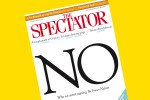
The Spectator has categorically said 'NO' to signing up to the government's new regulatory body, but why are MPs so divided? In this week's View from 22 podcast, Peter Lilley — who has spoken in support of The Spectator's position — goes head-to-head with George Eustice, David Cameron's ex-press secretary, over the Royal Charter agreed by the three parties this week, how it came to pass and what lies ahead for Fleet Street. Listen below to hear more about how divided the Tories are over the issue. Fraser Nelson and James Forsyth also join to discuss George Osborne's 2013 budget and in particular, the prominent role of the Monetary Policy Committee and the arrival of Mark Carney. Is the new Bank of England governor a knight in shining armour from Canada?

Hacked Off says press damages plan is a mistake

From our UK edition

So the latest twist in the surreal saga of statutory regulation of the press is that the campaign group which had unparalleled access to the three parties hammering out a settlement in the silent watches of the night now thinks there's been a terrible mistake. Whoops! Hacked Off has put out a statement this afternoon which says the amendments to the Crime and Courts Bill approved by MPs on Monday night contain 'an accident in the drafting' and is now trying to change the amendments so that they won't impact bloggers and small publishers. You can read the full statement here, but this is the key section: 'The amendments are the work of Conservatives in government and not of Labour, the Liberal Democrats or for that matter Hacked Off. 'They have not been endorsed in any way by Hacked Off.

Why The Spectator won’t sign the Royal Charter

From our UK edition

Whatever else is said about David Cameron’s hand-ling of press regulation, there can be no doubt that the deal he struck on Monday demonstrated masterful sleight of hand. Just days earlier, his differences with Ed Miliband and Nick Clegg had seemed irreconcilable and the Prime Minister was heading for defeat in the Commons. But then, overnight, everyone united around a compromise: a state regulator which insisted it was no such thing. It was the political equivalent of Magritte’s ‘Ceci n’est pas une pipe’; Britain’s first piece of legislative surrealism. The Royal Charter’s ornate, 17th-century language is part of the obfuscation. It begins: ‘To all to whom these presents shall come, greeting!

Blonde ambition

From our UK edition

Seems a little weird to be rabbiting about sport at a time when a malign confederacy of sanctimonious do-gooders, vengeful politicians, hypocritical celebrities and hatchet-faced lefties has brought about the biggest threat to press freedom since Uncle Adolf started on his European adventures. But at least we have this fine journal which has refused to sign up to any new system of state licensing of the press. How long before a newspaper has the guts to follow the Spec’s lead? As more than one commentator has pointed out, try to imagine reading the following sentence in the New York Times: ‘The Senate and House of Representatives last night agreed on a new system of press regulation and legislation will be introduced in the next few days.’ Yeah, right!

Osborne’s pitch to Sun-reading voters caught up in Leveson row

From our UK edition

If this was a Budget for Sun readers, then it hasn't quite worked out as well as George Osborne might have hoped. The newspaper sounded pretty cheery this morning with its story about the beer duty escalator. But here's the front page for tomorrow's edition: Now, this is clearly as much about Leveson and the newspaper's industry disgust that it wasn't consulted when the lobbying group Hacked Off was invited to the late night negotiations as it is about the measures announced today. But there's also the point that Fraser makes tirelessly on this blog that politicians like to be lazy at best when it comes to talking about debt and the deficit. One of the bullet points reminds readers that the government isn't 'paying down its debts' as David Cameron has said before: 'Debt!

Jim Sheridan MP and those “parasites” in parliament

From our UK edition

Labour MP Jim Sheridan covered himself in glory this morning by asking why the ‘parasitical press’ is ‘even allowed to come into’ parliament. Westminster watchers will remember the eloquent and thoughtful Mr Sheridan’s contribution to the expenses crisis when he described the soon to be disgraced Speaker, Michael Martin, as a man of the ‘highest integrity’. Now, a reader has regaled me with a tale that makes you wonder how Mr Sheridan reached the giddy heights of the Culture Media and Sport Select Committee: ‘At a day at the races some years ago my girlfriend was making small talk with him and he must have been the Labour Convenor for Scottish MPs at the time, so she just said 'must be like herding cats'.

Ministers avoid awkward vote on foreign criminals as Tories rebel on press damages plan

From our UK edition

The Crime and Courts Bill, which contains one half of the government's response to the Leveson recommendations, has just passed its third reading in the House of Commons. An earlier amendment on exemplary damages, which the Mail's James Chapman reports this evening has roused the ire of Boris Johnson, saw this group of Conservative rebels troop through the 'No' lobbies: Richard Bacon, Christopher Chope, Tracey Crouch, Philip Davies, Richard Drax, Nick de Bois, Andrew Percy, Mark Reckless, John Redwood, Jacob Rees-Mogg, Andrew Turner, Martin Vickers, Charles Walker and Sarah Wollaston. The amendment passed 530 ayes to 13 noes (the list above includes tellers Rees-Mogg and Drax, who are not listed in the initial division numbers).

It’s not a press regulator, it’s a web regulator.

From our UK edition

Since the early 1990s, hundreds of millions of words have been produced about the Web. Enthusiasts have told us that it is the greatest communications revolution since Guttenberg invented movable type, and they are probably right. Utopian fantasists have imagined that cyberspace would be beyond the reach of governments – those 'weary giants of flesh and steel', as one particularly giddy theorist put it – and they were certainly wrong. Their libertarian dreams, as we can see tonight, were an illusion. Those 'weary giants of flesh and steel' are tougher than they look. They are more than capable of using the new technologies to their own advantage, while censoring what their citizens write online.

Newspapers irritated by exclusion from Leveson talks

From our UK edition

As he summed up today's debate on press regulation, the Prime Minister repeatedly stressed that the new system was a voluntary one, with incentives for journalists to join. It marked a shift in the tone from the leaders at the start of the debate: the Prime Minister was now trying to coax the industry to join the new system leaders had agreed on. Perhaps it was this statement from the Newspaper Society that made him a little more conciliatory: 'We would like to make it clear that, contrary to reports broadcast by the BBC this morning, no representative of the newspaper and magazine industry had any involvement in, or indeed any knowledge of, the cross-party talks on press regulation that took place on Sunday night.

Press regulation: Tory backbenchers worried by proposals

From our UK edition

MPs are continuing to debate the cross-party deal on press regulation in the Commons at the moment. The debate has been divided between congratulations for the party leaders and their colleagues who hammered out the deal, and wariness from some Tory backbenchers about what the proposals actually mean. David Cameron insisted during the debate that this wasn't statutory underpinning, but Nick Clegg said 'of course' when asked whether it actually was. Some Tory MPs agree with Nick: they believe this does include statutory underpinning.