Poverty

Modern capitalism has failed my son

A light was on in the caravan site office so I went over to try and buy a gas canister. Come Easter the little Cornish seaside resort will be heaving. Now a stiff north wind blew in off the sea and it felt like the dregs of winter still. The site office was shut but a woman came out and said she was expecting a delivery tomorrow but she didn’t know yet how much a canister would cost. Nor did she know of anywhere open where we could get something to eat. She thought there might be a place down by the beach. Nobody had managed to get any seasonal staff yet and everything was a bit uncertain, she said. So me, my son and my two grandsons went down to the parade of seaside shops with our chins in our collars. There were no lights on or any people about.

Why I don’t stick to football

In football, you are always stronger in numbers. With a shared focus, people from different cultures, nationalities, races, sexual orientations, political affiliations and religions can unite to achieve incredible things. When you pull on that national team shirt, rivalry subsides and is replaced with a shared desire to win. When fans step into that stadium, for 90 minutes they feel a part of something, a collective, able to leave any worries outside those turnstiles. To many it is a religion. To me, it’s still a dream. You grow up idolising figures in this game who turn out to be just like you and me. Human beings with human emotions and who, more than likely, have overcome some level of adversity in their career.

Boris’s levelling up risks leaving behind London

Boris Johnson’s plan to ‘level up’ Britain sounds long overdue. It implies the creation of a less geographically unequal United Kingdom. What's not to like? The motivating theory behind ‘levelling up’ seems to go like this: London, the beating heart of this relatively affluent corner of our nation, has had plenty of investment in recent years. It is now time to listen to the needs of the newly-Conservative ‘Red Wall’ and Leave-voting ‘left behind’ communities in the north of England. These areas have been ignored for decades, and recently voiced their displeasure at the ballot box. But the reality is rather more complicated – and there is a danger that, yet again, London’s poorest get left behind.

Westminster and the truth about the class ceiling

I come from the Lancastrian town of Ormskirk, which, though pretty, provided little in the way of opportunity or aspiration. No one in our family had been to university. I qualified for free school meals. Expectations for my future were low. But I was lucky. I had great mentors and ended up in Downing Street. I also worked for a Prime Minister who believes in social mobility and put ‘levelling up’ at the very centre of his premiership. This was the reason I came into politics too. Boris Johnson understands that the need for social mobility is now more urgent than ever, as we emerge from lockdown. While the food poverty debate raged last summer, and the government found itself losing a PR war with the footballer Marcus Rashford, I attended a cabinet meeting.

Nicola Sturgeon reinvents herself as a social democrat. Again

It’s the surest sign there’s an election on in Scotland: Nicola Sturgeon has become a social democrat again. Addressing her party’s spring conference today, the SNP leader vowed to double the Scottish child payment to £10 per week for under-16s in low-income families if the Nationalists are returned to government after 6 May. She explained:  ‘I want to make ending child poverty a driving mission for the next parliament. It is time to end the scandal of child poverty, and this will help us do it. And it is a down payment of what will be possible when we have the full powers over tax and social security that only independence can deliver.’ Ending child poverty is a noble aim.

The real reasons children are going hungry

‘We’re idiots, babe, it’s a wonder we can even feed ourselves.’ I listened to The Food Programme on Radio 4 this week, because the channel finder on my car radio wasn’t working and so I was stuck with it. It was, as it almost always is, four left-wing ratbags moaning to one another. As I’ve mentioned before, this is the template for almost the entirety of the station’s output: miserable women carping endlessly about everything. It is almost impossible to know what particular programme you’re listening to. You have to keep your ears tuned for key phrases which might give you an indication. If it’s a woman teacher moaning about having to do a spot of teaching, it’s probably World At One.

Trade not aid: spending more doesn’t mean we care more

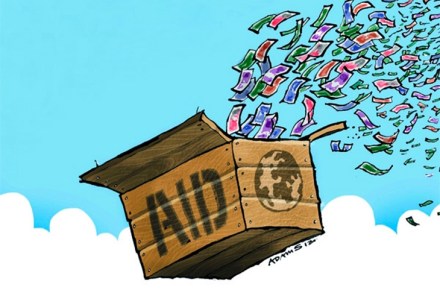
Outside the Catholic mission I walked through rows of women in traditional hide skirts, squatting or sitting with legs astride, palms upturned in supplication. Many suffered from scabies and cradled emaciated babies, and all looked 20 years older than their true age. These are my memories of the Uganda famine in 1980 and these were the survivors. Africa is a different place today and so are the methods used to combat famine. But this was where I learnt about the contradictions of overseas aid. Aid is pernicious, and injudicious aid can destroy all before it. Take food aid. It is wonderful for saving those in extreme peril, but once the extreme event has passed, it destroys farmers and local markets, and inevitably leads to corruption.

Racism, poverty and the ‘controversy paradox’

It might seem puzzling that we have seen such a furore about racism and racial discrimination at this particular time in our history when all possible measures of racism indicate that there is less of it in Britain than at any time in the past 70 years. A decade ago, 41 per cent of us ‘-strongly agreed’ that we would be content for our children to marry someone of a different race. That has now risen to 70 per cent. In 2006, 55 per cent ‘strongly disagreed’ that you had to be white to be ‘truly British’. That has risen to 84 per cent.

Lives vs lives – the global cost of lockdown

‘There have been as many plagues in history as there have been wars,’ wrote Albert Camus in The Plague, ‘yet always plagues and wars take people equally by surprise.’ So it was this time. The arrival of a new coronavirus blindsided governments of most advanced nations as they reached for a tool that few had ever really considered before: lockdown. It all happened too fast for a proper discussion about the implications. The biggest question — the extent to which lockdown will claim lives as well as save them — is one you can ask at a global level. We know the national costs. In the United States, there is joblessness on a scale not seen since the Great Depression, with more than 33 million unemployed.

Who can still make a Sunday joint last a week?

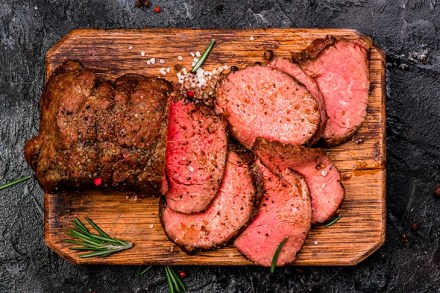
Sunday lunch was always roast beef and, in the traditional way, the Yorkshire pudding was served first with gravy, supposedly because if you were full of cooked batter you wanted less meat. Monday saw cold meat, jacket potatoes and pickles, while the beef bone went into the pot with lentils, pearl barley, carrots and onions and bubbled on the hob for days, the basis of every dinner until Friday’s fish and Saturday’s sausages and mash, before Sunday came round again. That is what everybody had and, like all housewives, my mother made the most of every morsel. Throughout and after the war, waste was a crime. I hate cooking and am bad at it for all I learned, by watching, about roasting the potatoes in the hot fat round the meat, and I always helped beat the batter.

There’s nothing equal about this virus

Filthy germ-laden townsfolk were out and about on the footpaths near my home on Easter Sunday, dragging with them their awful, mewling children. I got the dog to harass them and occasionally shouted out: ‘These are local paths for local people. Clear off.’ One youngish father — lightly bearded, self-satisfied smirk, probably a sticker on his car window saying ‘-Refugees welcome here’ — even had the nerve to ask me for directions to the nearest train station so that he might return to his squalid Remainer tenement. I directed him and his family through a field which was fecund with manure and full of restive bullocks. The child — four or five years old and already gobby and full of itself — was wearing a bright red T-shirt.

The cops are impotent in lawless New York

New York   Things are heating up, in both London and Nueva York, as this place should correctly be called. Two flunkeys writing in the New York Times announced that Boris is committing gaffes and could, like Trump, be a dead man walking. This is wishful thinking and the premature celebration confirms that the media can no longer be trusted, certainly not here in the land of the depraved. (The flunkeys sought quotes from obscure British left-wing academics, and loftily present them as ‘the people’. Their detachment from the workaday world is hilarious.) In the meantime, here in the Bagel an alleged drug pusher looking at nearly 100 years behind bars is photographed walking free and saluting Governor Cuomo for his bail-reform law.

Priti Patel hasn’t learned the lesson of ‘no such thing as society’

Can Priti Patel really stand in Barrow-in-Furness, which has some of the most deprived wards in the country, and say that the government isn't responsible for poverty? The Home Secretary's comments to the BBC's North West Tonight have unsurprisingly gone viral because of the juxtaposition between the charity she was visiting and the stridency with which she said them. It's worth noting that she wasn't, as some have claimed, standing in a food bank. In the interests of accuracy, Patel was actually visiting The Well, which is a local charity helping people with with addiction (I live in the town, and it's a fantastic organisation, like so many of the charities and community groups who tend to be staffed by Barrovians with their own stories of poverty and struggle.

David Lammy is wrong about white saviours and Comic Relief

Comic Relief have reported an £8 million plunge in year-on-year donations following the recent row ignited by Labour MP David Lammy accusing the charity of propagating the ‘white saviour’ complex. To be clear, there is no hard evidence proving the shortfall a direct fallout from Mr Lammy’s critique. It is, however, hardly conceivable the negative emotions ignited by his ‘white saviour’ accusations would have no impact on the public’s willingness to continue funding the charity. As someone born and raised in Nigeria, I feel compelled to address Mr Lammy’s comments about Africa and the ‘white saviour’ complex, pointing out why I consider his approach wrong and counter-productive.

Love hurts

There is very little art about modern poverty, because who wants to know? It is barely acknowledged, unless there is redemption, or salvation, as in A Christmas Carol. Those most suited to make it — those who are actually poor — are usually too busy doing something else, such as surviving. So, it is remarkable to learn that Alexander Zeldin’s play LOVE, a success at the National Theatre in 2016, is now a film and will air this weekend on BBC2. The closest thing to it recently was Benefits Street, which was exploitative and, therefore, an instant hit. Zeldin is 33. He read French at Oxford University and is artist-in-residence at the National Theatre. His work is plain and understated. He listens, rather than writes, and there are no diatribes, just calm despair.

Real life | 24 May 2018

‘What a fabulous tan, where did you get it? said one of my fellow lunch guests as we entered the women’s powder room of a Mayfair hotel. I get this a lot. I want to talk about where I have wintered, or summered, or springed, because although I am poor I am lucky enough to mix with people who are not, and I love people who are not. I will defend them to the death. The poorer I get, the more capitalist I become. I can trace my attraction to Trump directly along the lines of my diminishing bank account and mounting credit card bills. I think it is to do with the fact that when one encounters poverty it is so unutterably awful that one can bear it only by taking refuge in the knowledge that somewhere else there are people who are comfortable, some fabulously so.

Darkness visible | 16 November 2017

All photography requires light, but the light used in flash photography is unique — shocking, intrusive and abrupt. It’s quite unlike the light that comes from the sun, or even from ambient illumination. It explodes, suddenly, into darkness. The history of flash goes right back to the challenges faced by early photographers who wanted to use their cameras in places where there was insufficient light — indoors, at night, in caves. The first flash photograph was probably a daguerreotype of a fossil, taken in 1839 by burning limelight.

Child’s play

The Florida Project is a drama set in one of those cheap American motels occupied by poor people who would otherwise be homeless. It’s sad but not depressing, bleak but also joyful, and features one of the best and truest child performances you will ever likely see. Also, it is captivating without ever being condescending — I think. It is always so hard to know, but if you get too hung up on that, cinema will never be allowed to say that poverty exists, or deal with stories that don’t regularly get told, and that’s the end of my lecture for this week, you will be delighted to hear. The movie is written and directed by Sean Baker, whose previous film, Tangerine, about a transgender sex worker, was shot on an adapted iPhone 5 and won many awards.

Destitution is the new British disease

I became aware that there was real destitution in modern Britain five years ago. Destitution, as I see it, arises when a family or individual is hungry, unable to afford gas and electricity, and on the brink of homelessness. It was apparent to me then that too many people at the bottom of the pile who fall on hard times are slipping through holes in the nation’s safety net — some are even forced through those holes by the modern welfare state. The model of how society worked, which I had picked up as a child of the 1945 Attlee Government, survived my decade at the Child Poverty Action Group and many of the years I have spent as Birkenhead’s MP. It is the model that most voters held — a great story of British progress.

How to be good

Suffering, wrote Auden, takes place ‘while someone else is eating or opening a window or just walking dully along’. His poem ‘Musée des Beaux Arts’ emphasises the mundanity of pain (‘even the dreadful martyrdom must run its course/ Anyhow in a corner, some untidy spot’) and how irrelevant it is to all but the sufferer: ‘Everything turns away quite leisurely from the disaster.’ Alice McDermott’s eighth novel, The Ninth Hour, is peopled by women who refuse to turn away from the disasters of others. The ‘untidy spot’ is Brooklyn, sometime in the first half of the 20th century, and the unsung heroines with no time for leisure are the Little Nursing Sisters of the Sick Poor.