Postmodernism

A tower of nonsense

Western civilization believes in increasingly few Big Things, as the Greek poet Archilochus and the 20th-century philosopher Isaiah Berlin called them. This includes the One Big Thing, God, the numerous philosophical proofs of whose existence many claim to find insufficient and unbelievable. Among those things the West does believe in are the numerous discoveries that scientists have claimed for themselves, such as the recent discovery that the universe is expanding at its edges – that is to say, it is receding from us – faster than the speed of light, owing to the cumulative stretching of space: a thing that seems to me to be far more unimaginable and unbelievable than the existence of a single triune God who created that universe and everything in it.

Thomas Pynchon’s Shadow Ticket is transcendent and exhausting

From our US edition

And just like that, after an excruciating 12-year hiatus, the literary world’s answer to Harry Houdini is back. Thomas Pynchon, that notorious recluse, has resurfaced with Shadow Ticket, a tricksy Prohibition-era detective caper that is by turns exhilarating, exasperating and inimitably Pynchonian. A new Pynchon novel is simultaneously a reviewer’s wet dream and feverish nightmare. There’s so much to unpack, you’re never going to do it full justice after a single reading. This is, after all, the writer famous for Byzantine, convoluted plots which zigzag their way across entire continents, ideologies and historical epochs, brimming with mysterious entities and delightfully nutty characters. Shadow Ticket is no different.

thomas pynchon shadow ticket

‘Media Literacy’ and the decline of Woke

From our US edition

What is “woke”? To Jordan B. Peterson it is “postmodern neo-Marxism.” To James Lindsay it is “critical race theory” and latterly “revisionism” in general. These theories of what woke means take for granted that one of its core tenets is a denial of objective truth under the influence of what is broadly called “critical theory,” but the thinking behind contemporary wokeness falls far short of these theoretically exalted standards. Critical theory was a movement, primarily among academics, in the mid 20th century which had a diverse array of followers, but the common denominator was the belief that texts, whether literary works like novels, or historical documents, had no inherently “true” interpretation.

Media Literacy

Decent redesign, ravishing rehang: the new-look National Gallery reviewed

A little under a year ago, it emerged that builders working on the redevelopment of the National Gallery’s Sainsbury Wing had discovered an unusual time capsule embedded in a pillar they had been instructed to knock down. It contained a letter signed by Sir John Sainsbury, who, along with his brothers, had thrown the museum a £50 million lifeline to realise the extension in 1990; and clearly, he wasn’t happy with the way his money was being spent. He expressed this with no small amount of elegance: ‘If you have found this note,’ his missive read, ‘you must be engaged in demolishing one of the false columns that have been placed in the foyer of the Sainsbury Wing of the National Gallery.

Remembering the postmodern Paul Auster

From our US edition

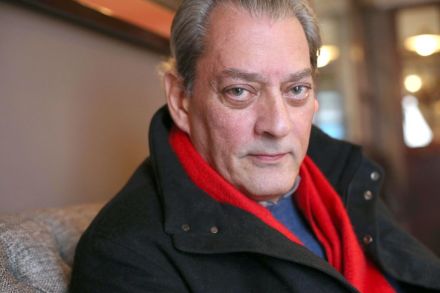
In Salman Rushdie’s new memoir Knife, there is a powerful and moving moment — amid the many other powerful and moving moments — in which Rushdie visits his ailing friend Paul Auster at the latter’s house in Brooklyn and describes his sorrow at seeing him so reduced by illness. It may have been that the extent of the cancer that killed Auster had not been made public knowledge, although a statement was released about his condition, until Rushdie’s description of his encounter — and some might accuse him of indiscretion or indelicacy. Yet the news of Auster’s death, anticipated though it undoubtedly was, has meant that such questions recede almost immediately — and instead a consideration of his legacy as a writer, rather than an invalid, can begin.

paul auster

Nietzsche’s thinking seems destined to be mangled and misunderstood

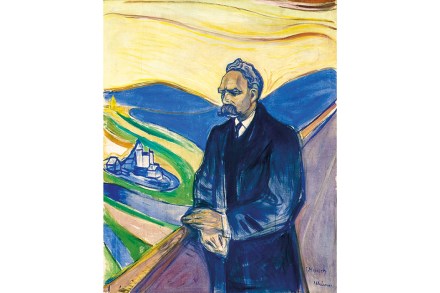
For Mussolini’s 60th birthday, Hitler gave him a de luxe edition of Friedrich Nietzsche’s complete works, bound in blue pigskin. After the war, writers vied to revile the philosopher. Then, in the 1960s, he suddenly became philosophy’s darling. How come? Enter two erotically entangled Italians: Georgio Colli, a philosophy teacher at Lucca from 1942, and his pupil Mazzino Montinari, who in 1943-4 was beaten, interrogated and imprisoned for anti-fascist activism. Both found Nietzsche’s philosophy irreconcilable with fascism. Rumours had been swirling that the Nazifying of Nietzsche emerged from the Nachlass, a mysterious hoard of Nietzsche’s manuscripts suspected to contain forgeries that were the work of his sister Elisabeth and her Nazi minions.

Our academics are attacking the whole concept of knowledge

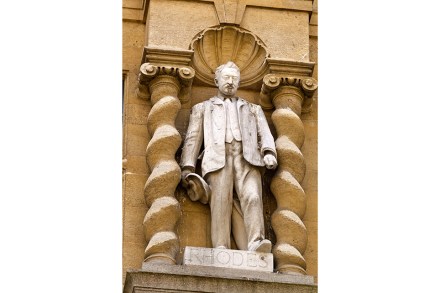
The first problem about decolonisation is the word itself. Colonisation is the process of establishing control over a foreign territory and its indigenous inhabitants, by settlement, conquest or political manipulation. But decolonisation? It has come to mean much more than the reversal of that process. Today, it refers to an altogether wider agenda, whose central objective is to discredit or downgrade the cultural achievements of the West. Objective truth and empirical investigation are mere western constructs. They are optional ideas which need have no weight beyond the western societies which invented them. But the West has imposed them on the rest of the world by a process akin to the colonial conquests of the past four centuries.

From modernism to totalitarianism

From our US edition

The modernist movement in the arts got underway around the start of the last century, encouraged by Ezra Pound’s exuberant exhortation to “Make it new!” Somewhat less attention was paid to making it good, as if what was new was inevitably good — better, indeed, than everything that had come before it. Barrels of printers’ ink were expended on the subject in the so-called “little magazines” of the period on both sides of the Atlantic, not all of it wasted; much of the relevant critical commentary was very intelligent and interesting indeed. Modernism as a concept and an aesthetic was less successful in music, painting, the plastic arts and architecture than in literature — though again, some of the work it inspired was very good.

modernism

Is Donald Trump postmodern?

David Shields is an American author who has decided to collate many of the questions he’s been asked in interviews and reprint them – without any of his answers – under themes of Childhood, Art, Envy, Capitalism etc. The idea is that the questions put to him are just as revealing as his responses. This is a gimmick, but not merely that. To map how others interrogate us is an original idea. It follows that the best way of testing whether this works for the length of a book, even one as short as this, would be for the book to be reviewed by someone who had no prior knowledge of Shields. In this, I’m your man. My ignorance of him was immaculate – and I’ve kept it that way, for the duration.

Boringly postmodern and an ideological fantasy: Slavoj Žižek reviews Matrix Resurrections

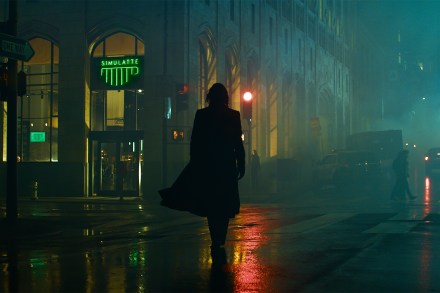
The first thing that strikes the eye in the multitude of reviews of Matrix Resurrections is how easily the movie’s plot (especially its ending) has been interpreted as a metaphor for our socio-economic situation. Leftist pessimists read it as an insight into how, to put it bluntly, there is no hope for humanity: we cannot survive outside the Matrix (the network of corporate capital that controls us), freedom is impossible. Then there are social-democratic pragmatic 'realists' who see in the movie a vision of some kind of progressive alliance between humans and machines, sixty years after the destructive Machine Wars. In these wars 'scarcity among the Machines led to a civil war that saw a faction of Machines and programs defect and join human society.

Absurd and amusing, solemn and scholarly: Charles Jencks’s Cosmic House reviewed

An editor once told me: always look at the loos. It was remarkable, she said, how many grand cultural projets, having spent a fortune on the atrium, the concert hall, the galleries, spent pennies on the bogs. The smallest rooms at Charles Jencks’s Cosmic House are among the loveliest loos in London with windows on to the garden and a ‘Jencksiana’ mirror over the sink. This was the Baltimore-born writer, critic and landscape designer’s take on the ‘Serliana’ window devised by the mannerist architect Sebastiano Serlio and it recurs throughout this mad and marvellous post-modern house. Jencks died in 2019 leaving his house on Lansdowne Walk in Holland Park as a stucco memorial. From the pavement, there isn’t much to distinguish No.

Universities are supposed to encourage debate, not strangle it

Liberal values are under attack on two flanks. Those of us who think extensive freedom of expression, universal human rights and respect for science and evidence-based policies are vital for a healthy society are getting worried. We foresaw the rise of a dogmatic right-wing populism that is as sceptical about truth as Pontius Pilate, but were caught napping by a new illiberalism that emerged from the left, one that has found fertile ground in universities and beyond. The new illiberals are eager to police others’ language and thought. They attack Terfs, and tell us which words we can and can’t use. If you enter a debate about any of a range of sacred concepts, this is likely to be labelled an act of violence. Not metaphorical violence, but actual violence.

The truth according to social justice

From our US edition

We have reached a point in history where the ideas that sustain the liberalism and modernity at the heart of western civilization are at great risk. The precise nature of this threat is complicated. It arises from at least two overwhelming pressures, one revolutionary and the other reactionary, that are at war over which illiberal direction our societies should be dragged. Far-right populist movements claim to make a last desperate stand for liberalism and democracy against a rising tide of progressivism and globalism. They are increasingly turning toward leadership in dictators and strongmen who can maintain and preserve ‘western’ sovereignty and values.

social justice