Politics

Liberalism is a lost cause

From our US edition

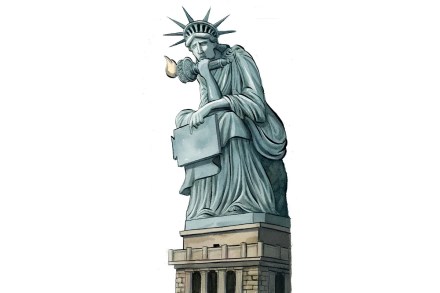
The worst book title of the modern age actually belongs to a superb work: The Strange Non-Death of Neoliberalism, which the English sociologist Colin Crouch wrote in 2011. The title was meant to play off the historian George Dangerfield’s 1935 book about the politics of the United Kingdom before World War One, The Strange Death of Liberal England. Alas, after almost a century, not many people remember Dangerfield. A larger problem is that it is hard to say what liberalism is, neo- or paleo-, dead or alive. In Europe, it mostly means the free market. In the United States, it mostly means various movements for social betterment pushed by those skeptical of the free market. Liberalism thus comes to mean every political tendency and its opposite.

liberalism

The risks of Reform

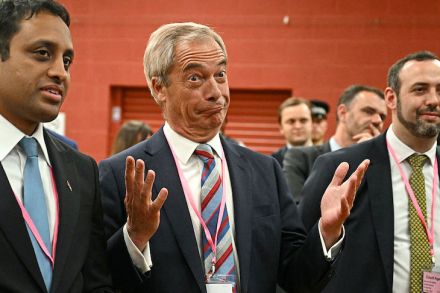
In 1979, XTC sang: ‘We’re only making plans for Nigel/ We only want what’s best for him.’ The song is from the perspective of two overbearing parents, confident that their son is ‘happy in his world’ and that his future ‘is as good as sealed’. Nigel Farage is making plans for his own future but it’s doubtful it’s as good as sealed. This week, he announced Reform UK’s proposal for mass deportations, ‘Operation Restoring Justice’. Some 600,000 illegal migrants will be removed, he promised, should his party win the next election. Britain will leave the European Convention on Human Rights (ECHR) so we can return people to countries such as Afghanistan and Eritrea, currently deemed too dangerous.

How Italy’s ‘new young’ party

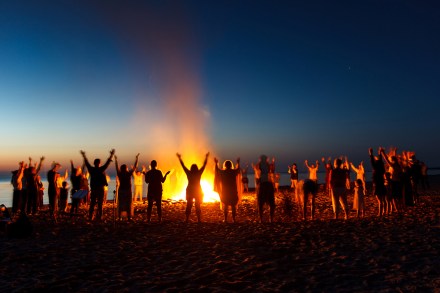
Dante’s Beach, Ravenna The Feast of the Assumption began for me just after midnight with a WhatsApp message from my eldest son, Francesco Winston, 20, which said: ‘Papà don’t come, the police are everywhere.’ He and my eldest daughter, Caterina, 21, had invited me to a party on the beach organised by their group of friends to mark Ferragosto, the most important day of summer. There would be a bonfire and sausages, booze and guitars, and all the rest of it, until the blood-red sun emerged out of the sea at about 6 a.m. to bring it to an end. The huge, shimmering sun rose up out of the sea, a wondrous way to end a party I cannot remember the last time I went to a party. I avoid small talk if possible and am currently not drinking.

Dinner party talk won’t help Gaza

I’m one of the Silent People who sit on the sidelines of the great political events and debates of the present. We Silent People don’t sign on-line petitions or go on protests to show solidarity with this group or that one. We don’t tweet our outrage, or blog our bile. We prefer to keep what we think to ourselves. When a verbal punch-up erupts over Gaza or trans rights at a dinner party, I stay silent and wonder what’s for pudding. The thing we Silent People are most silent about is our silence. It’s easy to see why: the silent are suspect The thing we Silent People are most silent about is our silence. It’s easy to see why: these days the silent are suspect.

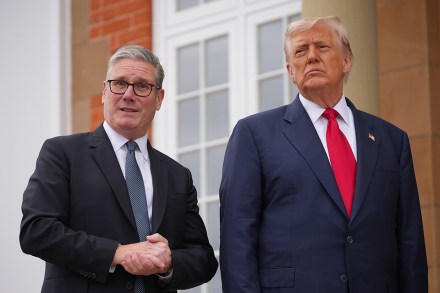
Britain shouldn’t put up with Donald Trump

History is the march of folly and far too many of my countrymen are hearkening to a drumbeat which would lead us to disaster. On Tuesday several of our newspapers led with variations of the same headline: ‘Trump: cut tax to beat Farage.’ This is idiotic counsel, given the state of Britain’s public finances. I would have thought the way to beat populism was not by emulating its idiocies but by prudent, cautious, sensible management of a nation tired of liars. If Donald Trump teaches us anything, it is how to ruin a great nation. Far more useful than parroting the US President’s delusions would be telling the British people more than they are currently permitted to read about his manic conduct of office.

The National have bungled their Rishi Sunak satire

The Estate begins with a typical NHS story. An elderly Sikh arrives in A&E after a six-hour wait for an ambulance and he’s asked to collect his own vomit in an NHS bucket. The doctors tell him he’s fine and sends him home where he promptly dies. His only son, Angad, inherits all his property, which irritates his two daughters, who receive nothing. The personality of the dead Sikh is left deliberately obscure. Newspapers in Britain and India publish glowing accounts of his achievements but his youngest daughter calls him ‘a slum landlord’ who owed his fortune to ‘a lifetime of tax-evasion’. The bad-tempered tussle over his will takes place in Angad’s west London mansion, owned by his mega-rich wife who supports the decision to withhold cash from the greedy sisters.

Could Japan soon be governed by chatbots?

Tokyo Could Japan be the world’s first -algocracy – government by algorithm? The concept has been flirted with elsewhere: in 2017 a chatbot called Alisa challenged Vladimir Putin for the Russian presidency. But there is reason to believe that if any major country is going to replace its politicians with AI, it will be Japan.  The citizens of Yokosuka in Kanagawa have had a remarkably lifelike AI avatar of their mayor, Katsuaki Uechi, at their service for over a year now. It (he?) speaks perfect English with a slight Japanese accent, with Uechi’s facial features manipulated to make it look as if he is pronouncing the words correctly. The avatar exists on the city’s website and YouTube channel, standing at a podium, making speeches.

‘Let Keir be Keir’: inside the cabinet’s away day

Labour ministers face a range of terrible political choices, but when the cabinet met for an away day at Chequers last Friday, the first dilemma was what to wear. ‘There was panic beforehand about what “smart-casual” meant,’ one ministerial aide says. Both Hilary Benn and John Healey turned up in dark suits and red ties. ‘To be fair to the Defence Secretary, he hadn’t seen that bit of the invite,’ a No. 10 official explains. ‘Whereas in Hilary’s case, that is what his smart-casual looks like.’ By contrast, Peter Kyle, the Science Secretary, turned up in what one observer describes as a ‘tech bro AI T-shirt’.

How governments gaslight

The posters now plastered around German public swimming pools are so hilarious that you may have seen them already. Keeping up my entertainment end of things, I’ve forwarded the pictures to multiple correspondents myself. See, news stories have been accumulating – and many similar stories doubtless remain unreported – about Muslim immigrants harassing and sexually assaulting native Germans trying to cool off. In response, some helpful bureaucrat has generated a series of images whose crudely drawn cartoon format makes light of the problem while wilfully, defiantly misrepresenting it. Below ‘Schubsen ist nicht lustig!’ (‘Shoving is not funny!’), a white boy and vaguely brownish boy push a terrified black girl towards the pool. Below ‘Stopp! Grabschen verboten!

The vicious genius of Adam Curtis

In an interview back in 2021, Adam Curtis explained that most political journalists couldn’t understand his films because they aren’t interested in music. Having known a fair few political journalists, I can say with some certainty that he was right. Most politically motivated types are – not to be unkind, but it’s true – total losers. This cuts across left and right, all ideologies and tendencies, from Toryism to anarchism to Islamism and back: whatever you believe, if you believe it too strongly you were probably a weirdo at school. The other kids went out clubbing; you stayed at home, drawing pictures of Lenin or von Mises on your satchel. The other kids were in bands, you were in a reading group.

Being stalked by a murderer was just one of life’s problems – Sarah Vine

Private Eye asked last week: Which of Michael Gove’s luckless staff at The Spectator will be assigned to review this grisly account of their editor’s marital woes? Reader, it’s me! I’m happy to do this, though, because I have an interest in how to be a political wife (I am married to Alex Burghart MP), and perhaps have something to learn here, though I’m struggling to understand, eek, ‘lesson seven’: Realise... that when you step over the salt circle into the five-pointed star coven of politics, you have ceased to become a person. You are now a c**t. There’s a feeling that the author still has a touch of PTSD. Readers with expectations of schadenfreude will not be disappointed.   Sarah Vine shoots thunderbolts.

A small world: Shibboleth, by Thomas Peermohamed Lambert, reviewed

Two shibboleths are treated in Thomas Peermohamed Lambert’s audacious debut novel. The first is the University of Oxford; the second is the Israeli-Palestinian controversy. ‘It is the great issue, isn’t it? The great shibboleth.’ Edward, the protagonist, is a state-educated undergraduate whose connection to Islam is a Muslim grandfather from Zanzibar. He finds himself in a world of wealthy public school boys with ‘a social calendar, rugby fixtures and sexual assault hearings’, and girls from sister schools, ‘fully recovered from eating disorders’. This fictitious world is outdated, but Lambert’s satirical touch still hits the mark about ‘the creatures of the written word [the university] specialised in churning out, as if the country needed more of them’.

Rachel Reeves, the Iron Chancer

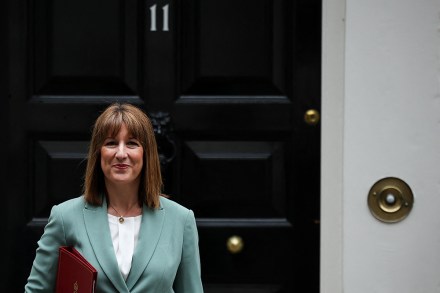
Gordon Brown may not be every teenager’s political pin-up. But as an Oxford student, Rachel Reeves proudly kept a framed photo of him in her bedroom. It was Brown who introduced the first multi-year spending review in 1998: the kind of big political set-piece speech which he relished. Reeves’s speech on Wednesday showed the level of constraints facing the Treasury this decade vs the 1990s. Chess, not poker, is the Chancellor’s chosen game of recreation. As a player and a politician, she prides herself on making decisions guided by skill, care and thought. Yet this week she staked her government’s future on a series of political bets. Her tax rises and changes to Treasury rules gave her some £300 billion to spend across Whitehall – including £113 billion in capital funding.

Britain needs reform

This week’s spending review confirms that where there should be conviction, there is only confusion; where there should be vision, only a vacuum. The country is on the road to higher taxes, poorer services and a decaying public realm, with the bandits of the bond market lying in wait to extract their growing take from our declining share of global wealth. When every warning light is flashing red, the government is driving further and faster towards danger The Chancellor approached this spending review with her credibility already undermined. Promises not to raise taxes on working people translated into a tax on work itself which has driven up unemployment.

Left-wing violence is being normalized

From our US edition

Something has changed in America’s psyche. Violence has become more acceptable. It’s not just that we’ve seen two attempted – and very nearly successful – attacks on Donald Trump’s life, it’s that a worrying number of young Americans cheered on those attempted assassinations and still wish they had succeeded. Since early this year there has been widespread public support for smashing up Tesla dealerships – and for shooting Elon Musk. An unprecedented 10,000 new threats have been made against Senate and congressional members just this year, according to Capitol Police. Applause for the actual murder of UnitedHealthcare CEO Brian Thompson in December goes on, unabated, online.

luigi mangione political violence
Democrats

Who can bring the Democrats together by 2028?

From our US edition

“Why is the Democratic party viewed as toxic by so many? Even people inside the party acknowledge that,” journalist Tara Palmeri recently asked the Democratic Senator from Pennsylvania on her ominously titled Somebody’s Gotta Win podcast. John Fetterman’s answer was blunt: “I think their primary currency was shaming and scolding and talking down to people and telling them, ‘Hey, I know better than you’ or ‘You’re dopes’ or ‘You are a bro’ or ‘You’re ignorant or you know it, don’t you’? You know, ‘How can you be this dumb?’ I can’t imagine it. And then, by the way, ‘They’re fascists, how can you vote for that?’ When you’re in a state like Pennsylvania, I know and I love people that voted for Trump and they’re not fascist.

YMCA

How Trump’s favorite anthem became the barometer for his policies

From our US edition

“The so-called ‘nation-builders’ wrecked far more nations than they built,” said Donald Trump on stage in Riyadh at the joint US-Saudi Arabia investment conference in May. “The interventionists were intervening in complex societies that they did not even understand themselves.” Calling time on the neoconservative framework for diplomacy – also known as waging war – was jaw-dropping enough. But President Trump wasn’t done. He wanted to celebrate. Wrapping up his speech, the self-proclaimed President of “common sense” brought his friend, the Saudi Crown Prince Mohammed bin Salman, onto the stage to commemorate the moment. Naturally, the speakers blasted out the President’s favorite anthem: the Village People’s “YMCA.

Delightful nostalgia for political wonks: The Gang of Three, at the King’s Head Theatre, reviewed

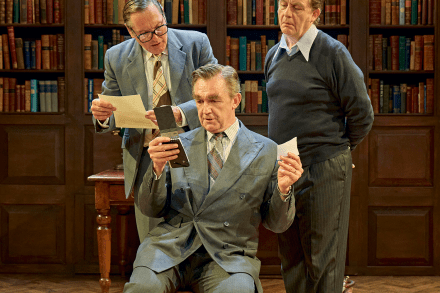
The Gang of Three gets into the nitty-gritty of Labour politics in the 1970s. It opens with the resignation of Roy Jenkins as deputy leader in 1972 in a desperate attempt to quell the party’s growing hostility to the Common Market. He holds a council of war with Anthony Crosland, his old Oxford chum, and they discuss their next moves while awaiting the arrival of Denis Healey whom they both heartily detest. The writers, Robert Khan and Tom Salinsky, capture the characters beautifully. Crosland considers himself more gifted and mature than Jenkins but he hasn’t yet made his mark by holding one of the great offices of state. He boasts about his record during the 1960s when he destroyed the grammar school system and cancelled the Channel tunnel. Both achievements make him deeply proud.

Am I too Online?

From our US edition

There have always been “two Americas.” Our country has always reflected deep social, economic and cultural divides. It’s threaded into the fabric of our national identity, with origins dating back to the very beginning: should America exist on its own? Tensions only intensified in the 19th century between the industrial North and agrarian South, which played out in the Civil War and Reconstruction. In 1967, Dr. Martin Luther King Jr.’s “The Other America” speech described two nations. One was prosperous. The other was trapped in poverty, racial injustice and systemic inequality, especially for black Americans.

Cathedral online

My apology to Reform

I have read countless commentaries explaining why we shouldn’t take Reform’s victories last Thursday too seriously. They are all wrong. I have the distinct impression that these were the most significant election results for a good few decades. Up here in the north, everyone I know voted Reform. More importantly, when I used to ask people how they voted, they would beckon me to one side and, through a cupped hand, whisper ‘Reform’. Now they say it out loud and proud. And the apology is because I had doubted Reform’s ability to climb above 30 per cent – the crucial figure. I also doubted that they were serious enough about the Blue Labour/SDP levelling-up stuff. And I doubted their ability to make serious inroads into local government. All of this was wrong too.