Podcast

My favourite failed podcasts

The promise of the internet was supposed to be thus: you could be your own bizarre, inappropriate self, and you would find a community of the likewise bizarre and inappropriate. You put yourself out there, and you will find what you consider unique or intolerable to be mundane and perfectly within the bounds of acceptable behaviour. But look, some of us went online, we said our things, and the internet responded: what the hell is your problem, truly why would you say something like that? There are a lot of reasons online projects fail, from lack of funds to real life intruding on your time to realising you just don’t care that much any more. But let’s not forget the power of realising you actually are a total weirdo in tracking the demise of creative endeavours.

Apple TV+’s new series damn near cost me my marriage: Calls reviewed

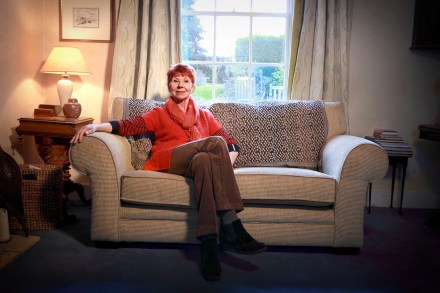
Calls is the very antithesis of televisual soma. In fact it’s so jarring and discomfiting and horrible that I think this week’s column damn near cost me my marriage. ‘Why are we having to watch this hideous drivel?’ grumbled the Fawn, who felt cheated of a soothing night glued to our new addiction, the French series Call My Agent! (Netflix). ‘Because it’s my job and this is a new thing and Call My Agent! isn’t,’ I said. So I had to watch on my own. I do understand the Fawn’s objections. Really, it’s more like radio than TV and might work better enlivening a long car journey.

Barack Obama will make you cringe: Renegades: Born in the USA reviewed

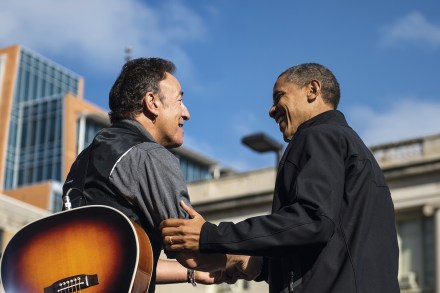
Barack Obama wants the world to know how much he loves singing. In his new podcast, which takes the form of a series of conversations with Bruce Springsteen, he’s rarely without a tune on his lips. ‘Further on up the road…/ you been laughing, pretty baby…’ A shower-singer, a bedroom warbler, an Air Force One air guitarist with an okay voice, the former president is proof that you really can be embarrassing without feeling an ounce of embarrassment. Oh, to have seen his daughters’ faces when he broke into ‘Let’s Stay Together’ in front of Al Green. The sound team at the fundraiser in Harlem urged him to do it, he tells Springsteen, but no one’s buying it.

Harry and Meghan’s podcast of platitudes

Why is there not a single trans voice featured in Harry and Meghan’s first podcast? It’s a question that needs answering. The half-hour recording – the couple’s first since signing a $25 million deal with Spotify – sets out to explore the psychological impact of the Covid-19 pandemic on, as the Duchess herself puts it, ‘people from all walks of life’. Given this description, excluding the trans community from participating seems, at best, problematic – perhaps even sinister. Why leave trans people out in this most public of discourses? This editorial decision – a slap in the face for an already marginalised community – seems all the more surprising because of who has made it.

The Archers is a masterclass in how not to write a monologue

If you’ve been listening to The Archers lately, you’ll know how tedious monologues can be. The BBC has received so many complaints about the stream of soliloquys that has dominated the episodes since lockdown, that Mohit Bakaya, controller of Radio 4, has been compelled to issue an apology. The new format — introduced so that the cast and crew could follow social-distancing rules — has proven especially unpopular because, as some listeners have pointed out, the producers might easily have stitched recordings together to keep the drama going. Instead, they’ve more or less dispensed with dialogue between characters in favour of a watered-down talking heads approach.

The New York Times thinks ‘nice white parents’ are the root of all evil

From our US edition

Cockburn was recently made aware of a new production at the New York Times, bearing the ominous-in-2020 title Nice White Parents. The podcast, launched on Thursday, is the work of the same people who created Serial, the preposterously popular true crime podcast. This time, Team Serial digs into New York City’s public school system, and specifically, the group they say is the root of all pedagogical evils. 'We’ve tried standardized tests, and charter schools,’ narrator Chana Joffe-Walt solemnly intones in the first episode. 'We’ve tried smaller classes, longer school days, stricter discipline, looser discipline, tracking, differentiation. We’ve decided the problem is teachers, the problem is parents.

nice white parents

The unstoppable rise of television-rewatch podcasts

Talking Sopranos — a new weekly podcast which launched this month— is another example of a seemingly unstoppable sub-genre occupying an ever-growing slice of the podcast market: the television-rewatch podcast. The format is simple: take any much-loved yet expired television series (the kind usually prefaced by words like ‘I can’t believe you haven’t seen…’) and scan the cast list until you find some former stars willing to work for an affordable rate. Record them giving an audio commentary on each episode and, bingo, you’ve got yourself dozens of hours of podcasts — and a massive fan base waiting to be converted to listeners.

Why aren’t leftists happy Joe Rogan endorsed Bernie?

From our US edition

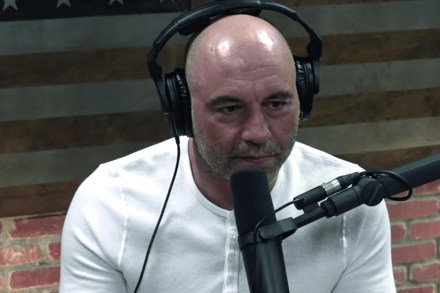
As a twenty-something man who spends excessive amounts of time on the internet I have of course watched countless hours of The Joe Rogan Experience. Like any viewer, I know the martial artist-cum comedian-cum-actor-cum-commentator-cum-podcaster's irritating traits. He is morbidly obsessed with mind-altering drugs. He has a dilettante's weakness for pseudoscience. Worst of all, he — or, at least, his production company — censors people who make fun of his friends, despite his oft-expressed opposition to censorship. But whatever our complaints with the joke-cracking, pad-kicking, pot-smoking, elk-killing renaissance man we have to admire the range of his talents and the scale of his energy. And, besides, listen to anyone talking for hours and you will find a lot to dislike.

joe rogan

The pod delusion

From our US edition

This article is in The Spectator’s December 2019 US edition. Subscribe here. At a recent party, a mortgage-banker friend approached, asking me to come on his podcast. I politely declined. ‘What do I know about mortgage banking?’ I protested. ‘I don’t know my ARM from my Fannie Mae.’ I’ve never made my amigo for the sensitive type. His hobbies include drinking tequila like he’s in a worm-eating contest and getting in fistfights at professional sporting events. But he seemed wounded. ‘My podcast isn’t just about mortgage banking,’ he said, ‘it’s about spirituality.’ Here, I was briefly tempted, as I’m more in touch with spirituality than loan originations.

podcasts podcast pod

Pod almighty

From our US edition

This article is in The Spectator’s October 2019 US edition. Subscribe here. ‘Man the food-gatherer,’ wrote Marshall McLuhan, ‘reappears incongruously as information-gatherer.’ Once we foraged for information in the library. Now we graze among the podcasts. In the age of compulsive eating, podcasts are compulsive listening, an attempt to fill the silence. Nothing better to do? Click on a podcast, and let your attention drift. It takes no effort, it dissolves minutes into hours, and talking about the ‘great podcast’ you just listened to can sound just as smart as saying you’re reading War and Peace. After all, podcasts were originally made by nerds, for nerds.

podcasts

Chapo Trap House’s revolution fizzles

From our US edition

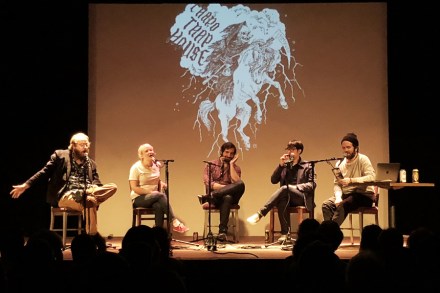
The socialists behind the immensely successful podcast ‘Chapo Trap House’ have now released a book, The Chapo Guide to Revolution. A satirical attack on liberals and conservatives, as well as a sincere case for democratic socialism, it is often funny and sometimes instructive. The book has good jibes about the foaming rage of right-wing keyboard warriors and the affectations of conservative intellectuals. Chapo satire often flounders on its contradictions, though. The Chapo crew enjoy mocking the appearances of liberal and conservative figures, for example, yet their photographs suggest that if they want such jokes to be effective they should confine themselves to non-visual forms of media.

chapo trap house

Life ‘n’ Arts podcast: celebrating American audacity with William Giraldi

From our US edition

The Spectator USA Life 'n' Arts podcast launches this week with fanfares, the popping of corks, and much coughing and wheezing into microphones. From now on, every week I’ll be casting a pod with artists, writers, thinkers, painters and even people who do something useful for a living too. First up is the novelist and essayist William Giraldi. Author of the novels Busy Monsters and Hold the Dark, and The Hero’s Body, a memoir of misspent youth as a bodybuilder, Giraldi is one of the few contemporary American critics worth reading. This month, he publishes his first collection of essays, American Audacity: In Defense of Literary Daring (Norton).

william giraldi podcast