Philosophy

Why we must forgive Immanuel Kant his misogyny and racism

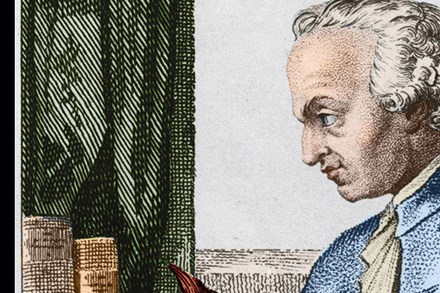
If the only story you’ve heard about Immanuel Kant’s life is that it was so regular that the citizens of Königsberg (now Kaliningrad) would set their watch by his daily walk, then this book has much to teach you. In fact the provenance of this oft repeated anecdote is an essay by the German poet Heinrich Heine, who, far from being an eyewitness, had never even met Kant: ‘Everything had its set time, and the neighbours knew that it was exactly half past three when Immanuel Kant, in his grey frock coat, rattan cane in hand, emerged from his front door.’ The Kant that emerges from these pages is less dull and more recognisably human than his metronomic image. He played billiards, gambled and socialised with the great and good of Königsberg.

Were the French structuralists of the 1960s really as cool as they seemed?

‘Theory was cool. Theory was French. Theory was also, strange though it might sound, sexy.’ When Emily Eakin first encountered ‘theory’ as a Harvard undergraduate in the 1980s, it marked the start of an obsession, intense as a love affair. She wasn’t the only one. For the Anglophone world, France has long represented a style of thinking that is just that: stylish. It’s not for nothing that an estimated three million American tourists flock to the boulevards of Paris each year. The place is synonymous with glamour in its most alluringly intelligent form.

Are good people made by good surroundings, or the other way round?

How can Britain cut its spiralling benefits budget and the number of alienated youths spending taxpayer-generated monies on frivolous consumer goods, facing off against the police and making life unpleasant for those of us not involved in creating poverty porn documentaries? Traditional answers – such as colonising Africa or declaring war on, let’s say, Russia – are off the table. Drones, AI and our defence budget mean that there is no prospect of a Crimean War II, led by the kind of martial Britons who so frightened the Duke of Wellington on the Peninsular campaign. What then? Britain’s current problem is one that the heroes of Joad Raymond Wren’s scintillating book never had: a complete want of thinking outside the box.

A tower of nonsense

Western civilization believes in increasingly few Big Things, as the Greek poet Archilochus and the 20th-century philosopher Isaiah Berlin called them. This includes the One Big Thing, God, the numerous philosophical proofs of whose existence many claim to find insufficient and unbelievable. Among those things the West does believe in are the numerous discoveries that scientists have claimed for themselves, such as the recent discovery that the universe is expanding at its edges – that is to say, it is receding from us – faster than the speed of light, owing to the cumulative stretching of space: a thing that seems to me to be far more unimaginable and unbelievable than the existence of a single triune God who created that universe and everything in it.

The humiliating truth about the way we think

Over the long span of human existence, different cultures have held varying notions as to how responsible we are for our own thoughts and beliefs. Before the dawn of the Abrahamic religions, and in places untouched by these faiths, it tended to be the rule that individual members of the group could only be understood as parts of the whole, or in the grander cosmic scheme of things. The ascendence of Christianity in Europe, with its idea of the indivisible soul, tilted matters more towards a belief in individual agency and accountability. This concept, secularised by Descartes, who gave us the commanding rational ego, has proved resilient ever since, despite the best efforts of Freud, neuroscience and gene selection theory to dethrone it.

Who wants to bring back the Neanderthals?

In the not-too-distant future, if your T-shirt starts giving fashion advice or we’re all enslaved by a race of disease-resistant metahumans, then blame Martin Amis. More precisely, blame his obsession with Space Invaders. With a foreword by Steven Spielberg, Amis’s 1982 Invasion of the Space Invaders: An Addict’s Guide to Battle Tactics, Big Scores and the Best Machines gave intellectual heft to a pursuit – videogaming – that had hitherto been the preserve of glassy-eyed youths. His advocacy proved prescient. Over the next couple of decades, the best minds of a generation dedicated their lives to making pixellated worlds as compelling and realistic as possible.

Don’t let AI read philosophy for you

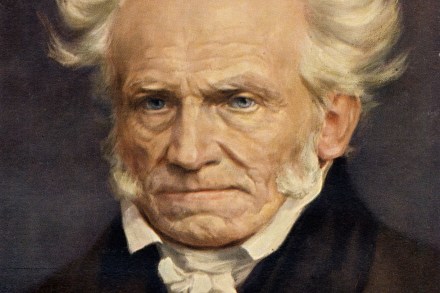
The German philosopher Arthur Schopenhauer (1788-1860) once wrote that "the man who feels himself drawn to philosophy must himself seek out its immortal teachers in the quiet sanctuary of their works." That’s easier said than done: philosophical classics have a terrible reputation outside ivory towers – as big, boring, difficult books, filled with obtuse theorizing about irrelevant problems, their covers featuring ghastly old men staring miserably out at the reader. Books about philosophy are hugely popular today, most of which repackage the thoughts of past thinkers for time-pressed readers – but I suspect not many people transition from these guides to the great works themselves, especially when AI can do all the hard reading for you.

philosophy

The mystery of what makes us special remains unsolved

Consciousness is thought by many to define what it is to be human. We know that animals are conscious to some extent, but they don’t have what we have in that department. So if we can explain how human self-awareness works it will be a Rosetta Stone to understanding what makes our species so odd, or, depending on your view, so special. Also: big brains love exercise. And the great thing about this topic is that it can be tackled by biologists, neurologists, philosophers, physicists and even novelists. It’s an interdisciplinary, no-holds-barred intellectual wrestling match. Michael Pollan, an American journalist and academic who works at both Harvard and Berkeley, comes from a literature background but is fluent in the relevant science.

Is it better to be reasonable or rational?

You find yourself in the heat of an argument and your mulish interlocutor refuses to see the light. ‘Please,’ you implore, ‘be reasonable.’ But what exactly are you asking? Do you want him to be more rational? Or to act as a typical person might act in his shoes? Maybe the whole question is hopelessly subjective, as your paragon of reasonableness may be his idea of madness, and vice versa. Or else perhaps your request is a mere smokescreen – a sly piece of rhetoric to mask your will to power behind the language of decency? In a short and deftly argued book, Krista Lawlor, a professor of philosophy at Stanford University, dives into the questions of how to be reasonable and why it matters – in law, in our relationships, in morality and in political life.

Adventures in the City of Light: Rousseau’s Lost Children, by Gavin McCrea, reviewed

What biographer would pass up a time-travelling opportunity to meet their subject face to face? This novel’s protagonist, Gavin Mulvany, an academic specialising in Jean-Jacques Rousseau, is somehow able to slip back in time to 1777, a year before the fractious French writer died. He turns from irritating fan to close companion, accompanying Jean-Jacques on long philosophical rambles and coach journeys around Paris. They attend the premiere of Voltaire’s last play (as does Marie Antoinette), call on Benjamin Franklin and visit the Marquis de Sade in a lunatic asylum. Gavin’s long-delayed book about Rousseau is concerned to solve the puzzle of why a passionate theorist on children’s education could dispatch his own five newborns to a foundling hospital, never to see them again.

Christian nihilism is taking over American life

From our US edition

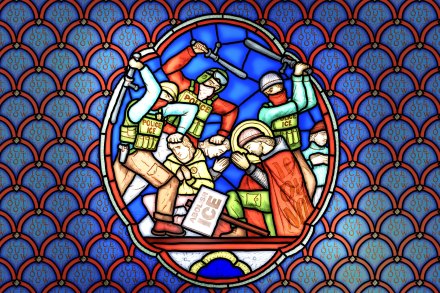
There’s something very religious about nihilism. For proof, look to the new capital of American nihilism, Minneapolis. A callousness toward death and danger has fallen over the city. Of the many disturbing videos to come out of Minnesota’s anti-ICE protests, one of the stranger examples shows a white man walking up to a line of heavily armed law-enforcement officers, shouting: “Shoot us in the fucking face! Shoot me in the fucking head!” What possesses someone to do that? I understand being against Donald Trump and Stephen Miller’s blitzkrieg deportation policy. And it’s not irrational, in the viral age, to protest theatrically. But this is psychotic. It is the death drive in overdrive.

christian nihilism

Where will the extremes of OOO philosophy lead?

The world divides between creeps and jerks. History can be seen as a long, unedifying creep, or what one of Alan Bennett’s characters called ‘one fucking thing after another’. Alternatively, it might be seen as consisting of jerks – that’s to say, big events that revolutionise the world (the invention of the printing press, the advent of steam, the French Revolution, Hiroshima, Tim Berners-Lee’s creation of the world wide web). The latter position is essentially that of the philosopher Alain Badiou. The French Maoist maintains that the significance of events that stand out from the usual blah of history can only be grasped retroactively – vindicating Zhou Enlai’s reply when asked in 1972 about the significance of the French Revolution: ‘Too early to say.

The serious business of games: Seven, by Joanna Kavenna, reviewed

Joanna Kavenna is very serious about games. Her novels have a certain playful quality, even her debut Inglorious, where the humour and allusions are Mittel-european. More markedly ludic are her Lewis Carroll-esque fantasy about quantum physics, A Field Guide to Getting Lost and the Philip K. Dickish tech-dystopia of Zed. In Seven, however, it’s not just the style but the subject. As if to make clear that games are neither childish nor mere distractions, there is a pointed reference to Johan Huizinga’s study Homo Ludens¸ published on the eve of the second world war. The narrator here is working for a formidable philosopher in Oslo, whose current project is entitled ‘Thinking outside the Box about Thinking outside the Box’. (‘I’m serious,’ the narrator archly notes.

No passive utopia: Tibetan Sky, by Ning Ken, reviewed

We often forget to ascribe agency to modern Tibet. Politically, it seems to lie mute in the behemoth shadow of China. Culturally, we encounter it more as the backdrop to journeys of self-discovery than a producer of modern culture in its own right. But the villages of the Tibetan plateau are defiantly cosmopolitan in Ning Ken’s novel, the first by this important Chinese writer to be translated into English. Sardonic and erudite, it’s the only major literary treatment of Sino-Tibetan relations to appear in English in decades. The author belongs to the generation of such era-defining Chinese novelists as Mo Yan and Yan Lianke, publishing his first fiction in the heady days of reform and opening-up.

Reflections on the Winter Solstice

From our US edition

According to the handy timeanddate.com website, the Sun rose over our patch of Long Island Sound today at 7:18 this morning. It will set this afternoon at 4:28. From beginning to end, we will enjoy 9 hours, 12 minutes and 53 seconds of full daylight (not counting the prefatory and subsequent periods of twilight) in this bit of New England today. That may seem like a gyp. In high summer, we get more than 15 hours of daylight. But look on the bright side. Yesterday was the Winter Solstice, the shortest day of the year. We had just 9 hours, 12 minutes and 50 seconds of daylight. So you see today is fully three seconds longer than yesterday. Gutta cavat lapidem. I can’t quite see it yet, but today the Sun began its leisurely trek back north.

winter solstice

Why religious societies succeed – with Rory Sutherland

35 min listen

Advertising guru – and the Spectator's Wiki Man columnist – Rory Sutherland joins Damian Thompson for this episode of Holy Smoke. In a wide ranging discussion, from Sigmund Freud and Max Weber to Quakers and Mormons, they discuss how some religious communities seem to be predisposed to success by virtue of their beliefs. How do spiritual choices affect consumer choices? Between Android and Apple, which is more Protestant and which is more Catholic? And what can modern Churches learn from Capitalism? Produced by Patrick Gibbons.

A philosophical quest: A Fictional Inquiry, by Daniele del Giudice, reviewed

A researcher arrives in Trieste to piece together the life of a well-known literary figure. In cafés, bookshops and hospitals he visits the friends and lovers who were part of the writer’s circle. Now dying themselves, they share echoes of a literary scene that has long since dispersed. Women recall how they were celebrated in poetry; men how their conversation sparkled. Someone remembers how the writer once asked if he might immortalise one of his witticisms in his work: ‘Forty years ago I made a joke in a bar, and he said “Oh that’s good! Will you give it to me? I want to put it in my novel.’” But the proposed novel never came. At the heart of this short, dreamlike book is a gap: the great writer around whom this literary society orbited never published anything.

The concept of ‘the West’ seems to mean anything you like

A hundred years ago, T.S. Eliot wrote to Geoffrey Faber, for whose publishing company he had just started work, complaining: ‘The Defence of the West… is a subject about which everyone thinks he has something to say.’ Plus ça change? Back then, people were coming to terms with a war that had shown the West to be neither as unified nor as civilised as had been assumed. A century on, American isolationism, demographic decline, mass immigration, Islamism and a slow but decisive shift in global economic gravity are giving commentators the opportunity to bloviate endlessly about the decline/suicide/end/decay/of the West. But what exactly it is that we are defending or lamenting is far from clear. Georgios Varouxakis’s The West attempts to answer that question.

Camus comes to America

From our US edition

The 20th-century French writer Albert Camus remains a living author, a permanent contemporary, in a way that the far more dogmatic and ideological Jean-Paul Sartre does not. The latter provided a caricature of “existentialism,” nihilism dressed up as absolute freedom, beholden to no limits and no enduring truths. In contrast, the author of The Stranger and The Plague rejected Sartre’s facile nihilism, as well as his repellant accommodation with murderous messianism, typically conveyed in fashionable leftist nostrums. The more hopeful side of Camus comes through in his recently re-released Travels in the Americas: Notes and Impressions of a New World.

camus

Orcas, dolphins and the ancient question of animal sentience

Killer whales have been seen offering titbits to divers – but as a gift or a lure? Plutarch (c. AD 100) had strong views on animal sentience.  Unlike most ancients, Plutarch did not think that animals were there to be exploited for humanity’s benefit, whatever that entailed for the animals themselves. He believed they were worthy of respect rather than exploitation because they demonstrated, admittedly in a ‘weak’ and ‘muddy’ form, a capacity to think, reason and remember. For example, without those capacities, an animal would not be able to discriminate between what it should avoid and what pursue.