Paywall

Style on steroids: the power of Jerry Bruckheimer

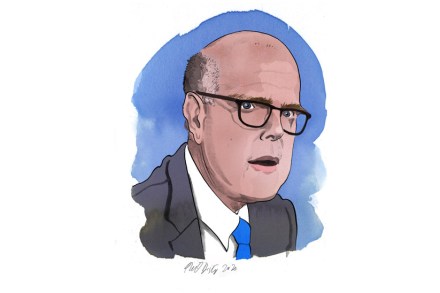
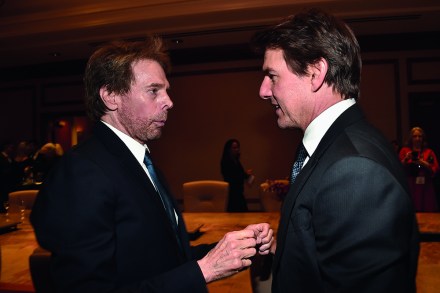
This article is in The Spectator’s January 2020 US edition. Subscribe here. Jerry Bruckheimer is a quiet man who produces the loudest movies in the world. Early, arty Jerry was the fixer who put together 1980’s slight neo-noir American Gigolo. Thrusting mid-period Jerry, happily partnered with the 1980s zeitgeist and fellow producer Don Simpson, made the classics Flashdance, Top Gun and Beverly Hills Cop. Don died a truly maximal Hollywood death in 1996 — they found 21 different substances inside him — but Jerry, always the sober one, kept going bigger, faster, louder: The Rock, Con Air, Armageddon.
jerry bruckheimer
standing

Standing up to eat is the new line in dining in DC

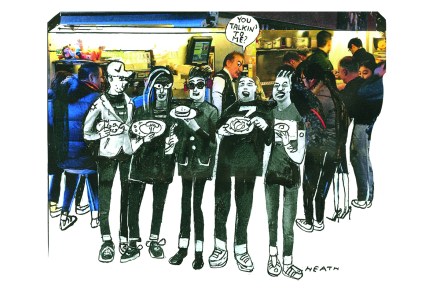
This article is in The Spectator’s January 2020 US edition. Subscribe here. Going into Spoken English, you feel a little like Henry Hill taking the back entrance to the Copa in Goodfellas. Wander into the Line Hotel, past the check-in, take a right past the elevators and enter the kitchen. It works best if you’re with someone you need to impress. Unfortunately, this time I’m with a Spectator editor. The Line is one of DC’s newest and hippest boutique hotels. That’s another way of saying it’s slightly less boring than the Hilton about five blocks away.

‘A system at odds with the Constitution’

This article is in The Spectator’s February 2020 US edition. Subscribe here.How did America’s house divide for a second time in the 1960s? By a tragedy of good intentions and bad-faith actions, Christopher Caldwell argues in his new book, The Age of Entitlement: America Since the Sixties. He talks to our Life & Arts editor about how we got here from there, and how activism inside and outside the courts has refounded American politics on an undemocratic basis. DG: The Age of Entitlement argues that the Civil Rights Act divided the country by establishing what you call a ‘second constitution’. CC: That is a big part of it. The book is about the evolution of American society since the Kennedy assassination.

caldwell lockdown

Tyranny of the minority

De mortuis nil nisi bonum, the Romans used to say: ‘Of the dead speak only good.’ We can speak nothing else of the friend and longtime Spectator contributor we lost in January. Sir Roger Scruton was a fearless and humane advocate for art, beauty, faith, peoplehood and tradition; a fierce defender of the right to free and honest speech; and a clear-eyed advocate for the legal inheritances and cultural unity of the English-speaking peoples. He was one of the first people to undergo ordeal by ‘cancel culture’, or persecution by progressives, which is why we dedicate this free-speech issue to him. In the early 1980s, Roger was effectively expelled from the academy for expressing conservative opinions in public.

Show off and tell: the sad death of inconspicuous consumption

O America, how do I love thee? Let me count the ways. As an Englishman, I loved the two years I lived in New York as a correspondent for the Daily Telegraph over a decade ago. But I’m afraid I never fell for the American cult of conspicuous consumption — even if at times I thoroughly indulged in its worst excesses. At a party at one of the New York Armories, a huge military building now given over to parties and exhibitions (I forget which one, due to overindulgence), I watched, goggle-eyed, as two brave young blondes frolicked in an ice-cold pool around a larger-than-lifesized ice sculpture of a pair of swans. At another party in SoHo, I made my way to the dance floor to find dozens of twentysomethings dancing around a Range Rover — the car company was sponsoring the event.

consumption

Jung love

This article is in The Spectator’s January 2020 US edition. Subscribe here. If Jim Proser’s goal in writing Savage Messiah was to convince people to take Jordan Peterson seriously, I am afraid he has failed miserably. Peterson, for those without an internet connection, is a Canadian psychologist who rose suddenly to fame after he posted a video on YouTube criticizing a bill that proposed criminalizing speech against transgenderism. In 2018 he published 12 Rules for Life: An Antidote to Chaos, which has sold several million copies. He has confounded undemanding television hosts like Cathy Newman, but he has also debated Sam Harris and Slavoj Žižek, all while keeping up his popular podcasts and lectures.

peterson

A Godfrey New Year

Portland, Oregon A new year, whether you follow the Greek calendar or the Latinx, is like the first page in a new diary, its date set by patriarchal theocracy, its entries written in guilt. I’ve always questioned the tradition of making and then forgetting resolutions. I view them as an empty promise of redemption, like the fad diets with which late-capitalist dysmorphia tyrannizes the fat-positive. This year, however, I decided to indulge my curiosity. Yes, dear reader, I have made a resolution. ‘B-b-but how on Earth can Godfrey Elfwick’s holistically beneficial way of living xir’s best life be improved upon?’ I hear you stutter in bewilderment.

new year

Who invented the hamburger?

The hamburger is the perfect meal in the hand, eaten by workers on their lunch breaks, or by families who cannot afford fancy restaurants. It is the great comestible leveler, suitable alike for suburban barbecues and the front steps of tenement houses. The staple food of American democracy yields cheeseburgers, baconburgers, franchise brands, and drive-in outlets with total annual sales of five billion units. The precise origins of the patty, however, remain opaque. Nobody knows for certain who first thought of cooking a patty of minced beef and serving it inside a fresh-baked bun. The earliest use of the name was for an 11-cent dish, the ‘Hamburger steak’, served at a New York restaurant, Delmonico’s, in 1873. There is no mention of buns or relish.

hamburger
de niro

Is he talking to us?

This article is in The Spectator’s January 2020 US edition. Subscribe here. There’s an old joke about Democrats and Republicans that might help us understand the anti-Trump rantings of pop-culture icons such as Robert De Niro and Bruce Springsteen. Two old guys are talking politics. One asks the other which party he supports. ‘The Democratic party,’ he responds. ‘Why so?’ ‘Because my daddy voted for the Democratic party, and my granddaddy voted for the Democratic party. So I vote for the Democratic party.’ ‘That’s ridiculous,’ rejoined the Republican voter. ‘So, if your daddy had been a hoss thief, and your granddaddy had been a hoss thief, does that mean you’d be a hoss thief, too?

americans syria

After the Americans

This article is in The Spectator’s January 2020 US edition. Subscribe here.Malkef, northern Syria I’m sitting under an olive tree about a mile from the front with ‘Agir’, a Kurdish soldier from the Syrian Democratic Forces (SDF). The sharp cracks and dull rumbles of fighting make their way to us over dusty farmland; the shade protects us from the scorching mid-morning sun and omnipresent Turkish drones. Agir tells me how the Turkish-backed Free Syrian Army (FSA) can’t fight — at least, compared with the Islamic State (Isis). Agir fought Isis with American backing for years in Syria. Sometimes, he says, Isis soldiers would tie foam cushioning to their feet, sneak up to your position in the moonlight and slit your throat.

All modern art is quite useless

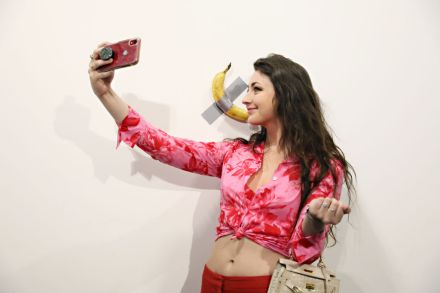
This article is in The Spectator’s January 2020 US edition. Subscribe here.Laramie, Wyoming ‘It’s pretty, but is it art?’ Rudyard Kipling asked in 1890. In those days the modernist movement across the Beaux Arts was gaining a grip on the western world that it maintains in the 21st century and is likely to hold into the 22nd, if there is one. One hundred and thirty years later, Kipling’s question calls for a plain response: ‘If it’s ugly, it has to be art.’ Aquinas defined art as ‘right reason in action’; reason in making. Right reason depends upon a man’s knowing what he ought to believe, desire and do. The modern artist is ignorant of all of these things.

art
isaac hayes

The Hayes of our lives

This article is in The Spectator’s January 2020 US edition. Subscribe here. Somehow it’s fitting that in the era of Donald Trump, the blaxploitation genre, which emerged from the black nationalist movement during the original call for ‘law and order’ during the Nixon administration, has been making a comeback. In 2018, Sony released a remake of Superfly starring Trevor Jackson as pusherman Youngblood Priest and directed by Director X. But perhaps no film has done more to signal the revival of the blaxploitation genre than the latest Shaft film. The franchise could scarcely appear hardier. It was Gordon Parks who first adapted the film from the works of the pulp novelist Ernest Tidyman.

2019 was not a good year for freedom of speech

This article is in The Spectator’s January 2020 US edition. Subscribe here. ‘Crisis? What crisis?’ That’s often the response of complacent academics when people like me draw attention to the erosion of free speech on campus. For instance, Lee C. Bollinger, the president of Columbia University, wrote an essay for the Atlantic last June entitled ‘Free Speech on Campus is Doing Just Fine, Thank You.’ But is everything rosy in the groves of academe? I thought I’d take this opportunity to look back on the year gone by and see if 2019 was a good or bad one for intellectual freedom in American higher education.

freedom
food cart

In the cart of the city

This article is in The Spectator’s January 2020 US edition. Subscribe here.New York City It’s the Sunday before Memorial Day outside the Metropolitan Museum of Art and the street is filling up with families. Navy servicemen and women stop for a friendly word and a photo. But a tragedy is happening here and there’s nothing anyone seems able to do about it. Elizabeth Rossi, a retired disabled Marine veteran in her early forties, runs a hot-dog stall outside the museum. She served in Operation Iraqi Freedom. ‘On my first day we were bombed; you never forget that,’ she says. Her father, Dan, also a disabled vet, runs the van next door. But they feel that they have been rejected by the city of New York and the world around them.

The soft power of Italian jazz

This article is in The Spectator’s January 2020 US edition. Subscribe here.New York City The singer and saxophonist Ray Gelato opens his set at Birdland with a cover of ‘That’s Amore’. But this isn’t the sleepy send-up of Neapolitan street waltzes that Dean Martin recorded in 1953. Gelato raises the tempo and swings it four to the bar. As he sprints his way through the verses, Philadelphia’s City Rhythm Orchestra drives the pace, piano, bass and drums holding down the shuffle while the four-piece horn section plays call-and-response to each other and his vocals. It’s the start of a fun, high- energy set, the two hours of which feel as if they pass in half the time. You don’t tap your feet to this music: you stomp.

italian jazz
lose

How to lose votes and bore people

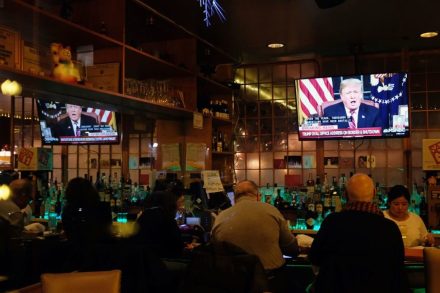
This article is in The Spectator’s January 2020 US edition. Subscribe here. If we can’t be governed, we may as well be entertained. That’s become the ethos behind the Donald Trump presidency. The national debt might continue to bulge, our military might remain pointlessly overextended, our healthcare system might stay ablaze, but at least politics has become funny in a nothing-matters, Rick and Morty kind of way. Americans upvoted a man who’d spent hours on the Howard Stern show boasting about his sexual prowess, and we expect to be amused, dammit. So why has the news lately been so dreadfully boring? The fault certainly doesn’t lie with Trump.

Polls apart

This article is in The Spectator’s January 2020 US edition. Subscribe here. Galileo famously said that the book of nature is written in the language of mathematics. But what made him so important in the history of science was his further insight that mathematics, in order to reveal the laws of nature, had to be empirically tested. Mathematical formulae described what he thought would happen; he had to clamber up the leaning tower of Pisa and drop the two balls to convince us that objects of different masses fall at the same speed. I am not sure that most modern pollsters have taken Galileo’s second insight fully on board. The modern pollster tends to be in love with his model.

polls

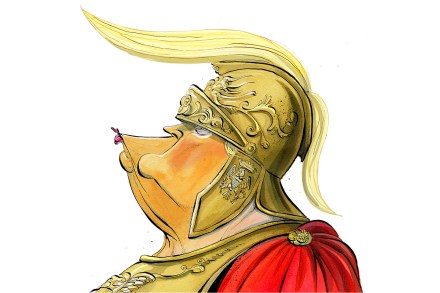
The case for Genghis Trump

This article is in The Spectator’s January 2020 US edition. Subscribe here. America has a problem, and it’s not Donald Trump. Suicides and deaths by overdose are up; life expectancy is down. The country that led its allies to definitive victory against both Nazi Germany and imperial Japan in just four years has now been fighting in Afghanistan for nearly 20, with no end to the Taliban in sight. Wall Street prospers but young Americans are deep in debt, manufacturing employment is in decline, and the Great Recession of a decade ago revealed how fragile and irrational the whole financial system is. For all the talk we hear about ‘polarization’, the policies that led to these grim results were born of bipartisan consensus.

genghis donald trump boomer republicanism establishment

A hero for the Snowflake age

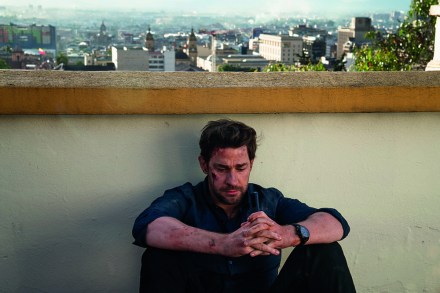
This article is in The Spectator’s January 2020 US edition. Subscribe here. What have they done to Jack Ryan? That’s a rhetorical question, by the way: he’s been captured by a crack team of Ivy League majors in Race, Gender and Weaponized Resentment Studies — probably the same guys who wrote the Washington Post headline calling Abu Bakr al-Baghdadi an ‘austere religious scholar’ — and they’ve reengineered him as a beta-cuck pantywaist woke dork for the Age of Snowflakes. To be fair, Jack did slightly show these tendencies in the first season of his Amazon adventures.

jack ryan
Johnson

The audacity of verse

This article is in The Spectator’s January 2020 US edition. Subscribe here. Shelley famously and optimistically proclaimed that poets were the unacknowledged legislators of the world. Adorno famously and pessimistically declared that poetry was impossible after Auschwitz. In The Music of Time, his new study of poetry in the 20th century, John Burnside makes a rather more modest claim: that to write a poem at all is an act of hope. By any standards, Burnside’s own career seems cause for hope in poetry’s capacity to transform at least one individual life.