Parliament

What the papers say: Would the Lords dare block Brexit?

From our UK edition

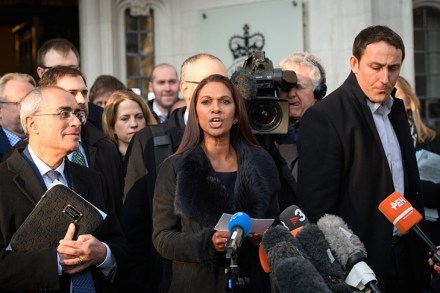
Theresa May’s Brexit timetable is on track after MPs overwhelming backed the Government’s Article 50 bill in the Commons last night. Not everyone is happy with the role that Parliament has played so far in holding ministers’ feet to the fire over Brexit though. In its editorial this morning, the Guardian says MPs failed their first test: ‘Too many MPs genuflected’ to the referendum outcome - a result which the paper describes as one of the worst political decisions in the UK since the second world war. It seems as though the referendum took away Parliament’s power - and not even the ‘heroic efforts’ of Gina Miller in winning her case in the Supreme Court have helped get it back - the paper says. So what next?

John Bercow was right to criticise Donald Trump

From our UK edition

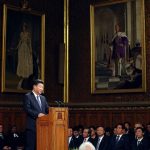
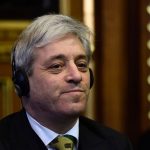
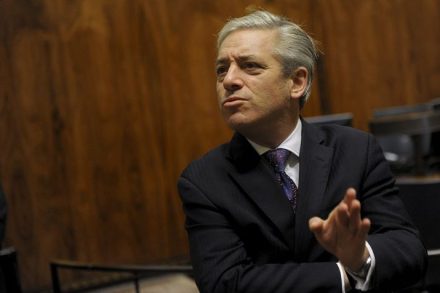
John Bercow has taken a lot of flak for his comments about Donald Trump. The Speaker has been accused of being an embarrassment to Parliament for saying Trump wouldn't be welcome to address MPs during a state visit. But amidst all the fury, Bercow’s pre-emptive ban does touch on a deeper question about the muddled thinking in British foreign policy. Several autocrats, many with poor human rights records, have addressed both Houses of Parliament: Emperor Hailie Selassie of Ethopia in 1954, Nikolai Bulganin of the Soviet Union in 1956, and his successor Alexei Kosygn in 1967, have all done so. And during Bercow's time as Speaker, the Emir of Kuwait and President Xi Jinping of China, have also spoken in Parliament.

What the papers say: Why Bercow was wrong – or right – to speak out about Trump

From our UK edition

John Bercow has grabbed the headlines this morning with his pronouncement on Donald Trump’s state visit. But was he right to voice his opinions about the President? No, says the Daily Telegraph which claims that Bercow was only speaking for one person when he said Trump would not be welcome addressing MPs in Westminster Hall: himself. Instead, Bercow would do well to delve into the history books and remember the actions of speaker William Lenthall who faced down Charles I with the words: 'I have neither eyes to see nor tongue to speak in this place but as the House is pleased to direct me.' Yet instead of listening to his predecessor’s words of wisdom, Bercow has chosen to voice a ‘near hysterical rant’.

John Bercow should have kept his trap shut about Donald Trump

From our UK edition

John Bercow is a little chap, and no harm in that, but does he really need to grandstand about his inviolable liberalism? Do we really need to know that 'opposition to racism and sexism' were 'hugely important considerations' in making him raise an issue which should have been left well alone, viz, the theoretical possibility that President Trump would address parliament in Westminster Hall? It wasn’t an issue, not really, until the Speaker sounded off about his opposition to it.

What the papers say: Brexit’s day of reckoning and why Trump’s critics are wrong

From our UK edition

At last, says the Guardian, MPs will finally have a proper say today on Brexit. David Davis has said the debate comes down to a simple question: do we trust the people? But for the Guardian, it’s a mistake for MPs and peers not to try and ‘get in the way’ of pushing the triggering of Article 50 back beyond Theresa May’s ‘self-imposed deadline’ of the end of March. It’s clear that the outcome of last June’s referendum left Parliament reeling: ‘casually drafted regulations’ backed up the vote and ‘with no leave process mapped out, the Commons failed to muster the resolve to force its way into the process of departure’.

The Spectator’s Notes | 26 January 2017

From our UK edition

The English tradition of dissenting judgments in important civil cases is a good one. They are often better than the majority view, because they tend to be advanced by judges who resist the self-aggrandisement of their profession. In the Miller case on triggering Article 50, before the Supreme Court, Lords Reed, Carnwath and Hughes dissented from the other eight. This is what Lord Reed says: ‘…the argument that withdrawal from the EU would alter domestic law and destroy statutory rights, and therefore cannot be undertaken without a further Act of Parliament, has to be rejected even if one accepts that the 1972 Act creates statutory rights and that withdrawal will alter the law of the land.

A wake-up call for Parliament

From our UK edition

Parliament is the cockpit of the nation, but MPs have been on autopilot rather a lot in the past 40-odd years. Ever since the United Kingdom joined the European Economic Community, more and more powers have been passed away from Parliament to Brussels and its institutions. Brexit will see these powers come flowing back to Westminster. So it was appropriate that the Supreme Court has decided that Parliament must legislate for the triggering of Article 50, the two-year process by which this country will leave the EU. For MPs to vote against Article 50 would be to vote against the referendum result itself; it says nothing about the terms on which Britain will leave the EU.

On Syria, it is easier for MPs to reflect on their past mistakes than confront the present

From our UK edition

Whose fault is the bloodshed in Aleppo? Yesterday the House of Commons discussed this at some length in an emergency debate on the onslaught by Syrian and Russian planes on the city. One of the most powerful speeches came from George Osborne who spoke about the impact that the 2013 Commons vote had on Syria and on American politics. It is worth reading in full. ‘Of course, once this House of Commons took its decision, I believe it did have an impact on American politics,’ he told MPs. ‘We cannot have it both ways - we cannot debate issues such as Syria and then think that our decisions have no impact on the rest of the world. I think that did cause a delay in the American Administration’s actions and did cause Congress to get cold feet.

What the papers say: Article 50 debate, Brexit ‘fog’ and ‘looney Labourites’

From our UK edition

After MPs voted last night to back the Government’s plan to invoke Article 50 by the end of March, the Guardian says it’s good news that Parliament is now finally using its powers to shape the Brexit process. The paper says it’s ‘extraordinary’ that so much time has passed since the referendum, given how there is still no ‘real clarity about the government’s general aims’ in upcoming negotiations. It says yesterday, however, ‘some fog began to lift’: ‘At last, the great issue of the UK’s future relations with Europe was finally being discussed where it matters most of all, in our elected parliament,’ the paper says.

The unhinged backlash to the High Court’s Brexit ruling

From our UK edition

As a general rule, any day the government loses in court is a good day. So yesterday was an especially fine day. A delicious one, too, obviously, in as much as the fist-clenched, foot-stamping, whining of so many Brexiteers was so overblown and ludicrous it toppled into hilarity. People who shouted for months about the urgent need to restore parliamentary sovereignty now reacted in horror to the restoration of parliamentary sovereignty. 'That's not what we meant', they spluttered. We meant governmental supremacy only when it suits us. Well, tough. A certain amount of squealing was only to be expected since, if Nigel Farage has taught us anything, it is that the Brexit-minded really don't like it up 'em. But, still.

Theresa May will only regret it if she doesn’t call an early election

From our UK edition

Is there anything more absurd than hearing a bunch of Remainers claiming that they have achieved a great victory for Parliamentary democracy in today’s High Court ruling that Parliament should vote on the exercise of Article 50, beginning Britain’s exit from the EU? Parliament voted for a referendum, in which the British people voted to leave the EU. All that today’s judgement does is frustrate that process. As I wrote last week over Heathrow, the judicial review system is fast-turning Britain into a Krytocracy, in which judges wield the real power. All that said, why is the government bothering to fight the judgement? If the Remainers want more Parliamentary democracy, Theresa May should give it to them.

Parliamentarians vs Corbynistas – two tribes at war in the Labour Party conference

From our UK edition

Quite extraordinary scenes here at the Labour Party conference. I’m typing this in the main conference hall and have just watched Mike Katz of the Jewish Labour Movement give a short speech against anti-Semitism. This ought to be utterly uncontroversial, but it has become a wedge issue between the two tribes who now make up the Labour Party. Between those who were members before May 2015, and those who joined after. There have two very different outlooks, and are at war with each other. https://www.youtube.com/watch?v=msl8Hm0GZp0 Katz’s speech was cheered effusively, like a rallying call, by about a third of the hall. And, amazingly, heckled by other members.

Labour MP climbs the greasy pole with Flora plug

From our UK edition

After the Government released its childhood obesity strategy last month, Theresa May stood accused of sidelining the issue. So, Mr S was pleased to receive an invite to an event focussing on the issue. Sharon Hodgson -- the Chair of the All-Party Parliamentary Group for School Food -- is holding a breakfast on Tuesday morning to call on the government to do more to tackle child obesity. However, Hodgson is not alone in her mission -- the Labour MP appears to have teamed up with Flora. In an email for the event sent out to hacks, Hodgson invites attendees 'on behalf of Flora'.

Letters | 14 July 2016

From our UK edition

Lurid about Leavers Sir: Matthew Parris has spent much of the past few months denigrating those of us who want to leave the EU, but his latest article (‘For the first time, I feel ashamed to be British’, 9 July) really does go too far. It is simply untrue to claim that the leaders of the Leave campaign relied on hatred of immigration, and that this won it for Leave. As Brendan O’Neill pointed out (‘Not thick or racist: just poor’, 2 July), a majority of Leave voters (including me, for what it is worth) rejected the EU primarily for sovereignty reasons. But whatever Mr Parris may feel, there is nothing immoral about wanting to control (not stop) the number of immigrants who enter one’s country.

The shame of Iraq

From our UK edition

‘If it falls apart, everything falls apart in the region’ — Note from Tony Blair to George W. Bush, 2 June 2003.   Instead of asking why we fought the war, we should ask why we lost The extraordinary length of time that we have had to wait for Sir John Chilcot’s report into the 2003 invasion of Iraq has not made the end result any more satisfying. For some, nothing less than the indictment of Tony Blair on war crime charges would have sufficed. As for Blair himself, and many of those who surrounded him when the decision was made to remove Saddam Hussein from power, they will go on believing until their dying day that not only was the war just, but there was nothing much wrong with the way in which it was sold to the public and to Parliament.

‘Our Jo’: MPs unite in grief to pay tribute to Jo Cox in Parliament

From our UK edition

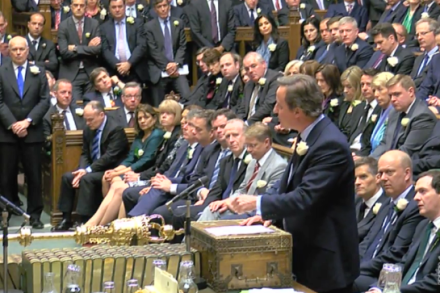
MPs from all parties have gathered in the Commons to pay tribute to murdered Labour MP Jo Cox. Parliament was recalled today following the terrible events last Thursday. The Speaker John Bercow opened the moving session by saying politicians were gathered in 'heartbreaking sadness'. He went on to say: 'An attack like this strikes not only at an individual, but at our freedom. That is why we assemble here, both to honour Jo and to redouble our dedication to democracy.' Jeremy Corbyn then delivered his tribute to Jo Cox: David Cameron followed Corbyn in paying tribute to Jo Cox.

Labour’s England problem

From our UK edition

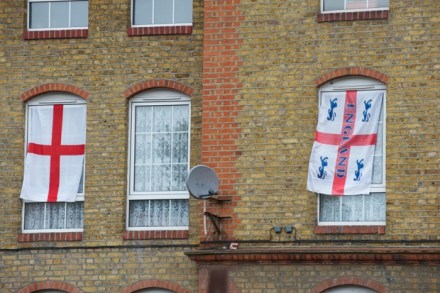
In the window of a council house on a working-class estate in Exeter was a sticker bearing the cross of St George and a simple warning: ‘If this flag offends you, why not consider moving to another country?’ For some canvassers working on Labour MP Ben Bradshaw’s 2015 campaign, such a symbol naturally meant the dreaded ‘A’ on the canvas sheet: ‘Against Labour’. In fact, it was a household of solid Labour voters — supporting a party far too often offended by the flag. The truth is that the Labour party has an English problem. While members might just about embrace Britishness, too many feel queasy about Englishness — with all those connotations of ethnicity and chauvinism.

Parliament is becoming an easy place for ministers to calm rows

From our UK edition

The government has had a messy few weeks: that much is clear. And the latest mess, which is the row following the Panama Papers leaks, is still all over the press a week after the story broke. There are apparently more revelations to come. But the government has also settled into a pattern of having multiple damaging rows which are played out in the media over days, with a series of ill-judged responses making matters worse, followed by an attempt to calm things down in the House of Commons on a Monday afternoon.

Listen: Justin Webb takes Amber Rudd to task on Today over her ‘plague of frogs’ Brexit claims

From our UK edition

Today Amber Rudd is doing her bit for the In campaign with a speech in which she will warn the nation that UK energy costs could 'rocket' by £500 million a year if Britain were to vote to leave the European Union. The Energy and Climate Change Secretary will also claim that leaving the EU would mean that President Putin could raise the price of Russian gas and in turn cause energy chaos for Britain. To discuss the claims, Rudd -- whose brother Roland is the treasurer of the Britain Stronger in Europe campaign -- appeared on the Today show with Justin Webb. Unfortunately for Rudd, Webb had done his research when it came to her claims. He proceeded to take her to task over  the speech which he pointed out had a 'bit of a plague of frogs feeling to it'.

Watch: Norman Smith’s live BBC broadcast interrupted by Parliament security

From our UK edition

While PMQs took place in the Commons this lunchtime, outside in the Central Lobby a protest could be heard. Disability campaigners  had gathered outside Parliament to protest the benefit cuts in the Budget. Not that the powers that be want you to hear about the protest. The BBC's Norman Smith was interrupted live on air by a member of Parliament security who told him he was not allowed to film while the protest was taken place: PS: You're going to have to stop, you can't film with this going on in the background NS: We're not allowed to film this? PS: No NS: Why not?