Parliament

Parliament mystery: late night break-in at journalists’ bar

From our UK edition

This weekend saw a host of EU drama unfold, as a number of Cabinet Ministers rebelled against David Cameron on Saturday -- declaring that they would campaign for Brexit. Then came another blow to Number 10 on Sunday as Boris Johnson announced that he, too, would be supporting Out. So, did it all get a bit too much for one Parliamentary worker? Word reaches Steerpike that Moncrieff's -- the Parliamentary press bar -- was subject to a break-in last night. It's thought that someone broke-in in the search for a drink... or five. Police have cordoned off the area: The word in the corridors of power is that wine was the thief's tipple of choice.

Tories worry about plan to Short change opposition parties

From our UK edition

Labour is a very poor opposition at the moment, and no amount of money could fix that. But the government is currently pursuing a policy that seems intended to weaken even decent oppositions. In the Autumn Statement, George Osborne announced a 19 per cent cut to Short money, which is the state funding for political parties to be able to do their job of representing the millions of voters who want them in parliament. The 19 per cent cut is in line the reductions made to unprotected spending departments in the spending review, and is quite easy for ministers to defend, because they can talk about reducing the cost of politics, and voters like that idea. Naturally, the opposition parties involved don’t like the idea, and have been complaining about it.

The Corbyn crack-up

From our UK edition

Jeremy Corbyn is a rarity among politicians. All his enemies are on his own side. For the Tories, Ukip and the SNP, Corbyn is a dream made real. They could not love him more. As the riotous scenes at the shadow cabinet and parliamentary Labour party meetings this week showed, his colleagues see Corbyn and John McDonnell as modern Leninists who are mobilising their cadres to purge all dissidents from the party. Conversations with Corbyn’s aides show a gentler side to the new regime, however. They suggest the Corbynistas are unlikely to be able to control Labour MPs when they can barely control themselves. ‘Chaos’ was the word that came up most often, followed by ‘panic’ and ‘unforced errors’. Corbyn’s staffers were working 12-hour days.

Portrait of the week | 29 October 2015

From our UK edition

Home After it was twice defeated in the Lords on its plans to reduce working tax credits, the government announced a review of the workings of Parliament, to be led by Lord Strathclyde, the former leader of the House of Lords. Peers had voted for a motion by Lady Hollis of Heigham to delay the measures until the introduction of ‘full transitional protection’ for those who would suffer loss, and for a motion by Lady Meacher to delay them until the government had responded to an analysis by the Institute for Fiscal Studies. The IFS had said that three million working families would be on average £1,300 a year worse off.

Why is Parliament debating a petition written by ‘total bigots’?

From our UK edition

Shortly after MPs return from the conference recess, they will debate a petition that orders the government to ‘close all borders and prevent more immigrants from entering Britain’ because ‘foreign citizens are taking all our benefits’ and ‘many of them are trying to change UK into a Muslim country’. It then adds that ‘there is footage of foreigners destroying British soldiers [sic] graves, which is a huge disrespect to us’. The petition has sailed past the 100,000 signature threshold and has over 185,000 names on it, which means it must be considered for debate in Parliament. MPs on the Petitions Committee have given it a Westminster Hall debate on 19 October.

Speaker Bercow: Corbyn will need to stick with new PMQs tone for months

From our UK edition

John Bercow has long made clear that he would like MPs to behave a little better at Prime Minister’s Questions, which he believes is so rowdy that it upsets voters. Well, he seems to have got what he wants, or at least for the first week of Jeremy Corbyn’s leadership of the Labour party. Last night, at a lecture to the think tank Policy Exchange, he was asked about the session, and whether he thought it would improve permanently. The Speaker said he didn't believe 'that a huge amount of additional work is required in terms of creative construction of the session', though he added that the session could be longer, or have a mix of open and substantive questions from MPs, if they wanted that.

The Spectator’s notes | 17 September 2015

From our UK edition

When the Labour party began, its purpose was the representation of labour (i.e. workers) in the House of Commons. Indeed, its name was the Labour Representation Committee. Its goal was gradually achieved, and then, from the 1980s, gradually annihilated. With the victory of Jeremy Corbyn, the Labour leader is supported by only 10 per cent of the party’s MPs, and yet it is imagined, at least by his backers, that he will eventually be able to get into government with them. It is an impossible situation. What is needed today is the opposite of how it all started — a Parliamentary Representation Committee in the Labour party. When the history of Corbynism comes to be written, many will assume that his form of leftism arose as a protest against the Thatcher era. This is not so.

PMQs sketch: Jeremy Corbyn’s master plan

From our UK edition

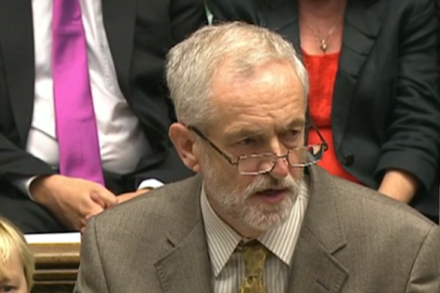
Jezza! What a genius. The master plan is clear at last. You spend four days plumbing new depths of political incompetence with bungled cabinet appointments, surly refusals to talk to reporters, tedious waffly platform-speeches and grumpy scowls during a service at St Pauls. And then, when your reputation can dwindle no lower, you spring forth and dazzle everyone with a political revolution. Cameron was grinning sheepishly before the Labour leader rose to the despatch box. He smirked sideways at his new opponent, through half-closed eyes, like a shy girl about to enter a forced marriage. Corbs looked relaxed and far sprucer than before. He might have been a civics teacher arriving for Day One at the new comp. Shiny grey tunic, off-white striped shirt, green splotchy tie.

PMQs: Corbyn’s defensive performance gets him through unscathed

From our UK edition

After the 72 hours that he has had, I suspect that Jeremy Corbyn is quite relieved to have got through his exchanges with David Cameron unscathed. The evening news tonight will be far better for Corbyn than it was yesterday. Corbyn, who was making his debut at the dispatch box, began by announcing that he wanted to change the style of PMQs and that he had got members of the public to email in questions. He proceeded to ask Cameron half a dozen of them. Cameron, who could hardly attack the question in these circumstances, answered respectfully and with only the odd jab at Corbyn which will have been a relief to many on the Labour benches.

The best arguments from the assisted dying debate

From our UK edition

The debate currently taking place on the second reading of the Assisted Dying Bill in the Commons is one of the best ones MPs have conducted in recent times. It is full of vehement, passionate disagreement. But it is also well-informed, not absurdly tribal or rowdy, and a debate that focuses on scrutinising the legislation itself, rather than slinging mud at the other side's motives. Here are the best speeches so far, as they come - on both sides of the debate.

Surviving the purge

From our UK edition

[audioplayer src="http://rss.acast.com/viewfrom22/jeremycorbynsbritain/media.mp3" title="Dan Hodges, James Forsyth and Ellie Mae O'Hagan discuss the impact of a Corbyn victory" startat=40] Listen [/audioplayer]How long does it take to rebuild a political machine? Twelve months? Two years? Three years? Maybe it can’t be done at all. Jeremy Corbyn has won. Everyone within Labour’s ranks acknowledges that now. The issue concentrating minds is how long it will take to remove him, how bloody the process of removing him will be and how much effort it will take to repair the damage once he has been removed — assuming the damage is reparable. This is why Labour MPs are thinking about the machine.

Letters | 27 August 2015

From our UK edition

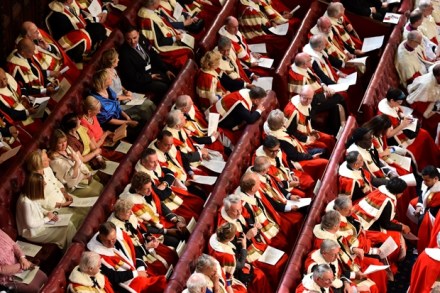
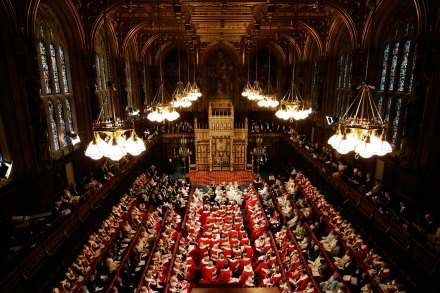
Trimming the ermine Sir: I am a new boy in the House of Lords compared with Viscount Astor — though I did hear Manny Shinwell speak — but he is right that it is bursting at the seams, and something needs to be done about it (‘Peer review’, 22 August). I detect signs of a consensus that the right number of peers is about 450. It is 782 at the moment. In the 16 divisions since the election, the largest number of peers voting was 459. The Lords values its crossbenchers and if their number were set at one fifth of the total, that would yield 90 on this figuring. The remaining 360 could then be proportioned out according to strength in the Commons, with each political grouping being given the freedom to decide how it got from here to there.

Flashmob rule

From our UK edition

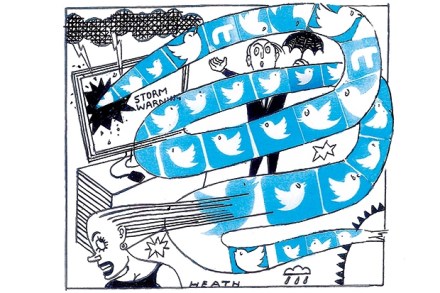
What should be the response of politicians to mass emailings and Twitter storms? The question is an urgent one, especially for Conservative MPs, given the general truth that mass petitions, in which complex issues are simplified to ‘for or against’ and emotion given a head start over reasoned argument, tend to come from the left. I was astonished to learn that a Tory MP decided his vote on the proposed Hunting Bill would depend on opinion polls in his local newspaper. In the event the Bill was withdrawn, largely, if Nicola Sturgeon is to be believed, as a result of online petitioning. Progressive causes such as the campaign against hunting have a familiar profile: the powerless against the powerful, victims against oppressors, the clean utopia against the murky reality.

House in order

From our UK edition

The shaming of Lord Sewel was a classic tabloid exposé. The fact that a peer of the realm (albeit one appointed by Tony Blair) was caught on camera apparently ingesting Class A drugs in the company of prostitutes is a good enough story in itself. The fact that the peer in question was chairman of the Lords privileges and conduct committee while he was doing so makes it very near to red-top nirvana. Since the publication of the story — and scores of lavish accompanying photographs — the peer’s Pimlico flat has been raided by police (who battered down a door to gain access), and Lord Sewel has resigned from the House of Lords, expressing the correct and noble sentiment that he can ‘best serve the House by leaving it’.

Podcast: Morality and privacy online, and how the SNP MPs may save the Union

From our UK edition

The hacking of adultery website Ashley Madison has raised the question of whether there is such a thing as privacy online. On this View from 22 podcast, Hugo Rifkind discusses this week's Spectator cover feature with Van Badham from the Guardian Australia. Should the 37 million users of Ashley Madison be surprised that their details may be leaked? Should all internet users accept that their personal details may be hacked? And does having an anonymous online profile make us do things we wouldn't consider otherwise? James Forsyth and Isabel Hardman also look at the first Parliamentary session since the election and how each of the parties have faired.

Jeremy Corbyn reunites with his old ‘comrade’ Gerry Adams in Parliament

From our UK edition

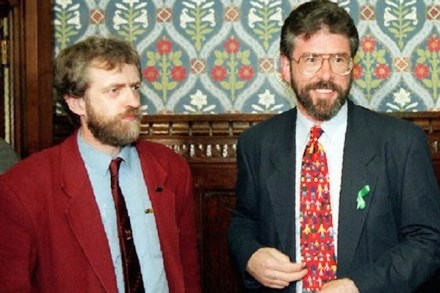
Jeremy Corbyn just can't help making friends wherever he goes. He previously described Hamas operatives as 'friends' and now he has found time out of his Labour leadership campaign to meet up with his old 'comrade' Gerry Adams in Portcullis House. The Sinn Féin president has tweeted a picture of their meet up, which Martin McGuinness also attended: https://twitter.com/GerryAdamsSF/status/623530633055313920 Of course the pair go way back. Corbyn, who supported ending British status for Northern Ireland, was heavily crtiticised after he invited Adams -- along with other Sinn Féin members -- to the House of Commons shortly after the Brighton bombing in 1984.

Diary – 16 July 2015

From our UK edition

I witnessed what was almost a violent fight to the death on Hampstead Heath the other morning. Broad flawless sunlight, the serenity of one of London’s greatest lungs and then, from the little pond opposite the mixed bathing pond, screams. A swan, its neck arched like a bow, yellow beak wide open, was shielding four cygnets from the splashy persistence of a determined mongrel. The swan struck, the mongrel dodged the blow. The swan swivelled and followed the attacker into the shallows, but the dog still ducked and taunted the swan. A frantic owner ran along the bank fruitlessly calling out the dog’s name. Someone — me I’m afraid — yelled, ‘Grab it! It’s shallow water!’ I went towards the bank but the owner took courage.

Philip Davies moves on from Esther McVey

From our UK edition

When Esther McVey moved into Philip Davies' flat in 2013, the pair were quick to dispel rumours that they were anything more than good friends. Davies - who had separated from his wife at the time - went so far as to gush of his glamorous friend that he was 'flattered anyone could think I am dating her'. Now the platonic pair's living arrangements have come to an end, with McVey - who lost her seat to Labour in the election - recently moving out of Davies' London flat. Happily, the Tory backbencher won't be short of company, as Davies tells Mr S he has already found a new housemate: 'I have a new housemate, he's a man but I won't say who he is as I'm not sure he would want it to be public knowledge.

There’s only one way to save the crumbling Houses of Parliament. Turn them into a theme park

From our UK edition

The Houses of Parliament are falling down. According to the Independent Options Appraisal of the Palace of Westminster Restoration and Renewal Programme - a group of engineers and project managers commissioned to have a butcher’s - the Palace of Westminster is 'partly sinking, contains asbestos and has outdated cabling', is 'infested with rats and mice and in an advanced state of disrepair' and will take £5.7 billion and 32 years to put right, unless MPs and Lords shuffle off somewhere else for a bit, in which case it’ll be £3.5 billion over six years. Without such repairs, 'major, irreversible damage' looms.

Laying down the law

From our UK edition

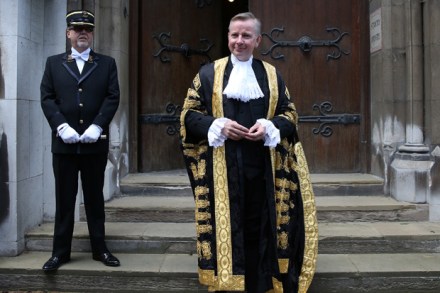
A great test of political leadership is how well you deal with vested interests on your own side. In his first speech as Lord Chancellor this week, Michael Gove has shown himself willing to tackle a profession which has long been comfortable with Conservative governments and whose reform, as a consequence, is long overdue. A legal system designed from scratch would not resemble what we have now. The only thing wrong with Michael Gove’s observation that Britain has a ‘two-nation’ justice system is that he should really have said three nations. Like the central London property market, the courts have become the preserve of the very rich and the very poor. The middle is excluded. The rich can afford to revel in the pantomime.