Parenting

AOC and the dishonest business of egg freezing

From our US edition

"All of these men often times who are saying, ‘oh if you haven't had a kid by 30 like you're done,' it's just not supported," said Alexandria Ocasio-Cortez, in a video uploaded to her Instagram Story on Sunday night. The 36-year-old congresswoman has announced to her audience of 9.6 million followers that she, like a growing number of American women, has decided to freeze her eggs. She continued, "Don't trust the people writing abortion laws, that don't even understand the first thing about a woman's body, to tell you about how many eggs you have at what age.

aoc egg freezing

My Jersey Shore summers

From our US edition

Sea Isle City, New Jersey It’s August 3. My mother’s birthday. Standing in the surf, my youngest son this morning said to me: “What would you do if you could breathe underwater and live there under deep pressure the rest of your life?” “I would eat more fish, I think.” “You could explore the Mariana Trench,” he corrected me. My brother-in-law Matt came down with his two sons to join us. The boys splashed and hollered in the rough sea. The red flag was put up by the lifeguards today. The fathers talked about how much easier it got each year.

Beware the ‘matrescence’ con

Every so often, a fashionable new concept is born. Witness the arrival of ‘matrescence’, which, for the uninitiated, is a phrase used to describe the physical, psychological, emotional and social transition a woman undergoes when becoming a mother. Or, as my mother and grandmother would have put it, and perhaps yours too: motherhood. ‘Matrescence’ first appeared in the 1970s, coined by the medical anthropologist Dana Raphael, but it seems to be reaching maturity now. Adverts splashed across the back page of the New York Times make the case for the inclusion of the word in the dictionary. A ‘global movement’ is being launched (by a social networking site for women and a company that sells baby bottles) to put matrescence on the cultural map.

Down with the children’s birthday-industrial complex

From our US edition

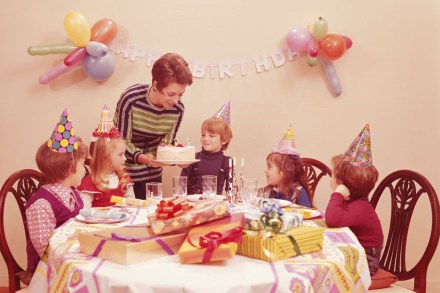
Recently, I’ve been thinking a lot about birthdays. For one thing, I’m writing this on the very day I turn 37. For another, you might’ve heard that America’s got a big one coming up later this year: 250. Old enough to stop squabbling and act its age. But right now, the only birthday that matters in our household is my daughter’s, and it’s coming up in two weeks. New York City children’s birthday parties – at least many of the ones I’ve witnessed – are unlike anything you’ve ever seen. Not so much parties as highly coordinated tests of moral conscience. They’re diplomatic summits involving balloons, sugar and, yes, perhaps a touch of low-level psychological warfare.

How to write a diary

From our US edition

A few gray hairs have appeared on our dog Budgie’s chin. She’s only seven and is part of our family. The silver streaks are a reminder that we are inching slowly to the inevitable day when she will no longer be with us. “Having dogs is a sad business,” my dad says. “You fall in love with them and when they go, they break your heart.” I once heard Ricky Gervais describe dogs as life’s greatest invention, the closest thing to something spiritual most of us will ever experience. As a joke, my husband asked me whether Budgie was my best friend. “Yes,” I replied, and I wasn’t joking at all. I write a diary and I try to think of something to say every day. Occasionally I stop myself: “You can’t write that,” I think. “What if someone reads it?

diary

Why is maternity care in Britain getting worse?

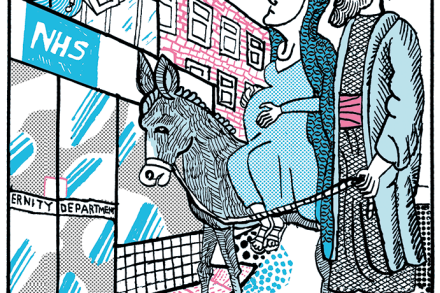
Chelsea and her partner had been trying for a baby for two years. Following several miscarriages, she became pregnant again last spring. ‘We were overjoyed,’ the 26-year-old says. ‘We thought this time everything would finally be different.’ Joy rapidly turned to worry when Chelsea began to suffer headaches and visual disturbances and made several trips to Worthing Hospital, part of University Hospitals Sussex NHS Foundation Trust. Eventually, foetal distress was picked up during a scan; after a transfer to another hospital and an emergency Caesarean, Bonnie was born in September at just over 26 weeks’ gestation. She had suffered a brain bleed and had chronic lung disease. ‘I knew something wasn’t right,’ Chelsea says.

I’m a Screen Grinch – and proud

He’s 12 next month, my eldest son, but he’s rejected the ‘movie night’ party I’ve suggested, and he doesn’t want any of his new friends from senior school to come for a sleepover. And I know why. Our television is a modest one, not the size of one of the screens flanking the main stage at Glastonbury. I recently went to pick up my son, who was at a new friend’s house. They were playing Mario Kart on a screen that took up about half a wall of the living room. Neither looked up when his mum let me in, so I stood in front of them. ‘Hello? Hel-LO?’ ‘It’s so hard when they’re on screens, isn’t it?’ exclaimed the other mum, as her son manoeuvred Luigi around Brain Rot circuit on Bilge Island with slack-jawed expertise.

How to solve the birth rate crisis: lower standards

There comes a moment, a few weeks after you give birth, when your baby outgrows their Lilliputian clothes and you’re obliged to replace ‘newborn’ with ‘0-3 months’. At which point, usually while still absolutely steaming with hormones, you find yourself sitting on their bedroom floor, staring at these teeny garments, trying to decide if you’re going to keep them (have another baby) or give them to the charity shop (start leaving leaflets about vasectomy around the house).  Historically, this was a major decision for you, but one which had almost no relevance to anyone else.

No, the internet is not bad for your child

The forces arranged in favour of banning social media for under-16s are powerful and wide-ranging. The unlikely alliance includes the leader of the Tory party, more than 60 Labour MPs, Big Suze from Peep Show and the patron saint of all bad ideas – His Majesty King Charles III. It seems probable that when amendment 94A of the Children’s Wellbeing and Schools Bill is voted on, it will receive support from all these quarters, as well as from Sir Keir Starmer, who has, true to form, launched a consultation on the issue. A handful of mental health charities will tell him that he must really get on with banning social media for teenagers, which he will then promptly and politely do.

My father gave me the internet

From our US edition

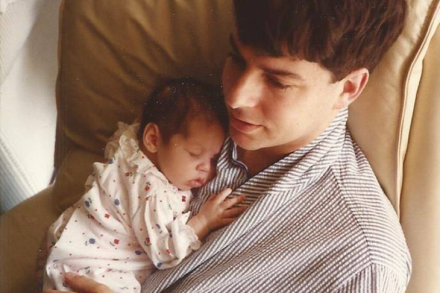
My father went into the kitchen for a cookie, then disappeared into his home office for a phone call. He was arranging a surprise for my mother – hired waitstaff for Christmas Eve dinner, one of the biggest our family would have hosted. Then he died. It took 15 seconds. We found him within minutes. The waitstaff called back 11 times over the next two days. I thought they were debt collectors. Finally, I went into his office, where we had found him, picked up his phone, and yelled, “He’s gone! Stop calling!” That’s how I learned what he’d been doing. They were trying to confirm. And in the corner of my eye, on his bookshelf: Irish Folk and Fairy Tales by W.B. Yeats.

father internet

Long live the yummy mummy

Yummy mummies everywhere, put your Veja trainers and frill-collar shirts away, because last week the Times issued a stinging broadside. Being labelled a ‘yummy mummy’ is apparently now so derogatory as to be an ‘almost cancellable offence’. The Yummy is dead, the headline declared, while my phone blew up like the fourth reactor at Chernobyl as Yummies far and wide forwarded me the article. ‘We are not dead!’ many fulminated, while others were more concise: ‘That’s just bollocks; I’ve never worn barrel jeans in my life.

French parents do it better

I arrived in Paris as an au pair in 2022. I was in my early twenties and armed only with GCSE French and a suitcase that could barely fit in my chambre de bonne – nine square metres of ‘characterful’ living space under the eaves, with a window just large enough to glimpse the Eiffel Tower if I leaned out at a dangerous angle. How did I end up here? After graduating, I wanted to immerse myself in a new city and polish my French. A few years on and I am still nannying, though I have returned to London. It seems I’ve become a career nanny by accident. But I’ve come to understand more about the different styles of parenting in the UK and France than I ever thought possible – and feel sure that British parents could learn a lot from our friends across the Channel.

Motherhood is tougher and lovelier than I could imagine

My son’s first birthday has arrived, which feels like a much bigger milestone for us than it is for him. I had to let go of any expectations around motherhood early. At eight months pregnant I learnt that I could not have the calm, candlelit water birth I had planned (does anyone actually have one of those?). It transpired that I had a condition called placenta previa, and so would need a planned caesarean. The midwife cheerily told me not to worry about him ‘coming out the sunroof’ – a rather grating expression as it implies an easy way out, when I am, as it happens, a car without a sunroof. Then came the rather startling announcement from the surgeon that my baby was ginger (my husband and I are more Draco Malfoy than Ron Weasley).

The reality of raising an autistic child

From our US edition

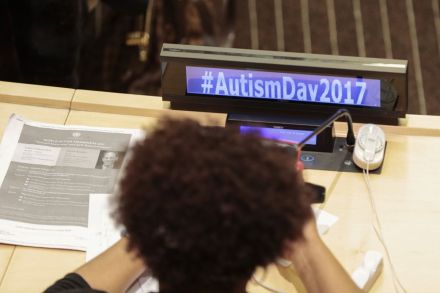
Although I disagree with Donald Trump’s and Robert F. Kennedy Jr.’s suggestion that mothers who took Tylenol during pregnancy may have caused the huge rise of children born with autism in the US, I also can’t agree with the spate of articles and interviews that have followed – several by high-functioning autistic adults, others by parents of autistic children – basically saying it is great to be autistic. I understand that they are fearful that Trump’s idea of a “cure” could result in anyone with special needs being regarded as subnormal and a second-class citizen, but it’s not helpful, either, to pretend that autism is without its many frightful drawbacks. My son, 42, was diagnosed with Asperger syndrome on his 13th birthday in 1996.

autistic

Bring back the big family

As a species we are richer than we’ve ever been before. We live longer. We have more food to eat than is good for us. We have abundance in all things. And yet we are no happier than we were. In fact, many of us are downright unhappy. Among our woes is an epidemic of loneliness. Some 8.4 million of us are now living alone in Britain, and more than 3.8 million report being chronically lonely. We lock up more people in our prisons than ever and we can see for ourselves the signs of friction in our society, one which is clearly not entirely at peace with itself. So somewhere we have gone wrong. And I think I know where. It’s our families. They are simply too small. The average number of children born per woman in England and Wales has fallen to 1.

Pity the poor offspring of the pushy Pollys

What do tech bros and pushy parents have in common? They’re both fond of citing Samuel Beckett’s most famous quote: ‘Fail again. Fail better.’ For parents, the line is invariably deployed when their ‘gifted’ child has underwhelmed at a crucial juncture. Let’s park the inconvenient fact that Beckett’s line has nothing to do with self-help. Just go with it and nod sympathetically while inwardly enjoying their elaborate contortions in an attempt to save face. Perhaps my favourite example is a West London mother (we’ll call her Polly). Her boy’s failure to get into Cambridge (‘It wouldn’t have been the right place for him anyway, so we’re pretty relieved!’) has proved to be a gift that continues giving.

Phone-addicted yummy mummies are neglecting their children

As a foster carer and an adopter, I know what neglect looks like. I’ve looked after children who didn’t know what a bed was. Children who arrived at my door with matted hair, rotten teeth and eyes that scanned every room for danger. Neglect smells of mildew and unwashed clothes. It is chaotic, desperate and tragic. But there is also a different, quieter kind of neglect. One that doesn’t look like crisis at all, but it has a profound effect on the children at the receiving end of it. Teachers have been sounding the alarm for years – children starting school unable to speak in full sentences or sit still for even five minutes. Some can’t feed themselves. Some aren’t even toilet trained.

The competitive cult of the summer camp

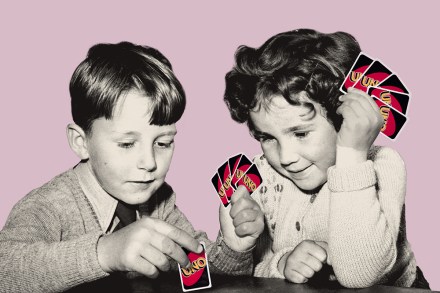
‘Before you ask, Mummy, the answer is no.’ While this could be any number of conversations that I have with my seven-year-old daughter, this one has a particular tang. It is the thrice-annual bargaining round that I do in the run-up to any school holiday in which I try to get her to go to a kids’ camp. An executive at Goldman Sachs in equity sales does not work as hard as I do to seal the deal – but I fail every time.  For a brief, prelapsarian period when she was five and more biddable, I had some success. I managed to get her into all manner of summer holiday camps in Oxfordshire: activity camp, Shakespeare camp, tennis camp, even God camp. You name it, I signed her up. Sure, we had some argy-bargy at the moment of drop-off, but in she went.

Let’s slash the school summer holiday

There are three little words that strike horror into the heart of every parent of school-age children. They are the words that cause you to break out in a cold sweat or let out a moan in your sleep in the dead of night – even in the middle of winter. They are ‘school summer holidays’. Hear those three words and you may very well envisage jubilant children spewing from the school gates and then remember the dim, distant sun-kissed summers of your own youth. But mention them within earshot of a parent of appropriately aged offspring and you’ll see the light go out in their eyes. Oh yes, the kids are happy – just like the waving teachers who weep with joy to see their charges depart. But now it’s time for the parents to weep.

Now it’s getting late: on Neil Young, ageing and fatherhood

Neil Young once saved my life. Or at least, that’s how I remember it.  This was at an outdoor show in Finsbury Park in July 1993. I had pushed and squeezed my way almost to the front of a large crowd shortly after being passed something of dubious provenance to smoke. One moment everything was perfect: he was playing that romantic late career hit, ‘Harvest Moon’, the sun was setting, the moon, conveniently, rising, and I was swaying along, rapturous. But then, suddenly – bang… I fainted.  This is the only time in my 45-year gig-going career that this has happened. But I was gone. I was briefly unconscious, then I came to lying on my back on the grass, looking up at dozens of legs all around and above me, almost on top of me.