Pandemic

What’s the evidence for England’s vaccine passports?

From our UK edition

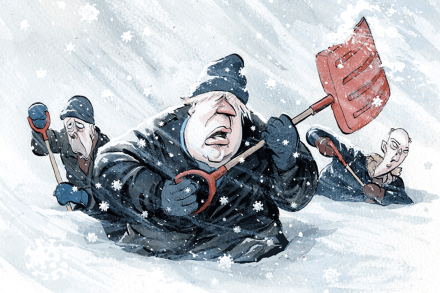
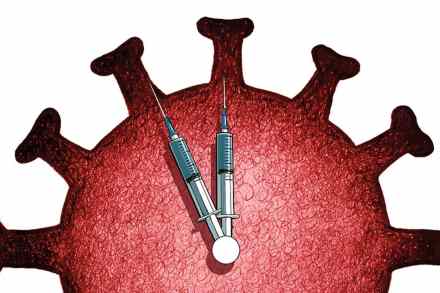
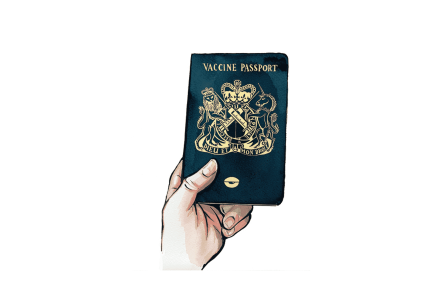
The Prime Minister has just announced Plan B. Working from home has been all but mandated and large venues — as well as nightclubs — will be required to check for vaccine passports. But where is the evidence for this, and what does the data say? Johnson’s vaccine passport idea copies Nicola Sturgeon’s policy in Scotland which was found, in a 70-page evidence paper, not to have had any measurable effect. As evidence Chris Whitty presented South African hospitalisations — a country with less than a third vaccinated. When Omicron was discovered the government said we should wait for data to be gathered before reacting. Sensible, given the huge economic and livelihood consequences of even small restrictions. Data is published every day.
Omicron: cause for hope?

From our UK edition

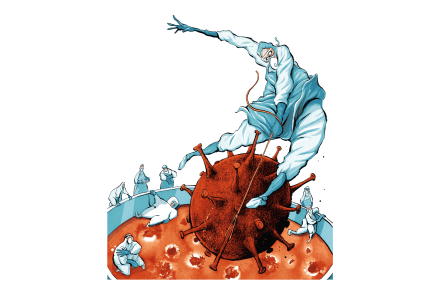
It will be weeks before we know just how worried we should be about Omicron — but the first indications seem hopeful. The epicentre of the first recorded outbreak has been the subject of a study that suggests that it may be milder than Delta. Early data from 166 patients in the Tshwane district comes with the usual caveats, especially that very little Omicron has been found among South African over-65s. But the study nonetheless has two weeks of hospitalised Omicron patients to analyse — more than any other country. Here are the main indications so far:  Fewer people hospitalised with Omicron have ended up in intensive care: 8 per cent, compared to 25 per cent for Delta.Fewer patients need oxygen: only about a third.

Boris’s festive fear

From our UK edition

Until a few days ago, ministers could see how the government might regain its footing after several weeks of self-inflicted damage. The argument, as I say in this week's magazine, went like this: as Christmas approaches, voters will see that life in Britain — and specifically England — carries on with very few Covid restrictions whereas elsewhere in Europe more draconian measures have been imposed. This scenario seemed plausible. Austria was in lockdown and heading for compulsory vaccination; there had been rioting in Holland after the announcement of an 8 p.m. curfew and several German states had cancelled Christmas markets.

After a lifetime in nightclubs, now I party at home

From our UK edition

New York   It’s party time in the Bagel, and it’s about time, too. Good restaurants and elegant nightclubs are now a thing of the past, at least here in New York, so it’s home sweet home for the poor little Greek boy, for dinner, drinks and even some dancing at times. Here in my Bagel house my proudest possessions are my three Oswald Birley pictures. One is enormous and covers the whole wall of the entrance hall. The other two are a self-portrait and one of a rather grand lady. They are masterfully executed portraits, with aesthetic as well as psychological realism, an extremely difficult goal for an artist to achieve. Birley is more than equal to contemporaries such as Augustus John and John Lavery.

Unless Omicron changes everything, Covid is on the way out

From our UK edition

There are good reasons to be concerned about the Omicron variant. For starters, this strain has 50 mutations, twice as many as Delta. Early reports from South Africa, where the virus has been circulating for a while, suggest it’s outcompeting Delta and spreading rapidly. There is a concern, too, that it could blunt the vaccines, because more than half of the new mutations affect the spike protein that the jabs are designed against. But all of this is theoretical: we need real-world data. So we won’t know whether it really is more transmissible, or how the vaccines perform against it, until long after Christmas. The concern, for now, remains Delta, as Chris Whitty said last week. On that front, the news is better.

When will the Tories do something about house prices?

From our UK edition

Anyone who doubts that the fiscal response to the pandemic has stoked inflation needs to look at the latest figures from the Nationwide on the housing market. Yet again they confirm that the deepest recession in modern history has been accompanied by a boom in house prices. Moreover, the inflation does not seem to have been reined-in by the ending of the stamp duty holiday. The price of the average home, according to the building society, rose by a further 0.9 per cent in November to reach £252,687. This is ten per cent up on last November and 15 per cent up on March 2020, at the beginning of the pandemic. How can a global crisis which temporarily put several million people out of work in Britain have resulted in a housing boom?

Do masks really halve the risk of Covid? A note on the evidence

From our UK edition

‘Most of the trouble in life comes from misunderstanding’ as Willy Loman said in Oscar Wilde’s masterpiece An Inspector Calls. Grating isn’t it? But also a reasonable facsimile of how science reporting often reads, at least to those of us self identifying as scientists. Pre-Covid it was so. With Covid the problem has become, well, an epidemic. Recent reporting about the efficacy of masks is a classic case in point. You might remember the study in question: it certainly made headlines when it came out. 'Mask-wearing cuts Covid incidence by 53 per cent, says global study', stated the Guardian: 'results from more than 30 studies from around the world were analysed in detail'.

Chris Whitty on the Omicron variant

From our UK edition

This is an edited transcript of Professor Chris Whitty's remarks at today's Downing Street press conference The existing situation is almost entirely Delta.  In terms of numbers of cases, it is broadly flat. In younger children, there is quite significant transmission at this point in time, and rates are increasing in many parts of the country. At the other end of the spectrum, as a result of the booster programme almost certainly, rates are beginning to drift downwards in people over 60 and particularly people above 70. So we're seeing an improvement in the group who are most vulnerable.  The numbers going to hospital are gradually decreasing. This is not a sudden drop. This is a gradual drifting down.

Satire misfires: Our Country Friends, by Gary Shteyngart, reviewed

From our UK edition

It is, as you’ve possibly noticed, a tricky time for old-school American liberals, now caught between increasingly extreme versions of their traditional right-wing adversaries and the new Puritans on the left. In Our Country Friends, Gary Shteyngart sets out to explore their resulting confusion — but ends up inadvertently exemplifying it. Like his creator, the protagonist is a Russian Jew, born in Leningrad in 1972, who as a boy moved to America with his parents and later made his name writing satirical novels about people from the same background. Unlike Shteyngart, though, Sasha Senderovsky is now facing a stalled career, having abandoned literature in an ill-advised bid for success in TV screenplays.

The vaccine cheer is gone

From our UK edition

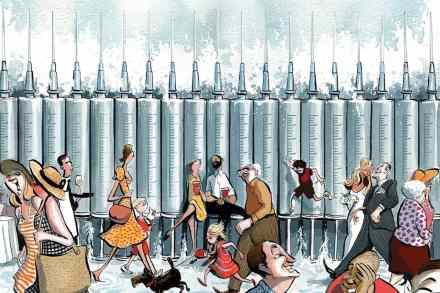
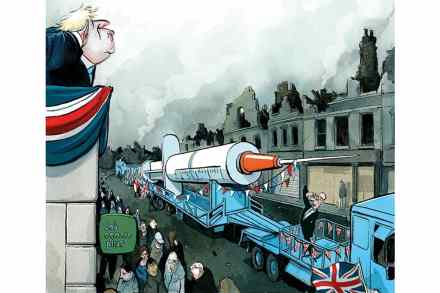
I am 45, which means I’ve now had my third Covid vaccine. The experience of getting that injection crystallises a thought: Britain is starting to take the miracle of vaccination for granted, and that spells trouble for Boris Johnson. I don’t use that word ‘miracle’ lightly. The development and distribution of working vaccines with such speed and scale is surely a historical event, and one that should give both big-state left-wingers and the free-market right pause for thought, since it relied on the partnership between public and private. The politics of the vaccine have always been slightly under-appreciated in the Westminster village.

Boris has no answer to the backlog crisis

From our UK edition

Jeremy Hunt asked an entirely reasonable question of the Prime Minister today in the Commons — and got an entirely unreasonable answer. Hunt raised an amendment he is tabling which would require Health Education England to produce regular forecasts for the numbers of doctors and nurses that the UK needs to train. This is quite a small thing to ask for, but Johnson's response was first to dodge his way around the question, and then to turn the issue into a party political attack on Labour. He said: My right hon. friend is absolutely right that we have to ensure that our NHS has the staff that it needs. That is why there are 50,000 more healthcare professionals in the NHS this year than there were last year –—12,000 more nurses.

Did Covid first emerge at the Wuhan Institute of Virology?

From our UK edition

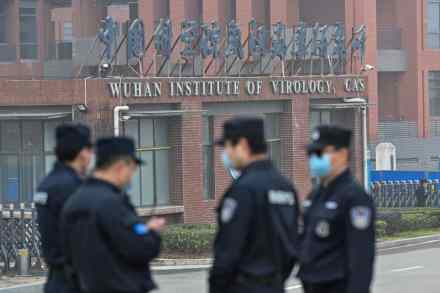
The net around the Wuhan Institute of Virology continues to tighten. A letter from Lawrence Tabak, principal deputy director of the National Institutes of Health (NIH) in the United States, has shed more light on the grant which the institute made to the EcoHealth Alliance for work at the Wuhan Institute.  One of the experiments, it reveals, involved testing to see whether the spike protein of a naturally-occurring coronavirus found in the bat population was capable of attaching itself to a human receptor, via experiments with mice engineered with a human gene. The experiment amounted to ‘gain of function’ research (something the NIH has denied) – modifying viruses so that they have qualities which don’t exist in nature.

Why did we decide that Covid was over?

From our UK edition

Look, I don’t know much epidemiology. Can’t pretend to. So what follows is, necessarily, a personal finger to the wind. But perhaps it chimes with your experience.  First time round — back in the days when we were all huddled indoors, leaving the house only to stand on the doorstep of a Thursday night to bang pans with a wooden spoon, or making solo expeditions to a denuded supermarket where we do-si-dohed around each-other in the aisles… yes, back in those days, I didn’t know very many people who got Covid. Acquaintances, the odd friend. Some scary stories. Some scarier statistics. But not so many ‘rona stricken friends. Could we inch towards herd immunity down a road scattered with corpses rather than heaped with them?

No. 10 moves to kickstart the booster campaign

From our UK edition

In a move that as important as any in the recent Cabinet reshuffle, Emily Lawson is returning to run the Covid vaccination programme. Lawson headed up NHS England's vaccination team during the rollout, and after its success, she was moved to take charge of the new Number 10 delivery unit. The hope was that she would bring the rollout mindset to public services more broadly. The delivery unit, modelled on its Blair era predecessor, is meant to ensure that the government actually does what it says it is going to do. Such is its importance that Lawson addressed the first meeting of the newly reshuffled Cabinet. The fact that she is now going back to the rollout shows how worried ministers are about the booster programme.

Javid says no to restrictions – for now

From our UK edition

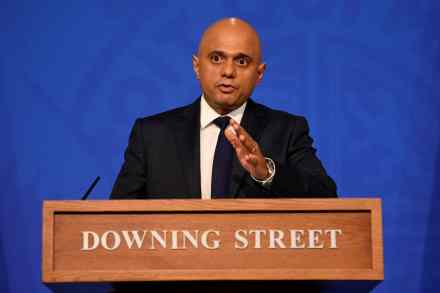
Is the government considering activating its 'plan B' Covid plans? Not yet.  After the Business Secretary played down talk of new restrictions this morning, Sajid Javid used today’s press conference to confirm that he would not be implementing the back-up plan ‘at this point’. However, the Health Secretary suggested that further measures – namely vaccine passports, work-from-home orders and mask mandates – could not be ruled out if the data substantially worsens. The main message from the press conference: get vaccinated There was a marked change in tone from Javid since the days soon after his appointment as Health Secretary when he declared that there was 'no going back'.

Why Covid means the big state is back

From our UK edition

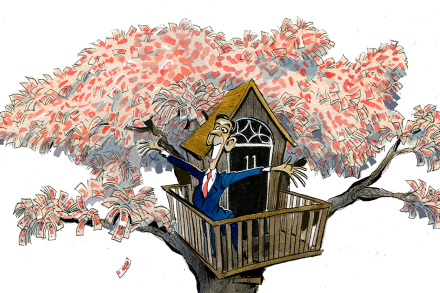
History suggests that when the state expands in a crisis, it doesn’t go back to its pre-crisis level once the emergency is over. After the first world war, the Lloyd George government extended unemployment insurance to most of the workforce, fixed wages for farm workers and introduced rent controls. The second world war led to Attlee's nationalisations, along with the creation of the NHS and the modern welfare state. In the magazine this week I ask if Covid will lead to a permanently bigger state. There is another danger in all this intervention: can the country afford it? Last year, state spending exceeded 50 per cent of GDP for the first time since the end of the war.

New York is up to you

There are two types of people in New York City: the ones who stayed and the ones who called it quits. Those who stayed wear it like a badge. With a sense of pride, they call themselves the ‘real New Yorkers’. They supported Our Lady of Liberty in her time of need. They consistently ordered delivery to help prevent restaurants from closing. They donated their time and money to the city’s hungry and homeless all while cheering on healthcare workers every night. Those that left bear a stain on their New York resumé. The old way to tell a real New Yorker was if they had lasted and hit the 10-year mark. The new way is faster: if you stayed during the pandemic. It’s like the vaccinated and unvaccinated: there is really no in-between. More than 320,000 NYC residents left in 2020.

new york

The Washingtonian’s dreary, woke ‘best of’ list

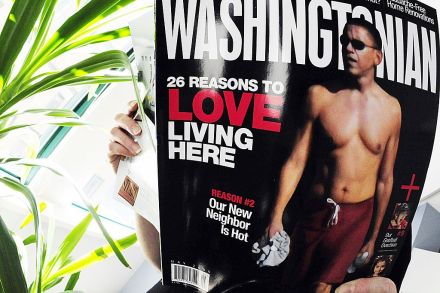
Cockburn was waiting to get his beard trimmed at the barber recently and found himself flicking through the latest issue of the Washingtonian, an outlet where fangirling over the Biden administration passes as journalism and a love of America’s dreary capital substitutes for a personality. The issue in question featured Washingtonian’s annual best of list. This is supposed to be a list of bars, restaurants, people and other stuff that makes DC such a great place to live. But this year’s offering had Cockburn browsing Zillow for homes in Ketchum, Idaho, faster than you can say 'Fauci Pouchy'. It’s been years since Cockburn relied on the Washingtonian for advice on having a good time in the imperial city, but the 2021 offering is especially unappetizing.

washingtonian

China and the WHO are given an easy ride in the Covid blame game

From our UK edition

Are you ready to relive 2020? That’s what Adam Tooze is offering as he tells the story of Covid-19 through the spectacular and terrifying economic consequences created by the global health crisis. For many, the answer will be a simple no. But for others looking to make sense of an utterly surreal year, Shutdown might seem an obvious place to start. Unfortunately, the book offers less analysis and more ranting than would normally be expected from an economic digest — especially one written about one of the most startling shocks to the economy the world has ever seen. Some readers may like the rant.

Javid avoids Tory fightback – for now

From our UK edition

Tory MPs were not happy when Sajid Javid unveiled the Covid winter plan in the Commons this afternoon. They’re dissatisfied with the government holding so many powers – such as vaccine passports, further lockdowns and other restrictions – in reserve as part of its Plan B, which will be activated this winter if cases breach what the NHS can cope with. The Health Secretary explained Plan B thus: ‘It is absolutely right that the government have a contingency plan, and the trigger, so to speak, for plan B, as I mentioned in my statement, would be to look carefully at the pressures on the NHS.