Pandemic

The research is in and lockdowns don’t work

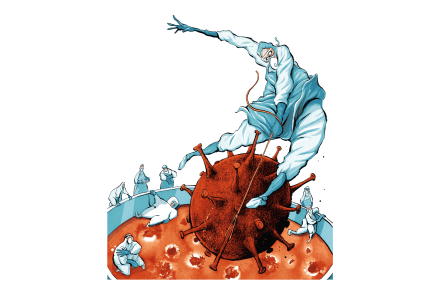
A new Johns Hopkins systematic review cuts in two the narrative that government-imposed mandates meaningfully prevent coronavirus deaths. The review looked at 34 different studies analyzing business and school closings, shelter-in-place orders, and international travel bans. It included data from US and European Covid mitigation efforts, along with endeavors in India, South Africa and China. Almost two dozen of these studies were peer-reviewed, while the other 12 were working papers. The results of this meta-analysis are striking. Lockdowns reduced Covid mortality by an average of only .02 percent. Shelter-in-place orders were slightly better at a 2.9 percent average, but nothing worth crowing about.

Two years on, what’s the evidence for lockdown?

From our UK edition

Did lockdowns save lives? We will never have a definitive answer to this vital question because it was impossible to conduct controlled experiments — we don’t have two identical countries, one where lockdown was imposed and one where it wasn’t. Nor is it easy to compare similar countries, for the simple reason that every country in the world — bar Comoros in the Indian Ocean — reacted to Covid by introducing at least one non-pharmaceutical intervention (NPI) by the end of March 2020. There was no clear link between lockdown stringency and fewer deaths in the spring of 2020, A team from Johns Hopkins University has, however, assessed the many (albeit flawed) studies into whether lockdown works — a ‘meta-analysis’.

Reading during a pandemic

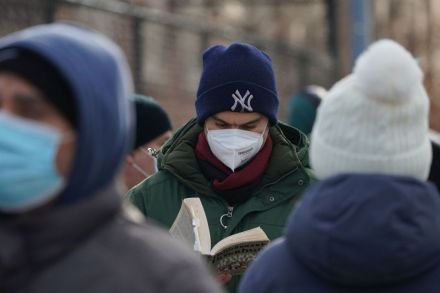
The experience of having Covid is, by now, well-documented. You spend seven to ten days in your room or house feeling ill and sorry for yourself. The world outside becomes a distant dream, and one of the few pleasures of spending twenty-four hours a day in bed is the time to read. This winter, the Omicron bell tolled for me — as it seemed to do for half of the global population. I was very lucky with the virus: after two days of unbelievable complaining and texting everyone I knew to tell them I was either like Beth in Little Women or a fevered Marianne in Sense and Sensibility, I recovered from my gothic heroine-like swoon and set about ploughing through novels. At the outset, there were endless articles and tweets about what one should read during a pandemic.

Omicron is on its way out

From our UK edition

Omicron peaked in England in early January, according to figures just released by the ONS. The estimates from the weekly infection survey show that cases in the UK peaked at around four million before falling. In the week ending 15 January, 1 in 20 had Covid in England, Scotland and Northern Ireland, and 1 in 25 in Wales. We shouldn't be surprised by this We shouldn't be surprised by this — this is how Omicron seems to go world over. As in Gauteng, as in South Africa, as in Lambeth, as in London and now in the UK: it falls almost as fast as it rises. Quite simply, the variant is so infectious that it quickly reaches levels of prevalence that are unsustainable because so many people have been vaccinated, infected and become immune.

Masks in schools: how convincing is the government’s evidence?

From our UK edition

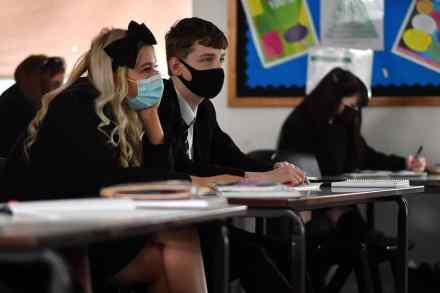
Why has the government changed its mind and asked children to wear masks in school? When Plan B was announced last month, there was no requirement. But that has changed. Nadhim Zahawi, the Education Secretary, was asked why on Monday. He replied that ‘we conducted a small observational study with 123 schools who had followed mask-wearing in classrooms before and saw that they made a difference'. He suggested it was quite a significant study. 'If you just think it through, with a respiratory disease that is aerosol-transmitted, if you are asymptomatic but wearing a mask, you're much, much less likely to infect other people.' The government has now published an ‘Evidence Summary' for the use of face coverings in education settings.

Watch: Sajid Javid confronted by unjabbed NHS doctor

From our UK edition

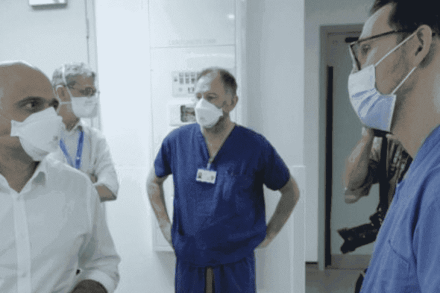
Since becoming Health Secretary there has been one big question Sajid Javid cannot answer: how can he justify firing a worker who has recovered from Covid, has antibodies and doesn’t want the vaccine? Javid first did this with unjabbed care home workers and now plans to fire unjabbed NHS doctors. Today he met one of them — and it didn’t go well. https://www.youtube.com/watch?v=hOlEYcd1nyI Javid’s answer? He didn’t have one During a visit to King’s College Hospital in south London, Javid was on camera talking to NHS staff asking them what they thought about his plans for compulsory vaccination. He presumably expected them to agree.

Boris Johnson rejects lockdown (again)

From our UK edition

Boris Johnson latest Covid press conference was slightly confusing. The Prime Minister spent nearly an hour saying nothing particularly new. He warned that there was ‘considerable pressure’ on the NHS at the moment and unveiled daily priority lateral flow testing for 100,000 essential workers so that key services, including healthcare, don’t seize up due to staff absences. But while he accepted that hospitals were feeling the heat, he also insisted that there was no data suggesting that a lockdown was necessary or helpful. Indeed, he argued:  ‘We have a chance to ride out this Omicron wave without shutting down our country once again. We can keep our schools and our businesses open, and we can find a way to live with this virus.

Boris’s plan to test key workers daily

From our UK edition

The Prime Minister is attempting to lessen the threat posed by Omicron to essential services by requiring around 100,000 workers in specified industries to take daily Covid tests. In order to keep the lights on, maintain the supply of food and keep aeroplanes flying, these workers will have to test five days a week —  so that infections are caught as early as possible, to minimise spread of the virus to colleagues. A government source said the requirement to test daily would apply to those in civil, nuclear and other power generation, air traffic control, meat processing and food supply chains.

The problem with ‘vaccine equity’

From our UK edition

'A stain on our soul'. That was how Gordon Brown, in his latest missive on the subject, described the failure of the west to ensure that the whole world is vaccinated. In a previous attack on western policy — at the end of November, just as Omicron was emerging — he wrote of “hoarding” and 'vaccine nationalism'. Take Africa: it is certainly true that vaccination rates in many countries are very low. While the UK has managed to deliver 195 doses per 100 people, Nigeria has only managed seven, Ethiopia and Somalia nine, and Chad and South Sudan two. Can all this be blamed on the failure of western nations to donate vaccines?

Is Boris feeling lucky?

From our UK edition

The political and economic new year is all about surging Covid and a surging cost of living. The list of what families in particular will contend with in the coming weeks is enough to induce tears of exasperation. Take schools for starters. Staff absences, largely caused by coronavirus, were 8 per cent at the end of last term. On the Department for Education's own projections, the Omicron surge means these absences will rise to between 9 per cent and 13 per cent at the beginning of this term, and it is not inconceivable the upward path in absences will peak at between 20 per cent and 25 per cent. The Education Secretary, Nadhim Zahawi, is determined schools should remain open.

dive

The dive is alive

Last summer, Covid claimed yet another casualty. The Post Pub, tucked away under a low ceiling on L Street in Washington, was a throwback to a different age, one of noontime highballs and midnight shots on the house. Yet while the past had been swinging, the future for the little downtown watering hole was bleak, and so it announced that it would have to close. For me, the loss was personal. The Post was where I had deepened countless friendships over glasses filled and then unfilled with foamy brown. It was where, in 2018, I looked up at the TV above the bar, saw the words “fire and fury” on the same chyron as “North Korea,” and wondered for a fleeting second whether that was where I might die (it wouldn’t have been a bad end, all things considered).

The churches must stay open

From our UK edition

Hooray for Cardinal Vincent Nichols, who used the one day of the year when his pronouncements are amplified by the season to 'sincerely appeal that [the government] do not again consider closing churches and places of worship.' He said in a BBC interview he believed it had been demonstrated that the airiness of churches meant they are 'not places where we spread the virus'. Mind you, Catholic churches weren’t as bad as the Church of England This is, of course, entirely sensible. It was nuts for churches to close at the start of lockdown, at least as spaces for prayer if not for communal worship. Pretty well any church is 'Covid-safe', in that there’s lots of room for people to spread themselves out.

Sage modellers start to accept that Omicron is milder

From our UK edition

Public health officials in Britain and South Africa were on different planets for about a fortnight. While those in South Africa kept presenting data suggesting that Omicron caused less severe disease than earlier variants, scientists in Britain continued to claim it was too early to say. Scenarios published by the London School of Hygiene and Tropical Medicine (LSHTM) last week pictured a frightening picture of January, suggesting that hospitalisations could peak above previous waves. An assumption was made that Omicron was just as likely to land you in hospital or kill you compared with Delta. As LSHTM admitted, quite a big assumption:- Due to a lack of data, we assume Omicron has the same severity as Delta.

Is Omicron now falling in South Africa?

From our UK edition

Man makes Covid predictions and God laughs. Yet with the stakes this high in Britain, every bit of real-world data is useful. That’s why South Africa is so important: it’s a country with a well-digitised healthcare sector that we have to thank for sequencing the Omicron variant, and has been first to experience the impact. That’s why its figures, released daily, are being watched so eagerly world over. Right now, there are two questions: is Omicron now falling? And if so, what conclusions can we draw? The epicentre is Gauteng province: home to Johannesburg, Pretoria and about a quarter of South Africans.

Omicron is now Britain’s dominant Covid strain

From our UK edition

If you test positive for Covid now in Britain, the odds are that it’s Omicron: it’s now the dominant strain in England and Scotland. Data released this evening by the UK Health Security Agency showed that by Tuesday, 54 per cent of PCR tests were positive for S-gene target failure (a proxy for Omicron). For perspective, it has only taken eight days for the variant to become dominant: Delta took nearly a month. North of the border, Sturgeon said that the ‘tsunami [of cases] was starting to hit’ and confirmed that in Scotland more than half of cases were Omicron too. Again, that’s using S-gene dropout as a proxy. Some 13,741 Omicron cases have been confirmed in England so far: 696 in Scotland, 313 in Northern Ireland and 159 in Wales.

Why Omicron may not lead to a surge in hospitalisations

From our UK edition

There were two takeaways from last night’s press conference: firstly, the hard data showing that the number of recorded cases of Covid had surged by 19,000 – or 28 per cent – in a single day. Second was the assertion that, as a result, the NHS is in danger of being overwhelmed. What was lacking was the hard data on hospitalisations and the number of people in hospital. Although you would never have guessed from the tone of the conference, these both fell. The number of people admitted to hospital – a figure which runs a few days in arrears owing to a delay in the four constituent nations of the UK collating their data – fell from 800 to 774, the lowest figure recorded in a week.

Should we be scared of the Omicron variant?

From our UK edition

Why is the government so scared of the Omicron variant? So far, most of the evidence we have for transmissibility and virulence of Omicron is based on very limited data from South Africa, but the UK Health Security Agency (UKHSA) has now published its own preliminary study of the variant — the results of which will presumably have been available to ministers and scientific advisers prior to Wednesday’s decision to enact ‘Plan B’. They appear to show a variant which is more transmissible, more likely to evade vaccines and more likely to reinfect people who have previously had Covid. But there is a very big caveat: they are based on tiny numbers of Omicon cases.

Has Boris seen the Omicron data?

From our UK edition

There was nothing but gloom about the Omicron variant at yesterday’s No. 10 press conference. But with reporters preoccupied with last year’s Christmas parties, no one thought to bring up a statement by Tedros Adhanom Ghebreyesus, the head of the WHO, who earlier told reporters that there is ‘some evidence that Omicron causes milder disease than Delta, but again it’s still too early to be definitive.’  You don’t want to make decisions before you have good evidence, but if it does turn out that Omicron is a milder disease, won’t the government’s efforts to suppress it with travel bans and restrictions be counter-productive?

America is a nation divided

From our UK edition

New York Imagine a European country today in which a newspaper in its most populous city launches a mendacious project reinterpreting its past. The practice was perfected under the old communist system that ruled Romania, Hungary, Poland and the rest of the Soviet satellites. But it is no longer possible in that part of the world now that the old continent has rediscovered freedom. It is taking place elsewhere, though, right here in New York, marinated by the Bagel Times which has invented a nation predicated on racism and enforced racial inequality. The 1619 Project is based on delusion and is a sweeping assault on the American way of life that spreads racial and gender discord.

Boris takes his colleagues for fools

From our UK edition

Is Boris Johnson really deploying a 'diversionary tactic' in announcing vaccine passports on the day he has had to perform a volte-face over a Christmas party in Downing Street? After watching his press conference tonight, I'm not so sure, though not because of the explanation the Prime Minister himself offered. He was asked about this accusation, which was first levelled by one of his own MPs, William Wragg, at PMQs. Johnson's response was to ask journalists to imagine what it would have been like if today's political row had forced a delay of the 'Plan B' measures to contain the spread of Covid this winter.