Pandemic

When the masks come off in blue states

The other night, I went to the Vermont State Fair in distinctly downscale Rutland, where my wife and I watched the pig races, ambled through the livestock exhibits, and examined the farm equipment, while enjoying corndogs and the crowd of distinctly overweight Rutlanders. The next day, I was back in my office in midtown Manhattan. A thin man wearing a mask got into the elevator with me and used a cloth to press the elevator button. Then he used the cloth to open the two doors to the street. He was clearly annoyed to have had to share the elevator with a maskless heathen. As he walked away, it occurred to me that I hadn’t seen a single mask or Covid-crazed person of any sort at the Vermont State Fair.
Covid Mask

Farewell, St Anthony Fauci

From our UK edition

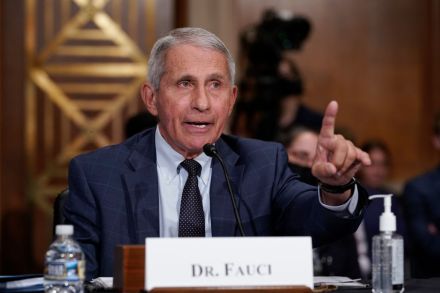
So farewell, Anthony Fauci, the unfortunate face of America’s pandemic response. Well, not so unfortunate – the doctor is stepping down as head of the US National Institute of Allergy and Infectious Diseases this December, riding off into the sunset with a reported $350,000 per year golden parachute, the largest pension in US federal history. Fauci has developed something of a reputation for baffling the public – whether it be for contradictory advice on the efficacy of masks or herd immunity or vaccines. Even his resignation announcement was confusing:  I will be leaving these positions in December of this year to pursue the next chapter of my career... While I am moving on from my current positions, I am not retiring.

Has the lab leak theory really been disproved?

From our UK edition

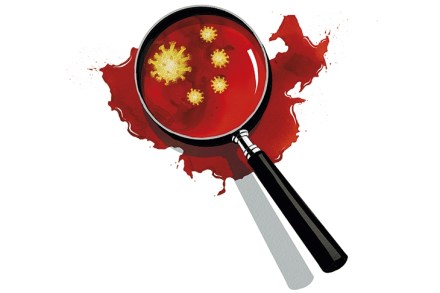
The BBC carried a story this week with the headline ‘Covid origin studies say evidence points to Wuhan market’. Bizarrely the paper in Science they are referring to, by Michael Worobey and colleagues, says no such thing. It says: ‘the observation that the preponderance of early cases were linked to the Huanan market does not establish that the pandemic originated there’. All three of the scientists quoted in the BBC story have been highly dismissive about even discussing the possibility that the pandemic began as an accident in a Wuhan laboratory. Their vested interest is clear: they worry that the reputation of their field of virology would be threatened by such a discussion.

The Everybody Inn: what happened when a hotel opened its doors to the homeless?

From our UK edition

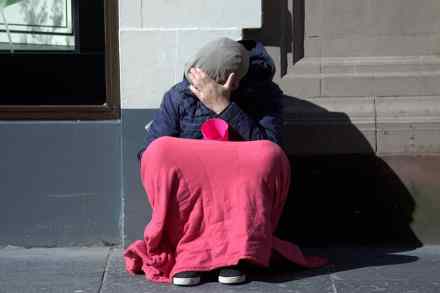
What do you do when you pass someone sleeping or begging in the street? I’ll tell you what I do: pretty much the bare minimum to appease my conscience. Pound coins distributed, some names asked for and learned, sandwiches and snacks for those outside supermarkets (Müller Corners and bottles of chocolate milk particular favourites). After reading this book I realise there is rather a lot more I could be doing. And indeed a lot more others, particularly the government, could be considering. Here is how Christina Lamb describes what Mike Matthews, owner of the historic Prince Rupert Hotel in Shrewsbury, was doing a few years before the pandemic struck: He couldn’t help remembering...

As goes Florida…

Do you remember Rebekah Jones? Don’t worry, we’d forgotten about her too. At the height of the pandemic, she resigned as a low-level functionary in Florida’s public health bureaucracy and accused her state’s governor, Ron DeSantis, of cooking the books on Covid. There was never much evidence to back up Jones’s claims of data manipulation, but that didn’t stop her becoming a pandemic-era media darling. She was given seemingly endless airtime on cable news while newspaper profiles heralded her as a brave whistleblower. Boosted by this favorable coverage, the kooky data scientist even announced a congressional run. But it is now as clear as could be that Jones was wrong.

florida

Why Operation Warp Speed worked

On Friday January 3, 2020, Dr. Robert Redfield, director of the US Centers for Disease Control and Prevention, phoned Alex Azar, secretary of the Department of Health and Human Services. With the words, “we have a problem in China,” Redfield broke to the secretary and those of us on his immediate staff news that was about to change the world. At the time, neither Redfield nor anyone else knew much about the characteristics of the virus that would become known formally as SARS-CoV-2, but he knew enough to sense that we needed to respond, and quickly. Thus began an odyssey of pandemic response actions, strategies and regulatory processes that would consume HHS, where I worked, along with much of the rest of the administration, until Inauguration Day 2021.

warp covid origin pandemic

Chicago is coming apart

There are two ways to think about Chicago. The depressing one is to follow the news. These days it’s pretty bad. In mid-May, two people were killed and seven wounded when a gunman fired into a crowd outside a McDonald’s restaurant on the Near North Side. I know the McDonald’s well. I went to high school nearby, and my three children attended the elementary school across the street. Once scruffy, the area is now affluent. Overlooking the murder site is a seventy-five-story tower where condos sell for up to $6.1 million. The building’s developer described the shootings as “isolated to [that] location.” If only. In fact, it was the tenth mass shooting in the city this year, CBS News Chicago reported.

chicago

How to not argue at the dinner table

Family dinners, like almost every area of American life, have become a subject of fierce politicization recently. In the years following Trump’s election in 2016, readers of elite progressive outlets were treated to a long parade of thinkpieces urging Americans, in the words of a 2019 Atlantic essay from Ibram X. Kendi, “to liberate our relatives from their abusive relationship with Trump’s alternative reality.” “This Thanksgiving, It’s Time to Take on Your Conservative Relatives,” declared a headline in the Nation. Molly Jong-Fast called on readers to “Deprogram your relatives this Thanksgiving.” A 2017 GQ article was perhaps bluntest of all: “It’s Your Civic Duty to Ruin Thanksgiving by Bringing Up Trump.

family

Gas prices are the new Covid

Soaring gasoline prices (they’re up 49 percent since President Biden took office) are due to “Putin’s price hikes,” claims Biden. But last I checked, Putin wasn’t stateside canceling the Keystone XL Pipeline, pursuing efforts to end federal oil and gas leasing programs, and careening our country toward more Covid-like lockdowns, social isolation, supply chain shortages, and another summer crime wave. A brief recap of Biden’s oil and gastastrophe: in January 2021, during his first days in office, the president revoked the Keystone Pipeline permit and issued an executive order that, in his own typically eloquent words, directed the “Secretary of the Interior to stop issuing new oil and gas leases on public lands and offsh- — and offshore waters, wherever possible.

Sheila Hancock takes pride in her irascibility

From our UK edition

This book begins with Sheila Hancock wondering why she is being offered a damehood. I must say I slightly wondered too, but it seems that most actresses become dames if they live long enough: vide Joan Collins, Penelope Keith, Joanna Lumley etc. And Hancock, as well as acting and making brilliant appearances on Radio 4’s Just a Minute, also does lots of charity work. She considers refusing the honour because ‘it’s hardly in keeping with my Quaker belief in equality’, but decides ‘no, it would be dreadfully rude and ungracious’. Anyway, she admires the Queen, and also Prince Charles, who left flowers and a handwritten note on her doorstep when her husband John Thaw died in 2002. So Dame Sheila it is.

Travels in time and space: Sea of Tranquility, by Emily St. John Mandel, reviewed

From our UK edition

It’s a bold writer who confronts a major historical moment such as a pandemic before it’s over, but Emily St. John Mandel has a claim to fictionalised outbreaks. Her 2014 novel Station Eleven presciently envisioned a devastating flu. That book was televised by HBO and became a major hit, and this latest touches on the same ground. As J.G. Ballard proved, revisiting a subject – as a painter might – can be a fertile approach in speculative fiction. Sea of Tranquility initially adopts a time-leaping structure reminiscent of David Mitchell’s Cloud Atlas (which itself sprang from Italo Calvino’s masterpiece If On a Winter’s Night a Traveller). In 1912, we meet a young English aristocrat exiled to Canada for his radical views.

Murder, suicide and apocalypse: Here Goes Nothing, by Steve Toltz, reviewed

From our UK edition

Angus Mooney is dead. Freshly murdered, he’s appalled to find himself in an Afterworld, having always rejected the possibility of life after death. Moreover, he can observe his murderer getting on increasingly well with his innocent widow. Mooney’s Afterworld is a deeply unsatisfactory mixture of computerised bureaucracy and urban chaos. In a landscape undreamed of by Dante, his guide is no cicerone but a woman with a welcoming bed and good contacts in Management, who knows her way around the local drinking spots. The Australian novelist Steve Toltz specialises in the blackest of comedy. His first novel, A Fraction of the Whole, was shortlisted for the Booker in 2008. Here Goes Nothing, his third, plays with murder, suicide and apocalypse. Laughter in the dark.

The march of the ‘experts’

Historically Americans have had little, if any, respect for college and university professors, for whom they felt a mild though distant and tolerant contempt. As more and more members of the professoriat have been recognized as “experts” in their respective fields, or at least at the edges of them, since World War Two, they have naturally presented themselves to the public under the guise of “specialist,” a vast improvement over their previous reputation as absent-minded eggheads barely able to afford the Ford Motor Company’s cheapest product and a shabby house on the wrong side of the railroad tracks.

experts

I’m done being a crazy Covid lady

I was seven months pregnant in March, 2020. I had miscarried before, and it had taken a little while to conceive, so even before the world became anxious about reports of a novel coronavirus, I was a nervous wreck. When the pandemic came in earnest, I was utterly overcome. I had been working on a live news show. Every day in late February, and even at the very beginning of March, we were telling Americans to wash their hands, but that everything would be okay. Local politicians and medical experts came on the show to tell people it was all going to be fine. This was The Before. One day, I came into the studio during a commercial.

covid

Should we worry about the BA.2 Omicron variant?

From our UK edition

When the Omicron variant (now categorised as BA.1) swept across the world at the end of last year it was seen by optimists as the final chapter in the Covid story – it was so contagious it would infect essentially anyone, but would be far less likely to cause serious illness. Now a new wave of Omicron – the BA.2 variant – is becoming dominant in many parts of the world. In the UK, cases are again on the rise. Genomic surveys show that BA.2 made up 76 per cent of new cases in England as of 5 March. The below is from the Sanger Institute: So what's going on? Firstly, both the BA.1 and BA.2 variants do not have an intrinsically much higher growth rate than any previous variant. Instead, they have spread globally for two main reasons.

Is China’s zero Covid game up?

From our UK edition

Omicron has broken through China’s Covid wall. On Tuesday, the country saw a record-high of more than 5,000 cases, the highest number since the original Wuhan outbreak. To Brits (and most people around the world), that might sound like a laughably small number – but, as you might expect, China’s zero Covid machine has jumped into action, leading to a disproportionate, severe response. In the most afflicted areas like Shenzhen and Changchun, public transport has been suspended, non-essential businesses closed, residential compounds locked down.

Covid is rising again. Should we worry?

From our UK edition

For some time now, Covid has been rising in Scotland - there are now more Scots in hospital with Covid than at any time throughout the winter. A freak, or a sign of what’s to come nationally? The ONS survey answers that question today, confirming that Covid cases are rising nationally: some 4 per cent of England’s population, it says, would test positive. In Northern Ireland it’s closer to 8 per cent and in Scotland 5.7 per cent. Have waning vaccines created space for another wave - and do we need to worry? Just as Gauteng and South Africa then Lambeth and London were the early warning signs for Omicron’s rise and speedy peak, so seems to be Scotland now. The ONS survey have shown cases rising there for weeks and it’s been puzzling scientists.

Florida’s ‘Don’t Say Gay’ bill plays into DeSantis’s hands

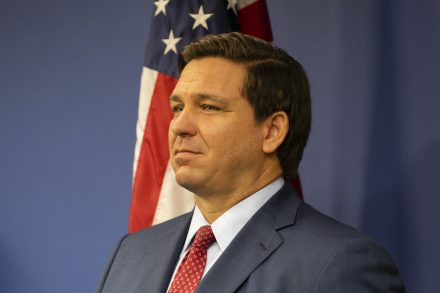
On Tuesday, the Florida Senate passed the Parental Rights in Education bill, and Democrats lost their minds. The Florida left is in a bind these days. Governor Ron DeSantis is shaping the state in his image and Florida is all but guaranteed to go red for the foreseeable future. Yet their recent behavior is desperate even for them. Democrats are having trouble finding suitable candidates to run for statewide elections in 2022 — Debbie Mucarsel-Powell, for instance, isn’t seeking to reclaim her old seat — so it’s not a surprise that they’ve gone all in with the emotional scare tactics and sleight-of-hand rhetorical tricks that increasingly epitomize their party. The approach, however, is misfiring, only serving to prepare DeSantis for his inevitable 2024 presidential bid.

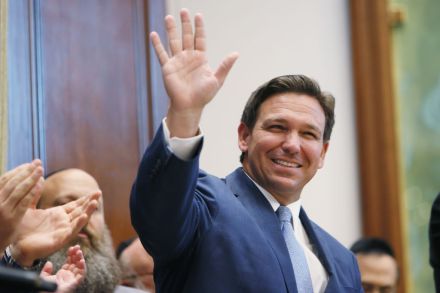
Florida Governor Ron DeSantis (Getty Images)

Sage admits its models were ‘at variance to reality’. But why?

From our UK edition

The Sage committee was set up as a pool of experts on tap to advise government. During the pandemic, it mutated into something different: a group whose advice ended up advocating long lockdowns. Its regular meetings have now been discontinued, with questions being asked in No. 10 about whether it’s time to disband Sage and set up a new structure – in the same way that Public Health England was reformed and became the UK Health Security Agency. There will be plenty of lessons to learn. But we might not have much time to learn them: a new variant or (given the growth of genomic sequencing) a new pathogen could come along at any time. This matters.

Ending restrictions won’t save Boris

From our UK edition

Boris Johnson certainly managed to rally the troops on their first day back from recess this afternoon as he told the Commons that all remaining domestic Covid restrictions were coming to an end.  The most explosive moments of the past few months haven't been about the continuation of Covid restrictions From this Thursday, the legal requirement to self-isolate following a positive test will come to an end. Until 1 April, people who test positive will be advised to stay at home, but after that 'we will encourage people with Covid-19 symptoms to exercise personal responsibility, just as we encourage people who may have flu to be considerate to others'.