Pandemic

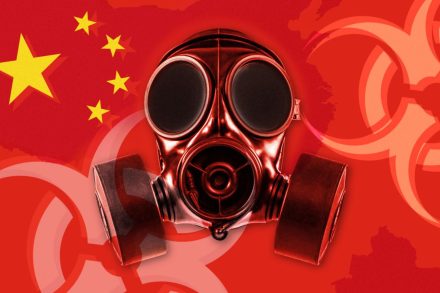
Why doesn’t the CDC care about Chinese biolabs in America?

If you rent a cheap Airbnb house in Las Vegas, you might not be altogether surprised to find dead crickets in the garage. But a thousand vials of medical samples in several freezers – and a centrifuge? After the cleaner and one guest fell ill at a property in the city’s Sunrise Manor neighborhood last week, federal agents raided it and found a whole laboratory’s worth of scientific kit of the kind more useful to medical scientists than, say, drug dealers. Curious. Curiouser still, the house belongs to a Chinese national named Jia Bei (Jesse) Zhu. He is currently in prison awaiting trial over a secret laboratory that (it is alleged) he was running in Reedley, California.
Biowarfare

Where have all the rabbits gone?

From our UK edition

It’s spring and in this corner of rural Sussex, the bluetits are at the window, newborn lambs are bleating in their pens, and all the rabbits are dead. The burrows are still there, but the chewed grass, the little collections of brown pellets, the white bobtails scattering before your headlights at night, they are gone. I first noticed this in spring 2020, when the ancient nest of burrows in our local woods was suddenly empty. Around that time of year, the scores of rabbits gingerly setting out for the evening made a great meal for the fox cubs who first showed their faces around Easter. Both predators and prey have mostly disappeared. It turns out rabbits were also facing their own pandemic.

The Europe of American imaginations no longer exists

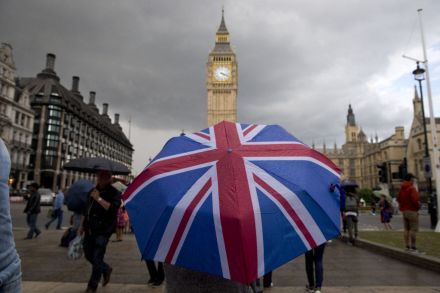
Since the United Kingdom left the European Union five years ago, the pair have been in battle to prove who has performed better. But the real story of the past five years is not a stagnant UK falling behind a buoyant EU, but of Britain and Europe being trapped in the same cycle of relative decline. It’s America that has quietly raced ahead of Europe this century. Following the pandemic it has become impossible to ignore the gulf in economic vitality between the US and Europe, the former growing by 16.3 percent per capita since 2008. There are very good reasons for America’s success, or rather, Europe’s decline. The EU and the UK increasingly treat their industries as pieces of heritage which must be preserved against disruptors and foreign competition.

Europe

Boris Johnson on Covid failures, the Nanny State & his advice for ‘Snoozefest’ Starmer

From our UK edition

36 min listen

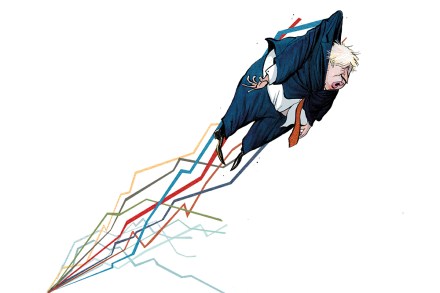
Former prime minister Boris Johnson joins The Spectator’s political editor Katy Balls to divulge the contents of his new book, Unleashed. He reflects on his premiership as PM during the pandemic, describing the time as a ‘nightmare’ for him. He also details how he managed to suppress the force of Nigel Farage, and gives advice to Keir Starmer on how to build a relationship with Donald Trump. Watch the full interview on SpectatorTV: https://youtu.

Life’s little graces: Small Rain, by Garth Greenwell, reviewed

From our UK edition

Garth Greenwell has made a name for himself as a chronicler of touch. In his previous novels, What Belongs to You (2016) and Cleanness (2020), the intimacy of a lover’s hand or the frisson of something much darker – the spit, the slap of a BDSM session – could expand to fill whole paragraphs: stories in themselves of layered sensation and reminiscence. Early in the opening sequence of Small Rain, the unnamed narrator spends close to two pages musing on the ‘shock’ of when a nurse ‘softly stroked or rubbed my ankle’. But now the touch is different. This is not a novel of sexual escapades, but pain – like ‘someone had plunged a hand into my gut and grabbed hold and yanked’.

Why were Germany’s Covid files redacted?

From our UK edition

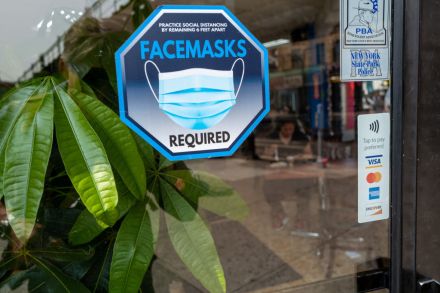
There are two kinds of long Covid. One is a medical syndrome, the other manifests as a healthy obsession – an urge to shed light on what happened during the pandemic crisis. Too many questions remain unanswered: why did Sweden come out of the pandemic better than other countries without having endured a lockdown? Why were masks imposed when scientific studies repeatedly demonstrated that they were unnecessary? Why was discrimination introduced between the vaccinated and the unvaccinated when it was clear that vaccines were incapable of blocking the transmission of the infection? And why, since the lockdowns, has there been such a high excess-death rate in Europe? Why were masks imposed when scientific studies repeatedlyshowed they were unnecessary?

In the grip of apocalypse angst

From our UK edition

You have to love a book about the end of the world in which the first two references are to Saul Bellow’s Herzog and the HBO series The White Lotus, a high/low combo that preps us for authorial omniscience. In the next few paragraphs we get Marc Maron, Sally Rooney and Frank Kermode. Buckle up, kids, a cultural whirlwind is coming! The day of judgment is at hand, and the all-knowing Dorian Lynskey, who seems to have doomscrolled through every card catalogue on the planet, is just the person to provide live commentary. A capacious cultural history of ‘apocalyptic angst’, his Everything Must Go will make you happy to be alive and reading – until the lights go out.

How Covid amnesia spread through the right and left

In August 2020, the US Centers for Disease Control released new Covid testing guidelines, which called for increased vigilance in nursing homes and other hotbeds, while leaving hypochondriacs free to sodomize their noses to their hearts’ delight. The document sought to move away from mass testing for its own sake, which served the dual purpose of, first, generating panic-inducing headlines that could be used to justify lockdowns and drive cable TV ratings and, second, not doing a thing to protect the elderly. The Coronavirus Task Force led by Vice President Mike Pence had signed off on the change a week before in a situation room meeting without any objection from National Institute of Allergy and Infectious Diseases lead Anthony Fauci, as White House advisor Dr.

covid

Anti-vaxxers aren’t to blame for rising measles cases

From our UK edition

The UK Health Security Agency is sufficiently concerned about the growing number of measles cases in the West Midlands that it declared a ‘national incident’ last week. According to official figures, there have been 216 confirmed and 103 probable measles cases in the region since last October. The cause? The uptake of the MMR vaccine is at its lowest level in more than a decade, according to Dame Jenny Harries, CEO of the UKHSA. For some, this is proof of the ‘harm’ that anti-vaxxers and conspiracy theorists can do if greater efforts aren’t made to silence them. A leading article in the Times blamed the outbreak on ‘disease disinformation’, accusing activists of waging ‘irresponsible and immoral campaigns’.

Fast and furious: America Fantastica, by Tim O’Brien, reviewed

From our UK edition

It’s been said again and again but rarely so plainly illustrated: American life is now too berserk for fiction to keep up. Tim O’Brien’s wild, rollercoaster satire America Fantastica is as wacky as its title suggests; but it can’t compete with the daily trainwreck that calls itself the land of the free and the home of the brave. O’Brien tracks with furious contempt the spread of a highly contagious illness: mythomania and delusional conspiracy theories infecting the body politic and poisoning a defenceless citizenry in the dark pre-Covid days of 2019. The name ‘Trump’ is never mentioned in the novel, but the ‘avalanche of oratorical whoppers’ issuing from the White House is the obvious source of O’Brien’s raging dismay.

Why was an erroneous graph used to justify the second lockdown?

From our UK edition

Two stories are emerging from the Covid Inquiry: one that it wants to tell and one that it does not. The first is a tale of foul-mouthed incompetence, of which there’s no shortage of evidence dredged from the private messages of the main actors. The more important story can be found in the submitted statements – hundreds of pages of thoughts, documents and reflections. They raise an important question which Baroness Hallett’s inquiry shows little interest in answering: was lockdown based on a false premise, conjured up by poorly drafted models? Only later did No.

Covid restrictions are returning with a vengeance

Friends from my hometown are often shocked when they come visit me in the DC area and find that many Americans are still adhering to long-expired Covid restrictions. Thankfully I recently moved to the suburbs, but whenever I travel into the city — or even Arlington or Alexandria — for work, it’s not uncommon to see people driving alone in their cars with a mask over their face. People here still wear N95s into the grocery store, “socially distance” and otherwise behave like paranoid hypochondriacs.  We are now more than three years out from the start of the Covid-19 pandemic.

Exclusive: How Covid protocol disrupted the Afghanistan withdrawal

The Biden administration’s Covid obsession interfered with the execution of the Afghanistan evacuation, just as it had with Special Immigrant Visa applicants’ evacuation planning. The administration’s Covid vaccination requirements deprived critical units of key personnel. The problem was especially acute for the Marines in 2/1. From April to October 2021, the battalion rotated in as the combat arms unit of the Special Purpose Marine Air-Ground Task Force — Crisis Response — Central Command (SPMAGTF-CR-CC). In classic military fashion, the task force has an eleven-word name but a straightforward mission: part of the battalion safeguards embassies in the region, and the other part serves as the region-wide “Oh, shit!” response team.

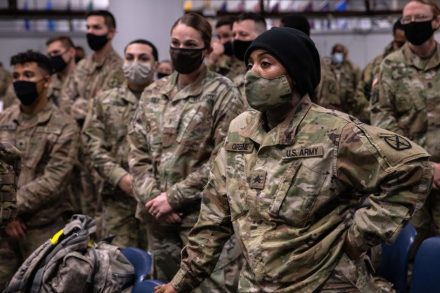
U.S. Army soldiers are briefed on COVID-19 quarantine procedures after returning home from a 9-month deployment to Afghanistan on December 10, 2020 (Photo by John Moore/Getty Images)

A feminist finds fulfilment in derided ‘women’s work’

From our UK edition

Marina Benjamin writes with a frankness, depth and wisdom that recalls the self-exploratory but world-revealing essays of Michel de Montaigne. In A Little Give, she turns her exacting philosopher’s mind, and opens her capacious heart to, her own life. Her essays, Tardis-like in their complexity, depth and range, scrutinise what has made and unmade her feminism, and then enabled her to make anew the feminism that has given her life both its personal and political trajectory: While I’ve never stopped identifying as a feminist, I am less and less certain what it means to live as one. I don’t mean how to organise and mobilise collectively. I mean simply how to be.

Why aren’t we more focused on cleaning up the pandemic mess?

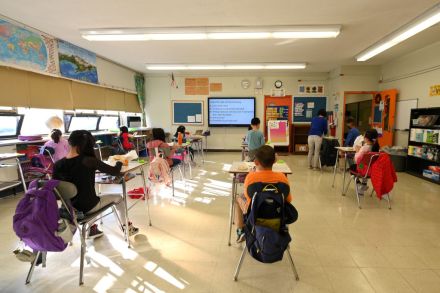
Unless you work for the White House, where the emergency declaration doesn’t expire until May, the pandemic has long been over. March marks three years since Covid upended Americans’ lives and, for all but a tiny minority, it has ceased being a day-to-day consideration. After long and bruising fights over everything from lockdowns to vaccine mandates, perhaps the only thing Americans can agree on is that the country’s response to the pandemic was a failure. From that starting consensus, arguments about what went wrong soon diverge sharply.

school education american pandemic

Will 2023 be the year we discover the truth about Covid’s origins?

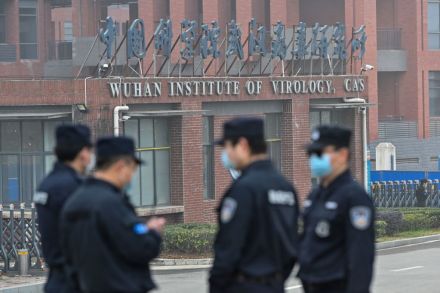
The search for the origin of Covid-19 has been a story of investigators who suddenly found themselves under investigation. Virus hunters who had spent years successfully tracking the origins of novel pathogens fell under suspicion of having caused the 2019 novel coronavirus outbreak in Wuhan. An international consortium of scientists, including collaborators in the US, had hunted for novel SARS-like viruses in South China and Southeast Asia, collecting tens of thousands of samples from not only bats but animals and people associated with the wildlife trade or living near bat caves. In the lab, the scientists grew or recreated these viruses and made chimeras to understand how they could infect people.

wuhan

A nation of quitters

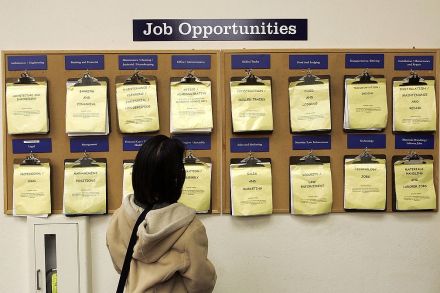
America’s post-pandemic employment picture is an unsettling paradox. On the one hand, job totals are finally back above pre-pandemic highs — and unemployment rates skirt fifty-year lows. But at the same time, overall work rates are lower than they have been since the 1980s — and millions of workers who dropped out of the labor force during the Covid-19 lockdowns have yet to return. A peacetime labor shortage has erupted, yet vast numbers of men and women are still sitting on the sidelines of the economy. America is renowned for its work ethic — and rightly so. The average worker in the United States clocks more hours each year than those in Canada, Australia, Western Europe and now even Japan. But those are the work patterns of US men and women holding down a job.

work
federal

The deep sleep state

America may be falling behind in manufacturing everything from household goods to textiles and semiconductors, but there is one sector of innovation where these United States will never be surpassed: defrauding the federal government. Sure, Beijing’s Machiavellian overlords may steal some missile or naval tech here or there — more often than not here and there — but they couldn’t come up with deploying fake concrete in public works projects or, say, building the Middle East’s largest women’s studies department in the name of defeating terrorism. We Americans cannot be topped in our capacity to fleece the taxpayer. I witnessed one such act on summer vacation and marveled at its creativity and simplicity.

Just how ‘over’ is the pandemic?

For all the confusion caused by President Biden’s recent declaration that “the pandemic is over,” and the familiar sight of administration officials rushing to qualify his comment, it raises a question: where does the Covid emergency actually stand? Having gone from draconian lockdowns to a summer of travel chaos in just over two years — with lots of political squabbling in between — it has been easy to lose track of both the remaining dangers and the precautions many health experts believe are needed going forward. Strictly speaking, Covid is still very much with us. The average number of daily cases in the US has floated between 50,000 and 60,000 since April of this year and the death toll remains fairly constant at 400 per day.

omicron

Isolating with the ex: Lucy by the Sea, by Elizabeth Strout, reviewed

From our UK edition

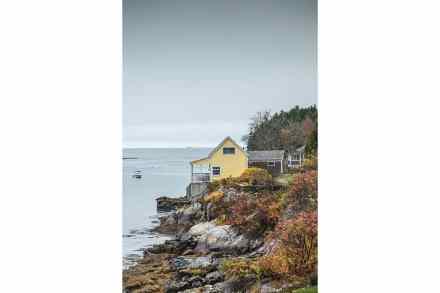
Elizabeth Strout’s fourth book about Lucy Barton comes on the heels of Oh William!, shortlisted for this year’s Booker Prize. That book tracked Lucy’s growing friendship with her first husband, William, after the death of her second. In Lucy by the Sea, she accompanies William to Maine to ride out the pandemic. Closing the door of her New York apartment, she does not know that she will never see it again; that she will lose a friend and a family member to Covid; and that her relationship with William and her two grown daughters will change. Lucy is at sea at first: she hates the cold, the locals’ distrust of out-of-staters, even the ocean’s ‘bitingly salty smell’.