Pakistan

The truth about Pakistan’s role in the US-Iran conflict

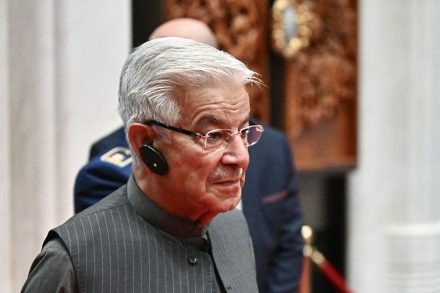
Pakistan was always an unlikely mediator for peace negotiations between the United States, Iran and sotto voce, China. It would not be an exaggeration to describe Pakistan as a failed state. Having outperformed India economically in the aftermath of partition, Pakistan went into steep decline after the arrival on the political scene of a corrupt chancer, socialist and demagogue, Zulfikar Ali Bhutto. Today, bankrupt Pakistan is kept afloat by loans from the IMF, China, and the Gulf States. Trump can be in no doubt that, with regards to political power in Pakistan, it is Munir who wears the pants Bhutto’s political dynasty continued under the aegis of his daughter Benazir and later his grandson.

pakistan

Why Pakistan is brokering peace in Iran

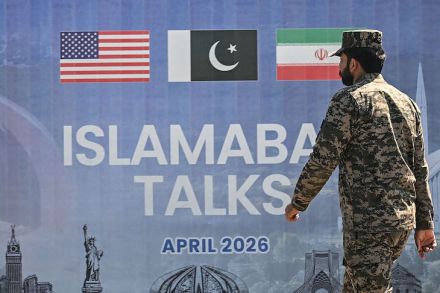
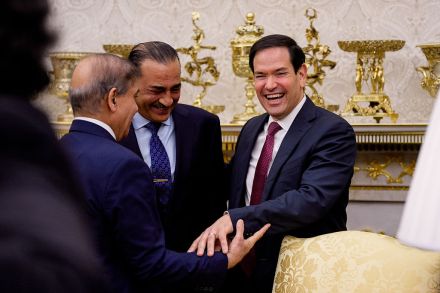
Pakistan, the world’s only Muslim nuclear power, has traditionally been an international sideshow. No longer. The country has reportedly been passing messages between Washington and Tehran in efforts to bring an end to the Iran war. It is has a five-point plan aimed at restoring “peace and stability” across the region. How have the Pakistanis pulled off this remarkable diplomatic makeover? The answer starts with some critical decisions the Pakistanis took last year. After the four-day armed conflict between Pakistan and India in May 2025, both sides claimed “victory”. But crucially Islamabad publicly acknowledged Washington’s role in achieving a ceasefire (something India refused to do). Pakistan later nominated President Donald Trump for the Nobel Peace Prize.

Pakistan

Why the Afghanistan-Pakistan war matters

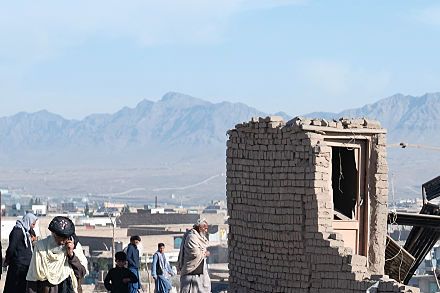
More than a decade ago, during a tense visit to Islamabad as secretary of state, Hillary Clinton gave Pakistan’s leaders a warning: "You can’t keep snakes in your backyard and expect them only to bite your neighbors." She was referring to the Taliban and other militant groups that Islamabad had long tolerated as part of its "strategic depth" policy aimed at countering India’s regional dominance. Now, as Pakistan’s jets strike targets inside Afghanistan and the Taliban mobilize forces along the border, that warning seems like a prophecy.

Portrait of the week: Growth slows to zero, Scotland rejects assisted dying and Trump sends Marines to the Gulf 

From our UK edition

Home Sir Keir Starmer, the Prime Minister, spoke to President Donald Trump of America about the importance of reopening the Strait of Hormuz, but resisted his call for Britain’s ships to be sent there. The government considered sending British-made Octopus drone-interceptors to the Middle East. Sir Keir said £53 million would help a million households reliant on heating oil – £53 a household; ‘It’s moments like this that tell you what a government is about,’ he said. The economy showed zero growth in January, according to the Office for National Statistics. The ONS added alcohol-free beer to the basket of goods used to calculate inflation. John Lewis awarded staff a bonus for the first time in four years.

Portrait of the week: Iran attacked, Iran attacks and Starmer fumbles

From our UK edition

Home Britain was not involved in the attack on Iran, Sir Keir Starmer, the Prime Minister, said, but a day later he gave America permission to use British bases (including Diego Garcia) ‘to prevent Iran firing missiles across the region’. He told the Commons, ‘This country does not believe in regime change from the skies,’ and ‘the only way forward is a negotiated outcome’. ‘This is not Winston Churchill that we’re dealing with,’ said President Donald Trump of America. A drone hit RAF Akrotiri in Cyprus; the destroyer HMS Dragon was dispatched there. At least 300,000 British citizens were said to be in the Gulf.

Will Bradford survive Britain’s curry house crisis?

From our UK edition

Bradford, West Yorkshire, is not known as the curry capital of Britain for nothing. The city is home to more than 200 Asian restaurants. In the main, these are Kashmiri and Pakistani – driven by the city’s Pakistani-Muslim population which is one of the most concentrated in the country – and much of the local economy relies on them for jobs and income. My memories of Bradford curry houses go back to the late 1990s when I worked at the university. Commuting from London and therefore living in student digs meant I would eat out more often than not. That meant curry almost every night I was in the city as it cost little more than a sandwich.  Bradford’s curry houses are known for their homestyle cooking, rather than fancy, westernised, Instagram-aesthetic grub.

How Fatima Bhutto’s dog saved her from a toxic relationship

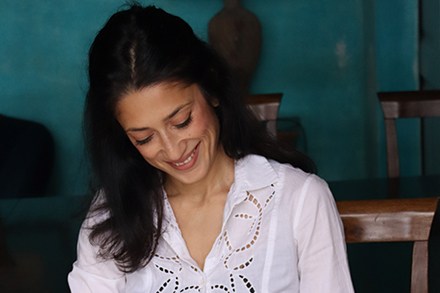
Americans who are concerned with heightened levels of political violence should understand that we are fortunate compared with Pakistan, whose most visible political family, the Bhuttos, have a history that makes even that of the Kennedys look tame. One survivor, journalist Fatima Bhutto, born in 1982, encapsulates the family tragedies. Her grandfather, the charismatic prime minister Zulfiqar Ali Bhutto, was executed under trumped-up charges by the government serving the man who deposed him, army chief Zia-ul-Haq. Her uncle, Shahnawaz Bhutto, died in mysterious circumstances, possibly murdered, at the age of 26.

The Art of the Dealmaker-in-Chief

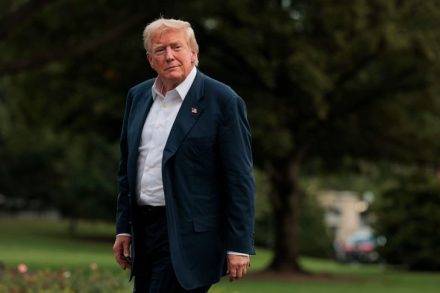
Who really thought Donald Trump’s America was about to join the stampede of first-world powers promising to recognize Palestine at the United Nations?  "Wow!" He exclaimed this morning on Truth Social. "Canada has just announced that it is backing statehood for Palestine. That will make it very hard for us to make a Trade Deal with them."  All over the world, commentators convinced themselves that Trump’s expression of concern on Monday about "real starvation" in Gaza meant he was pivoting with global opinion and against Israel.  It turns out, however, that Team Trump is not for turning when it comes to the Middle East. Marco Rubio, the US Secretary of State, has accused the countries now embracing Palestinian statehood of falling for "Hamas propaganda".

Trump deals

Portrait of the week: Reform party’s victories, Duke of Sussex’s defeat and Deliveroo’s takeover

From our UK edition

Home In a day that upset the apple cart of party politics, Reform won the Runcorn and Helsby by-election by six votes, with 38.72 per cent of the vote, compared with Labour’s 52.9 per cent last year. Of 1,641 wards in England up for election, Reform won 677. The Tories lost 676, winning only 317. The Lib Dems gained 163, winning 370 in all. Labour lost 186, winning 99. Reform won control of ten of the 23 councils in contention. The Liberal Democrats won three councils. The Tories lost all their 16 councils. Dame Andrea Jenkyns, a former Tory minister, was elected Reform mayor of Greater Lincolnshire; Luke Campbell, the former boxer, became Reform mayor of Hull and East Yorkshire.

How Pakistan’s most powerful man provoked India’s missile attack

From our UK edition

From a western perspective, memorising all 114 chapters of the Quran might seem an unusual qualification for a national leader. Yet this is a defining feature of the résumé of General Syed Asim Munir, Pakistan’s chief of army staff since November 2022. To become a Hafiz – one who knows by heart the entire Quran – requires committing 77,430 words to memory, each recited with precise pronunciation in classical (not modern) Arabic. This accomplishment earns the revered title of Hafiz Sahb or Sheikh and reflects deep religious devotion. To put it into perspective, it would be akin to Sir Keir Starmer memorising the biblical books of Genesis, Numbers and Judges – together totalling more than 72,000 words. Why compare a British prime minister with a Pakistani general?

The hypocrisy of the Heathrow Nimbys

From our UK edition

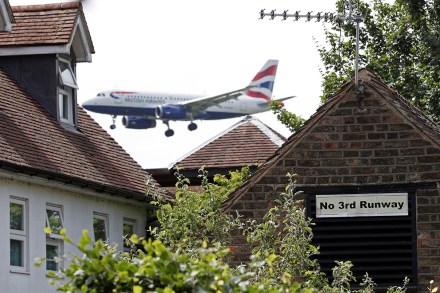
Some readers may have noticed that it takes rather a long time to get anything done in Britain these days. For example, if you added them all together, I wonder how many hours of Prime Minister’s Questions and BBC Question Time – under consecutive governments – have been taken up by a discussion of HS2. The debate over whether the country could construct a faster way to get out of Birmingham seems to have dangled over us for decades now. It is always we who must become impoverished and everyone else who can become enriched It is the same with almost every other major infrastructure project. That is because the UK is not just caught up by a sclerotic officialdom, legal overreach and much more, but because we seem to be caught between ideas.

South Asia in a time of the breaking of nations

From our UK edition

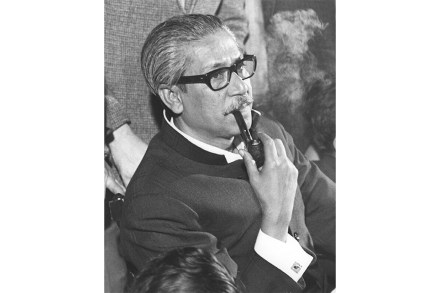
Early on Christmas morning in 1962, the Indian diplomat S.S. Banerjee heard a mysterious knock on his door in Dacca, East Pakistan. Standing outside in the darkness was a 14-year-old boy, who beckoned to him to follow, and minutes later Banerjee found himself opposite the firebrand politician Mujibur Rahman, a pipe-smoking Bengali activist who had recently transformed from a Pakistani nationalist into one of the country’s fiercest critics. For the next hour, the two men engaged in small talk, with Banerjee growing increasingly mystified as to why he had been summoned. Then, just as he was about to go home, he was handed a small envelope intended for the Indian prime minister Jawaharlal Nehru.

A fiery examination of the damage wrought by internet culture

From our UK edition

Historically, when a woman was giving birth, she was attended by the women she trusted most, including her child’s prospective godmother. The word ‘gossip’ derives from the Old English ‘god-sibb’, meaning godparent, but came to refer to what went on around the childbed. As Erica Jong later put it: ‘Gossip is the opiate of the oppressed.’ Gossip has since moved online – see Mumsnet and the network of Facebook pages called ‘Are we dating the same guy?’. Women use the latter to post warnings to alert others to serial cheaters – and worse. Perhaps inevitably, it has become the focus of several lawsuits brought by men who have been publicly maligned. Is it possible to keep the old ‘whisper network’ alive without being sued in the process?

Bringing back rhinos in Pakistan

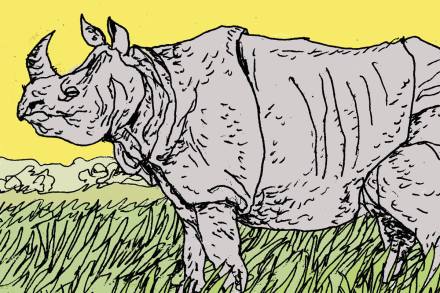
The drive from Islamabad to Multan takes about eight hours. We passed through fields of citrus fruit and farmers tending weed-burning fires. Boys carried giant bunches of twigs over their heads or zipped by on old Honda 70s, balancing water tubs. All had early-Beatles haircuts and wore the shalwar kameez, the Punjabi suit of lightweight trousers and a tunic. Multanis, distinguished by their good looks and their own musical dialect, are called meethi churiyans by other Punjabis, meaning “sweet knives.” They are charming and generous, serving up piles of warm chapati and mutton chops, before stinging you with a hefty bill.

rhinos

Pakistani democracy is on the brink

From our UK edition

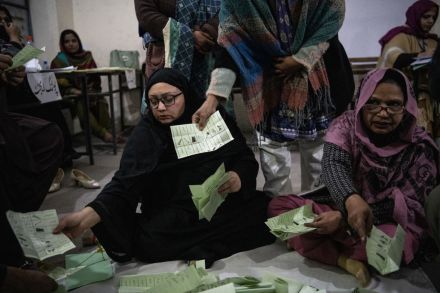
A senior official in Pakistan has publicly confessed to vote-rigging in the country’s general election earlier this month. It is an unprecedented admission of malpractice that raises fresh questions about the legitimacy of the electoral process and whether the final results were manipulated by the country’s all-powerful military. Commissioner Liaqat Ali Chattha claimed that authorities in Rawalpindi, Punjab province, changed the final voting numbers so that the candidates who were ‘losing’ the elections ‘were made to win’. Chattha says there was so much ‘pressure’ on him to manipulate the results that he contemplated suicide, before opting to make a public confession: ‘I take responsibility for the wrong in Rawalpindi.

Hanif Kureishi – portrait of the artist as a young man

From our UK edition

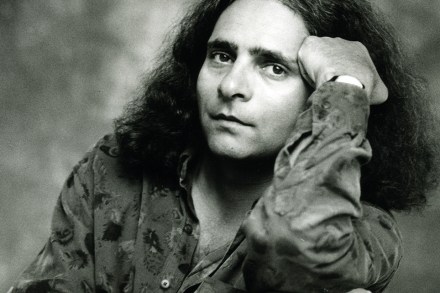
If any novelist, playwright or screenwriter of the past 40 years could be called ‘a writer of consequence’, to use the literary agent Andrew Wylie’s term, it would be Hanif Kureishi. While not shifting units on the scale of his near contemporaries Ian McEwan, Martin Amis and Salman Rushdie, Kureishi’s cultural influence – through his explorations of race, class and sexuality in novels such as The Buddha of Suburbia and films like My Beautiful Laundrette – is inestimable. In this first major biography, Ruvani Ranasinha tracks Kureishi’s progress from his birth in Bromley in 1954 to a Pakistani father and English mother, through his glittering, always provocative career, to the recent accident which rendered him unable to walk or use his hands.

A Hindu Cromwell courteously decapitates hundreds of maharajas

From our UK edition

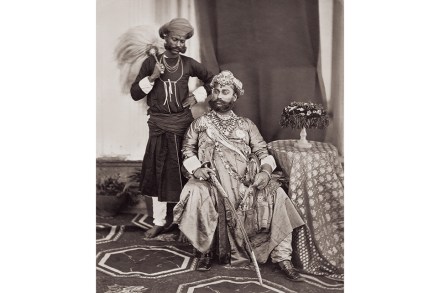
On 25 July 1947, in the searing heat, almost 100 princes bedecked in jewels gathered in a circular room in New Delhi. Some of them ruled over principalities of less than a square mile; others over an area larger than Korea. All of them had been Britain’s close allies for more than a century and, now that the British were leaving India, many looked forward to regaining their states’ independence. But on that fateful day, as Lord Mountbatten swaggered around in his ivory white uniform, anxious murmurs rippled through the throng. A cousin of George VI, and related to virtually every royal in Europe, the viceroy was no republican; yet he was about to set in motion one of the great revolutions in world history.

Has Bazball rescued — or ruined — cricket?

From our UK edition

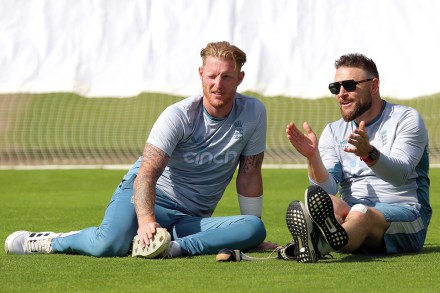
The date 6 June 2021 was a grim day for cricket. As the world was adjusting to life after the pandemic, a Lord’s Test with a full house felt like ‘the promised kiss of springtime’. And so it was, until the final afternoon, when New Zealand challenged England to make 273 in 75 overs. The gesture was recognised as generous by all except the faint souls in the England dressing room, rendered frit by the possibility of defeat. Thousands of spectators, bewildered by five hours of fearful prodding, withdrew their consent. Cricket has witnessed more profound changes in the past decade than in the previous 100 years With ‘the Hundred’ looming like a pirate’s galleon, caution was inexplicable.

Pakistan is on the brink

From our UK edition

On Tuesday I speculated that Pakistan’s former Prime Minister Imran Khan, now the opposition leader, was so popular that he might have to be shot by his enemies to prevent him from coming back to power. This was not a throwaway statement. After Sri Lanka and Lebanon, whose political murder rate since the second world war has been off the charts, Pakistan with 44 political murders comes a clear third, not including the peripheral hundreds if not thousands who have died in bombings. As if in sync with my warning, Tuesday afternoon saw another political murder in Pakistan. Majid Satti, the leader of Imran Khan’s Pakistan Tehreek-e-Insaf (PTI) party in Rawalpindi was gunned down by a group of armed assassins.

Is Imran Khan Pakistan’s Donald Trump?

From our UK edition

Imran Khan, the cricketing hero, legendary lothario and deposed prime minister of Pakistan, is in trouble again. His political opponents in the police and the judiciary, in a manner not dissimilar to the judicial attack on former US president Donald Trump, have moved against Khan in recent days by accusing him of terrorist activities. In theory, these charges could carry the death penalty. Khan’s crime was to threaten retaliatory action against the police and the judiciary in revenge for the arrest of his chief of staff, Shahbaz Gill. Gill had been roughly arrested by police and his assistant allegedly beaten up. In addition, police had tried to apprehend former Khan acolyte and home affairs minister, Sheikh Rashid. But he escaped the net and is now in hiding.