Home
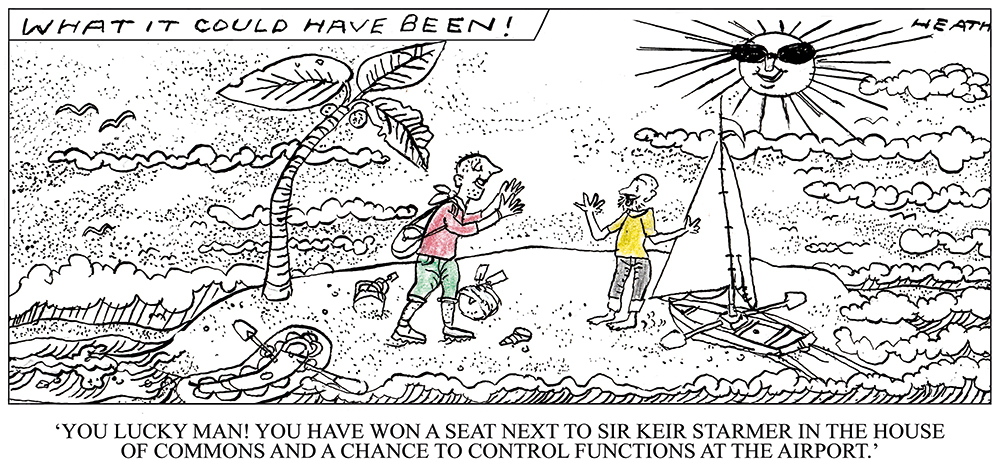
Britain was not involved in the attack on Iran, Sir Keir Starmer, the Prime Minister, said, but a day later he gave America permission to use British bases (including Diego Garcia) ‘to prevent Iran firing missiles across the region’. He told the Commons, ‘This country does not believe in regime change from the skies,’ and ‘the only way forward is a negotiated outcome’. ‘This is not Winston Churchill that we’re dealing with,’ said President Donald Trump of America. A drone hit RAF Akrotiri in Cyprus; the destroyer HMS Dragon was dispatched there. At least 300,000 British citizens were said to be in the Gulf. Hannah Spencer for the Greens won the Gorton and Denton by-election with 14,980 votes (41 per cent), ahead of Reform with 10,578 (29 per cent) and Labour with 9,364 (26 per cent, down from 50.8 per cent in 2024). The Conservatives attracted only 706 votes. An election observer group, Democracy Volunteers, said it had recorded 32 instances of ‘family voting’ in a sample of 545 voters, by which more than one person entered the polling booth, contrary to the Ballot Secrecy Act 2023. Churchill’s statue in Parliament Square had the words ‘Zionist war criminal’ and ‘Free Palestine’ daubed on it; a 38-year-old man was arrested.
The Office for Budget Responsibility reduced its prediction of growth this year from 1.4 to 1.1 per cent (before taking into account the effects of the Iran war) and said unemployment would rise to 5.3 per cent, as Rachel Reeves, the Chancellor of the Exchequer, revealed in the Spring Statement. MPs’ pay will rise to £110,000 in three years. John Lewis abandoned plans to build 1,000 homes. Hamit Coskun, 51, who had burnt a copy of the Quran in the street, saw his acquittal on appeal upheld by the High Court. Ian Huntley, the murderer of the schoolgirls Holly Wells and Jessica Chapman in 2002, was wounded in the head with a metal bar by another prisoner at Frankland prison. On one day 605 migrants crossed the Channel. Tilray, a US company, bought Brewdog. Waitrose said it would stop selling mackerel.
Josh Simons resigned as a Cabinet Office minister. Hamish Falconer, a Foreign Office minister, told MPs that the government was ‘pausing’ its Chagos Bill, but Downing Street then said it had ‘never set a deadline’. The government decided not to give the Terminally Ill Adults (End of Life) Bill more time. Jeremy Corbyn was expected to become parliamentary leader of Your Party. Drusilla Beyfus, the journalist, died aged 98. Professor Jack Scarisbrick, the Tudor historian, died aged 97. Fifty-one swans were found dead of avian influenza at West India and Millwall Docks in London.
Abroad
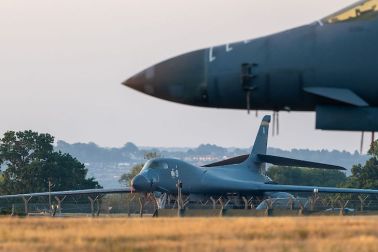
America and Israel went to war against Iran. Ayatollah Ali Khamenei, the supreme leader of Iran, was killed early on, in an air strike. The chief of Iran’s Islamic Revolutionary Guard Corps and the defence minister were among others killed. An explosion at a girls’ school was reported to have killed 165. President Donald Trump said the motives of ‘Operation Epic Fury’ were to protect America and stop Iran getting nuclear weapons. ‘When we are finished, take over your government,’ he told the Iranian people. America hit 2,000 targets in four days and destroyed 17 ships. Iran said it had attacked Bahrain, Qatar, Kuwait, the United Arab Emirates and Jordan. The Fairmont hotel on the Palm Jumeirah island in Dubai was set on fire by a missile. Iran attacked Dubai and Abu Dhabi airports. Israel said ten of its people were killed in the first two days. Israel struck Hezbollah in Lebanon. A drone started a fire at the US embassy in Riyadh. Qatar said it had shot down two SU24 supersonic tactical bombers. Three US F-15 jets were shot down by mistake by Kuwait. Iran said it would ‘set fire’ to any ship passing through the Strait of Hormuz. The price of oil rose.
Pakistan bombed Kabul. Hundreds marched on the US consulate in Karachi and ten were killed. The Global Fellowship of Confessing Anglicans (Gafcon) met in Abuja after rejecting the authority of the Most Revd Sarah Mullally as Archbishop of Canterbury. An 82-year-old man died in a car crushed at a scrapyard in Munich.
Lieutenant-Colonel Antonio Tejero, who attempted a coup by holding up the Spanish Cortes in 1981, died aged 93. Neil Sedaka, who wrote and sung such hits as ‘Breaking Up Is Hard To Do’, died aged 86. CSH


Comments