More than a decade ago, during a tense visit to Islamabad as secretary of state, Hillary Clinton gave Pakistan’s leaders a warning: “You can’t keep snakes in your backyard and expect them only to bite your neighbors.” She was referring to the Taliban and other militant groups that Islamabad had long tolerated as part of its “strategic depth” policy aimed at countering India’s regional dominance.
Now, as Pakistan’s jets strike targets inside Afghanistan and the Taliban mobilize forces along the border, that warning seems like a prophecy.
Pakistan is at war with the militant networks it once cultivated for regional power
Pakistan is at war with the militant networks it once cultivated for regional power – with consequences that could redraw the region’s security landscape, from Pakistan’s internal stability to the wider balance of power in South Asia.
The Taliban – bankrolled, armed and sheltered by Pakistan’s security establishment during their war against the United States and its NATO allies – are behaving like the snakes Clinton warned might eventually turn on their keeper. Pakistani officials say the immediate trigger for the conflict is the Tehrik-e-Taliban Pakistan (TTP), a militant movement ideologically aligned with the Taliban and dedicated to overthrowing the Pakistani state.
Since the Taliban returned to power in Kabul in 2021, Islamabad has, ironically, accused them of allowing TTP fighters to regroup on Afghan soil and launch attacks across the frontier. The UN Security Council says the TTP is just one of almost two dozen transnational terrorist and jihadist groups, including Al Qaeda, operating in Afghanistan.
The Taliban deny direct responsibility for the TTP’s intensifying violence, but they have shown little interest in dismantling the movement and the broader jihadist ecosystem flourishing under their protection.

The result was the launch of Operation Righteous Fury, with Pakistan’s defense minister, Khawaja Muhammad Asif, declaring “open war” against the Taliban, saying: “Our cup of patience has overflowed.”
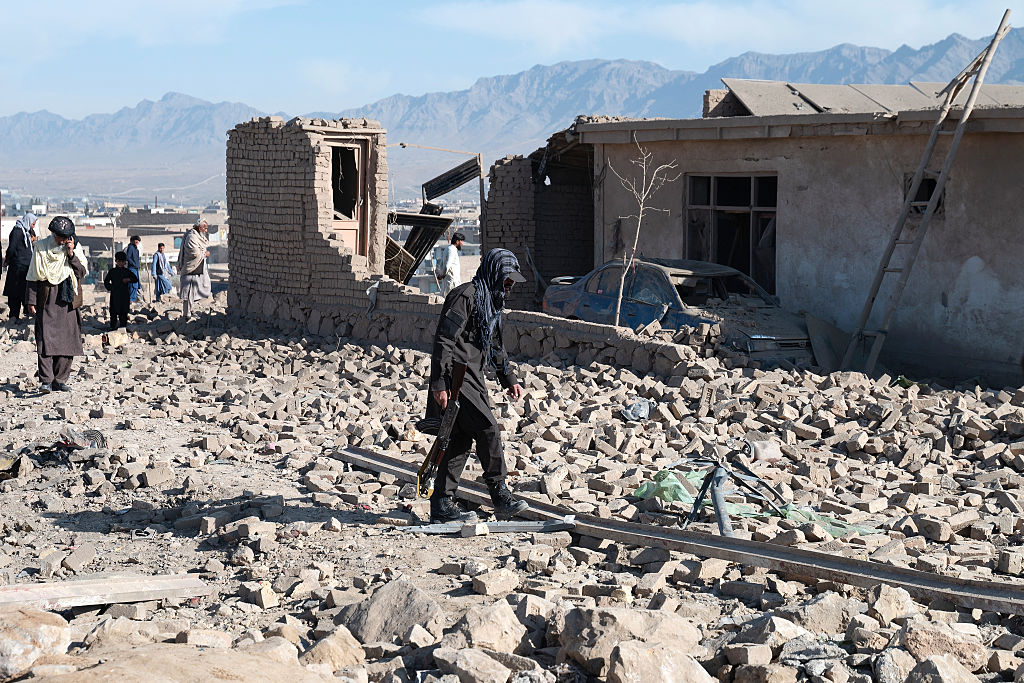
The latest flashpoint was a Pakistani strike on a former US base in Kabul, now used by the Taliban. It also housed a drug treatment facility. The Taliban claimed this strike caused 400 deaths but this appears to be an inflated number. The UN has suggested that around 150 were killed and 119 wounded in the attack.
The Taliban leadership have made similarly exaggerated claims about successful attacks on Pakistani targets, even as Pakistan’s air force bombs military sites across Afghanistan’s eastern and southern regions, as well as sites in the capital, Kabul, and the group’s “spiritual home” of Kandahar.
Ostensibly, the central issue is the 2,640-kilometre frontier between the two countries, known as the Durand Line. Drawn in 1893 by British colonial officials to divide Afghanistan from British India, the line cut directly through Pashtun tribal lands and has never been formally recognized by successive Afghan governments. The border has since become a porous belt of militant networks, tribal loyalties and competing claims to sovereignty.
Pashtun political leaders say the fighting is already exacting a heavy civilian toll. Mohsin Dawar, chairman of Pakistan’s National Democratic Movement, said the escalating conflict across the Durand Line is disproportionately killing Pashtun civilians. At the same time, Pakistani air strikes continue to hit populated areas in Afghanistan.
Ending the cycle of violence, he said, would require “a fundamental shift in Pakistan’s Afghanistan policy,” including shutting down what he described as the long-running “project Taliban.”
Former Afghan government adviser Mujib Rahman Rahimi said the fighting is less a war between two states than Pakistan confronting a militant movement it once used for its own strategic ends, while simultaneously exposing the Taliban’s inability to defend Afghanistan’s sovereignty.
In the five years since returning to power, the Taliban’s incompetence, corruption, cruelty and ignorance have transformed Afghanistan into an economic basket case and a playground for larger powers, including Russia and China, seeking to counter American influence.
Rahimi said the war could mark “the beginning of a gradual process of political erosion and decline for the Taliban.”
Some observers have suggested Pakistan has the approval of President Trump, who has repeatedly rued the loss of American control of Bagram Air Base, near Kabul. Speculation about this was fueled by Pakistani jets hitting Bagram on March 1, soon after Prime Minister Shehbaz Sharif met with Trump in Washington.
Afghan and Pakistani sources said the strikes aimed to destroy Taliban military sites and munitions dumps. One source in Kandahar, speaking anonymously, said the Taliban had begun moving weapons and ammunition to avoid stockpiles being hit by Pakistani bombs.
Against the backdrop of the US-Israeli war on the regime in Iran – which borders both Afghanistan and Pakistan – regional powers are maneuvering to contain the fallout of the conflict.
Iran, China and Russia all have an interest in preventing the fighting from widening along one of Asia’s most volatile frontiers. It is China, however, that has taken the most visible role, stepping in as a mediator and urging Islamabad and the Taliban to resolve their differences through dialogue. Chinese diplomats and special envoys have been shuttling between the two capitals as Beijing presses for a return to talks.
For China, stability along the frontier is essential. Pakistan anchors the China Pakistan Economic Corridor, a key part of Beijing’s Belt and Road Initiative, while Afghanistan offers access to mineral resources and a buffer against militant spillover toward China’s western region of Xinjiang. A widening war along the Durand Line would threaten both of these foreign policy aims.
Meanwhile, more than a decade after Hillary Clinton issued her warning in Islamabad, Pakistan is confronting the consequences of its own shadow war. The snakes Pakistan kept in its backyard are no longer just biting its neighbors.





Comments