Omicron

Don’t underestimate the Omicron variant

From our UK edition

As the Omicron variant makes its way through the population of the UK, the Chief Medical Officer’s warning that we don’t know all that much about the variant, but ‘all the things we do know are bad’ was not what anyone wanted to hear this week. Unfortunately, Chris Whitty is right. The Omicron variant’s assault on the UK has been like a blitzkrieg so far, and it has left a trail of shock and confusion in its wake. It is no wonder that Sage have advised this week that more restrictions may now be needed to prevent a rapid rise in hospitalisations. There is still a lot we don’t know about Omicron, but we have been able to build up a partial picture of the variant.

Pubs and restaurants are being decimated by Covid uncertainty

From our UK edition

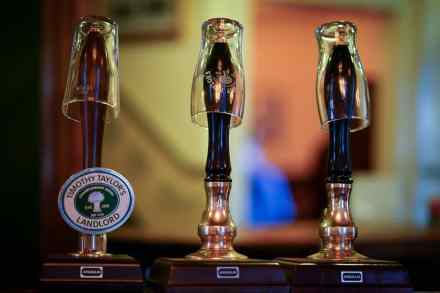
The run up to Christmas is normally a merry time for the hospitality industry. Our nation’s restaurants, pubs and bars are usually bursting at the seams. Most people are out celebrating with their family, friends and colleagues – with crackers being pulled, pigs in blankets served and a glass or two of mulled wine drunk under the mistletoe. Yet, the exact opposite is happening right now for the hospitality industry in the UK. Instead it’s the nightmare before Christmas. Ever since people in Britain have been told to work from home by the government and told to cut back on socialising by chief medical officer Chris Whitty, pubs and restaurants have been clobbered.

Omicron is now Britain’s dominant Covid strain

From our UK edition

If you test positive for Covid now in Britain, the odds are that it’s Omicron: it’s now the dominant strain in England and Scotland. Data released this evening by the UK Health Security Agency showed that by Tuesday, 54 per cent of PCR tests were positive for S-gene target failure (a proxy for Omicron). For perspective, it has only taken eight days for the variant to become dominant: Delta took nearly a month. North of the border, Sturgeon said that the ‘tsunami [of cases] was starting to hit’ and confirmed that in Scotland more than half of cases were Omicron too. Again, that’s using S-gene dropout as a proxy. Some 13,741 Omicron cases have been confirmed in England so far: 696 in Scotland, 313 in Northern Ireland and 159 in Wales.

Macron’s British travel ban is entirely political

From our UK edition

Emmanuel Macron subjected France to a two-hour primetime television interview on Wednesday evening which must have been a pre-Christmas treat for the nation. Just under four million tuned in to see Macron discussing his achievements as president in what was a polished performance; not since Tony Blair has a world leader been such a consummate actor as Macron. He declined to confirm that he will be standing for a second term in April's presidential election but his people know that he will. There was one fly in the ointment, however, a buzz which has been distracting Macron for months: Covid. France is only just emerging from a 'fifth wave' of the virus which last month prompted the government to launch its booster campaign and, among other measures, close nightclubs.

Why Omicron may not lead to a surge in hospitalisations

From our UK edition

There were two takeaways from last night’s press conference: firstly, the hard data showing that the number of recorded cases of Covid had surged by 19,000 – or 28 per cent – in a single day. Second was the assertion that, as a result, the NHS is in danger of being overwhelmed. What was lacking was the hard data on hospitalisations and the number of people in hospital. Although you would never have guessed from the tone of the conference, these both fell. The number of people admitted to hospital – a figure which runs a few days in arrears owing to a delay in the four constituent nations of the UK collating their data – fell from 800 to 774, the lowest figure recorded in a week.

Boris Johnson is in a bind on Covid

From our UK edition

This morning, it’s the Tory party versus the scientists, with a number of Conservative MPs seeing red following Wednesday’s downbeat press conference on the Omicron variant. As the number of Covid cases soars, Boris Johnson has been accused of a lockdown by stealth – after he appeared alongside Chris Whitty in a press conference urging caution over Christmas. The Chief Medical Officer suggested people ought to prioritise the social events they most care about. This morning Whitty is giving evidence to MPs where he has suggested it is too early to say whether further restrictions will be needed. In all of this, no one is quite sure where the Prime Minister sits None of this is landing well with the Tory party.

Why Omicron may overwhelm the NHS

From our UK edition

What we know from the imperfect data we have is that Omicron is vastly more infectious but less virulent than the Delta variant. If the UK Health Security Agency is right in its modelling estimate that as of last Sunday, there were already 200,000 cases of Omicron in the country, compared to 60,000 confirmed and 40,000 suspected cases, we cannot exclude a mass pandemic of Omicron infections in the new year. At this rate, even a much milder virus would still overwhelm our hospital capacities. A study by Discovery Health, a South African private health insurance administrator, based on 211,000 positive test results, showed that the hospitalisation rate of Omicron is 30 per cent less than the previous variants.

The ethics of the Omicron travel ban

From our UK edition

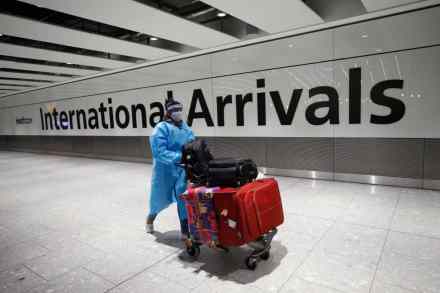
The Omicron variant had not even been named when the government’s reflexes sprung into almost involuntary reaction last month, and it introduced yet more Covid restrictions. The ‘red list’ was immediately revived and South Africa was placed on it. All travellers from there and several other African countries were soon forced into expensive quarantine hotels to live on microwaved mush for ten days. Some European countries even banned flights from southern Africa, while, in turn, Switzerland responded to the first cases of Omicron in Britain by banning unvaccinated Brits from entering the country. Whenever Covid rebounds, the first thing to happen is that international borders are closed.

Vaccine passports may prove a pointless distraction from Omicron

From our UK edition

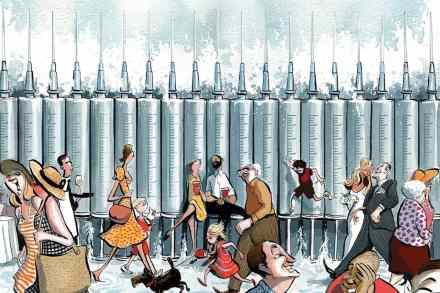
Sajid Javid ditched vaccine passports when he became Health Secretary but he now has to bring them in again, albeit in an updated form where a lateral flow negative test will also be accepted. But how to get this past the Commons where 65 MPs have now decided to rebel? How to do this now given that the argument - that vaccine passports restrict transmissibility - has now collapsed? The big news is that the AstraZeneca vaccine has ‘zero’ effect on people catching Omicron. The vaccine still offers protection from getting seriously ill, but the premise of vaccine passports – that the double-jabbed are less likely to be infectious than the unjabbed – has just collapsed.

Should we be scared of the Omicron variant?

From our UK edition

Why is the government so scared of the Omicron variant? So far, most of the evidence we have for transmissibility and virulence of Omicron is based on very limited data from South Africa, but the UK Health Security Agency (UKHSA) has now published its own preliminary study of the variant — the results of which will presumably have been available to ministers and scientific advisers prior to Wednesday’s decision to enact ‘Plan B’. They appear to show a variant which is more transmissible, more likely to evade vaccines and more likely to reinfect people who have previously had Covid. But there is a very big caveat: they are based on tiny numbers of Omicon cases.

Sturgeon: all cases will be Omicron by Christmas

From our UK edition

Nicola Sturgeon has said that Scotland should expect a ‘tsunami’ of Covid cases, so has said Christmas parties should be cancelled and household contacts of any positive case — Omicron or not — should isolate for ten days regardless of vaccination status. Given that Scotland and England have very similar Covid profiles (both in waves and vaccination) this is relevant to the whole of the UK. But what especially jumps out is the prediction from Scottish government modelling that Omicron will account for all Covid cases by Christmas. Her document: Omicron in Scotland — evidence paper released during Sturgeon’s TV appearance pointed to modelling to suggest that half of new cases could be Omicron by Monday.

Has Boris seen the Omicron data?

From our UK edition

There was nothing but gloom about the Omicron variant at yesterday’s No. 10 press conference. But with reporters preoccupied with last year’s Christmas parties, no one thought to bring up a statement by Tedros Adhanom Ghebreyesus, the head of the WHO, who earlier told reporters that there is ‘some evidence that Omicron causes milder disease than Delta, but again it’s still too early to be definitive.’  You don’t want to make decisions before you have good evidence, but if it does turn out that Omicron is a milder disease, won’t the government’s efforts to suppress it with travel bans and restrictions be counter-productive?

pfizer

Is Pfizer about to cash in on the Omicron variant?

The new Omicron variant of Covid-19 is “mild” and no reason to panic, according to one of the South African doctors who discovered the new strain. Nonetheless, American politicians and public health officials are extending mask mandates, expanding vaccine mandates, and warning of the potential for another lockdown. Pfizer is taking their cues and stepping in to play hero. Despite only having a week or two of research available to them, the pharmaceutical giant insists that preliminary lab results show that three doses of their vaccine work well at neutralizing the Omicron variant. How convenient that the so-called “booster” shot Pfizer and President Joe Biden have been pushing for months is now found to be super effective against this new variant.

Omicron: cause for hope?

From our UK edition

It will be weeks before we know just how worried we should be about Omicron — but the first indications seem hopeful. The epicentre of the first recorded outbreak has been the subject of a study that suggests that it may be milder than Delta. Early data from 166 patients in the Tshwane district comes with the usual caveats, especially that very little Omicron has been found among South African over-65s. But the study nonetheless has two weeks of hospitalised Omicron patients to analyse — more than any other country. Here are the main indications so far:  Fewer people hospitalised with Omicron have ended up in intensive care: 8 per cent, compared to 25 per cent for Delta.Fewer patients need oxygen: only about a third.

Escaping from South Africa during the Omicron panic

One of the most gripping scenes in the classic film Casablanca is at the very beginning, when many of the characters who would feature in the story are seen together in a busy city plaza. Suddenly silent as a small Lisbon-bound plane passes overhead, they all look up, and the audience can see in their faces the cumulating stress of not knowing when, or even if, they would get out of wartime Morocco and fly to America. I never imagined I would experience anything remotely like that until just a few days ago when my twenty-eight-year-old son Zachary and I were wrapping up a long-planned and, due to the coronavirus, frequently postponed vacation to South Africa.

omicron

Unless Omicron changes everything, Covid is on the way out

From our UK edition

There are good reasons to be concerned about the Omicron variant. For starters, this strain has 50 mutations, twice as many as Delta. Early reports from South Africa, where the virus has been circulating for a while, suggest it’s outcompeting Delta and spreading rapidly. There is a concern, too, that it could blunt the vaccines, because more than half of the new mutations affect the spike protein that the jabs are designed against. But all of this is theoretical: we need real-world data. So we won’t know whether it really is more transmissible, or how the vaccines perform against it, until long after Christmas. The concern, for now, remains Delta, as Chris Whitty said last week. On that front, the news is better.

Boris’s booster bet

From our UK edition

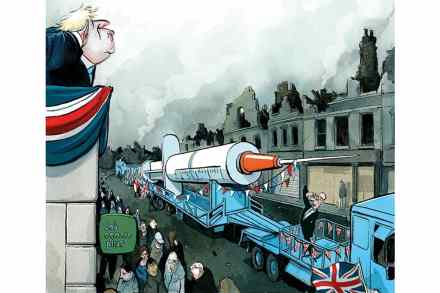
Boris Johnson is relying heavily on the booster programme to protect Britain from any additional threat posed by the Omicron variant. The Prime Minister made that very clear at this afternoon's Covid press conference in Downing Street, opening by saying that 'there is one thing we already know for sure: right now, our single best defence against Omicron is to get vaccinated and get boosted'. Temporary vaccination centres were going to pop up 'like Christmas trees', he said. He also seemed committed, if not to boosterism in the form of unbridled optimism about how the next few months would go, then at least to a reluctance to tell people to change their behaviour.

Is Boris right to fear the Omicron variant?

From our UK edition

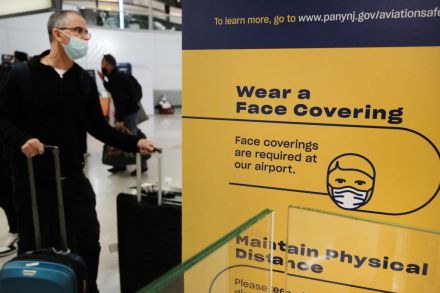
Boris Johnson announced a new raft of coronavirus measures on Saturday, after two cases of the Omicron variant were detected in the UK. Face masks will soon be made mandatory in shops and on public transport and  PCR tests compulsory for those travelling to the UK. These new restrictions were revealed less than half a week after health authorities in South Africa informed the World Health Organisation of the discovery of the new Covid-19 variant, designated B.1.1.529 and now re-named Omicron. First isolated on 9 November, on Saturday two cases of the virus were detected in Britain, in Essex and Nottinghamshire. Is Boris Johnson right to fear this new variant? In South Africa the appearance of the strain coincided with a steep increase in case numbers.

Has Boris Johnson done enough to stop the Omicron variant?

From our UK edition

The restoration of an obligation to take a PCR test within two days of return to the UK, and to isolate until receipt of a negative result, is the most important of Boris Johnson's announcements today. In theory it will delay the seeding and spread of the new Omicron Covid-19 variant. But the relatively limited prophylactic measures unveiled alongside this – compulsory mask wearing in shops and on public transport, the obligation for any close contacts of those infected with Omicron to isolate, whether or not they test positive – will only turn out to be adequate if the new variant hasn’t already been seeded here. It is possible that there is more of Omicron in the UK than we know.