Oil

Europe has squandered its energy security

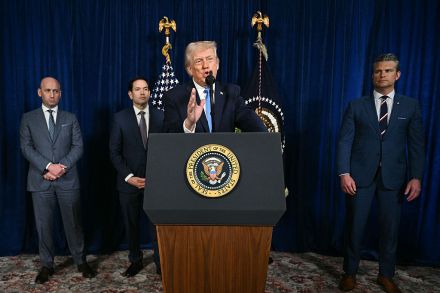
“Europe is desperate for Energy, and yet the United Kingdom refuses to open North Sea Oil, one of the greatest fields in the World.” Donald Trump said this month on Truth Social. It is, to use the President’s phrase, “Tragic!!!” But the necessity of oil hasn’t always been recognized. Back in 2008, while running for the White House, Barack Obama declared that one of the major challenges facing the US is “what we will do about our addiction to foreign oil.” His solution was to switch America to renewables. In that address, known as the “New Energy For America” speech, Obama said, “We simply cannot pretend, as Senator McCain does, that we can drill our way out of this problem.

energy

We’re stuck at the worst possible oil price

A ceasefire has been agreed with Iran. The Straits of Hormuz will reopen. And the oil market will get back to normal very quickly. By Wednesday morning, it looked as if the energy crisis was over. Finance ministers will be breathing a sigh of relief as the crisis abates. But hold on. In reality, the truce is fragile, and huge amounts of supply have been taken out of the market. So long as that remains true, the price of oil, and with it the global economy, will remain stuck. The average price of $90 to $100 a barrel is not what anyone really thinks a barrel of oil is worth The price of oil has been on a wild ride ever since the United States and Israel started the attack on Iran a month ago.

oil

Why Ukraine’s Russian oil strikes are backfiring

Every drone Ukraine fires at a Russian oil terminal is meant to defund Moscow's war in Ukraine. Right now, each one may be doing the opposite. Ukraine's strikes on Russian oil export infrastructure are intended to starve Moscow of the budget revenues that fund its war machine. The logic is straightforward: disrupt exports, reduce revenues, constrain the war effort. Kyiv has been explicit about this: Ukrainian officials consistently frame attacks on oil terminals as direct hits on Russia's war chest, treating every barrel that cannot be shipped as a ruble that cannot be spent on missiles or mobilization. Reuters puts the scale of that disruption in stark terms – at least 40 percent of Russia's crude export capacity, roughly 2 million barrels per day, is currently offline.

ukraine oil drone

Should NATO help America defend the Strait of Hormuz?

As soon as Operation Epic Fury, America’s latest campaign against the Islamic Republic of Iran, got underway on the last day of February, political, military and economic minds around the world should have turned their attention to the Strait of Hormuz. The waterway provided the only shipping route from the Persian Gulf to the Gulf of Oman and the open seas beyond. That has long made the strait the dagger Iran holds at the throat of the world. At its narrowest, it is less than 25 miles across, and Iran controls the northern shore; to the south is the Musandam Peninsula, shared by the United Arab Emirates and an exclave of Oman.

NATO STRAIT

The Iran war is just what Putin’s depleted coffers need

Of all the parties watching the chaos in the Middle East unfold, one should be rubbing its hands together with particular satisfaction. Russia has not fired a shot in this conflict, lost no allies it cannot afford to lose and has so far gained rather a lot, with more to come. A cynic might call it the perfect war for Vladimir Putin. Moscow's public reaction has been characteristically theatrical. The Foreign Ministry denounced American and Israeli actions as a "reckless step" and a "dangerous adventure." Things have gone no further. There has been no announcement of political or military support for Iran from the Kremlin – nor is there likely to be: Russia needs its drones and missiles for Ukraine.

putin

Was the raid on Venezuela real?

From the very start, there was something weird about Operation Absolute Resolve. The official story went something like this: after a whirlwind air attack, which included the use of suicide drones for the first time, special operators from the US Army’s renowned but shadowy SFOD-D unit (“Delta Force”) were helicoptered into the Fuerte Tiuna military complex in the south of Caracas, the capital of Venezuela. They defeated the local garrison, used “massive blowtorches” to breach heavy metal doors in a fortress-like residential site within the base, captured the President of Venezuela, Nicolás Maduro, and his wife, then spirited them back to the helicopters and flew them out to face charges in the United States.

venezuela

What Trump should learn from the British empire

One remarkable thing about Donald Trump’s adventure in Venezuela is just how old-fashioned it is. It is a world away from George W. Bush’s neoconservative efforts at nation-building in Iraq and Afghanistan. There is little attempt to justify the arrest of Nicolás Maduro in terms of the human rights of Venezuelan citizens. Little attention appears to have been paid as to how the country will now be governed. Nor have we heard much more about the drugs crimes of Maduro, other than the admission that he perhaps isn’t, after all, quite the lynchpin of an international criminal racket (for all his other offenses against his own people).

Trump

Why would anyone want to rule Greenland?

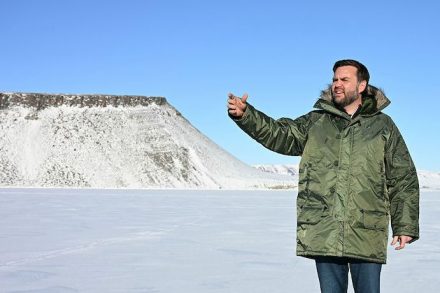
It was the Viking, Erik the Red who, in AD 986, first saw Greenland’s potential. He wanted to colonize his newly-discovered island, and in a blatant piece of tenth-century spin-doctoring hit on a wizard wheeze to encourage other Norse people to come to this bleak, icy and remote corner of the unknown world: "In the summer, Erik left to settle in the country he had found, which he called Greenland, as he said people would be attracted there if it had a favorable name." More than a thousand years later, President Donald Trump is proposing something similar. "It’s a large real estate deal. Owning Greenland is vital for US security... and economic security... It’s an absolute necessity and I cannot assure you that we would not use military or economic coercion.

greenland

The West can’t afford to shun Russian oil

Donald Trump is a radical foreign-policy innovator. Over the past few decades, the US has tried a range of non-military means to nudge, squeeze and occasionally strangle its adversaries. These range from travel bans and banking restrictions, to export controls and trade limitations. But never has the US – or indeed anyone – tried to use import tariffs as a species of economic sanction. Trump has threatened Vladimir Putin with introducing “secondary sanctions” against countries that import Russian oil – a threat intended to strike at the heart of Russia’s war economy. And on August 4, Trump appeared, for the first time, to make good on that threat.

oil

Where conflict in the Middle East goes from here

Anything written on the Middle East at this moment in history is almost instantly out of date. As Lenin said: “There are decades where nothing happens; and there are weeks where decades happen.” The Arab-Israeli war in 1967, the Iranian revolution in 1979, the invasion of Iraq in 2003...the region may once again be at one of those forks in the road that dictate the fate of nations for years to come. Journalists’ predictions age like milk out of the fridge. Nevertheless, here are some: Israel attacks Iran. This isn’t a hard one. The question is what form that attack will take. The prime minister, Benjamin Netanyahu, has wanted to bomb Iran’s nuclear facilities before, only to be stopped by the US.

Venezuela is essential for China’s ambitions

Venezuela has become a headache for Washington. Just after the Biden administration engineered a rapprochement strategy, Nicolás Maduro did more than just double down on not following through his promises of democratization: he is now pushing to annex neighboring Guyana. These developments, though, should have been anticipated, as Venezuela becomes a crucial part of China’s geopolitical strategy. "Ready for what will be a historic visit to strengthen ties of cooperation and the construction of a new global geopolitics. Good news will rain for the Venezuelan people," said Maduro after landing in the Chinese city of Shenzhen back in September.

Maduro china venezuela

COP28 is nothing but hot air

What position should the distant observer take on the COP28 conference in Dubai? That the sight of 70,000 delegates flying into a desert oil state from around the world to discuss human impacts on climate change is beyond satire and that its proceedings are never likely to rise above Greta Thunberg’s encapsulation of all such jamborees as “blah blah blah?” Or that the climate problem is now so obvious and urgent that all efforts towards global action, however small, should be uncynically applauded? I leave that choice on the table.

COP28

Will Venezuela invade Guyana?

Eight years ago in Guyana, an Idaho-sized country on the northern coast of South America, ExxonMobil discovered massive oil reserves. So massive, that it’s speculated that the tiny nation, which is one of the least densely populated countries on the planet, could become the richest country per capita. Estimates indicate that Guyana has around 11 billion barrels of oil equivalent, boosting the nation to the third position in terms of proven oil reserves in the region. To contextualize the enormity of these discoveries, consider that the tiny nation has almost five times more proven oil reserves than Argentina, a country thirteen times larger by land mass. Only Brazil, the fifth largest country, and Venezuela, the country with the largest proven oil reserves, surpass Guyana.

Guyana

ESG is a surprise boon for fossil fuel giants

ESG, or environmental, social and corporate governance, has taken the financial world by storm. It first hit the scene in a 2004 United Nations report that argued the financial sector could rack up more profits if it focused on carbon dioxide reduction and UN-approved progressive causes and has ballooned into a big, green financial juggernaut. In 2021, ESG assets under management hit an estimated $35 trillion. Bloomberg projects that by 2025 $53 trillion will be invested in ESG vehicles — that’s over one third of global assets under management and over five times 2007’s total of $10 trillion of ESG assets.  The main thrust is to hasten the renewable energy transition to solve climate change by diverting capital from fossil projects to various green projects.

opec aramco esg

Venezuela’s anti-socialist opposition has faltered

2019 was a banner year for Juan Guaidó, a relatively obscure Venezuelan lawmaker who announced to a crowd of thousands in the heart of Caracas that he, and he alone, was Venezuela’s new interim president. The United States and dozens of other countries in Europe and Latin America quickly followed up with official recognition for the fresh-faced head of the Venezuelan National Assembly. Nicolás Maduro, the man who took over the presidency after Hugo Chávez’s death, was for all intents and purposes relegated to the status of an isolated despot who had no legitimate claim to the Miraflores palace. 2022, however, has brought Guaidó and his international supporters back down to earth, with the opposition ditching his government in a 72-28 vote.

Juan Guaidó venezuela

The coming turbulent times in the oil market

When the Wall Street Journal reported on November 21 that OPEC, the oil cartel dominated by Saudi Arabia, was planning to increase production by 500,000 barrels per day in December, the crude market immediately reacted. Oil prices plunged by 6 percent, bringing the Brent benchmark close to $80 a barrel. Saudi energy minister Prince Abdulaziz bin Salman, the older brother of king-in-waiting Mohammed bin Salman, immediately went to work disputing the report. No decisions at OPEC had been made, he said, and it was possible the cartel could even proceed with further production cuts if needed to maintain balance in the market (for the Saudis, "balance" is usually defined as padding the kingdom’s balance sheet). Abdulaziz’s intervention helped make up most of those earlier losses.

oil

The tricky debate over fossil fuels on Native American land

The Biden administration has found itself between a rock and a hard seam of coal. A cohort of Native American tribes have realized just how sacred — and lucrative — their lands really are, and they’re not trusting the promises of an old white man this time. “When the administration says, ‘We're going to create all these millions of jobs if we just switched over [to renewable energy] today,’ they haven't shown us the fine print that says where those jobs are coming, which region, doing what,” Daniel Cardenas, chairman of the National Tribal Energy Association and member of the Pit River Tribe, told Fox News Digital in an interview. "When you start questioning them there, then they start getting defensive.

How the US failed to stop OPEC from cutting oil production

Near the top of President Biden’s to-do list for the past few months has been to keep gas prices down. On Wednesday, this was dealt a likely fatal blow by the Organization of Petroleum Exporting Countries, or OPEC, which, led by Saudi Arabia, agreed to cut its overall production by two million barrels per day. In actuality, the cut will mean a reduction of more like one million barrels per day if it's taken into account that OPEC has been underproducing compared to its previously stated production goals. Still, this is a significant cut, and the effects on oil markets are already being felt.

How the Saudis embarrassed Biden over oil prices

As Americans confront high inflation rates, tumbling prices at the gas pump are at least giving them a little relief. Brent Crude, the global benchmark for oil, has declined by 27 percent from its $127 peak six months ago. Gas prices in the United States, which were averaging just over $5 a gallon earlier in the summer, are now in the $3.72 range. That means Americans are saving $10 to $15 every time they fill up their tanks. Yet crude is a global commodity, and its price can fluctuate for any number of reasons — war, recession, and an economic slowdown in China to name but a few.

Blaming Saudi Arabia won’t make energy cheaper

How outraged should we be that Saudi Aramco has reported a world-record quarterly profit of $48 billion, representing a giant bonus from the global oil price spike provoked by the war in Ukraine? Well, that’s how the cookie crumbles when you’re sitting on oil reserves so abundant and so easily accessible that your marginal cost of producing the next barrel is less than $10 when the market price has just doubled to $130 — as it did in March, before settling back to around $95 today. And you might think that this recent price retreat is likely to continue as oil demand begins to shrink with the onset of recession in developed economies – just as you worry that your own reserves will one day dwindle.

saudi arabia