Oil

Has the Kremlin talked Trump out of sanctions?

From our UK edition

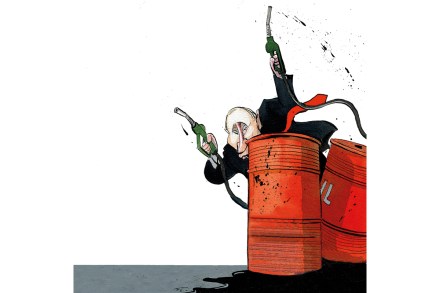
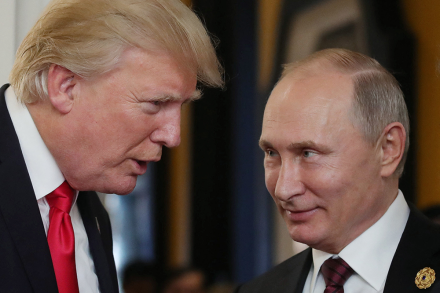
After a two-hour phone call last month, Donald Trump and Vladimir Putin announced that an improved bilateral relationship between the United States and Russia ‘has huge upside’, including ‘enormous economic deals and geopolitical stability’. Days later, however, Trump said he was ‘pissed off’ with Russia over its foot-dragging on a ceasefire in Ukraine. Putin’s demand, moreover, that Ukraine’s government be replaced with a transitional one had made him ‘very angry’. Trump warned that if a deal couldn’t be struck, then the US would ‘put secondary tariffs on all oil coming out of Russia… That would be that if you buy oil from Russia, you can’t do business in the United States. There will be a 25- to 50-point tariff on all [Russian] oil.

Ed Miliband doesn’t understand how energy pricing works

From our UK edition

Are we about to find out the full foolishness of Ed Miliband’s policy of blocking licences for new oil and gas extraction in the North Sea? While it may come as a surprise to some, until New Year’s Eve Europe was still receiving gas supplies from Russia – not through the Nord Stream 1 pipeline which was sabotaged in 2022, but via an unlikely route through Ukraine. These taps have now been turned off, after an agreement for Russia to supply gas to Europe came to an end. That leaves the continent facing a similar situation, if less acute, to that which it faced in 2022. It must look elsewhere to make up for lost Russian gas.

Whipping up a masterpiece: painters and their materials

From our UK edition

If you are someone who revels in the deliciousness of oil paintings, who looks at them and wants to eat them ‘as if they were ice cream or something’, in Damien Hirst’s phrase, then Martin Gayford’s latest book will be a banquet. In part, this is thanks to the illustrations – luscious close-ups of Van Gogh’s brushstrokes like buttercream icing, and a double-page spread of a golden Rothko large enough to tumble into. But mainly it’s due to his intention to understand the medium of painting from the inside out: from the artists’ viewpoint rather than the art historian’s. He is well placed to do this, having interviewed almost every well-known artist (many of them for this magazine) during his past 30 years as a critic.

Where conflict in the Middle East goes from here

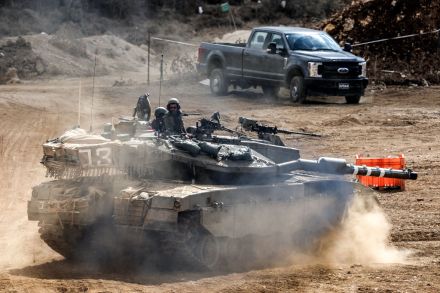
Anything written on the Middle East at this moment in history is almost instantly out of date. As Lenin said: “There are decades where nothing happens; and there are weeks where decades happen.” The Arab-Israeli war in 1967, the Iranian revolution in 1979, the invasion of Iraq in 2003...the region may once again be at one of those forks in the road that dictate the fate of nations for years to come. Journalists’ predictions age like milk out of the fridge. Nevertheless, here are some: Israel attacks Iran. This isn’t a hard one. The question is what form that attack will take. The prime minister, Benjamin Netanyahu, has wanted to bomb Iran’s nuclear facilities before, only to be stopped by the US.

The song of the bearded seal and other marvels

From our UK edition

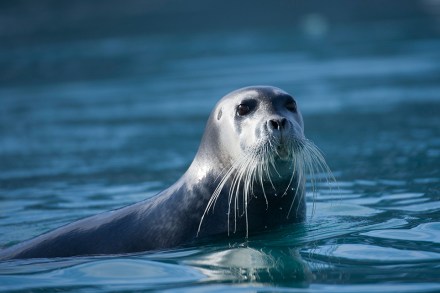
In his satirical Devil’s Dictionary, Ambrose Bierce defined the ocean as ‘a body of water occupying about two thirds of a world made for man – who has no gills’. Bierce may have been right to poke fun at human arrogance, but he underestimated the importance of the seas. Averaging almost 3,700 metres (12,000ft) deep, the ocean constitutes around nine tenths of the habitable space on our planet. It plays a commensurate role in the Earth system, not least as an engine – a ‘blue machine’ in the phrase that also titles an excellent book by the physicist and science presenter Helen Czerski – that moves heat around the planet.

A thriving City will test Labour’s tolerance

From our UK edition

The City is having a busier year than pessimistic observers – including me – might have expected. The biggest deal on the block, the £39 billion bid by Australian giant BHP Billiton for its London-listed South African mining rival Anglo American, has fallen away. But plenty of bankers’ and advisers’ fees have already been clocked up on both sides and BHP may now pursue global domination of the copper market by stalking other London-listed miners such as Antofagasta of Chile. Meanwhile, the £3.

The shadow fleet helping Russia to evade sanctions

From our UK edition

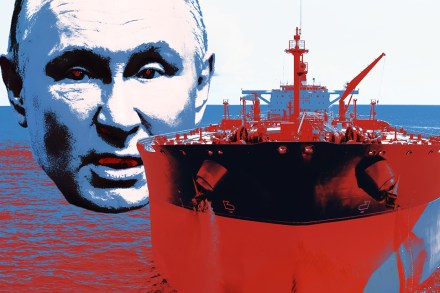
Economic sanctions were meant to be the West’s secret weapon against Russia, a way of crippling Vladimir Putin’s war machine and bringing his invasion of Ukraine to a halt without Nato firing a shot. Instead, Russia’s economy and military remain in rude health. After recent heavy attacks north of Kharkiv, Putin’s troops have seized more than 38 square miles of territory and stretched Kyiv’s already thinly deployed defences as they grind forward in Donbas. Putin has demoted his long-serving defence minister Sergei Shoigu, replacing him with the little-known economist Andrei Belousov. Appointing a finance specialist as military chief was a reminder that armies march on money. In Russia’s case, oil money.

The need for greed

From our UK edition

I suspect I’ve had a lot more fun writing about the annual Sunday Times Rich List over the years than many of its denizens have had clambering into it and staying there behind their high-tech security gates and their phalanx of tax advisers. The 2024 roll call includes some great British wealth-creation stories – led by the industrialist Sir Jim Ratcliffe, the inventor Sir James Dyson and the Far Eastern trading Swire dynasty. But if the completed jigsaw of 300 names makes any sort of picture, it is of a vast treasure hoard from elsewhere, and in some cases from nowhere, that has found a relatively safe vault in the UK. That’s not a bad thing in itself as an advert for our quality of life and rule of law.

How Pret ate itself

From our UK edition

How bad would it be if Royal Mail’s parent company, International Distributions Services (IDS), were to be taken over by the Czech billionaire Daniel Kretinsky? Our historic postal service is heavily lossmaking, struggling to maintain its universal delivery obligation and at war with its unions: a foreign owner would surely take an axe to it. Kretinsky, who owns almost 28 per cent of stockmarket-listed IDS, has gone back on an assurance that he would not try to take the company private and has tabled a £3.1 billion offer – above the group’s current market value but well below what other shareholders think it is worth. He won’t win with this first gambit but he’s likely to be back with a higher one.

Mike Lynch has little chance of escaping US jail

From our UK edition

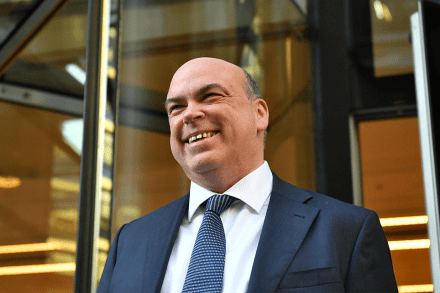
As I’ve said before, I hold no brief for Dr Mike Lynch, the founder of the Cambridge-based software firm Autonomy, who faces US fraud charges over the $11 billion takeover of his company by Hewlett-Packard (HP) in 2011. But I watched with foreboding as US marshals bagged Lynch under the lopsided 2003 US-UK extradition treaty and flew him to California – after the then home secretary Priti Patel declined to halt the process – and a judge there changed his pre-agreed bail conditions to place him under armed house arrest. Now, having comprehensively lost the argument that as a UK citizen running a UK company he should have been tried in British courts, Lynch is pleading ‘not guilty’ to a San Francisco jury.

Bombed-out bank shares are a failure of modern capitalism

From our UK edition

When I read news of a fresh strategic plan for Barclays, I seem to hear a ghostly rustling from the corner cupboard in the living room. Could it be a forlorn protest from the dusty bundle of share certificates that are the last vestiges of my late father’s lifelong service to Barclays from junior clerk to deputy chairman? They were a modest farewell reward – 40 years ago, in the era before mega-bonuses for senior executives – that might once have been swapped for a country cottage but today would barely yield enough to pay for his upcoming centenary dinner. Even the Qatari sheikhs have sold down their Barclays holdings in despair.

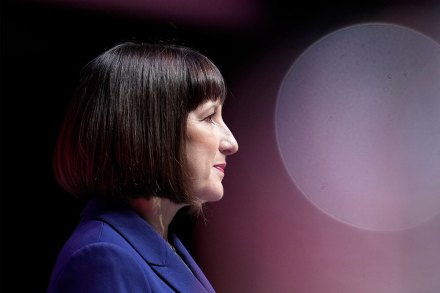
Will Rachel Reeves scrap the private equity tax break?

From our UK edition

I’ve been reading – so you don’t have to – speeches recently addressed to a hot-ticket gathering of business leaders at the Oval cricket ground by Sir Keir Starmer and shadow chancellor Rachel Reeves. The nub is a promise to hold corporation tax at the current rate of 25 per cent for the duration of the next parliament, combined with a warning that ‘levelling up of workers’ rights’ will cause companies’ labour costs to rise. Then there’s all the usual guff you’d expect from a government-in-waiting about infrastructure and skills; plus an unusually warm tone towards the financial services sector, including a pledge not to reinstate the EU-inspired cap on bankers’ bonuses that was abolished by Kwasi Kwarteng.

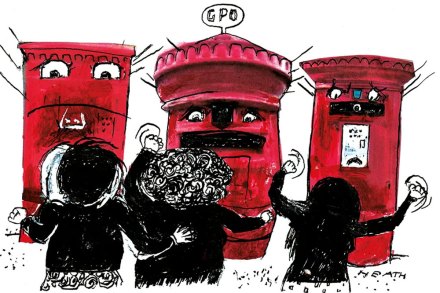
Can anyone save the Post Office? 

From our UK edition

Angry farmers offer a theme for the week – starting with the French at close quarters. Leaving the Eurotunnel at Calais en route to a wedding in the Alps, my car party encounters agricultural rage in the form of convoys of stationary trucks at all the port’s major exit points, as tractors blockade the autoroutes and police do nothing to shift them. Echoing recent protests in Germany, Poland and Romania, French farmers want better price protection, cheaper diesel, more import barriers, more aid from Brussels and less green regulation. We’re lucky not to be sprayed with manure, as was happening elsewhere. The protests have support from the powerful CGT union on the left and Marine Le Pen on the right, the latter calling the Emmanuel Macron regime ‘the farmers’ worst enemies’.

Where are the smart investments under a Starmer government?

From our UK edition

I worry that my Burlington Bertie life in London’s West End offers a misleading picture of the real economy. Yes, boutiques and brasseries are busy, but what’s it like in outer boroughs and distant provinces? To take a single morning’s headlines, on the plus side there’s upbeat trading news from ABF, the grocery and Primark discount clothing retailer, which reaches consumers everywhere; and a prediction that energy prices will fall 16 per cent by April. On the negative, warnings that ‘more than 47,000 companies are on the brink of collapse’ (from insolvency specialists Begbies Traynor); and that world trade faces a second wave of Red Sea disruption even if Houthi attacks stop (from the shipping giant Hapag-Lloyd).

Fujitsu should pay for the Post Office scandal

From our UK edition

Let’s talk about Fujitsu. In particular, let’s ask why the Japanese multinational IT supplier has not been taken to court, or heavily fined, or barred from bidding for new public-sector contracts, for the faults of its Horizon sub-post-office system and the mishandling of pleas for help from hundreds of innocent sub-postmasters who were wrongfully convicted. Public reaction to the ITV drama Mr Bates vs the Post Office has provoked the former Post Office chief Paula Vennells to hand back her CBE, but whatever she did wrong, she wasn’t the root cause of the scandal. So let’s take a closer look at the maker of the kit that failed. Fujitsu built Japan’s first computers in the mid-1950s.

Venezuela is essential for China’s ambitions

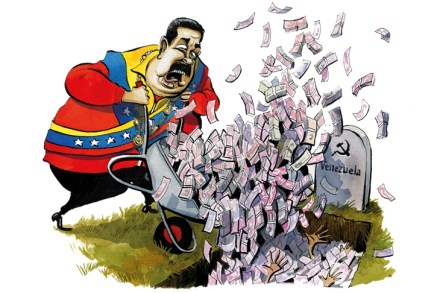
Venezuela has become a headache for Washington. Just after the Biden administration engineered a rapprochement strategy, Nicolás Maduro did more than just double down on not following through his promises of democratization: he is now pushing to annex neighboring Guyana. These developments, though, should have been anticipated, as Venezuela becomes a crucial part of China’s geopolitical strategy. "Ready for what will be a historic visit to strengthen ties of cooperation and the construction of a new global geopolitics. Good news will rain for the Venezuelan people," said Maduro after landing in the Chinese city of Shenzhen back in September.

Maduro china venezuela

COP28 is nothing but hot air

What position should the distant observer take on the COP28 conference in Dubai? That the sight of 70,000 delegates flying into a desert oil state from around the world to discuss human impacts on climate change is beyond satire and that its proceedings are never likely to rise above Greta Thunberg’s encapsulation of all such jamborees as “blah blah blah?” Or that the climate problem is now so obvious and urgent that all efforts towards global action, however small, should be uncynically applauded? I leave that choice on the table.

COP28

Was COP28 any more than hot air?

From our UK edition

What position should the distant observer take on the COP28 conference in Dubai? That the sight of 70,000 delegates flying into a desert oil state from around the world to discuss human impacts on climate change is beyond satire and that its proceedings are never likely to rise above Greta Thunberg’s encapsulation of all such jamborees as ‘blah blah blah’? Or that the climate problem is now so obvious and urgent that all efforts towards global action, however small, should be uncynically applauded? I leave that choice on the table.

Will Venezuela invade Guyana?

Eight years ago in Guyana, an Idaho-sized country on the northern coast of South America, ExxonMobil discovered massive oil reserves. So massive, that it’s speculated that the tiny nation, which is one of the least densely populated countries on the planet, could become the richest country per capita. Estimates indicate that Guyana has around 11 billion barrels of oil equivalent, boosting the nation to the third position in terms of proven oil reserves in the region. To contextualize the enormity of these discoveries, consider that the tiny nation has almost five times more proven oil reserves than Argentina, a country thirteen times larger by land mass. Only Brazil, the fifth largest country, and Venezuela, the country with the largest proven oil reserves, surpass Guyana.

Guyana

What’s the point of a degree?

From our UK edition

‘Place nose on dot.’ That’s what my screen is telling me to do as the first step in a ‘liveness’ test I must complete to be accepted as a signatory on a club bank account. But if I align the image of my face with the dot, nothing happens. If I press my nose to the screen, I go cross-eyed. And if the test’s purpose is to make sure I’m not dead, it would be simpler to ask me to shout at it.