Nicola sturgeon

A (partial) defence of the spin room

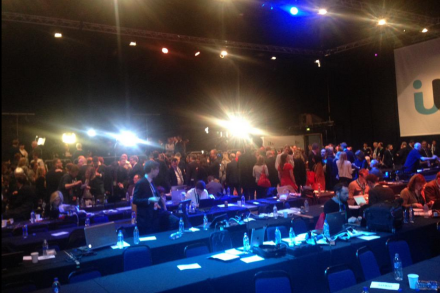
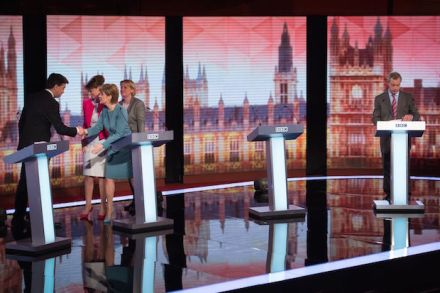
Tonight’s ‘Question Time’-style TV debates will be followed by what has become probably the most hated aspect of this rather uninspiring general election campaign: the spin room. This spectacle of journalists interviewing journalists as they listen to frontbenchers from all the parties parroting lines about how their leader was the best (or, in the Tory case, how well Nicola Sturgeon has been doing) is odd enough inside the room, let alone for those watching at home. The way the politicians spinning talk is even less natural than usual: it’s like a Westminster version of Made In Chelsea, stuffed with people acting at being actors.

Campaign kick-off: nine days to go

David Cameron is upping the ante on the SNP today, warning voters there’s just ‘ten days to save the United Kingdom’ — despite the fact the election is now nine days away. Or maybe he is counting until the coalition negotiations begin? Ed Miliband on the other hand will add some meat to his promise that Labour will put ‘controls on immigration’. To help guide you through the melée of stories and spin, here is a summary of today’s main election stories. 1. The Battle for Britain, cont.

This is a social media election. But in the most miserable, sinister way

A friend of mine was notorious at university for photoshopping every single photo of her that went onto Facebook. Every snap in a nightclub or lounging on the beach went through the same changes in RGB levels so that her tan appeared better. And she did look good, at first glance. To those who knew and loved her, though, she seemed rather sad and brittle, so uncomfortable in her own skin that she thought a warmer glow to her pictures might make people respect or like her more. Four weeks into the official election campaign, and the main parties are behaving in the same brittle manner. They hope that the photo opportunities that they craft will make voters think they’re popular and happy.

Barometer | 23 April 2015

Any answers? Nigel Farage accused the audience in the BBC opposition leaders’ debate of being left-wing. Need insulting an audience destroy a political career? — Former US Vice President Dan Quayle did it on a number of occasions, telling an audience of American Samoans in 1989: ‘You all look like happy campers to me.’ Two years later he upset the American Bar Association by asking: ‘Does America really need 70% of the world’s lawyers?’ — Current US Vice President Joe Biden told a crowd in Wisconsin in 2010: ‘You’re the dullest audience I’ve ever spoken to.’ — Nigel Farage has done it before.

Portrait of the week | 23 April 2015

Home The prospect of a parliamentary alliance between Labour and the Scottish National Party injected an element of fear into the election campaign. The SNP manifesto promised to increase spending and to find a way to stop the renewal of the Trident nuclear deterrent. Nicola Sturgeon, the SNP leader, said she wanted to make Labour in government ‘bolder and better’. Lord Forsyth, a former Conservative Scottish secretary, said that the building up of the SNP, to take seats in Scotland, was a ‘dangerous view which threatens the integrity of our country’. Ed Miliband, the Labour leader, said the Tories should not be ‘talking up’ the SNP. Even the Democratic Unionists began to eye prospects for advantage in a hung parliament.

David Cameron interview: ‘I feel I have worked my socks off’

In this week's Spectator, out tomorrow, James Forsyth and Fraser Nelson have interviewed the Prime Minister David Cameron. He discusses why even his closest colleagues think he needs to show more passion and warns that Nicola Sturgeon wants the next government to be a 'car crash'. Here is an extended preview...  David Cameron is sitting underneath a sign that reads quiet carriage, speaking loudly enough to be heard in the next carriage. He knows that even his closest allies are worried he may lose the election if he doesn’t show more passion, so he has been trying to compensate in recent days. He chops the air with his hands as he speaks, furrows his brow, and sounds a little more angry. He has no end of passion, he says.

Five rules of politics that Nicola Sturgeon has broken

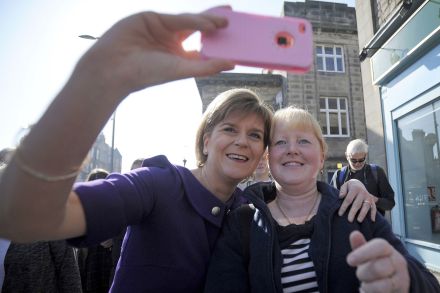
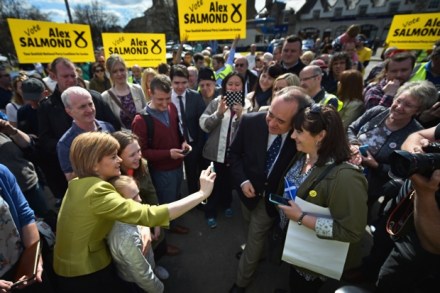
Nicola Sturgeon met my Auntie Patsy over the weekend, then was kind enough to tweet a picture of their encounter (below). Seeing her sandwiched between the two people most likely to break up the union was odd, but so was discovering that many members of my extended family are now voting SNP. Aunt Patsy is, I’m afraid, a typical example: like 1 in 50 Scots she has joined the SNP in the last seven months. She wasn’t really into politics until recently, but has caught the bug (there is a lot of it about in Scotland). .@FraserNelson just met your lovely (@theSNP voting) auntie in Inverurie. She says hello pic.twitter.

Campaign kick-off: 17 days to go

The campaign’s focus will swing back to Scotland today, with Nicola Sturgeon launching the SNP’s manifesto in Edinburgh. Ed Miliband is also heading north, to address the Scottish TUC and kick off Labour’s latest efforts to attack the Conservatives on the NHS. To help guide you through the melée of stories and spin, here is a summary of today’s main election stories. 1. Last chance to vote More important than any of the news stories, today marks the deadline for registering to vote on May 7. As the splash of today’s Daily Mirror puts it, ‘you can make a difference’.

Feisty Cameron warns English voters of the ‘frightening prospect’ of the SNP propping up a Labour government

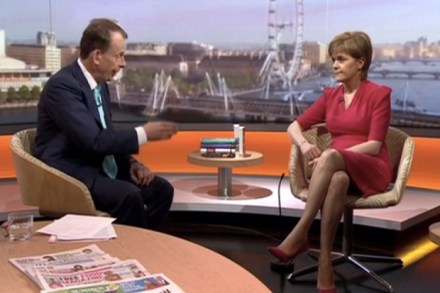
David Cameron has just delivered his feistiest performance of the election campaign yet. In a combative interview with Andrew Marr, the Tory leader repeatedly described the prospect of a Labour government propped up by the SNP as ‘frightening’, telling English voters that the SNP wouldn’t ‘care’ about them and their needs. He implicitly warned that SNP MPs supporting a Labour government would result in less money for English constituencies. He had been given this opening by Nicola Sturgeon, who in her interview had made clear how the SNP would use the fixed term parliament act to give them maximum influence on a Labour government.

Nicola Sturgeon sets out roadmap to a second referendum

Most politicians are having a miserable election, but not so Nicola Sturgeon. Her party is terrifying Labour in Scotland, she has put in very strong performances in the TV debates, and whoever is in government in Westminster from May will face trouble from Sturgeon. The forecasters now put the SNP on course to win between 40 and 50 of Scotland's 59 seats; Scotland is on the cusp of the sharpest change of political direction in her democratic history. But in order to sustain that momentum to polling day, Sturgeon needs to reassure nervous former 'no' voters who are considering voting SNP in order to exert the sort of left-wing pressure on Labour that Sturgeon promises.

‘Naughty’ Nicola Sturgeon reveals the saucy portrait that hangs in her home

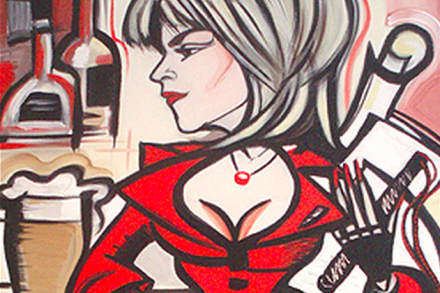
Nicola Sturgeon's style transformation over the past decade has been well-documented. The Mail on Sunday journalist Liz Jones went so far as to suggest that she had gone from being a woman with a 'Krankies haircut and orthopaedic shoes' to a 'golden halo of Princess Diana-like loveliness'. However, Mr S suspects that such naysayers may think differently about Sturgeon in her formative years if they take a glance at a portrait of her dating back six years. Speaking to Sky's Kay Burley, the First Minister of Scotland revealed that she has a saucy painting of herself hanging in her home. The oil painting of Sturgeon is by the French artist Laetitia Guilbaud, and went up for sale in 2009 at Glasgow's ArtDeCaf Gallery.

The BBC debate confirmed some unhelpful female stereotypes

If I were a nicer person, I suppose I'd have been rather more moved by what the Independent called the moment that summed up last night's leaders debate, the 'beautiful group hug' by the three women leaders at the end while Ed Miliband looked on.  Rather, it summed up for me what I felt about the entire event, that it was a slightly embarrassing affair for women whose approach to politics is anything other than the sort of thing espoused by Greece's radical left-wing party Syriza.

Campaign kick-off: 20 days to go

The third week of the election campaign looks set to end with a day of reflection. Last night’s opposition leaders’ debate provided plenty of things to ponder, not least how messy any post-election coalition negotiations will be. To help guide you through the melée of stories and spin, here is a summary of today’s main election stories. 1. Nicola + Ed According to the snap poll, Ed Miliband ‘won’ last night’s TV debate, followed closely by Nicola Sturgeon and then Nigel Farage. That says all you need to know about where the action was. As James Forsyth summarised last night, Miliband’s gamble paid off.

Ed Miliband’s gamble paid off but the Scottish question still haunts him

Ed Miliband took a risk by turning up to this debate and until the last question it looked like it had definitely paid off. Miliband avoided conceding too much to the anti-austerity alliance to his left of Nicola Sturgeon, Natalie Bennett and Leanne Wood and parried Nigel Farage’s attacks on Labour pretty effectively. On Trident, he sounded statesmanlike as he explained why in an uncertain world, Britain needed to renew its nuclear deterrent. All the while, he got in regular attacks on David Cameron both for his record in government and not being at the debate. But the last question was about hung parliaments and it is this which caused Miliband some problems. He stuck to his line about Labour wanting an overall majority and warned about the risks of voting SNP.

Podcast: the rise of left wing populism and Julie Burchill vs. Katie Hopkins

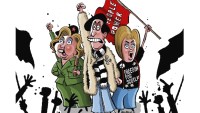
What do Ed Miliband, Hillary Clinton and Nicola Sturgeon have in common? On this week’s View from 22 podcast, Jamie Kirchick, Fraser Nelson and Alex Massie discuss the rise of left-wing populism in Britain, Scotland and America. How has Ed Miliband managed to harness the anger of mob to build-up momentum in the general election campaign? It's a similar situation in Scotland, where the SNP has harnessed this angry mob to make it a one-party country. Across the Atlantic, Hillary Clinton has kicked off her 2016 presidential bid with a newfound populist side — is this at all credible? And will these stance eventually put all the three leaders into power?

Mob rules

A spectre is haunting Europe — and knocking on the door of Downing Street. It has installed a president in France and a mayor in New York. It is causing mayhem in Spain and Greece and insurgency in Scotland and it may yet halt Hillary Clinton’s march to the White House. This idea — left-wing populism — is a radical, coherent and modern response to the financial crisis and the hardship suffered since. It is being effectively harnessed by Ed Miliband, taking him within touching distance of victory. And it may well become the creed that guides the next five years of British government. The Labour manifesto that was published this week is a response to the new populist mood.

Scotland’s new national faith

The Church of England’s catechism begins ‘What is your name?’ The old Presbyterian catechism favoured in Scotland asked a better, sterner question: ‘What is the chief end of man?’ The difference is telling and, in this general election, illuminates something useful about the differences between politics north and south of the Tweed. Nicola Sturgeon is a populist, certainly, but she is offering something stronger on the side. If England’s election offers a meek choice between Cameron and Miliband, Scotland’s is a faith-based affair. The answer to the catechism’s question, in these irreligious days, appears to be that man’s chief end is to glorify Scotland and enjoy her for ever.

What’s going on in Scotland

If the election in England is the political equivalent of trench warfare with Labour and the Tories inching forwards and then back, what’s going on in Scotland is a rout with the SNP driving all before it. What is remarkable is how the Nationalists are even in with a chance of winning seats such as Edinburgh South West that voted No by a more than twenty point margin. At the moment, everything their opponents throw at it seems to bounce off the SNP. The so-called Sturgeon memo, which claimed that she had told the French Ambassador that—contrary to all her public protestations—she would prefer Cameron to Miliband as Prime Minister, was the big story this time last week. But now, it is an irrelevance.

Barometer | 9 April 2015

The Scottish way of death Nicola Sturgeon said the SNP would block a rise in the state pension age on the grounds that it would be unfair to Scots, who don’t live as long as the English. — The idea that the Scots die early was fuelled by a study by the Glasgow Centre for Population Health in 2006, which found male life expectancy in the Calton area of Glasgow to be 54: less than in many developing countries. — The figure, derived from statistics collected between 1998 and 2002, was exaggerated by the presence of a large number of hostels in the Calton taking in drug addicts from other areas. Life expectancy in Glasgow as whole last year was 73 for men and 78.5 for women, the lowest for any council area in Britain but not by much. In Blackpool it is 74.3 for males.