Nhs

Letters | 8 September 2016

From our UK edition

What Swedes don’t say Sir: Tove Lifvendahl is, unfortunately, exactly right in her analysis of Swedish immigration and asylum policy (‘Sweden’s refugee crisis’, 3 September). Those in Sweden who support free movement and free trade feel it has long been obvious that the consensus in the riksdag would lead to disaster. Last autumn saw a celebrity-studded ‘Sweden Together’ celebration of the open-border immigration policy. Then, just six weeks later, we experienced the closure of borders and passport controls enforced on the Öresund bridge connecting Sweden to Denmark.

Labour must share the blame for the junior doctors’ row

From our UK edition

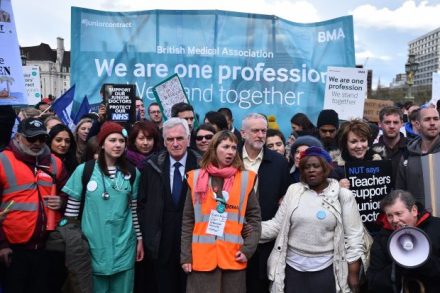
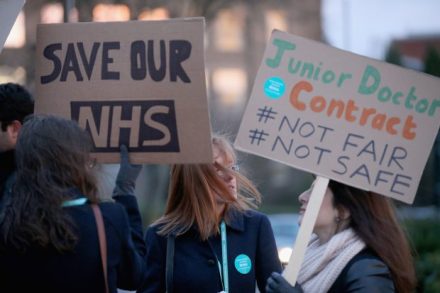
The BMA's decision to cancel the first of its planned five-day strikes yesterday was justified as a response to concerns over patient safety. Yet these warnings were nothing new. The General Medical Council issued frank advice to doctors hours earlier saying the strikes could harm patients. And the former Department of Health director Sir John Oldham - who also wrote Labour’s health policy review two years ago - also said the strikes were unethical. These interventions followed last week’s statement from the Academy of Royal Medical Colleges that, wait for it, made it clear the strikes would cause 'real problems' for the NHS. But amidst those warnings, Labour's silence on patient safety was deafening.

The BMA sees (some) sense over junior doctor strikes

From our UK edition

Junior doctors have scrapped plans to strike next week. In a dispute which looks increasingly messy and interminable, this is a small token of welcome news. But whilst the BMA has made the right decision in this instance, they are still sticking with their threat to stage three five-day walkouts in October, November and December. What's more, in justifying why they called off the strike which was due to start on September 12, they're trying to have their cake and eat it. After all, when industrial action was announced last week, patient safety - that all important concept which the BMA had trumpeted in the earlier stages of this row - seemed to have been forgotten. Hospital managers were given just 11 days to work out what to do.

status

From our UK edition

Whenever I try to use the NHS I end up feeling like Bruce Willis’s character in The Sixth Sense. No one can see me. It is as if I don’t exist. And unlike Dr Malcolm Crowe in the movie, I have not, as I wait in hospital and GP surgery queues, found an ally with a special gift which enables him to see me when no one else can. No one has ever come up to me and whispered: ‘I see sick people!’ Instead, I languish like a ghost in every south London minor injury clinic, A&E and doctor’s surgery. Recently, I received a letter informing me that my local GP surgery was closing and I would have to go elsewhere. While I was impressed that they had at least managed to acknowledge my existence by telling me to bugger off, I felt this was a bit of a cheek.

Words of wisdom

From our UK edition

Dominic Frisby is an actor best known for voicing the booking.com adverts (‘Booking dot com, booking dot yeah’). Voiceover specialists can earn large fees for a morning’s work and they have endless time in which to ponder where their money ends up. Frisby is irked by the UK tax regime, whose code-book is four times longer than Chilcot. He argues persuasively that our sprawling system should be replaced with a land value tax. Set at the right level this would ensure the abolition of all other duties, and those of us who don’t own property would pay no council tax, no income tax, no VAT, and no duty on fuel, alcohol or inheritance. Ever again. An attractive scheme laid out in a funny, absorbing show full of historical insights.

The Spectator’s notes | 4 August 2016

From our UK edition

The Daily Telegraph revealed on Tuesday that Michael Spencer, the chief executive of Icap, has been blocked for a peerage by the House of Lords Appointments Commission (Holac). All the indignation just now is against David Cameron’s resignation honours list, packed with his ‘cronies’, who allegedly include Mr Spencer. It is misdirected. The real anger should go against the pharisaical bureaucracy which has been imposed upon patronage. No one is allowed to know why Mr Spencer has been blocked, yet the world knows that he has been because, supposedly, he has ‘the wrong sniff’ about him.

The NHS would be crippled without big pharma

From our UK edition

Like Owen Smith, I have an interest to declare when discussing Pfizer.   Somewhere on my bookshelf I have a Pfizer physics prize – a school prize funded by the US pharmaceutical giant which at the time had a research facility nearby. Later, Pfizer helped fund an extension to the school which, appropriately enough given its best-known product, rose to twice the height of the existing science block. I don’t, then, share the view of Jeremy Corbyn who seems to see Pfizer as part of an evil empire trying to undermine the NHS. Rather I see it as a company which, while it gets into the odd scrape with regulators, has some sort of social conscience and which has helped fund and produce drugs which are relied-upon by millions of NHS patients a day.

Barometer | 14 July 2016

From our UK edition

Nuggets on May Some trivia about Theresa May — At 59, she is the oldest new prime minister since Jim Callaghan, 64, in 1976. — She has the shortest surname of any prime minister since Andrew Bonar Law, who held the post for 211 days in 1923. — She is the first childless PM since Edward Heath — She is one of three recent prime ministers whose fathers were preachers: Gordon Brown is the son of a Church of Scotland minister and Lady Thatcher’s father was a Methodist preacher as well as shopkeeper. In spite of her father being a Church of England vicar, Theresa May at one point attended a convent school — Like Lady Thatcher, May suffered a by-election failure before securing a safe Conservative seat.

Britain’s great divide

From our UK edition

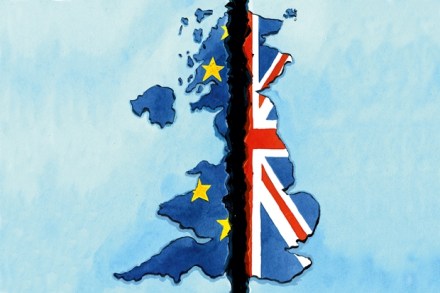
In Notting Hill Gate, in west London, the division was obvious. On the east side of the street was a row of privately owned Victorian terraced houses painted in pastel colours like different flavoured ice creams. These houses, worth £4 million to £6 million each, were dotted with Remain posters. On the west side was a sad-looking inter-war council block, Nottingwood House, which had dirty bricks and outside staircases and corridors. No posters there. But that is where my fellow campaigners and I headed — down to the basement entrances with their heavy steel gates. We looked up the names on the canvassing sheets and rang the bell of one flat after another until we found someone who would buzz us in. This was the hunting ground for the Leave campaign.

The NHS shouldn’t fund a drug that prevents HIV

From our UK edition

What would you say if a powerful cyclists’ pressure group ganged up on the NHS and lobbied it to provide free cycle helmets to anyone who asked for one, accusing it of having on its hands the blood of every helmet-less cyclist who died while the NHS tried to spurn the demand? I think I can guess the answer in the case of most readers: shove off and buy your own helmets. Why, then, does it become such a different matter when the National Aids Trust demands that the NHS provide a free supply of a drug known as Pre-Exposure Prophylaxis, or PrEP, to people who want to have unprotected sex with multiple partners.

How Vote Leave plan to persuade the electorate that there are real risks to staying in the EU

From our UK edition

The IN campaign’s plan for victory in this EU referendum is relatively simple.  ‘Do you want the status quo or the riskt alternative?’, is how one Cameron ally sums it up. To date, Remain—aided by the various government dossiers—have been pretty effective at pushing this message. That is why they are ahead in the polls. So, Vote Leave know that they need to push the risks of staying in, up the agenda. I write in The Sun this morning that their message in the coming weeks will be that ‘wages will be lower and taxes will be higher if stay in the EU’. Their argument will be that the continuing troubles in the Eurozone will hit the UK in two ways.

Long life | 26 May 2016

From our UK edition

When your mind suddenly goes wonky, you may be the one person who doesn’t realise that there is something wrong with it. That’s what happened a month ago when I was on a country holiday in Tuscany with my wife. It was lovely weather, and lunch had been laid out of doors. I had cooked a sea bass and was feeling rather pleased with myself. We were both happy, and things could hardly have been better. But everything began to go wrong when my wife decided to ask if I could pass her a knife. A knife? I didn’t know what a knife was. I had never heard of such a thing. I was damned if I was going to respond to this strange request, however much she persisted with it.

Immigration dominates first BBC EU debate

From our UK edition

The Lincoln-Douglas debate it was not, but we have just had the first prime time TV debate of this EU referendum. With Alex Salmond and Alan Johnson for In and Liam Fox and the UKIP MEP Diane James for Out speaking to an audience of 18 to 29 year olds in Glasgow. Many in the audience wanted to complain about the tit for tat tactics of the two sides in this referendum campaign or to condemn the scaremongering by both sides; interestingly, they seemed very sceptical of the Treasury’s forecasts of economic pain if the UK left the EU. One audience member, though, seemed to object to the idea that he would have to think about the issue at all.

Counting on sheep

From our UK edition

Going Forward (BBC4, Thursdays) is a BBC comedy about the continuing adventures of Kim Wilde, the fat, cynical but lovable nurse character played by former nurse Jo Brand. Now she has quit the NHS and is working in the private sector for a company called Buccaneer 2000 — which is, of course, exactly what a healthcare company would call itself in order to allay potential criticisms that it was backward-looking, heartless and rapacious. This is one of the series’ big problems. It wants to be naturalistic, almost fly-on-the-wall, observational comedy, with the dog wandering casually in and out, and parents and kids saying just the kind of things we all do in real life.

What now for Jeremy Hunt?

From our UK edition

The junior doctors strike will be remembered not only as the first time in NHS history that a complete walk out took place, but also for its viciousness. Both the British Medical Association and the Government can share their blame in this. Jeremy Hunt's threat to 'impose' contracts on junior doctors was unhelpful in its forcefulness, even if his frustration was understandable. Whilst the rhetoric used by the BMA has also scarcely painted the association in a good light. Junior doctors may have had their concerns about patient safety but this was also a dispute about pay and to suggest otherwise was disingenuous. It seems, at last however, that an agreement has been reached. The BMA's Dr Johann Malawana said the terms offered a 'good deal' for junior doctors.

A deal has been reached in the junior doctors dispute

From our UK edition

A deal has been reached between the government and the BMA on the new junior doctors contract. The deal now needs to be approved by a BMA ballot. Details of the deal are still emerging, but I understand that rather than junior doctors working the 11 Saturdays a year that the government wanted them to, they will now work 6 weekends a year. The marginal cost for a hospital of employing a junior doctor will fall by roughly a third if this deal goes through. The government has given some ground elsewhere. Doctors returning from maternity leave will be entitled to catch up on the skills training that they have missed out on while away and once they have done so, they will be entitled to a skills based pay rise as if they hadn’t taken leave.

In praise of doctors’ handwriting

From our UK edition

My baby and I excel at blood tests. He (tiny, jaundiced) stretches out naked under the hospital’s hot cot-lamps like a Saint-Tropez lothario. The nurse rubs his foot to bring blood to his veins, and I lean over the cot to feed the greedy midget, who squawks just once as he’s stabbed. I watch the drops bulge and drip and I puzzle over the NHS and its mysteries. Why do nurses collect baby blood in glass straws with an opening no wider than a pin? It’s like an impossible task set by a whimsical tyrant. Even more surreal is the way the NHS handles patient records. Because the midget and I have visited so many parts of the NHS — maternity wards, A&E, GP surgeries, neonatal units — we’ve become a crack two-man investigative team.

Polly’s pleb adventure

From our UK edition

Down and Out in Paris and London is a brilliant specimen from a disreputable branch of writing: the chav safari, the underclass minibreak, the sojourn on the scrapheap that inspires a literary monument. Orwell’s first book was turned down by Faber boss T.S. Eliot, who received the script under its original title, Confessions of a Dishwasher. New Diorama’s dramatisation brilliantly captures the raffish sleaziness of Paris in the 1920s. Orwell’s crew of thieves, parasites and drifters come across as comradely and charming in this magnificently squalid setting. The austere lighting and the ingenious stage effects are done with tremendous economy. There are flashes of bleak humour too.

The death of the author

From our UK edition

The ‘journey’ — at least the one played out in public — begins with an announcement that you are incurable. Patient waiting follows, described in monthly essays written for a respected publication. Jenny Diski (non-small cell adenocarcinoma, London Review of Books) calls this personally singular but culturally familiar experience the race from ‘the Big C to the Big D’. Surely the hope is not to reach the end in the fastest time. But if you take too long, your audience’s sympathy might tinge with suspicion, as Clive James (B-cell lymphocytic leukemia, the Guardian) recently described, now a survivor of several years. Claiming a title for your cancer memoir has also become competitive.

Hunt hits back – but is he now pulling his punches?

From our UK edition

Jeremy Hunt has not done himself any favours in the past with his comments about junior doctors. But today - the first time junior doctors have ever walked out without providing emergency cover – was the time for sounding conciliatory. The Health Secretary said it was a ‘very, very bleak day for the NHS’. Hunt went on to add that: ‘The reason this has happened is because the Government has been unable to negotiate sensibly and reasonably with the BMA over a manifesto pledge’. His emphasis on the Conservative’s ‘manifesto pledge’ is a clear part of the Health Secretary’s tactics to win over the public and Hunt repeated his focus on this point several times during his interview on the Today programme.