Nhs

The NHS is a vast, gaping, fathomless void

From our UK edition

The language of the left is a truly transformative grammar, so I suppose Noam Chomsky would heartily approve. There are words which, when uttered by a leftie, lose all sense of themselves — such as ‘diverse’ and ‘vibrant’ and ‘racist’. It is not simply that these words can mean different things to different people — it is that when the left uses them they are at best a euphemism and at worst a downright lie. And from that you have to draw the conclusion that their whole political edifice is built upon a perpetually shifting succession of imaginative falsehoods. Such as when they tell you you’re a ‘denier’ of something — child sexual abuse or climate change, for example.

Word perfect | 12 January 2017

From our UK edition

All that’s needed for Radio 4’s One to One series (Tuesdays) to succeed is a sharp-eyed interviewer, ready with the right question at the right time, and an articulate guest, not afraid to speak freely and openly, but with integrity, all too rare these days. In the opening programme, Julia Bradbury talked to Dr Martin McKechnie, an A&E consultant, about the challenges he faces day in day out. It was a timely reminder that not everything in the NHS is broken beyond repair. Most striking, perhaps, was not so much Dr McKechnie’s calm fortitude in the face of terrible human distress (remarkable thoughthis was) but the way he casually dismissed the idea of talking about his work with his family.

NHS chief puts up a fight as No 10 row goes public

From our UK edition

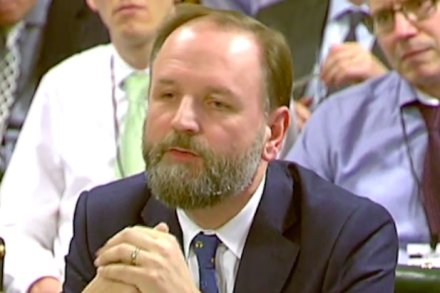
With the NHS in the midst of a 'humanitarian crisis' according to the Red Cross, No 10 appeared to try to pass some of the blame onto NHS chief Simon Stevens this morning, with reports that Theresa May's senior aides think he is 'insufficiently enthusiastic and responsive' when it comes to reducing spending. So, it was bad-timing -- or perhaps a case of Downing Street wanting to strike the first blow -- that Stevens was hauled before the Public Accounts Committee this afternoon to discuss the problems facing the NHS. Setting the tone for a feisty testimony, Stevens began by contradicting the Prime Minister's claim that the NHS was given more funding than he requested for its five-year plan.

Will more people start paying to see a GP?

From our UK edition

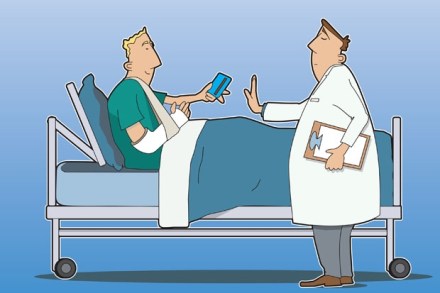
One of the many groups getting stick for the current pressure on NHS emergency wards are GPs, criticised for their long waiting lists and inflexible hours which lead to people pitching up at A&E with sore shoulders and the flu. The GP contract, which allowed primary care physicians to opt out of out-of-hours cover, is the popular scapegoat for this, but there’s also the question of whether there are enough GPs in the system at the moment to serve the number of patients who need them. Some patients are giving up on the free NHS primary care system. The doctor can see you now, in your living room, via webcam, using apps like Push Doctor.

Why isn’t Labour focusing its efforts on the NHS crisis?

From our UK edition

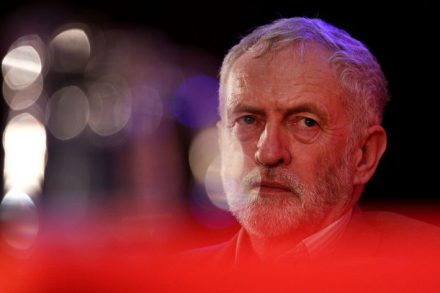
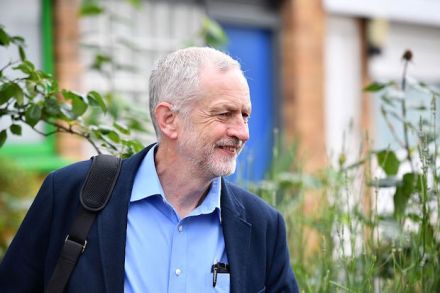
Jeremy Corbyn will shortly give his speech on Labour’s position on freedom of movement, hopefully clarifying whether that is his pre-briefed position that the newspapers published this morning, or his position as set out in his Today programme interview. It was initially briefed that he was ‘not wedded’ to the idea of freedom of movement, but then said Labour would not stop any EU citizens from coming to the UK. To add to the confusion over this policy announcement which appeared to be moving the Labour party to the right on immigration, the Labour leader then did the equivalent of shouting ‘look at that massive left-wing squirrel over there!’ in order to distract everyone by suggesting a national salary cap.

Is there a war on the old?

From our UK edition

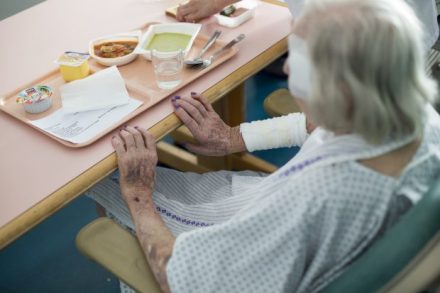
What’s it like being old? Rotten, says Professor John Sutherland in his latest book The War On The Old — and it’s made worse by what he sees as a systematic and malevolent conspiracy to airbrush the elderly and their problems out of public life. He’s not just complaining about the NHS’s niggardly rationing of Viagra. While millennial pundits moan smugly about the triple-lock pension and free TV licenses, he argues, their grandparents are waiting years for routine operations, being ignored by the political classes and dying of neglect in privatised old folks’ homes. The picture he paints is of something close to a programme of extermination. In this week’s Books podcast I ask him: come on, old boy, can this really be what’s going on?

Jeremy Hunt has a point about A&E

From our UK edition

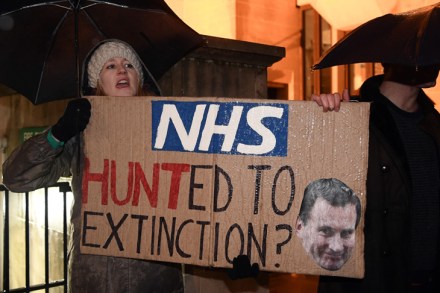
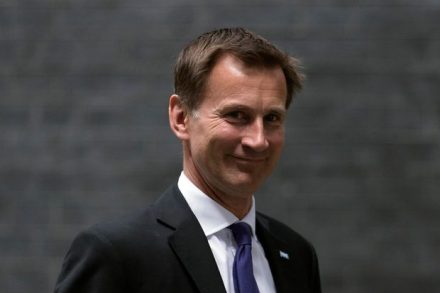
One of the supposed rules of modern politics is that you shouldn’t tell the voters they are wrong. So, Jeremy Hunt saying that a large part of the problem at A&E is people turning up who shouldn’t, is going to come in for some criticism. One can almost hear Labour readying its denunciation of the Health Secretary for trying to blame patients for the NHS crisis that Tory cuts have caused. But Hunt is right about people turning up to hospital too readily. He cites NHS England’s numbers which show that up to 30 per cent of those attending A&E don’t need to be there. It should be noted, though, that people often go there because it is so difficult to find a GP out of hours.

What the papers say: An overdue overhaul for mental health and May’s Trump-sized opportunity

From our UK edition

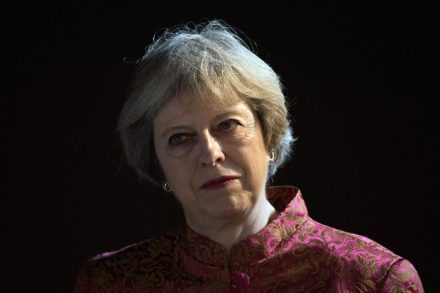
Theresa May is launching yet another attempt to define herself as a politician today with a major speech on tackling the ‘hidden injustices’ of mental illness. The Prime Minister has won plaudits for taking on an issue which often gets ignored, says the Daily Telegraph. Yet it’s true that we have been here before, the paper says - pointing out that David Cameron made a similar pledge only a year ago. So what's different? The Telegraph says there are ‘obvious benefits’ to May’s strategy to finally get to grips with this issue. But with the NHS in such a mess, her targets will be ‘hard to achieve’.

Letters | 24 November 2016

From our UK edition

Prisons and the public Sir: Your leading article on the sorry state of our prisons (19 November) was very welcome. However, you refer to the ‘public demand’ for sending offenders to prison. I have to query this. I cannot think of any occasion when the public has been consulted on prisons or sentencing policy or on the exceptionally high cost of incarceration. We currently have an unthinking and punitive culture, generated by tabloid newspapers and politicians competing to show how tough they are. It is hardly surprising that the coalition government’s search for savings targeted prison staff and community supervision, with results that can be seen today.

Poor mental health care is a ‘stain’ on our country. But whose fault is that?

From our UK edition

Today’s warning from every former Health Secretary from the past 20 years about inadequate mental health provision raises a number of questions. The first is whether the government really is serious about its pledge to make parity of esteem between physical and mental health a priority. Mental health has become more of a political issue in recent years, which is a good thing: parties now worry about their standing on the issue because society has become better at talking about mental illness, and therefore more people are aware of the shockingly inadequate treatment that their friends and family are receiving when they fall ill. The Tories became anxious in 2015 that the Lib Dems had owned mental health as an issue.

Real life | 17 November 2016

From our UK edition

The Israeli chef and I have become firm friends since he moved out of my flat. He has his own place now, and is trying to find a job. I take him horse riding at the weekends. On the way down the A3 he asks me all sorts of questions about his new life in Britain and the things he is struggling to make sense of. Like why he can’t get a work visa. He is very upset about this. ‘You have to understand,’ I explain, ‘that the mistake you made was to come here legally and apply to the system honestly and openly, stating clearly that you wanted to find work.’ I glanced at him as I drove, surveying his handsome baby face, dark skin, slightly curly black hair.

Barometer | 3 November 2016

From our UK edition

Strike force Nissan is to expand its plant in Sunderland, building two new models there. The Japanese company is praised for not losing a day to strikes in three decades in the city. But labour relations weren’t always so good. — In 1953, when part of Nissan’s business was assembling Austin cars in Japan under licence, the company suffered a bitter 100-day strike. Occupying US forces became involved, helping the Japanese government to arrest union leaders. — As a result of the strike, a new, less militant union was formed, with a Harvard-educated leader. The union accepted job losses but became involved in discussions over new technology. Global race And where did the UK fit in among the world’s largest car producers in the second quarter of 2016?

What the papers say: Should Carney stay?

From our UK edition

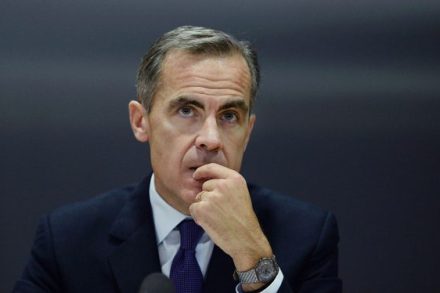
Mark Carney’s appointment in 2013 as Governor of the Bank of England was almost universally applauded. Yet more recently Carney has become something of a divisive figure. His interventions during the referendum campaign angered many. While his economic policies have also come in for criticism, leading some to call for Carney to quit. So should the Bank of England chief listen to his critics or is it best for Britain’s economy that he stays put? The Daily Telegraph says Carney has been hit by ‘referendum shockwaves’ and suggests that the attacks levied against him during the referendum - whether true or not - have undoubtedly placed him in an uncomfortable position.

TB or not to be

From our UK edition

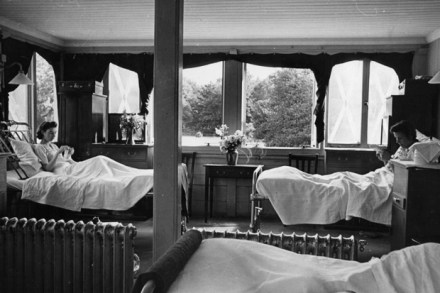
If you are 70-plus, the shadow of TB will have hung over your childhood and youth, as it did mine, and Linda Grant’s new novel strikes many a chord. My maternal aunt had the disease, and spent months in a sanatorium like the one described in The Dark Circle, but finally had a thoracotomy (removal of a lung and seven ribs). She was also given the ‘new’ wonder drug Streptomycin and together with the operation, it cured her to live until she was 86. From the sanatorium, she sent me drawings of herself lying under a blanket on the freezing terrace halfway up a mountain.

PMQs Sketch: Theresa May torpedoes Jeremy Corbyn in six syllables

From our UK edition

Today we saw government without opposition. At least without opposition in the hands of the Opposition leader. Rambling, disorganised Jeremy Corbyn spent his six questions getting nowhere over the health service. Familiar catcalls were heard on both sides. ‘You wasted billions.’ ‘No we invested billions.’ Mrs May attempted to break the record-book by insisted that ‘half a trillion’ will be spent on health during this parliament. Corbyn’s backbenchers took up the cause. The Labour party is teeming with broken princes and queens-across-the-water who spend their time brooding, and muttering, and plotting their route back to power. Any chance to expose Corbyn as a waffling nuisance is happily seized.

Corbyn leaves Ukip an open goal, and they miss it

From our UK edition

Jeremy Corbyn is taking Labour ever further away from its traditional working class voters in the north and the midlands. As I say in The Sun today, the party now has a leader who didn’t sing the national anthem at St Paul’s, a shadow Chancellor who has praised the IRA, a shadow Home Secretary who thinks promising ‘controls on immigration’ is shameful and a shadow Foreign Secretary who sneers at those who fly the English flag. This presents Ukip with an open goal and a chance to do to Labour in the north and the midlands what the SNP did to in Scotland following the independence referendum. Indeed, half of Labour supporters who backed Brexit already say they won’t vote for the party again.

Question time | 6 October 2016

From our UK edition

At my wife’s first 12-week scan, I was expecting — and duly got — that much-documented sense of thrilled wonder at the grey blobby thing on the screen. What came as a genuine shock, though, was realising the scan also had the entirely undisguised aim of calculating the baby’s chances of Down’s syndrome, on the apparent assumption that, if they were high, we’d want to terminate. In the event, this wasn’t a dilemma we faced — which possibly makes it easy to take the moral high ground. Even so, the whole process left me feeling both uneasy and rather naive. How long had this been going on? Did everybody else know about it? And if so, when had they discussed it? A World without Down’s Syndrome?

Food of love

From our UK edition

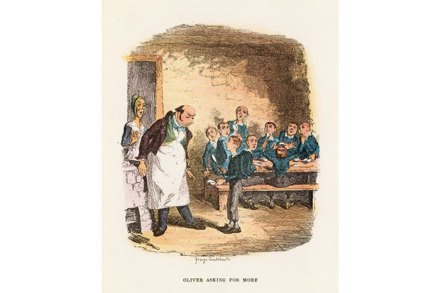
Modern Britain scratches its head over children who are overfed, not underfed, while guilt-ridden mothers stand accused of feeding children badly even if they are not obese. These are not insignificant troubles since childhood obesity is set to cost the NHS many millions in years to come. But as a new exhibition at the Foundling Museum in London will show, infant and child nutrition is not a new science and the challenge of nurturing, not least keeping children alive before the age of five, was taken just as seriously two centuries ago as it is now. Feeding the 400 is the first show at the museum, built on the site of the former Foundling Hospital (established in 1739, and closed in 1954), to examine how the many young boys and girls in the hospital were nourished.

Corbyn’s NHS plans reveal why Labour is doomed

From our UK edition

The NHS was the defining issue of the Labour leadership campaign because both candidates knew it had the power to get their supporters fired-up. But only Jeremy Corbyn wilfully ignores the differences between his supporters and the wider electorate. His post-election flagship policy, after all, is the removal of private sector involvement in the NHS. And with the thoughtful, dispassionate hand of shadow health secretary Diane Abbott grasping the rudder, Labour's course appears well and truly set. Unfortunately for the dwindling part of the Labour party still keen on governing, voters - as opposed to Labour activists - don’t actually tend to care whether they are looked after by the NHS or a private service.

The quiet patriot

From our UK edition

History teaches no lessons but we insist on trying to learn from it. There is no political party more sentimental than the Labour party. The stone monument of Labour history is Clement Attlee’s 1945–51 administration, so any biography of the great man is, inevitably, an intervention into the present state of the party, even if it comes supported with all the best scholarly apparatus. The last major biography of Attlee was Kenneth Harris’s official work, more than 30 years ago, in 1982. There is a neat symmetry to the fact that Harris was writing during the last occasion that the Labour party decided to join hands and walk off a cliff.