Nhs

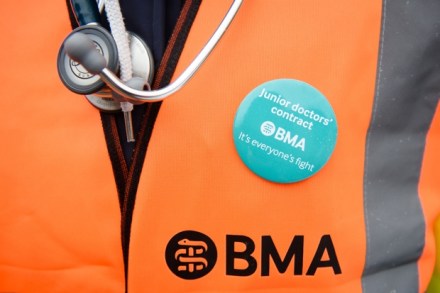
All-out strikes will not kill patients. An exodus of junior doctors will

From our UK edition

Until now, it has not been clear to most people what the junior doctors’ strikes are all about. It began about a total pay cut masquerading as a ‘basic pay rise’. Then it became about protecting doctors’ family and social lives at weekends. Most recently, there have been accusations of sexism. Somewhere in the middle, the more marketable concern about patient safety was introduced, and has risen to the forefront of the junior doctors’ campaign. Last time I wrote, I considered the plausibility of these claims. I suggested that the strikes are primarily about doctors’ quality of life. This is no cause for shame: everyone has the right to campaign and work for a better quality of life.

Junior doctors should be completely ashamed by today’s strike

From our UK edition

The junior doctors' strike that starts today has a strong claim to be the most selfish and irresponsible piece of industrial action in British history. They are refusing to carry out even emergency care between 8am and 5pm today and tomorrow. This walk out, the first all-out strike since the NHS’s creation, isn’t over some issue of high principle. It's about money. The main sticking point in their negotiations with the government is that Saturday shouldn’t be treated as a normal working day.

Watch: Dennis Skinner tells Jeremy Hunt to ‘wipe that smirk off his face’

From our UK edition

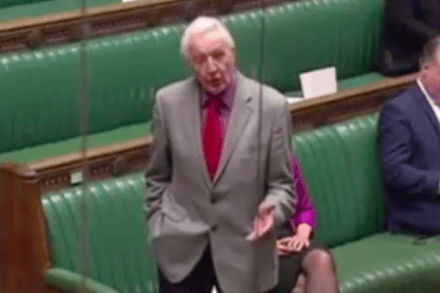
Given that the last time Dennis Skinner criticised a Tory Cabinet member in the Chamber he was ejected from the Commons, the Beast of Bolsover was on remarkably mild form today. Following Jeremy Hunt's statement on the planned junior doctors strike, Skinner told the Health Secretary that he ought to 'wipe that smirk off his face': 'When the Secretary of State came into the chamber today I don’t know whether he realises it or not but there is a smirk and arrogance about him that almost portrays the fact that he’s delighted in taking part in this activity. He could start negotiations today. Wipe that smirk off his face. Get down to some serious negotiations.

Today in audio: Jeremy Hunt stands firm ahead of junior doctors strike

From our UK edition

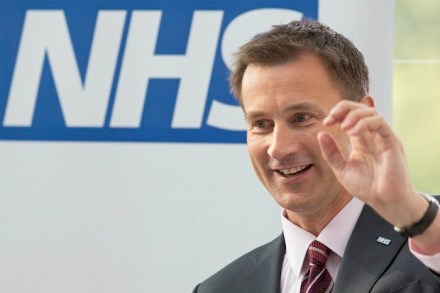
Jeremy Hunt has been facing questions in the Commons ahead of tomorrow's junior doctors strike. The Health Secretary said the industrial action was 'wholly unjustified' and said 'we are proud of the NHS but we must turn that pride into actions': His sentiment wasn't enough to placate Dennis Skinner, however, with the MP for Bolsover telling Hunt to 'wipe that smirk off your face': Labour's Heidi Alexander insisted tomorrow would be one of the saddest days in the NHS - and said that the Health Secretary was to blame: Nicky Morgan also faced a tough time in the Commons as she defended Tory plans for all schools to become academies by 2020.

Jeremy Hunt steps up war of words with junior doctors ahead of strike

From our UK edition

Now that Jeremy Hunt has rejected a proposed cross-party pilot scheme for new junior doctors' contracts it seems this week's strike looks certain to go ahead. The industrial action is due to start tomorrow morning and junior doctors will walk out again on Wednesday, but the war of words for this week has already begun in earnest. The Health Secretary has fired the opening salvo in his letter to Dr Mark Porter. Hunt said the strike: ‘…seriously risks the safety of many who depend on the NHS’ Dr Porter, the BMA council chair, has been on Today defending the industrial action which will see junior doctors walking out and not providing emergency care for the first time in this dispute so far.

Stress point

From our UK edition

In the 1920s, the anthropologist Margaret Mead studied the people of New Guinea. She noticed that they hunted birds and squirrels but not flying squirrels. The tribesmen explained that they didn’t like flying squirrels: a thing should be either a bird or a squirrel. They wanted nothing to do with the dirty things. And while New Guineans of the 1920s were not leaders of scientific inquiry, Mead concluded that they were quite unstressed at work. Bear with me, because I think the flying squirrel may just be the answer to the stress epidemic that is killing us. Apparently, we’re dying of work-related stress. The media, psychologists and union leaders say that stress could soon be as deadly as cancer and heart disease.

Diary – 7 April 2016

From our UK edition

It’s clear that Vladimir Putin has had a facelift, which might explain why Wendi Deng would take an interest in him. But a friend who met him was surprised enough to ask his translator why it was so obvious. ‘Surely he has enough money to get a better one done?’ he said. ‘Oh yes,’ she replied. ‘But here in Russia, a facelift is a status symbol so everyone has to be aware that it’s been done.’ I wonder if the reason American women continue to go for the wind-tunnel effect favoured by Joan Rivers isn’t based on the same social pressure. Wealth and power have their own looks. After nearly 50 years of giving advice, my career as an agony aunt appears to be at an end.

The scan said my baby wouldn’t live. It was wrong

From our UK edition

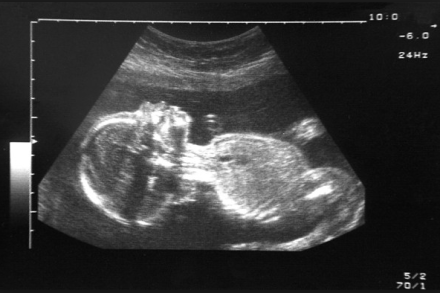
When my unborn baby was a five-month-old fetus, twisting about in the internal dark, he was given a death sentence by a man I shall call Anton. We’d gone, my husband and I, for a 20-week scan at our local hospital. Anton was our designated sonographer; we arrived in his room bright-eyed and anxious, as even elderly first-time parents are. We looked to Anton for reassurance, but Anton looked only at his assistant, a sulky 19-year-old sexpot from Romania. The sexpot tried seven times to dig into the vein in my right arm, then began on the left. ‘Don’t worry, good practice, try again,’ said Anton to her, kindly. ‘No, don’t worry at all!’ said I, pathetically.

What was this bed-blocker doing on my ward?

From our UK edition

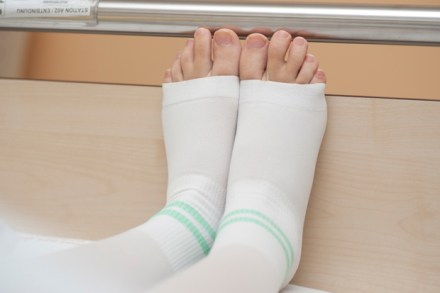
There’s some journalistic research you’d really never do by choice. Spending four days in an NHS hospital with a life-threatening pulmonary embolism, for example. Unfortunately it was out of my hands. I fell off a horse, one thing led to another, and suddenly there I was, lying in what I imagine is a reasonably typical NHS ward being tended by all those multi-ethnic nurses and hard-pressed doctors you read about in the newspapers but rarely encounter yourself because in order to do so you have to be quite seriously ill. So: what have I learned? First, that it’s not as bad as you’ve long feared, especially not for anyone hardened by the experience of the military, prison or — in my own case — being at an English prep school in the 1970s.

PMQs sketch: Shouldn’t ‘preventable deaths’ really be called ‘homicides due to negligence’?

From our UK edition

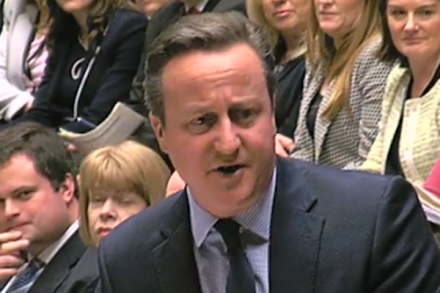
David Cameron was grilled today on plans for a ‘7-day NHS’. This is his attempt to iron out a slight kink in the NHS schedules. The trouble is that although our heroic doctors and nurses keep regular hours our deadly diseases are hopelessly unpredictable and like to smite us down whenever they feel a bit grim and reaperish. Perhaps we should write to them about it. In practice this means that NHS efficiency varies widely over the ‘7-day cycle’ or ‘week’ as it’s known. Get ill on a Tuesday and you’ll probably be at a party on Friday. Get ill on a Saturday and you’ll probably be at a funeral on Wednesday. Your own.

PMQs: Cameron delivers a knockout blow to a struggling Corbyn

From our UK edition

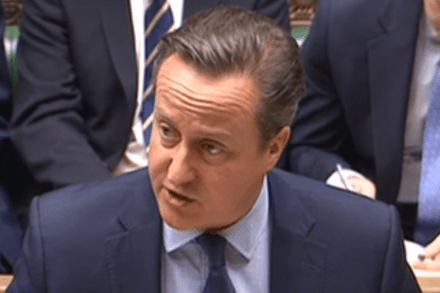
This could have been a tricky PMQs for David Cameron. Instead, it will be remembered for Cameron ventriloquising his mother and telling Corbyn 'put on a proper suit, do up your tie and sing the national anthem'. What gave this jibe its potency, is that it sums up what a lot of voters think of the Labour leader. It was not quite as Flashmanesque as it sounds. For it came in response to a Labour front bench heckle asking what Cameron’s mother would say about cuts in Oxfordshire. Even before Cameron floored Corbyn with that line, the Labour leader was struggling. He chose to go on the NHS and the junior doctors’ strike. But even on this subject, he couldn’t make any headway. Worryingly for Labour. Corbyn’s PMQs performances are—if anything—getting worse.

Letters | 18 February 2016

From our UK edition

Governmental ignorance Sir: Your leading article (13 February) blames junior doctors for playing with lives in their dispute; but what alternative do they have when confronted with the monumental ignorance of our present government (and the last, and the one before that, for that matter)? The NHS, when it started, was propped up by the amazing dedication of the post-war generation and then the baby-boomers. Even so, by the 1960s it was dependent on cheap foreign labour. If people want a first-class service they have to pay for it. It is about time somebody made our government aware of the facts of life — and the junior doctors seem to have stepped up to the plate.

It’s time for the BMA to get over the junior doctors’ contract

From our UK edition

The BMA needs to think carefully about its next steps. In recent weeks, it has become abundantly clear that there is more to this than just the junior doctors' contract, or indeed the rate of pay for Saturday daytime work. The union can walk away with the deals brokered by Sir David Dalton - which include major concessions on pay and hours - and start to work with the NHS on the wider issue of morale. Or it can continue to do its part to make junior doctors feel worse. Only one of these options will help the NHS meet the very real challenge that it faces. Sadly, peacemakers tend not to prosper within the BMA election process. So instead they pursue macho posturing, and build up whoever is the health secretary as a hate figure.

Flying doctors

From our UK edition

A few months ago, paramedics were on the brink of industrial action. They had legitimate grievances. Ambulance services were being run down, their staffing levels were dangerously thin — and the mismanagement (much of it exposed by Mary Wakefield in The Spectator) was horrendous. But in the end they stepped back from the brink — for good reason. It went against their nature to endanger lives, and in addition it would have been a tactical mistake. If a single patient died as a result of the strike, paramedics would have lost public sympathy. Should a nationalised health service really use the unwell as a bargaining chip? English doctors have not shown the same strategic foresight.

Today in audio: HMRC boss Lin Homer plays down her tax expertise

From our UK edition

It was a bad day in front of the Public Accounts Committee for Dame Lin Homer. Despite being the outgoing boss of HMRC, Homer admitted she was no tax expert: Meanwhile, Google boss Matt Brittin also had a miserable time in front of the committee. He was laughed at during the hearing after appearing to forget how much he earned: Met Police chief Bernard Hogan-Howe went on the defensive as he came up against John Humphrys on the Today programme. He dismissed Humphrys's claim about the police publicizing specific details of their investigation into Lord Bramall as 'nonsense': Jeremy Hunt vowed to impose new contracts on doctors following yesterday's strike.

Jeremy Hunt confirms he will impose junior doctor contract

From our UK edition

As expected, Jeremy Hunt has just announced in the Commons that he will impose the junior doctor contract after he was advised that there was no longer any chance of an agreement with the British Medical Association on the issue. And as expected, the BMA has said that it does not accept the contract and is considering ‘all options open’ to it in response. In response to the Health Secretary, Heidi Alexander warned that the new contract ‘could amount to the biggest gamble with patient safety’ that the Commons has seen because of the exodus of junior doctors from the NHS that this would cause.

Today’s doctors strike proves how the NHS needs radical reform

From our UK edition

This is a bleak day for the NHS. The doctors strike has gone ahead and some 3,000 operations have been cancelled. Talks broke down last night, and the British Medical Association has shown it is quite prepared to put patients in the firing line in its dispute over a deal that would mean a pay rise, not a pay cut, for 99 per cent of doctors. From 8am this morning, only emergency care will be provided. Treatment for that once-virulent condition, the British disease of strikes, has largely been successful. The number of working days lost to industrial action in the first ten months of last year was the second-lowest since records began. Pay and conditions have been relentlessly improving.

Death on the NHS

From our UK edition

I’ve never understood the phrase ‘died peacefully’. Two weeks ago I watched my mother die, in the very same NHS hospital where I watched my father die almost ten years earlier. There was nothing peaceful about it, at least from my unwanted ringside seat. The end — acute pneumonia providing the final nail in a soon-to-be purchased coffin — was painfully slow. It dragged on and on and on. She struggled for her last breaths and appeared distressed, confused and frightened to the end. The last time I had been to St Helier hospital in south London was September 2005, as my father slowly slipped away. Naturally the memories came flooding back. And so did confusion. Ten years is a long time, especially in the NHS.

PMQs sketch: Kamikaze Creasy

From our UK edition

The referendum is slowly (very slowly) breaking up Cameron’s cabinet. It’s put him in a weird mood. Yesterday he was striding about in shirt-sleeves like a bogus realtor selling flats on the moon. At PMQs today he was calmer and prepared for some rough weather. It failed to materialise. Jez We Can (Do a U-turn on Europe) didn’t want to discuss the In-Out decision in case viewers spotted that his love of Brussels is a mere summer crush dating from his election as Labour boss. Previously he was a committed Europe-nobbler. With his mentor, Tony Benn, he used to trudge along to every anti-EU meeting available. Alas, no one noticed. And no one cared.

All in the mind | 21 January 2016

From our UK edition

You don’t expect to be brought close to tears by the Reith Lectures, which are after all at the most extreme end of Radio 4’s commitment to ‘educating’ its audience. Yet when Stephen Hawking delivered this year’s talks at the Royal Institution in London (in front of a lucky audience of listeners and scientists) there was both much laughter and a heightened sense of emotion. This was not because of his plight — the eminent professor of theoretical physics has suffered from a rare form of motor neurone disease since the age of 21 and the only discernible movement in his body is in his eyes, and the twitching of his facial muscles. Nor his cheeky sense of humour, or his grace and dignity, although these are remarkable enough.