New zealand

Thrills and chivalry at the most civilised place on earth

From our UK edition

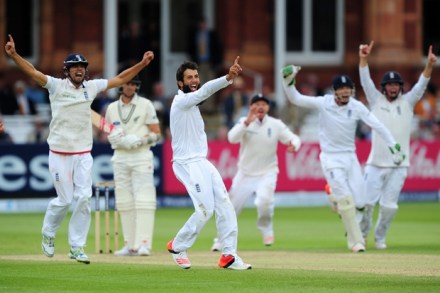
If heaven is a place on earth, as Belinda Carlisle so wisely observed, then surely that place has to be Lord’s on a Test match Saturday. Celestial indeed, and a privilege to have been there for just a part of what was one of the most thrilling Test matches in history. More runs scored than ever before in a Lord’s Test, 40 wickets taken, three magnificent centuries, technically brilliant from Williamson, sage and resolute from the Cook of old, jaw-dropping and Botham-esque from Stokes and five days of extraordinary sportsmanship. There is no more civilised place to watch sport than Lord’s. I love the fact that it still trusts spectators enough to allow them to bring in their own alcohol and doesn’t kick up a fuss when champagne corks are popped on to the outfield.

‘Another terrible thing…’: a novel of pain and grief with courage and style

From our UK edition

Nobody Is Ever Missing takes its title from John Berryman’s ‘Dream Song 29’, a poem which I’d always thought related to Berryman’s strange sense of guilt over his father’s suicide. At the heart of Catherine Lacey’s novel there is another suicide that brings with it enormous pain and grief, that of the heroine Elyria’s adopted sister Ruby, six years earlier. This is a novel of extremes — to put it mildly — charting Elyria’s slide into a derelict state. It is a witty, knowing and lyrical work that takes as its subject the thoughts and feelings of a woman who has suffered more misery than most humans can take. The bulk of the novel’s action takes place in New Zealand, but it could happen anywhere.

Michael Seresin – from film noir to pinot noir

From our UK edition

Michael Seresin claims, rather modestly, to ‘have no palate’, choosing instead to describe wine with light, colour and form. These are not your typical winemaker’s terms, but they make perfect sense given his unusual back story. Born and raised in New Zealand, Seresin emigrated to Europe in 1966 to pursue a career in cinematography. Movie buffs will know what happened next — Seresin, in his own words, ‘did really well, really quickly’, making a name for himself with a series of Alan Parker flicks: Bugsy Malone, Midnight Express, Fame. It was during this period that he leased a house in Italy — still his ‘favourite country in the world’ — and fell in love with wine.

The case for decriminalising prostitution is overwhelming. Look at New Zealand

From our UK edition

Every so often our politicians declare that ‘it's time to prosecute men for buying sex’; most recently with Caroline Spelman's call for men to make their views clearer about prostitution. I’m one of few men who’ll own up to visiting brothels and spending time with call girls. Alas – for those getting hot under the collar with anticipation – my time spent cruising red light zones was strictly professional: I spent most of 2008 photographing sex workers in New Zealand for my dissertation, which documented how the country's decriminalisation of sex work in 2003 had changed the industry.

Sam Neill’s diary: Back in Blighty, remembering drinking binges of yore

From our UK edition

I am back in the UK for work. Great time to turn up — after the grim, grey grind of the British winter. Here in Manchester, people stroll in shirtsleeves or T-shirts, though it’s still only 15 degrees. They are, in truth, dazzlingly white. Their semi-nudity strikes me as a tad premature, but then I’ve only just left my Indian summery vineyard in New Zealand via Bondi Beach. I’m here at the behest of BBC2, for a second season of The Peaky Blinders. If you didn’t see the first season, you should. And if you don’t ... I know where you live. And having played Chief Inspector Campbell, I know how to remove your fingernails. Be warned. Campbell is the psycho cop from hell (well, Belfast), and is more fun to play than any part I remember.

Warning: upspeak can wreck your career

From our UK edition

A few weeks ago, I accompanied my daughter to an Open Day at Roehampton College, where she is hoping to start a teacher training course in September. I enjoyed it — and was impressed by the broad mix of motivated young men and women who, if all goes well, will soon be teaching the next generation of primary school children. Towards the end of the afternoon, the co-ordinator said she wanted to offer a few tips about the interview process that would begin once all the applications have been submitted. It turned out she had only one main tip: avoid upspeak. She stressed the point vigorously.

Playing down Australia and New Zealand’s role in the Great War is shameful

From our UK edition

Back in the 1950s my grandmother wrote her memoirs of childhood in Edwardian London, a story that ends in the summer of 1914, when she was 14. In contrast to the image we’re given of cheering men skipping to war, she recalls her father in tears at the breakfast table, lamenting that the politicians had failed. He foresaw total disaster (optimism runs in the family). She then finds that her brother has joined up, not out of excitement or glory but because he’s ashamed not to be in uniform; he survived, although broken by shellshock, and his elder son was killed in the next war. It’s clear from her recollection that a world is ending, and all the assumptions and beliefs from that childhood now look alien.

Hurrah for Andrew Strauss

From our UK edition

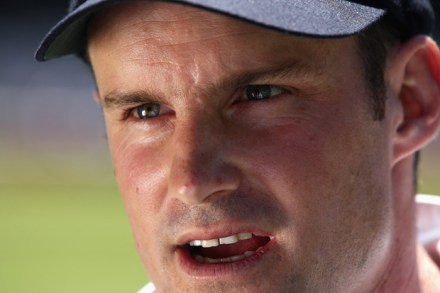
Andrew Strauss is a serious man and Driving Ambition (Hodder, £20, Spectator Bookshop, £18) is a serious book. It looks like most other sporting autobiographies: there are heroes, jokes and solecisms aplenty. Yet it is also the Bildungsroman of a determined bloke making the most of his talents. Strauss rejects the truism ‘You make your own luck’; but in his case, I’m not convinced. He matured as an adolescent when his contract with Middlesex County Cricket Club was threatened. Then he conquered mental frailty to make a career-saving century for England against New Zealand in 2008. There was lots of graft in between. It was his personality principally that turned the England team from a demoralised rabble in 2009 into an irresistible host by 2010.

How to conduct a Tallis motet in a cardboard cathedral

From our UK edition

To undertake a concert tour of New Zealand’s cathedrals at the moment is to be constantly reminded of the destructive power of nature and how dogged people can be when the chips are down. The list of buildings that the earthquake of February 2011 destroyed in the centre of Christ-church includes the Anglican cathedral, which, shorn of its bell tower and west end, will have to be entirely pulled down sooner or later. The square outside it looks like a war zone without the bullet holes. Other cities such as Napier, itself rebuilt after an earthquake in 1931 and made into an Art Deco jewel, are facing up to the reality of having to dismantle their principal buildings to make them quake-proof, as has happened in Wellington.

Australia are just New Zealand in disguise (plus Michael Clarke and Ryan Harris)

From our UK edition

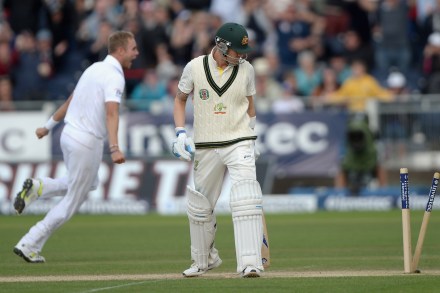
Thumping Australia is grand; thumping Australia without playing well almost feels like cheating. But in a good way. This is where England find themselves today. The Ashes are safe for another few months and England have not had to be very good to keep them. Which is just as well, frankly, since even though they are unbeaten in 12 tests England are not quite as good a side as they like to think they are. They are good enough to defeat these hapless Australians, however. The Australians are basically New Zealand in disguise. Like New Zealand they are a side good enough to get themselves into good positions but not a side good enough to take advantage of those good positions.

It’s all in a name | 7 May 2013

From our UK edition

Having a baby and stuck for a choice of name? Let the eminently sensible and well-adjusted people of New Zealand help you out. Their government has just released a list of names parents wished to call their kids but were banned from doing so by an overbearing and meddling state. Luckily they’re still legal over here, though. So you could go for ‘4Real’ or ‘V8’ - or, if it’s your kinda thing, ‘Anal’. There were even kids about to be called ‘2nd’ and ‘3rd’ and ‘4th’, inspiration having deserted the parents. My favourites came from New Zealand a few years back. That’ll be the twins, Benson and Hedges. And then you know how people sometimes call their kids after the romantic places they were conceived?

Borgen and Scotland: A Love Affair Founded on Self-Congratulation

From our UK edition

Borgen - the title refers to the Danish equivalent of Holyrood or Westminster - has been terrifically popular amongst those people interested in sub-titled political dramas from Denmark. I fancy that viewers in England have simply enjoyed the programme for what it is: a well-made but impossibly smug piece of "progressive" political propaganda. In Scotland, however, it has been seen as something different: a glimpse of the future. Or, at any rate, one future. In one sense this is reasonable. Even if it is only a TV show, one can see why Scots - and nationalists especially - should be thrilled by a drama showing how the ineffably right-on leader of a small northern European nation can make a mark upon the world. No wonder Nicola Sturgeon is on record expressing her admiration for Borgen.

Test Cricket, Eh? Bloody Hell.

From our UK edition

It would take a heart of stone not to laugh when reading about Australia's latest cricket crisis and, reader, I've no heart of stone. Much more of this and we'll have to wonder if the Aussies really deserve a five test series these days. The present crew are, apparently, "The Lowest of the Low". To which one can only say: not while anyone who played for England in the fiasco of 1988 is alive they ain't. But this is the thing about Test cricket: its habit of sneaking up and whacking your senses when you least expect it. This was a humdrum, low-key Test in tiny, sleepy Hobart (of which more later) designed as a useful warm-up for the Australians before the Indians arrive for the main event of the antipodean summer.

Is Scotland a Nordic Country?

From our UK edition

This is a question that meets the classic definition of John Rentoul's famous-to-them-that-ken series of Questions To Which The Answer Is No. That is, the people asking the question think the answer is Yes when in fact it is No. This question, like many of the SNP's other witticisms, is the brainchild of Angus Robertson, the MP for Moray who might be thought Alex Salmond's answer to Karl Rove. Like Rove, Angus sometimes gets carried away and this suggestion that Scotland is some long-lost Nordic appendage is one of those occasions. Not that he's alone in wishing Scotland could be redefined in this fashion. Lesley Riddoch had a piece in the Guardian recently making just this argument.

Pulling off a public finance rescue mission

From our UK edition

This is the next of our posts with Reform looking ahead to the Spending Review. Earlier posts were on health, education, the first hundred days, welfare, the Civil Service, international experiences (New Zealand, Canada,Ireland) and Hon Ruth Richardson’s recent speech and selling the case for cuts to the public.   George Osborne was right to frame the forthcoming UK Spending Review as a once in a generation opportunity to reshape government.  While it is convenient to see the current fiscal debate as cyclical, the truth is that heavily indebted countries such as the UK have a structural problem rooted in the overreach of government.

A lesson from New Zealand

From our UK edition

This is the next of our posts with REFORM looking ahead to the Spending Review. Earlier posts were on health, education, the first hundred days, welfare, the Civil Service and international experiences (New Zealand, Canada, Ireland). Ruth Richardson, the former reforming Finance Minister of New Zealand, set the benchmark for the Spending Review in a lecture for Reform on Wednesday evening. The coalition Government has framed the Review in the right way – as a chance to reshape and redefine the role of government rather than just shave a few percentage points off the existing structure with all its structural flaws. Ruth Richardson explained what that should mean, addressing each of government’s roles as spender, tax collector, asset owner and law maker.

What you need to know ahead of the Spending Review: the New Zealand experience

From our UK edition

This is the latest of our posts with Reform looking ahead to the Spending Review. The first five posts were on health, education, the coalition’s first hundred days, welfare and the Civil Service. International examples of public finance rescue missions Other countries can provide important lessons on what does, and what does not, work in devising a plan to bring government spending down. Several countries have undertaken major programmes of reform that have set out to restore fiscal credibility and improve the quality of their public services. Examples include New Zealand, Canada and Ireland. Reform has drawn on the experiences of senior figures from these countries, and lessons from the New Zealand experience are discussed below.

Who’s Afraid of a Hung Parliament?

From our UK edition

So it seems you have to vote Conservative to accept the party's invitation to join the government of Great Britain? Who knew? Tory warnings of the dire consequences of a hung parliament are understandable but, I suspect, unfortunate. There is little evidence that the electorate believes that a hung parliament will be a disaster, far less than they can be cajoled into thinking that they're letting Britain down if they don't vote Conservative. And that, my friends, is the underlying message sent by the Tories' blitz against a hung parliament. A hung election might not be ideal but it might also be a fitting end to this exhausted, depressing parliament. But it need not be the disaster the Tories claim. The PDF they released today - and the advert - is thin gruel.

The State We’re In

From our UK edition

Deficits aren't necessarily the end of the world but they're not your best chum either. This chart, pinched from Burning Our Money, is a handy reminder of where we are and the pickle we're in. Worse than Spain! Worse than the United States! Worse than Iceland! Worse than Ireland! Gordon Brown FTW. Sure, in the long run we're all dead. But we don't have to be dead quite so soon, do we? As always, the Nordics fare very well in this sort of caper. But look too at our friends in New Zealand - a model of how a non-Nordic, English-speaking country can still do pretty well for itself. Yet Alex Salmond never talks about the Kiwi example, even though, as Jim Telfer used to say, New Zealanders are "Scots who learnt how to win". Admittedly, he was talking about rugby.

School’s Out: The Swedish Model is Not the Only One.

From our UK edition

Like other sensible people I'm encouraged by the Tories plans for education in England. The Swedish system of Free Schools has a lot to be said for it. Still, I wonder why the Tories have chosen Sweden as their role model rather than, say, the Netherlands or New Zealand both of which also have extensive school choice programmes. As you can see, both those countries score very well on the PISA* scale (generally seen, I think, as the best international comparison) and do markedly better than the UK. Of course, Michael Gove's writ runs out at the Tweed. Which is a shame, since education policy in Scotland remains wholly in hock to the EIS and the other teaching unions.