New statesman

The appalling hypocrisy of Peter Wilby

According to the ancient proverb, if you sit by the river for long enough you will see the body of your enemy float by. That happened to me earlier this week when I discovered the fate of Peter Wilby, a former editor of the New Statesman and the Independent on Sunday. In 2018, when I was forced to resign from a government job over old tweets, Wilby wrote an article saying my public humiliation had come as no surprise to him. Apparently, I’d made a career out of ‘denigrating women, homosexuals, disabled people, ethnic minorities and anybody on benefits’, and ‘disgraced’ the memory of my dead father. ‘At one stage he was more or less addicted to both alcohol and pornography,’ he said. That piece cut me to the quick.

The Greatest Living American Writer on Salman Rushdie

From our US edition

In the late 1990s, author Neal Pollack developed an alter-ego character, "The Greatest Living American Writer," for the McSweeneys website, to satirize a generation of pretentious authors, particularly Norman Mailer and Gore Vidal, as well as macho literary journalists. That character formed the basis of Pollack's first book, the cult classic The Neal Pollack Anthology of American Literature. The GLAW has since appeared in numerous other publications,  left- and right-wing and completely apolitical, surfacing and de-surfacing as the times demand. Now he's back in The Spectator World, until we get tired of him.  I have been the Greatest Living American Writer across eight decades of world literature and have seen many shocking acts of violence.

greatest living american writer salman rushdie

Roger Scruton: My 2019

  January My 2018 ended with a hate storm, in response to my appointment as chair of the government’s Building Better, Building Beautiful Commission. But the new year brings a lull, and I hope and pray that the Grand Inquisitor enthroned by social media will find another target. February The 27th is my 75th birthday, and as it happens the last Wednesday meet of foxhounds for the season. We host the meet and celebrate with our neighbours. Despite my wife Sophie’s protests, I maintain my resolve to give up hunting at 75, counting again the broken bones, sprains and muscular disorders acquired over 35 years in the saddle, or, rather, out of it. On my last hunt, I am glad to say, I stay in the saddle all day.

Bernie Sanders leans into anti-Semitism

From our US edition

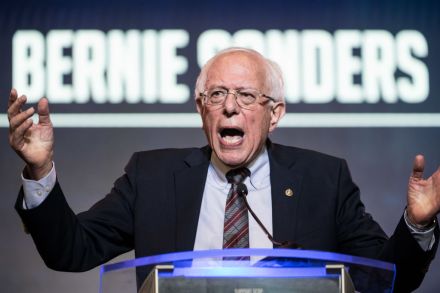
Just as Hollywood's racist liberals love a Magical Negro, so young socialists love a Magic Grandpa who promises to shake the money tree, annul student debt and hand out free subsidies to the kulaks. Not all socialism is the same, though, and not just because some of it is national socialism. The Chinese communists under Deng Xiaoping declared ‘socialism with Chinese characteristics’. America's Magic Grandpa, Bernie Sanders, is a socialist with American characteristics, a millionaire whose life was recently saved by the insertion of an ingeniously capitalist heart stent into his clogged arteries. Being rich, Bernie could, if he needed it, expect to receive a replacement kidney without it first being cut out of a tax defaulter.

bernie sanders

The three unanswered questions from the Roger Scruton hit job

The New Statesman has apologised to Sir Roger Scruton. In a statement published on its website, the magazine has admitted that in April this year its deputy editor, George Eaton, tweeted out ‘partial quotations’ from an interview with the philosopher ‘including a truncated version’ of a quotation. The New Statesman has further admitted that the effect of this quote-tampering was that: The views of Professor Scruton were not accurately represented in the tweets to his disadvantage.  We apologise for this, and regret any distress that this has caused Sir Roger. It is good of the New Statesman to finally admit what any fair observer has known for months.

Roger Scruton on the interview that got him fired

Roger Scruton has appeared on the Today programme to discuss the interview that got him fired. Here is the full transcript and recording of his conversation with Justin Webb: RS: I don't think I spoke intemperately. I speak as I speak and I discuss things as they are presented to me, according to my vision of them. But you know obviously the way in which it was presented in the New Statesman was such as to cause some kind of scandal. JW: At one stage, George Eaton, well he tweeted these words that he ascribed to you, 'each Chinese person is a kind of replica of the next one and that is a very frightening thing'. Let's listen to the context of that: There are difficulties around the corner that we are ignoring like the rise of China.

The Scruton tapes

Sometimes a scandal is not just a scandal, but a biopsy of a society. So it is with the assault on Sir Roger Scruton, who in recent weeks has been smeared in the media, fired by the government and had his life’s work assailed. Scruton is the latest, though far from the first victim of the modern outrage mob. It is now four years since the Nobel prize-winning scientist Tim Hunt was fired by University College London (among other institutions who were lucky to have him). That happened after one member of the audience at a conference in Korea tweeted something he had said about working with women and professed outrage at the comment’s alleged sexism. None of the institutions which dropped Hunt asked if there was any case for the defence.

Diary – 17 April 2019

I travel back from London with the St Matthew Passion filling my head, after the moving performance from the Elysian Singers and Royal Orchestral Society under Sam Laughton at St James’s Piccadilly. Why does that last chord send shivers down the spine? The dark instrumentation, the sense that it is not an ending but a beginning, that this shadow-filled saraband will repeat itself for ever? Or is it just the story — surely one of the greatest narratives in all literature, in which nothing is redundant and yet everything is said? I arrive home with the chord still in my head, C minor with a B natural thrust like a sword into its heart. It foretells the week ahead. I devote the rest of the day to my report for the Building Better, Building Beautiful Commission.

True grit | 14 September 2017

As literary editor of the Sunday Times in the early 1980s, when the rest of the editorial staff routinely papered their offices with mildly erotic female images, Claire Tomalin stuck up pictures of sexy men: ‘Some found it hard to believe I could do anything so shocking.’ Double standards, casual sexism and blanket prejudice were normal at the time, even on a relatively civilised national paper. I know because I had the same job a few years earlier at The Spectator. Men ran the world and women answered the phone. Claire had come down from Cambridge with a first in 1955, but the BBC refused her a job on the grounds that it did not employ female graduates.

The hatred that Amis and Corbyn share

Everyone loves an underdog. It doesn’t matter how incompetent they might be — indeed, incompetence works in their favour. You do not expect underdogs to be adept, do you? It doesn’t really matter how vile, otiose or absurd their beliefs are, either. So long as they are up against someone more powerful, a certain sentimental section of the population will be rooting for them. Look at the Palestinians, for example. And look at Jeremy Bloody Corbyn. My wife — a Tory — said to me the other day: ‘You lot want to watch it. I’m beginning to feel sorry for the bloke. The sympathy votes will be stacking up.

Did the New Statesman censor its censorship issue?

This week's New Statesman, guest-edited by Neil Gaiman and Amanda Palmer, is titled 'Saying the unsayable'. It promises to 'address the ideas of censorship, taboos, offence and free speech'. The magazine has Stephen Fry revealing two opinions that will get him in 'trouble', as well as Rowan Williams writing on 'Why religion needs blasphemy'. It was also supposed to have cover art penned by the American cartoonist Art Spiegelman, with the magazine even running a teaser of the artwork earlier this week on their website. Alas this article has now been taken down, and the cover image of the magazine changed to a photo of guest editors Palmer and Gaiman. Now, Spiegelman has accused the magazine of censoring him.

Why wasn’t the head of Hamas properly cross-examined during his BBC interview?

When journalists have the much sought after opportunity to interview the heads of states and organisations with appalling human rights records the very least we expect is to see such people given a thorough cross-examining. What we don’t expect is for heads of terrorist organisations to be provided with a platform from which to give the equivalent of a party political broadcast and to get away with it virtually unchallenged.  And yet that is precisely what we got when the BBC’s Middle East correspondent Jeremy Bowen recently interviewed Khaled Meshaal, the head of Hamas. Hamas leader Meshaal warns of Israeli 'extremism' after elections, reads the baffling headline that accompanies Bowen’s interview.

Revealed: The reason behind Alex Salmond’s pink champagne order

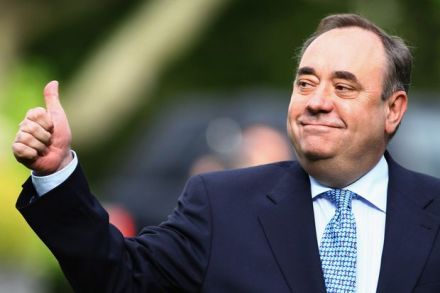
After Alex Salmond was outed as ordering pink champagne in not one but two interviews last week, naysayers were quick to ridicule the former Scottish First Minister for his lavish choice of tipple. However, Mr S has it on the highest authority that Salmond was guzzling in the name of the people. The rosé tipple, Mr S is told, is not Salmond's regular order. Instead, he was simply raising a toast to his football team Heart of Midlothian.

The media and political elite need to stop treating the electorate like dogs

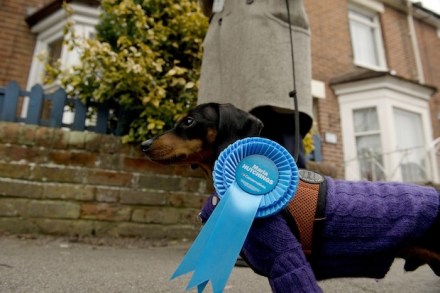
There are many grating phrases in modern British politics. ‘Best practice.’ ‘Fit for purpose.’ ‘Let me explain’ (just bloody well explain!). And that tendency of Labour politicians to preface pretty much everything they say with a schoolmarmish ‘Look’, as in ‘Look here’. As in: ‘You donuts know nothing, so I am going to put you straight.’ But even more grating than those, sat at the top of the pile of temperature-raising sayings, is ‘dog-whistle’. Everyone’s talking about ‘dog-whistle politics’.

Grayson Perry has a pitiably phalloscopic perspective

Calm down, dears: the strange coughing noise that was heard across Britain at around 8.30 yesterday morning was not the last gasp of an exhausted Mother Earth, nor was it the harbinger of a country-wide Ebola outbreak. No, it was simply the sound of nation’s middle-aged, middle-class men choking on their cornflakes while listening to Grayson Perry being rude about them on the Today programme. Perry was appearing to promote his guest edition of the New Statesman, proudly entitled the 'Great White Male Issue'.

Don’t you dare tell me to check my privilege

[audioplayer src="http://traffic.libsyn.com/spectator/TheViewFrom22_20_February_2014_v4.mp3" title="From this week's View from 22 podcast, Burchill and Paris Lees debate intersectionality" startat=86 fullwidth="yes"] Julie Burchill vs Paris Lees [/audioplayer]In the early 1970s, my dad was a singular sort of feminist. As well as working all night in a factory, he had banned my mother from the kitchen for as long as I could remember because, and I quote, ‘Women gets hysterical and you needs to be calm in a kitchen.’ He also adored tough broads: ‘There’s a lady!’ he would yell appreciatively at Mrs Desai when the Grunwick strike came on TV, the Indian women wearing English winter coats over their hard-core saris. ‘Thass a lady too!

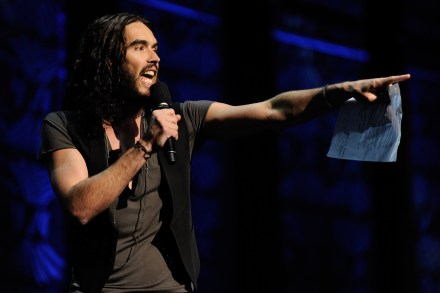
Was Russell Brand’s phrase ‘Harry Potter poofs’ offensive?

Russell Brand is in the naughty boy’s corner today after he jokingly told raucous members of the Cambridge Union last night to: ‘Shut up, you Harry Potter poofs.’ Naturally, there have been absurd calls for the millionaire revolutionary to apologise for cracking an inoffensive and tame quip Mr S is delighted to see that the New Statesman is not among those calling for Brand’s straggly-haired head. The folk at the Staggers can usually be relied upon for stern comment after homophobic outbursts, so congratulations to them for resisting the urge to be earnest. Brand, of course, edited a recent issue of the august magazine; perhaps his sense of humour rubbed off on them.

Russell Brand: an adolescent extremist whose hatred of politics is matched by his ignorance

So, I recommend a trip to Sri Lanka. Wonderful place. Go now before everyone else does. Being (almost entirely) offline for a couple of weeks is a blessing too. But even good things come to an end. Which brings me to Russell Brand. Fair play to the New Statesman. Their decision to ask Brand to "edit" an issue has brought them all the publicity they could have hoped for. It would be churlish to begrudge the Staggers that. Celebrity sells. Or, at least, wins attention. Which is fine. Plenty of people seem quite enthused by Brand. Even if they disagree with his diagnosis of contemporary ills they enjoy the sight of a "professional commentariat" that is supposedly discombobulated by Brand's invasion of their turf.

A letter to the Editor of the New Statesman

I have a letter in this week’s New Statesman. It is a response to an article in last week’s magazine by Mehdi Hasan. As NS Letters appear not to be published online I am pasting it here: Sir, The piece by Mehdi Hasan in last week’s magazine (‘Who needs Tommy Robinson and the EDL, when Islamophobia has gone mainstream?’) tries to infer that statements by various writers, including myself, are identical to those on show at some EDL demonstrations.   For instance he quotes some EDL supporters caught on camera chanting: “Burn the mosque!” and then quotes me as calling for ‘mosques accused of spreading “hate” to be “pulled down”.’  Mehdi then says ‘Spot the difference?

Bitter Experience Has Taught Me, by Nicholas Lezard – review

What, really, is a literary education for? What’s the point of it? How, precisely, does it help when you’re another day older and deeper in debt? These are questions that after a while begin to present themselves with uncomfortable force and persistence to those of us who have believed from our earliest youth that if literature will not save us, it will,  surely, at least do us some small, perceptible good. What answer can we make, surveying the ruins? Nicholas Lezard is useful here, as a test case, a case tested to destruction even. Not only does he have a thoroughly literary turn of mind, he is, as he says, probably the last remaining person in the world who makes ‘what could loosely be called a living from reviewing books’.