Nazis

Why one of Renoir’s most celebrated paintings languished unloved

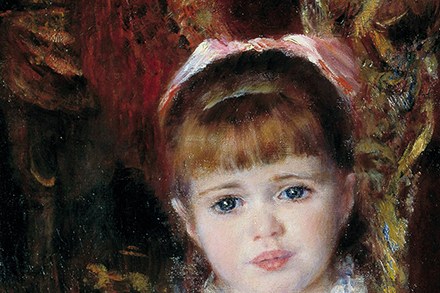
Shimmering off the cover of The Renoir Girls are sisters Alice (aged four) and Elisabeth Cahen d’Anvers (six), portrayed in all the promise and innocence of a pampered childhood by Pierre-Auguste Renoir. Aged 40, Renoir was then the coming portrait painter for the gratin of Paris, as he struggled to make ends meet with smart commissions from wealthy sponsors – a network of Catholic and Jewish banking families that included the Ephrussis (memorialised by Edmund de Waal in The Hare with Amber Eyes), Camondos, Rothschilds and Cahen d’Anvers.

Derided as ‘feminists’: the unsung witnesses of the Nuremberg trials

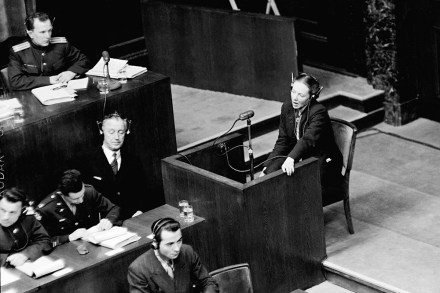
There are several things wrong with James Vanderbilt’s new film Nuremberg, least of all, some might say, the fact that it fails the Bechdel test. This 1985 metric assesses female representation in film by whether two named women have a conversation on screen about anything other than a man. If you are thinking, ‘So what? All the Nuremberg prosecutors were male, as was every defendant’, then you need to get hold of Natalie Livingstone’s revelatory book. While the public face of the trials was resolutely male, as were the indictments (there was no mention of rape, for instance, within the listed war crimes), the truth is that in the trials, as in the war, women played significant though often hidden roles.

Why Hitler’s suave architect escaped the noose at Nuremberg

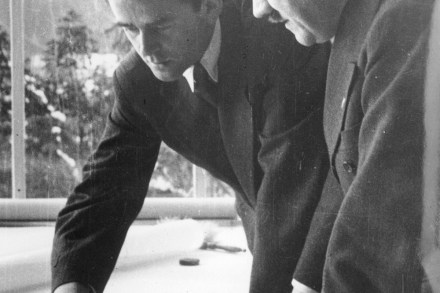
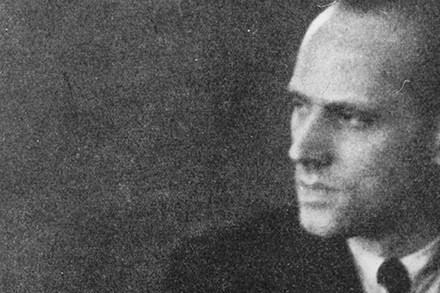
At the Nuremberg trial of the main Nazi war criminals, one man stood out: Hitler’s favourite architect and later armaments minister, Albert Speer. He cut a gentlemanly figure in a gallery of rogues. The strutting, smirking Hermann Goering reminded Rebecca West, who attended the trial, of ‘a tout in a Paris café offering some tourists a chance to see a black mass’. Julius Streicher, the Jew-baiting brute, was like ‘a dirty old man of the sort who gives trouble in parks’. On the same bench, all declaring their innocence in the face of overwhelming evidence of monstrous crimes, were the lantern-jawed SS leader Ernst Kaltenbrünner, the sour-faced ex-champagne salesman Joachim von Ribbentrop, Fritz Sauckel, the thuggish slave labour chief, and the rest of the sorry gang.

Caught between Hitler and Bomber Command – the Berliners’ cruel predicament

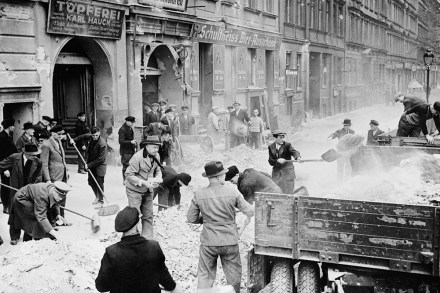
Can you be a true, thoroughgoing patriot and still want your country to lose in a war? It’s a dilemma that faced countless thoughtful people in the past century who lived under totalitarian regimes, and I know is torturing many Russians today. It’s the stark question at the centre of Ian Buruma’s subtly nuanced and beautifully written book about the lives of Berliners in the second world war as their city was being destroyed by a combination of aerial bombardment and the manic cruelty of their own leaders.

Gripping: Amazon Prime’s The Tank reviewed

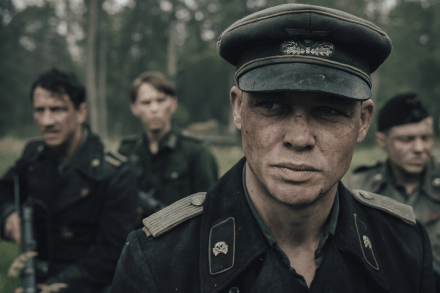
I don’t know how it got past the increasingly powerful ‘All Germans were evil Nazis’ censors but Amazon has released a sympathetic portrait of a Tiger crew on the Eastern Front, translated, clunkily, as The Tank. It has been criticised in some quarters for its weird twist at the end, which the genre-literate will see coming a mile off. But don’t be put off by its structural and narrative shortcomings. This is still a very watchable, gripping and sometimes moving portrait of men at war, and likely the most realistic ever depiction of a second world war tank crew. It’s far superior to the ludicrous Fury, where Brad Pitt plays an implausibly elderly tank commander, and where a single Sherman successfully takes on virtually an entire SS Panzer Grenadier regiment.

Sabotage in occupied France: The Shock of the Light, by Lori Inglis Hall, reviewed

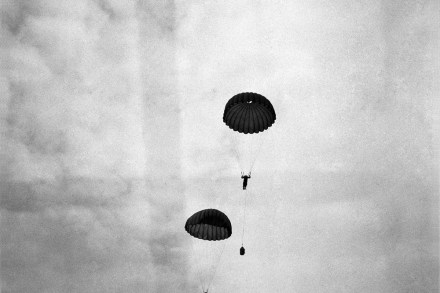
The courage of women dropped into Nazi-occupied Europe in order to work for Special Operations Executive (SOE), was immense. Trained as spies in Britain, they were tasked with sabotage and subversion of Nazi military rule and operated covertly with Resistance fighters and other British agents. It was a hugely risky job. Thirty-nine entered occupied France in this way, mostly by parachute. Imagining their experiences seems to be a rite of passage for many esteemed novelists – off the top of my head I can think of William Boyd, Sebastian Faulks, Simon Mawer and Kate Quinn. I have read and enjoyed their books, but there is often a sense of the protagonists being superhumanly lucky: beautiful, outspoken, brave, and able to glide through the espionage.

From riches to rags: The Effingers, by Gabriele Tergit, reviewed

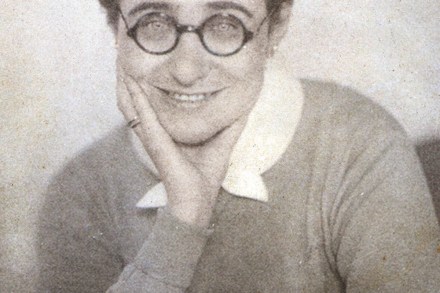
Sometimes the term ‘lost masterpiece’ proves to be little more than a publisher’s puff. At other times, however, a long-buried book that is dug up, dusted down and branded a classic is worthy of the accolade. That applies to Gabriele Tergit’s The Effingers. Originally published – and then promptly overlooked – in the author’s native Germany in 1951 and recently rediscovered and reappraised there, the novel, a vivid chronicle of German Jewish life over the course of 70 years, now appears in English for the first time. Opening in 1878, Tergit charts the progress of siblings Paul and Karl Effinger as they leave their provincial hometown in the south of Germany to make their fortunes in Berlin.

The surreal drama of Helsinki’s history

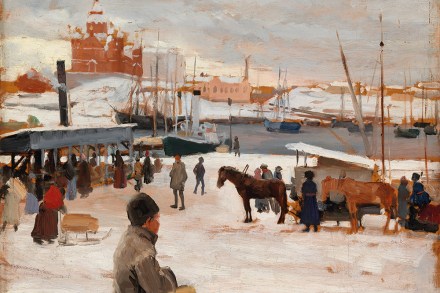
In 1920, the young Finnish architect Alvar Alto flew over Helsinki for the first time. He was aghast. ‘An aviator can see where the monkeys have been and destroyed so very much,’ he recalled. Alto’s aerial view reflected a story of fragmentation and occupation spanning some five centuries, now surveyed by the historian Henrik Meinander. The capital, explains the author, was bashed about by a series of bad actors – Swedes, Russians and Germans – until Finland stood its ground and became an independent nation in the early 20th century. Helsinki is ‘a city shaped by the sea, a city best seen from the sea’, writes Meinander. ‘Wherever you are in Helsinki’s inner city, you will always be close to the water.

The extraordinary courage of Germany’s wartime ‘traitors’

I once interviewed the late Enoch Powell for this magazine (the article never appeared, for reasons I forget). One thing he said on that occasion stuck with me. He remarked that loyalty to one’s country should be unconditional. I asked him what he thought people should do if their country were taken over by a criminal regime. After a short pause Powell replied that some people were luckier than others. I failed to press him further on this point, but it struck me as an unsatisfactory answer, and it still does. Jonathan Freedland has written a very good book on precisely such unlucky people: German patriots who hated Hitler and everything he stood for.

Alice in Nightmareland: The Matchbox Girl, by Alice Jolly, reviewed

Vienna, 25 July 1934 is a significant date in Austria’s history. But in The Matchbox Girl, the big events happen offstage, the world seen entirely through the eyes of its youthful narrator. We focus not on the assassination of Chancellor Dollfuss and a failed Nazi coup, but the children’s hospital, where 12-year-old Adelheid Brunner is waiting to be assessed for admission because she’s mute – designated ‘special’. Or, as her grandmother puts it, hopeless, ‘an idiot’. In the tall, shabby hospital, the young inmates are a protected community, closely observed by a team of specialist doctors, among them young Hans Asperger, later to find fame with his syndrome. Sister Victorine, a patient, saintly nun, oversees the gaggle of unruly, sometimes frenzied children.

What drove the German housewife to vote for Hitler?

‘It happened, therefore it can happen again,’ warned the Holocaust survivor Primo Levi, explaining why witnesses to the horrors of Nazism and genocide must be listened to, and why it is important for future generations to stay vigilant against a repeat of such atrocities. The underlying assumption is that the Nazis’ rise to power and the terrible crimes that followed were preventable. We believe that German democracy need not have died; that Hitler could have been stopped from plunging much of the world into a horrific war and from eradicating the vast majority of European Jews.

Hiding from the Nazis in wartime Italy

When memories come back to you, wrote W.G. Sebald in Austerlitz, his digressive novel about history and how it is remembered, their dreamlike quality sometimes makes you ‘feel as if you were looking at the past through a glass mountain’. Malcolm Gaskill’s exploration of the wartime adventures of his great-uncle Ralph, captured in Italian-occupied Libya in 1942, came from just such a memory, a ‘haunting’ dream experienced by his mother about her long-dead uncle. Finding a diary kept by Ralph while a prisoner, and fascinated by the ‘imperfections of memory’, Gaskill set off on a seven- year forage into the past that took him from archive to archive, retracing Ralph’s several attempts to escape.

There was no escaping the Nazis – even in sleep

Soon after Hitler came to power in 1933, Charlotte Beradt, who as a Jewish journalist and a communist had been barred from publishing, found her sleep wracked by nightmares that unmistakably reenacted the terrors of the Nazi regime. Deprived of her regular employment, her own dream experiences prompted the subversive if dangerous idea of recording the dreams of her fellow citizens. ‘I began to collect the dreams that the Nazi dictatorship had, as it were, dictated,’ she wrote. Citing a dictum of a Nazi official that in Hitler’s Germany no one has a private life except while asleep, the material she collected demonstrated how dreams ‘as minutely as a seismograph’ can record impinging external realities.

None of Mitfords sounds posh enough: Outrageous reviewed

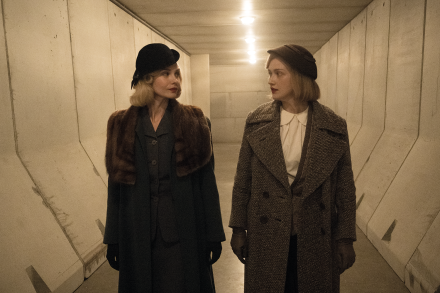
There aren’t many dramas featuring the rise of the Nazis that could be described as jaunty, but Outrageous is one. Oddly, this seems to be the first ever TV drama about the Mitford sisters – and, faced with the choice between playing it for laughs, going for a big historical soap opera or exploring the increasingly dark politics of the 1930s, the show’s writer Sarah Williams has, perhaps wisely, opted for all three. At times, admittedly, the clash of tones can be jarring, but generally in a way that feels like an authentic reflection of a story that remains irreducibly weird. The show also strikes a neat balance between acknowledging the Mitfords’ charm and never entirely succumbing to it.

The mystifying cult status of Gertrude Stein

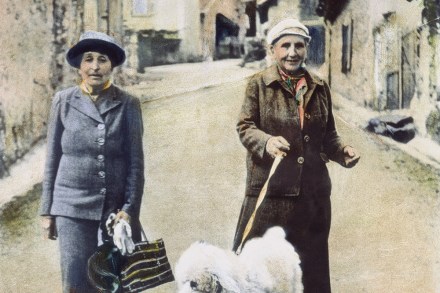
To most people, the salient qualities of Gertrude Stein are unreadability combined with monumental self-belief. This is the woman who once remarked that ‘the Jews have produced only three original geniuses – Christ, Spinoza and myself’. Of the reading aloud of her works, Harold Acton complained: ‘It was difficult not to fall into a trance.’ Even if you are as good a writer as Francesca Wade, it is still difficult to avoid the influence of what she herself calls Stein’s ‘haze of words’. So the first half of this impressively researched biography is cerebral rather than colourful.

When ordinary men did extraordinary things – D-Day revisited

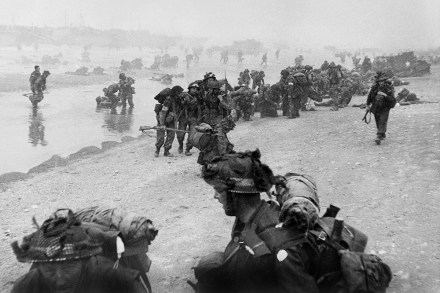
The ferry from Portsmouth to Caen is the most atmospheric way to visit the D-Day battlefields, if not always the most comfortable. As the Normandy coast emerges from the haze, the sand and shingle of Sword beach stretch away to starboard. This was the easternmost of five landing areas assaulted on 6 June 1944 with nearly 30,000 soldiers landed there that day. Over the port bow, on the far side of the River Orne, looms a ridge. Here the British 6th Airborne Division parachuted in by night to neutralise enemy artillery and guard the eastern flank. Out of sight ahead, some eight miles inland past the Pegasus Bridge, lies Caen, the largest city in the area and a strategic road junction.

Vindictive to the last: a Nazi atrocity in Tuscany

Late one evening in 1994, an Italian magistrate walked into a storage room at the military prosecutor’s offices in Rome. There his eye was caught by a 6ft-high wooden cupboard, curiously positioned so that it faced the wall. His interest piqued, he pulled the cupboard around and opened its doors. Inside were stacks of documents dating from the mid-1940s. In all, there were 695 long-lost war crime investigation files, detailing more than 2,000 incidents that had taken place in Italy during the fascist period. Picking up the story, the Italian media dubbed the cupboard the ‘wardrobe of shame’ – which quickly became a metaphor for what Thomas Harding calls ‘Italy’s general amnesia about the fascist past’.

Heroes of the Norwegian resistance

Reading Robert Ferguson’s fascinating history of the experiences of the Norwegians during the five years of German occupation between 1940 and 1945 – a collage of resistance, collaboration and the grey areas in between – I was reminded of the remarks of two Norwegian nonagenarians. In 2011, I interviewed Gunnar Sonsteby, a hero of Norway’s resistance movement, for The Spectator. The country’s most decorated man, Sonsteby told me that he was spurred to acts of sabotage and the ‘liquidation’ of collaborators by sheer outrage at the German presence. Conversely, earlier this year, I wrote the obituary of Olav Thon, the owner of a chain of supermarkets and hotels and one of the richest men in Norway. Thon had been criticised for trading in furs with the occupying forces.

How Anne Frank’s photograph became as recognisable as the Mona Lisa

Anne Frank died of typhus in Bergen-Belsen in late February 1945. Her last days were spent in the sick barracks caring for her sister Margot, who had a high fever and smiled contentedly, her mind already wandering. Anne, too, had been feverish, but ‘friendly and sweet’, according to witnesses. Her last recorded words were: ‘Margot will sleep well, and when she sleeps I won’t need to get up again.’  Ruth Franklin’s superb and subtle book pivots around this moment, which is described in a starkly titled central chapter, ‘Corpse’. Half her study tells Anne’s story up to the tragedy of her death.

Nazis, killer dogs and weird sex: Empty Wigs, by Jonathan Meades, reviewed

Jonathan Meades is, you might say, a baroque artist in a mannerist age. Whereas today’s younger and more widely feted writers think small – a Brooklyn sublet, a Camden Town love nest, the cracked mirror of the self – Meades goes big. And not just in physical terms (Empty Wigs tips the scales at nearly 3lb), but in scope. Where his contemporaries’ prose can be affectless and somehow skinless (a Paris Review interviewer said of Rachel Cusk, with apparent admiration, that her writing ‘feels contemporary, swift and “clean”’), Meades piles on the style, packing in metaphors, coinages and allusions until the crystals can’t take it, swooping between social classes, doing the police in different voices.