Christian House

The surreal drama of Helsinki’s history

From our UK edition

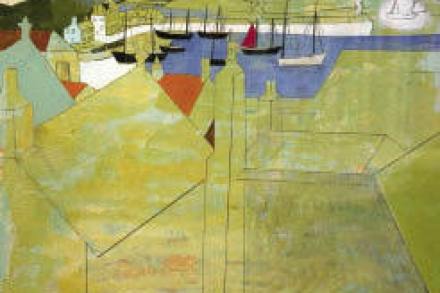
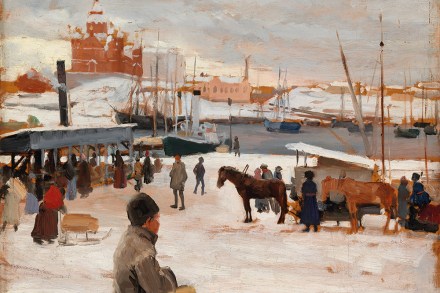
In 1920, the young Finnish architect Alvar Alto flew over Helsinki for the first time. He was aghast. ‘An aviator can see where the monkeys have been and destroyed so very much,’ he recalled. Alto’s aerial view reflected a story of fragmentation and occupation spanning some five centuries, now surveyed by the historian Henrik Meinander. The capital, explains the author, was bashed about by a series of bad actors – Swedes, Russians and Germans – until Finland stood its ground and became an independent nation in the early 20th century. Helsinki is ‘a city shaped by the sea, a city best seen from the sea’, writes Meinander. ‘Wherever you are in Helsinki’s inner city, you will always be close to the water.
Owen Matthews, James Heale, Francis Pike, Christian House and Mark Mason

From our UK edition

32 min listen

On this week’s Spectator Out Loud: Owen Matthews argues that Turkish President Erdogan’s position is starting to look shaky (1:19); James Heale examines the new party of the posh: the Lib Dems (7:51); Francis Pike highlights the danger Chinese hypersonic missiles pose to the US navy (13:54); Christian House highlights Norway’s occupation during the Second World War, as he reviews Robert Ferguson’s book Norway’s War (22:01); and, Mark Mason provides his notes on coins (28:18).  Produced and presented by Patrick Gibbons.

Heroes of the Norwegian resistance

From our UK edition

Reading Robert Ferguson’s fascinating history of the experiences of the Norwegians during the five years of German occupation between 1940 and 1945 – a collage of resistance, collaboration and the grey areas in between – I was reminded of the remarks of two Norwegian nonagenarians. In 2011, I interviewed Gunnar Sonsteby, a hero of Norway’s resistance movement, for The Spectator. The country’s most decorated man, Sonsteby told me that he was spurred to acts of sabotage and the ‘liquidation’ of collaborators by sheer outrage at the German presence. Conversely, earlier this year, I wrote the obituary of Olav Thon, the owner of a chain of supermarkets and hotels and one of the richest men in Norway. Thon had been criticised for trading in furs with the occupying forces.

A choice of first novels | 30 July 2011

From our UK edition

As L.P. Hartley noted, the past is a foreign country: they do things differently there. And no more so than during the two world wars, a fact that has provided a rich seam for several debut novelists to mine this summer. In Mark Douglas-Home’s puzzler The Sea Detective (Sandstone Press, £17.99), the tidal pull of a long-gone drama creates a psychological undertow for its hero Cal McGill. As the novel opens, Cal is on the run after covertly planting arctic flowers in Scottish ministers’ gardens as a subtle protest against the administration’s environmental policy. Cal is an oceanographer, skilled in the mapping of briny mysteries, logging sinister flotsam and jetsam through analysis of currents and shipping routes.

Our friend in the north

From our UK edition

The last surviving leader of Norway’s anti-Nazi resistance Oslo Even in the glare of a crisp spring day the execution ground at Akershus Fortress is a chilling place. Snow still fringes the old gun battery and the Oslofjord clinks with ice. Sitting above this small patch of ground, in Norway’s Resistance Museum, I’m reminded of the risks taken by the man sitting next to me. Seventy years ago, Gunnar Sønsteby, the most decorated man in the country and the last remaining leader of the resistance movement, spent five years fighting the Nazi occupation. Avoiding the firing squad in that courtyard was his highest priority. Sønsteby is a fine reed of a man; thin, poised and dignified, like a Nordic Giacometti.

A choice of first novels | 7 August 2010

From our UK edition

Write what you know. Isn’t that what aspiring novelists are told? Write what you know. Isn’t that what aspiring novelists are told? While two first-timers have taken the advice this summer, there is also an exception to prove the rule. In The Imperfectionists (Quercus, £16.99), Tom Rachman draws on his time at the International Herald Tribune to write a quirky patchwork tale of an English-language newspaper based in Rome. Cyrus Ott, helmsman of an American industrial dynasty, chronicles the paper’s fortunes, from its inception in the 1950s to the Noughties. Interspersed are the stories of the various reporters, editors and readers whose lives are anchored to Cyrus’s grand enterprise on Corso Vittorio Emanuele II. They make for a hapless bunch.

The 89-year-old Boy

From our UK edition

By the age of 21 Geoffrey Wellum knew his life had peaked. It was downhill from here on in. He was a squadron leader and had won a DFC. Moreover, he had lived through the Battle of Britain. Today, he is one of the few of ‘The Few’ left to tell the tale of how they won the battle 70 years ago this summer. Waiting for Wellum in his local hotel bar, perched on the cliffs of Mullion Cove, I watch the rifle-green Channel grinding on to the rocks below. I’m reminded of the watery graves of the many fellow pilots he pays tribute to in his bestselling memoir First Light. In it he details his days as the youngest Spitfire pilot in the fray. The BBC has now adapted the book to mark the anniversary.

Red faces in the galleries

From our UK edition

Art fraudsters, especially forgers, have a popular appeal akin to Robin Hood. Their cock-a-snook cunning provides a twist on those money shots on the Antiques Roadshow when some dotty great aunt from Sidmouth discovers her umbrella stand is Ming Dynasty. ‘How much?’ cries Dotty. The forger levels the field from the other side of the pitch. When some shipping magnate finds his Monet ‘Nympheas’ is more pond scum than Giverny gold the public collapses into bouts of schadenfreude. Many books and films have covered this subject, and yet The Conman has a particularly interesting tale to tell. This is a true story not only of dubious oils but also the obfuscation of the paper trail which allows a work of art to be declared genuine.

Novelty value

From our UK edition

Auction house catalogues are multi-faceted publications. Primarily, of course, they’re sales tools, reassuring buyers that something is what it says it is, that it can legally be bought and where to do just that. Yet, they’re so much more. They can be a simple full stop to one of life’s chapters or, alternatively, a celebratory exclamation mark. An anonymous 1895 house-contents catalogue (of which there are only four known surviving copies) for a Chelsea abode on Tite Street bears secret testament, through a haphazard compilation of loose-lotting, to the Icarus fall of one Mr Oscar Wilde.

A choice of first novels | 22 July 2009

From our UK edition

This year’s summer flurry of debut novels appears to tick all the booksellers’ boxes. This year’s summer flurry of debut novels appears to tick all the booksellers’ boxes. There’s the headline grabber, the European bestseller, the wartime melodrama and the quirky romancer. Publishers recognise a good thing when they see it. 60 Years Later is a case in point, having already hit the news pages and caused a buzz of expectation (Windupbird Publishing, £7.99). Flirtatiously spun as a sequel to Salinger’s Catcher in the Rye, its author has unsurprisingly opted for a reclusive nom de plume. The jacket announces the arrival of one John David California. The defendant’s name on the lawsuit swiftly dispatched by the real J. D.

Bombs and bombshells

From our UK edition

The Rescue Man, by Anthony Quinn The Other Side of the Stars, by Clemency Burton-Hill When journalists venture into no man’s land and begin writing fiction, they do so in the knowledge that it could all get a bit messy. It’s not long before the sound of grinding axes start up. So it’s a pleasant surprise to find two hacks emerging from the fray relatively unscathed. With The Rescue Man, Anthony Quinn, the Independent’s film critic, has taken Liverpool’s blitz during the second world war as the backdrop to a unusual tale of betrayal and obsession. In a city where faith and alcohol ferment on the waterfront, historian Tom Baines is a man with a more idiosyncratic passion: architecture.

The world at bay

From our UK edition

In Wild Mary, his biography of the irrepressible Mary Wesley, Patrick Marnham describes Cornwall in the 1930s as ‘a lost world, a world that had its own rules and customs and mysteries’. While Wesley was bed-hopping on the Lizard peninsula, around the Atlantic-battered rocks at Newquay, Emma Smith was enjoying a most peculiar childhood in this odd, seductive realm. It is this batty pre-adolescence that Smith captures with beguiling warmth in her wonderful memoir, The Great Western Beach. Emma Smith was born Elspeth Hallsmith in 1923 into a tense family environment. Her father, Captain G. Hallsmith, DSO, was a hero of the Great War reduced, thanks to his father’s financial failings, to the level of general clerk at the Newquay branch of the Midland Bank.

A choice of first novels | 18 June 2008

From our UK edition

The ghost of Harry Lime seems to be haunting the publishing houses of London. Graham Greene’s infamous anti-hero may have come to a sticky end in the Viennese sewers but his spirit lives on in several debut novels immersed in the noir world of post-war Europe. Hedi Kaddour’s Waltenburg (Harvill/ Secker, £20) is the most wide-ranging and ambitious of these. The book begins with the maelstrom inflicted on a French cavalry unit during the Great War before coursing through the second world war to the principal narrative of a 1950s CIA operation. The Hotel Waldhaus in the Swiss mountain village of Waltenburg proves the hub around which a German writer, an American singer, a French journalist and a shady, unidentified mole love and betray one another.

Don’t judge a book by its cover

From our UK edition

With its quartos, rectos and folio, the language of book-binding lends itself to the novelist’s palette. It’s a terminology rich in tactile pleasures and potential metaphor for a writer. So it’s a joy to find Belinda Starling doing it justice in The Journal of Dora Damage, not least by situating this idiosyncratic profession in the equally emotive world of Victorian London. In a clammy corner of Lambeth in 1859, within earshot of the clattering rails of the Necropolis Railway, Dora Damage struggles to keep her family out of the workhouse. Her husband Peter, proprietor of Damage’s Bookbinders, has succumbed to crippling arthritis, leaving Dora and their epileptic five-year-old daughter at the mercy of loan sharks and local gossip.

A mean time in Greenwich

From our UK edition

At 17, Truman Capote ‘just wanted to get out of Greenwich and get to New York’. At 17, Truman Capote ‘just wanted to get out of Greenwich and get to New York’. The local high school paper may have provided his first byline, but the dazzle of the bright lights, big city proved too much. Over half a century on I found myself only too pleased to be reversing Truman’s adolescent trajectory. Central Station was feverishly hot as I bought my ticket for a break away from the humidity of summer in the city. Leaving Manhattan to simmer in its juices, I joyfully barrelled upstate on the Metro-North Railroad. After only 40 minutes we rolled over the state line into Connecticut and pulled into Greenwich, the southernmost town of New England.

Short but neat

From our UK edition

No One Belongs Here More Than You by Miranda July Short-story compilations are a tricky beast. For writers, publishers and readers alike they all too frequently prove unsatisfying. Those who’ve mastered the form draw their stories together in a tapestry of narrative voice, social milieu and location to create a cohesive whole from stand-alone parts. Such writers, from William Trevor and Susan Hill to Russell Banks and Raymond Carver, have built successful careers from recognising this truth. With her début collection, No One Belongs Here More Than You, Miranda July follows firmly in their footsteps, especially Carver’s. This is blue-collar America brought to life in a pointillist fashion, achieved through the accumulated impact of small moments gathered together.

Fighting naked on the beaches

From our UK edition

Few have done more than Noble Frankland to dissipate the myths and propaganda that fog our understanding of modern warfare. After serving as a navigator in Bomber Command during the second world war, Frankland went on to become a historian in the Cabinet Office, Director of the Imperial War Museum and adviser to the Thames Television series The World at War. He has proved to be a consummate pathfinder, leading the public through the murky details of 20th-century hostilities. So it’s surprising to find him suddenly embracing the wild fantasies inherent in fiction. Luckily his keen intellect is still evident in his debut novel The Unseen War, as is an eye for the more absurd aspects of political and military power.