Music

What we learnt from Eurovision

From our UK edition

Twice during the Eurovision Song Contest our television lost the signal and the set went blank – once, mercifully, during the performance of a hirsute, gurning, cod-operatic bellend from that patently European country Azerbaijan. ‘Putin’, my wife and I both reckoned, seeing as Russian hacker groups favourably disposed towards their country’s leader had promised that they would do what they could to disrupt the broadcast and indeed the voting. If this really is the third world war, then I suppose it is a suitably banal and modernist take on universal annihilation – this yearly celebration of joyous gayness and very bad music suddenly part of the same war as the bloodshed, carnage and misery of Mariupol.

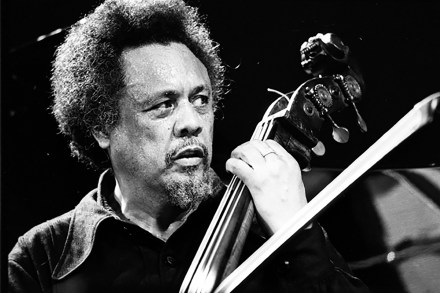
Charles Mingus at 100

"All the Things You Are” is an essential jazz standard, but in 1960 the bassist Charles Mingus gave it an update: “All the Things You Could Be by Now If Sigmund Freud’s Wife Was Your Mother.” It doesn’t take a psychoanalyst to peek under the hood of this composition. Like many Mingus tunes, the loose adaptation is fairly bipolar, picking up and dropping off in fits and starts, alternating between vacuum-tight swinging sections and meandering, tempo-less squabbles between members of the four-piece band. Mingus isn’t for the faint of heart, but on the centenary of his birth it’s worth confronting his life’s work, which surely places him among America’s most important composers.

Mingus

Ed Sheeran is right about British courts

From our UK edition

As they say in the music business, where there’s a hit, there’s a writ. It is something that no one knows better than Ed Sheeran, who yesterday won a legal battle over claims that his song Shape of You plagiarised an earlier song, Oh Why by Sami Chokri and Ross O’Donoghue. The judge ruled that Sheeran had neither copied the song deliberately nor subconsciously. After his victory, Sheeran said: Claims like this are way too common now and have become a culture where a claim is made with the idea that a settlement will be cheaper than taking it to court, even if there is no basis for the claim, and it’s really damaging to the songwriting industry.

What I learnt from Ludovico Einaudi

From our UK edition

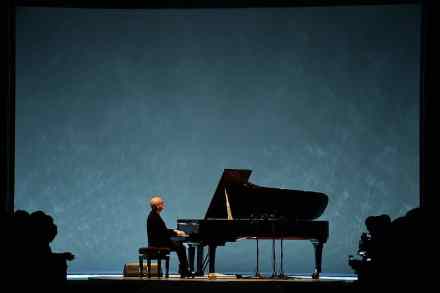
Last week I went to The Hammersmith Apollo to see Ludovico Einaudi perform his new album Underwater. I hadn’t been to a concert since before the pandemic and had forgotten the thrill of live music. Recordings can never match the sensual and social experience of live performance. When listened to collectively,  music unmasks the soul – solitary emotions are suddenly shared – and it connects us to something greater than ourselves. Music is the medium I go to for comfort when life is not quite making sense Underwater is Einaudi’s first solo piano album in two decades, becoming the fastest streamed classical music album in history. High minded critics turn their noses up, calling his music ‘elementary’.

Messenger service

When Art Blakey’s Jazz Messengers visited Japan for a two-week tour in 1961, they were among the first Western groups to tour the country. It didn’t take much for the locals to get the message. The legendary drummer’s band contained what might be his strongest lineup ever — Lee Morgan on trumpet, Wayne Shorter on tenor saxophone, Bobby Timmons on piano and Jymie Merritt on bass — and they were greeted by elated fans upon landing at Haneda Airport on New Year’s Day. “It was like a florist’s shop,” Blakey recalled. “They wanted me to make a speech but I couldn’t. I just cried.” For the band members, this maiden voyage was a deeply moving experience. Back home, they had been relegated to playing, more often than not, in smoky jazz clubs.

messengers
Jackson

Michael Jackson on Broadway

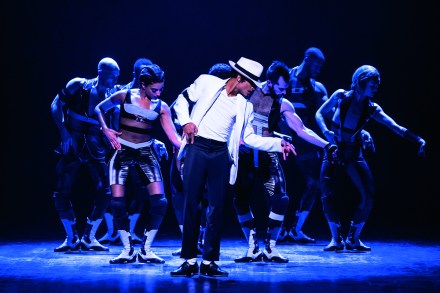
Michael Jackson has a claim to being the most famous man in history. He is certainly the most widely seen and heard. His career straddled five decades and the heydays of radio and television. His Thriller is the best-selling album of all time. He went from playing nightclubs and The Ed Sullivan Show with the Jackson 5 to solo tours that each attracted more than four million fans. For musical celebrity, there is no comparison. The Beatles? MJ owned them, literally: he bought their entire catalogue in 1985. Elvis Presley? Lisa Marie was the King of Rock and Roll’s only daughter, but it took marrying the King of Pop to make her a star.

Bono’s ‘poem’ was an insult to the craft of verse

From our UK edition

Poet', said Robert Frost, 'is a praise-word'. So it is. That explains in part the unabashed delight with which Colm Tóibín, speaking in our current Book Club podcast, talks about publishing his fine first poetry collection Vinegar Hill – decades of international acclaim as a novelist notwithstanding. Poetry is a high-status artform, perhaps the highest. Yet unlike most other artforms, very many people seem to think of it as something that anyone can do. You wouldn’t expect to be able to write a symphony, or build a suspension bridge, or win Wimbledon, without many years of apprenticeship and intimate attention to the work of those who have excelled in those things.

Enthralling and unusual – even if you don’t care about Kanye: Netflix’s Jeen-yuhs: A Kanye Trilogy reviewed

From our UK edition

The most disappointing pop performance I’ve ever seen – and in the course of my 15-odd years as a music critic I saw an awful lot – was Kanye West at Glastonbury in 2015. Perhaps he was making some kind of ironic statement on the nature of celebrity and fan expectation: blinding lights all focused on himself; no attempts to engage with the crowd; relentless, mechanical rapping but with most of the amusing samples and catchy hooks removed, the better to punish us all by ordeal with loud, righteous verbiage.

Sibelius speaks

When it comes to music in the classical era, central Europe — or, to put it is where most of the action has taken place. Haydn, Mozart, Beethoven, Schubert and Brahms are, in a sense, the Big Five, commanding the limelight, with the likes of Mendelssohn and Mahler bringing up the rear. But if geography has somehow played a key role in the development of modern classical music, then another region has been gradually nudging its way into view. Names from northern Europe such as Kalevi Aho, Leif Segerstam, Per Nørgård and Vagn Holmboe must figure prominently in any tally of leading composers who have expanded the boundaries of musical expression.Take Holmboe’s brilliantly imaginative Concerto No. 11 for trumpet and orchestra.

Sibelius
Carnegie

Carnegie plus one

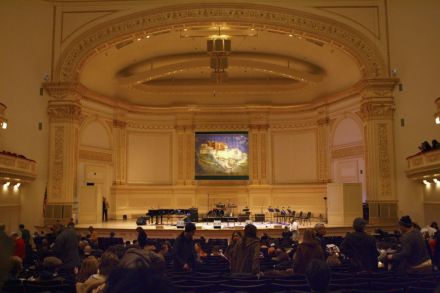
"A cable channel... but for classical music! It could be called ‘The Carnegie Hall Channel.’” I was on a beam reach to Eatons Neck about a quarter-century ago when a young man named Lawrence Perelman made this blustery pronouncement. We were Bill Buckley’s guests for an overnight sail across Long Island Sound. My first thought was: good luck with that. My second thought was no one wants to watch classical music on television. PBS’s Great Performances? More like lesser performances. With pixels the size of Cheez-Its and tin-can soundtracks, the experience was nothing like the real thing. But Perelman, an impresario who became an advisor to classical artists and institutions, as well as a friend, kept waving his baton long after we returned to Stamford.

When does ‘middle age’ end and ‘old age’ begin?

From our UK edition

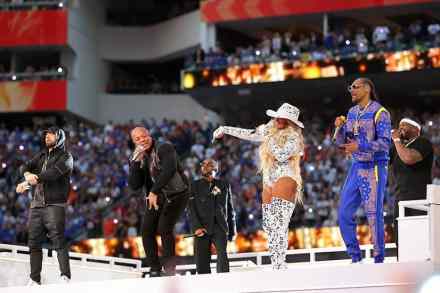
I was a bit irritated by all the millennials saying the Superbowl half-time show made them feel old. The 15-minute musical extravaganza at Sunday’s game was a tribute to the golden age of hip hop and featured Snoop Dogg, 50 Cent, Mary J. Blige, Eminem and Dr Dre. The reason it made so many people in their thirties and early forties feel a bit long in the tooth is that all artists are now candidates for the Hall of Fame. Dr Dre is 56 and Snoop Dogg turned 50 last year. Seeing their idols thickening around the waist and sprouting grey hairs was a mementomori for people who came of age around the millennium. The reason that bothered me is that I’m even more ancient than Dr Dre. Indeed, I felt old when Snoop Dogg had his first hit with ‘Deep Cover’ in 1992.

Playing until her fingers bled: the dedication of the pianist Maria Yudina

From our UK edition

The 20th century was an amazing time for Russian pianists, and the worse things got, politically and militarily, the more great pianists thrived, despite the extreme danger and discomfort in which they lived and in which some of them died. If we think immediately of Richter, the greatest of them all, and Gilels, there are at least 20 more that we could add without exaggeration. One of the most important was without question Maria Yudina, born in 1899, who astonishingly survived until 1970. She was not just a sovereign artist but an eccentric of the kind and degree that only Russia seems able and willing to supply.

Returning to live gigs

Gigs. Remember them? They were awful. You’d get to some dump of avenue, in a bad part of town (if a small capacity) or out in some apocalyptic wasteland (if an enormo-dome). You’d arrive too early and have to try and dodge some mediocre support band (who’d bought their way on to the tour) or queue for seven hours for a beer in a plastic cup. If you dared to speak while some awful act was plodding away, some goody-goody would hold a finger up to their lips, glare and shoosh you. An hour and a half later in the back of the venue, you’d stand gratefully nearer to death’s beckoning cold hand. “Ever get the feeling you’ve been cheated?” Yes. When Covid rampaged through the world like a Viking raid of death-cult realtors, the world was suddenly shorn of live music.

gigs

The moment I fell in love with music

From our UK edition

I’ve lived in Chelsea for the past 35 years. Since 2002, I’ve photographed everything I find interesting here — churches, streets, door knockers and pub signs, plus two old Chelsea pensioners chatting on a bench with their medal ribbons and rank pinned to their scarlet coats. I’ve recently finished my project and added these 1,800 photographs to the historical research I’ve done about Chelsea, which is now sitting safely on my bookshelf. My love of photography comes from my Uncle Jack. When he returned home at the war’s end, he had a Leica camera, which he got by trading his cigarette rations with an Italian civilian. He gave me his old Brownie box camera.

What musicians like me learned from the pandemic

From our UK edition

My mother died earlier this year aged 85. She left me her old pianola. These were popular in the 1920s and 1930s before people had records and hi-fis. You would put the rolls on the pianolas and they were cut by the great pianists of the day, from the popular players like Charlie Kunz, as well as the star jazz and rhythm pianists like Fats Waller or Jelly Roll Morton, and also the great concert pianists like Rubinstein. You would simply put the piano roll on and then pedal away. The old war-damaged pianola had been left to her by her mother — and I learnt in my grandmother’s front room — so the old piano has lasted for three generations. Without that pianola, all the extraordinary things in my life would never have been possible.

Our Christmas music is the envy of Americans

From our UK edition

For a working musician like me – I compose and conduct – the run-up to Christmas is one of the busiest times of the year. I generally find myself writing some last-minute carols, then come the garage-sandwich weeks: endless travel to far-flung rehearsals in freezing churches and halls in preparation for the annual round of concerts and carol services where I’ve been invited to guest-conduct and perhaps to deliver a Christmas reading. It’s exhausting but inspiring. Two years ago I was due to join the Bath Camerata choir for a recital. Looking around at the jolly gathering of grannies, vicars, bushy-bearded real ale drinkers and earnest-looking students I started to sense that I hadn't quite reached my intended destination.

Roy Hargrove doubles up

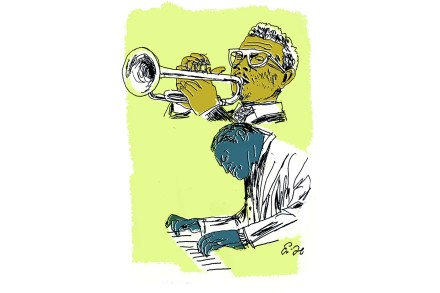
There is a long tradition in jazz of duets between trumpeters and pianists. It’s a mercilessly revealing format, one that allows for no hiding on the part of either performer. But the payoff can be big. Consider the recording of the song “Weather Bird” by Louis Armstrong and Earl Hines in December 1928. Part of the epochal Hot Five and Hot Seven sessions that announced a new era in jazz, it featured Armstrong ripping up the old New Orleans playbook. Armstrong’s remarkable rhythmic innovations sometimes seem like the musical equivalent of a running back stutter-stepping to fake out his opponent before exploding downfield. He helped ensure that the Roaring Twenties really roared.

hargrove
christmas

Sounds of Christmas past

Remember when you were so nonchalant about the inevitability of Christmas privilege? Time off work for the holiday season, a few messy coke sessions with colleagues, maybe a boozy catch up with an old friend? Going out and about, buying your bourgeois real (dead) Christmas tree? Remember how you hated all that cornball Christmas muzak piped into the department stores: Slade, Wizard, Macca’s “Wonderful Christmastime,” The Waitresses’ “Christmas Wrapping,” Nat King Cole’s “Christmas Song”? Then along came Covid and Christmas was gone. You, my friend, were in lockdown. As each post-2020 festive season rolls into town, so will the new variants of Covid. The smart set decrees that it’s best we all hole up for the holidays and hide from disease and death.

Vital Morgan

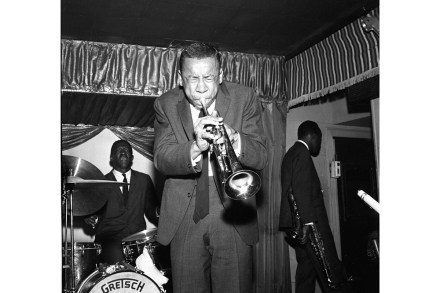
The jazz world has seen more than its share of tragic deaths, whether it was the trumpeter Clifford Brown perishing in a car crash at night on the Pennsylvania Turnpike at the age of 25 or saxophonist John Coltrane succumbing to liver cancer at 40. But perhaps there is no more confounding early demise than that of the bravura trumpeter Lee Morgan. Morgan, who played with the likes of Miles Davis, Dizzy Gillespie and Art Blakey as a teenager, was known for his swagger, which he liked to call ‘expoobidence’, (which he deployed as the title for an album for Vee-Jay records in 1960 called Expoobident). It all came to a swift terminus in February 1972 after his common-law wife Helen, a tough cookie if there ever was one, pulled out a .

morgan

Did the music industry enable R. Kelly?

From our UK edition

As Harvey Weinstein was to film, so Robert ‘R.’ Kelly has been to the music industry. An energetic and profligate figure who enjoyed enormous commercial and artistic success in his heyday, Kelly’s downfall, with his convictions on nine charges of sex trafficking and racketeering, is now total. It looks likely he will be given a life sentence for his crimes, and few, other than his most devoted admirers, will be mourning his entry into the penal system.  Yet Kelly’s fate, while richly deserved, is not the end of the story. Instead, questions have to be asked of those who were around him while he behaved egregiously behind the scenes.