Music

Burt Bacharach and the end of the age of accomplishment

From our UK edition

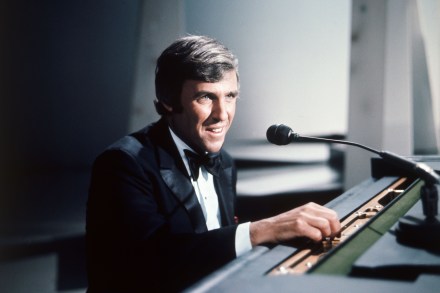
Hearing about the death of Burt Bacharach at the age of 94, I thought of one word: maestro. The word is variously defined as ‘a master, usually in an art’ (Merriam-Webster) or ‘a man who is very skilled at playing or conducting’ (Cambridge), but my favourite is the beautiful simplicity of the Longman definition: ‘Someone who can do something very well.’ The good (Brian Wilson: ‘He was a hero of mine and very influential on my work… he was a giant’), the bad (Billy Corgan: ‘A titan of beautiful and effortless song’) and the ugly (Mick Hucknall: ‘Farewell, genius’) of the music business spoke as one on this loss, with my favourite post coming from Noel Gallagher: ‘RIP Maestro. It was a pleasure to have known you.

Rihanna’s Super Bowl show was a celebration of motherhood

From our UK edition

Surprise! Rihanna is pregnant again. This was the big takeaway from the Grammy-winning singer’s Super Bowl half-time show on Sunday – her first solo live performance in seven years. The 34-year-old took a step back from her music career to focus on other projects such as her successful make-up and lingerie line Fenty, before giving birth to her first child in May 2022. Rihanna’s return to the spotlight was not met without criticism in America. Some Republicans condemned the NFL’s choice to have Rihanna perform due to her aggressively left-wing political views. Others took issue with the performance itself, pointing out that some of her lyrics and dance moves were quite raunchy.

How narcissism ate itself at the Grammys

From our UK edition

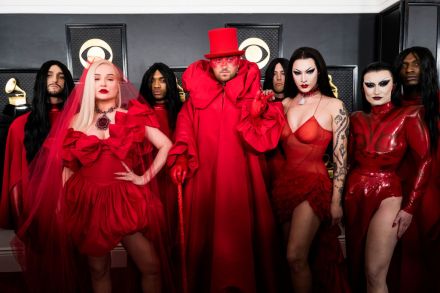
A transgender woman and a non-binary person dressed as Satan walk into a bar. That’s not the beginning of a bad joke, but the defining performance of the 65th Grammy awards, held in Los Angeles on Sunday.  You may have seen the clips. The singer Sam Smith wore what appeared to be a terrible Halloween costume: red high heels and a red hat with devil horns. He clomped around the stage performing 'Unholy' with Kim Petras, who was in a cage surrounded by flames and whip-wielding dominatrices.

Madonna and the curious business of biopics

From our UK edition

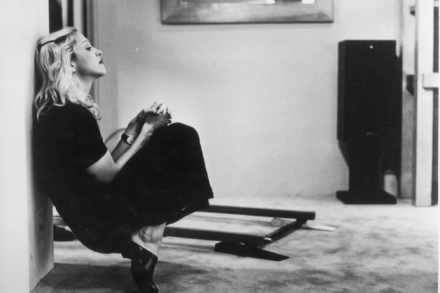
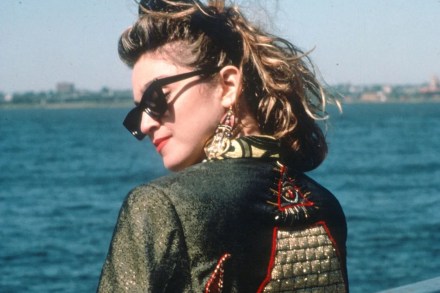
Reading that Madonna has decided to cancel the film about her life that she has been working on for the past two years, I felt a pang of sorrow. The biopic sounded like the biggest vanity project ever attempted – and thus promised to be an excellent ‘mock-watch’, as I’ve named the cinematic equivalent of the ‘hate-read’. In the specific case of biopics (always an easy thing to get wrong when one person imitates another, often with hilarious results), perhaps ‘sham-shaming’ is even better. Madonna was reported to be directing, producing and co-writing the film with the Oscar-winning screenwriter Diablo Cody, who has since moved on to the live-action Powerpuff Girls, obviously keen to get to grips with some real women of substance.

Sam Smith and the embarrassing terribleness of LGBTQIA+ culture

From our UK edition

Pop music – and specifically pop music stardom – has an incredible power to transform people into things they are not. The pop sphere enjoyed by my generation as teens transmogrified Morrissey into a sex symbol, Neil Tennant into an intellectual and Simon Le Bon into a surrealist poet.  More recently, pop’s alchemical potency has made Ed Sheeran someone people like to look at and Adele someone people want to hear from describing her emotional upsets at great length. But there are limits, and the singer Sam Smith has done us a favour by smashing into them.

Playing God with Paramore

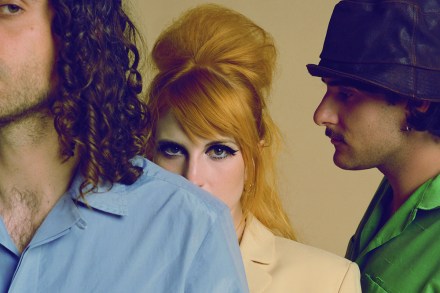
From the moment Hayley Williams founded Paramore with three Christian boys in Nashville, she was consumed by Biblical levels of conflict. Williams signed as a solo artist with Atlantic on the heels of Avril Lavigne’s “Complicated.” Her male bandmates performed and recorded without a contract. To counteract the narrative that a major label had engineered Williams, Atlantic released Paramore’s 2005 debut album, All We Know Is Falling, through the “sub-label” Fueled by Ramen. Critics caught onto the ruse, with Gigwise writing, “The band are an A&R man’s fantasy.” But Williams connected with angsty teens partially because the critics seemed to be bullying her. The bullying continued when Paramore changed their lineup and released the 2007 sophomore album Riot!

paramore

Bare and spectral: Bob Dylan’s Fragments – Time Out Of Mind Sessions reviewed

From our UK edition

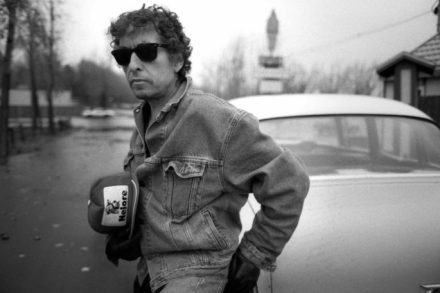
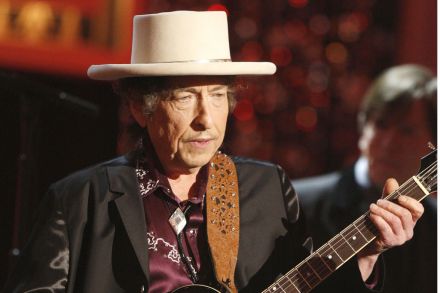
To understand Bob Dylan’s Fragments – Time Out Of Mind Sessions (1996-1997) – due to be released on Friday – you have to go back half a century to the release of the Beatles’s Let It Be. As millions of fans around the world bought the band’s final album, Paul McCartney was horrified. This was not the disc he had conceived: some of the most cherished songs in his oeuvre had been hijacked by superstar producer Phil Spector, who stamped his trademark ‘Wall of Sound’ during the album’s post-production process, filling it with lavish embellishments. Fast-forward to the mid-1990s and another legendary songwriter was at loggerheads with a different superstar producer, then still a dominant force in the era of mega-selling records.

Legend of the Fall: Mark E. Smith and me

From our UK edition

He was one of the most unlikely pop stars this country has ever produced: extraordinarily badly dressed and famously contrarian, with a voice that sounded more like an angry man shouting than anything recognisable as singing. But Mark E. Smith, front man of the Fall, became one of the most recognisable and eventually revered figures on the music scene. And five years on from his death at 60, his stock is higher than ever – his influence heard in the sound of newer bands such as Sleaford Mods and Idles, his name regularly evoked on the likes of BBC Radio 6 Music, and a giant tribute mural an unlikely tourist attraction in his hometown of Prestwich.

In defence of Spotify

From our UK edition

‘Pitiful.’ That’s the verdict of Damian Green MP, acting chair of the digital, culture, media and sport committee, on the payouts that streaming companies such as Spotify and Apple Music provide to musicians. An update to the group’s Economics of Music Streaming report, published on Friday, calls on the government to take a ‘proactive strategic role’ to make sure Britain’s music industry – one of the few that truly is world-beating – gets the cash it deserves. With streaming now accounting for 84 per cent of UK recorded music revenues, its businesses model really matters.

The secrets of London by postcode: NW (North West)

From our UK edition

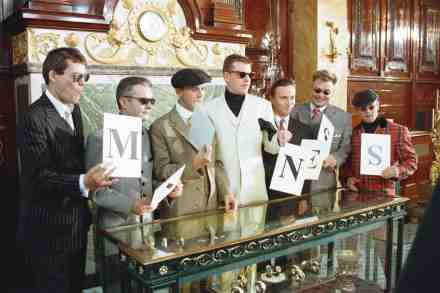
This month our trivia-inspired tour of London’s postcode areas reaches NW, where Tim Burton snored, Madness caused an earthquake and Desmond Tutu asked policemen for directions even though he knew where he was going… The Renaissance hotel at St Pancras station had the first revolving door in Britain. It was installed at the Midland Grand (as the hotel was then called) in 1899, by the device’s inventor Theophilus Van Kannel. (The door itself – or rather a modern replacement – is still in the same spot, at the entrance nearest the road, rather than the main one set further back.) Another innovation was the Ladies’ Smoking Room, the first in Europe where women could light up.

What’s the latest on the Madonna biopic?

"I’ve had an extraordinary life, I must make an extraordinary film," Madonna told Variety in July, as she described her decision to helm her own biopic as a "preemptive strike" against the men who wanted to tell her story. That was last summer, when there were reports of a months-long "Madonna bootcamp" led by casting director Carmen Cuba, which included eleven-hour choreography sessions, where everyone from Florence Pugh, Alexa Demie, Bebe Rexha, Odessa Young and Sky Ferreira auditioned to play the "Material Girl." Madonna said she wanted the role to go to someone who could "convey the incredible journey that life has taken me on as an artist, a musician, a dancer...the focus of this film will always be music.

The Whitney Houston biopic is a big, gay masterpiece

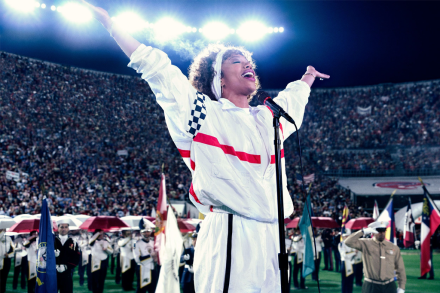
Half an hour or so into the new Whitney Houston biopic, I Wanna Dance with Somebody, two bros sitting next to me asked, “Why is gay Whitney in Black Panther?” They were in the wrong movie, but based on the other audience members screaming at the screen, the lone straight men weren’t alone in finding director Kasi Lemmons’s new film shocking. Sony promoted I Wanna Dance with Somebody as the feel-good biopic of the year. The trailer starts with the hook of the titular song and goes on to show Houston (Naomi Ackie) dancing to “How Will I Know” and singing her iconic rendition of the “Star-Spangled Banner” at the Super Bowl. Houston rarely speaks, but when she does, she talks about music: “My dream,” she purrs, “sing how I want to sing.

whitney houston

Bob Dylan’s tower of song

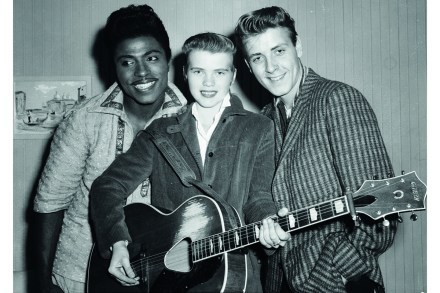
“He doesn’t write on drugs, he doesn’t write on liquor, he writes on everyday occurrences.” — Beatty Zimmerman, Bob Dylan’s mother, 1999. After you admire the cover of Bob Dylan’s The Philosophy of Modern Song, and its triptych portrait of Little Richard, Alis Lesley and Eddie Cochran in their prime, open it to the title page. There, in pulp-fiction red, is a little crimson lightning bolt. On the next page, there is a photograph of the twenty-two-year-old Elvis Presley — the man who popularized the lightning bolt, with his logo “TCB” or “Taking Care of Business in a Flash” — in a Memphis record store, looking through just-released bounty like “Here’s Little Richard” and “A Tribute To James Dean.

Dylan

Bob Dylan’s curious book signing controversy

The times, they are a-changing. For the past six decades, Bob Dylan has been one of the most enigmatic artists in American music, whose every public utterance has been pored over by his admirers and detractors alike. But one thing that Dylan has never been is a man who threw it all away: reputationally speaking, at any rate. Yet things at last have changed. In a simple twist of fate that Dylan surely never could have predicted, he has become embroiled in — of all things — a controversy over signed books. Dylan's most recent publication, The Philosophy of Modern Song, was released in a deluxe limited edition, retailing at $599 apiece.

David Bowie is bigger than ever

On Sunday, November 10, 1991, the band Tin Machine played a gig at Brixton Academy in south London. Brixton then was far from the gentrified area it has become; it remained a hotbed of simmering social and racial unrest. The notorious riots of a decade before were still a recent memory, and those who ventured to the Academy did so in the knowledge that fights and aggravation were highly likely, especially after alcohol had been consumed. But if on-street scuffles were a price that gig-goers had to pay to see their musical idols, the world of Tin Machine was a much less happy one. At the beginning of the Nineties, David Bowie had to consider, for the first time since the success of the single “Space Oddity” in 1969, that he might be a spent force.

bowie

Why David Bowie was the model of a Renaissance Englishman

From our UK edition

It’s hard to imagine how baffled the British public must have been by the arrival of David Bowie on to TV screens in the early 1970s. With his saffron hair, make-up and androgynous clothes, superficially he looked like a rejection of everything his post-war south London childhood had taught him. One of the most pivotal scenes in Moonage Daydream, the recent film about his life, is his 1973 interview with chat show host Russell Harty. Throughout this awkward cross-examination, Harty searches for a label he can stick on Bowie for the benefit of discomfited viewers. ‘Are those men’s shoes? Or women’s shoes? Or bisexual shoes?’ Harty inquires, looking down at Bowie’s strappy red and gold platform sandals. ‘They’re shoe-shoes, silly!

Nick Cave’s musings on life, death and creativity

The musician, novelist and occasional ceramicist Nick Cave is the most literate of that often-decried breed, the rock star. Over the course of a forty-year career that began with the raucous punk act the Birthday Party and continues to this day with the Bad Seeds, in addition to eclectic solo and film-scoring work, he is restlessly innovative. Not only has he written countless lyrics that approach Dylan or Cohen-esque levels of profundity, but he has written film screenplays, novels and even a loose collection of musings about life on tour, The Sick Bag Song. Yet he shows no interest in writing the autobiography that many might have expected from him.

cave

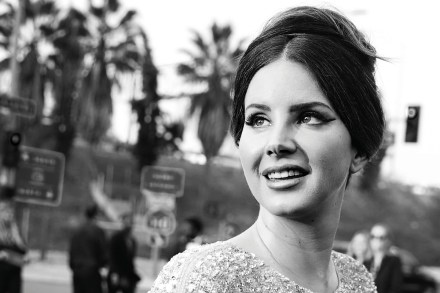
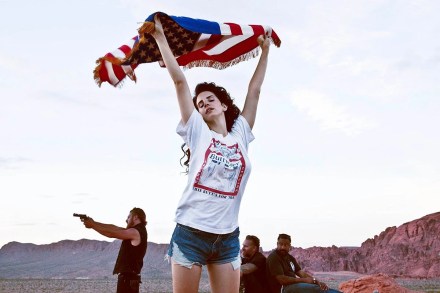
What’s on Lana Del Rey’s stolen laptop?

What do Lana Del Rey and Hunter Biden have in common? More than you might think, apparently. Cockburn must admit that he felt a little sorry for the singer after she announced that she was facing a “bit of a roadblock” with her work... after her laptop was stolen. The singer posted to her private Instagram that “a few months ago, I parked my car on Melrose Place and I stepped away for a minute. And the one time I left my backpack inside my car, someone broke all of the windows and took it and inside of it was my computer and my three camcorders and my hard drives.” So, what’s in the bag? Del Rey revealed that she lost her in-progress album after admitting that she did not have any of her work backed up to the cloud and had wiped her computer.

lana del rey

Artistic achievements that changed the world

From our UK edition

‘Astonish me!’ was the celebrated demand that the impresario Sergei Diaghilev made of Jean Cocteau when he was devising Erik Satie’s ballet Parade. Dominic Dromgoole has taken it as the title for a collection of essays on a series of seismic first nights, ranging across different public art forms. It is a celebration of the artistic achievements that overcame the odds to change the story of culture, and whose effects rippled out to change the world. The author is a distinguished theatre director, and his focus is on performance. He is at pains to reject the notion of the solitary artist and argues that, from the dawn of history, the finest art has been communal.

A visit to Louis Armstrong’s old home

The New York Times recently started a new series about introducing a friend to jazz in five minutes with a tribute to Duke Ellington. In many ways, Ellington is a sound choice. He was the bandleader par excellence, a brilliantly inventive composer who formed much of the modern jazz vocabulary. But matters can’t rest there. In any assessment of jazz’s founding fathers, Louis Armstrong has to stand as the most influential figure. Both his trumpet and voice are simply inimitable. A recent visit to his modest home, which is now a museum, during a trip to New York with my family offered a reminder of the magnetic attraction Armstrong continues to exert.

armstrong