Misogyny

Why we must forgive Immanuel Kant his misogyny and racism

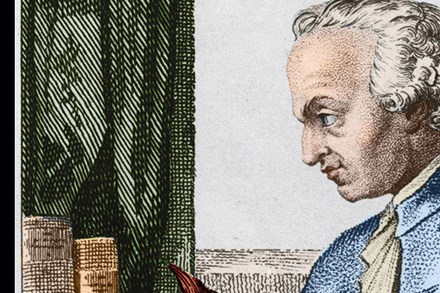
If the only story you’ve heard about Immanuel Kant’s life is that it was so regular that the citizens of Königsberg (now Kaliningrad) would set their watch by his daily walk, then this book has much to teach you. In fact the provenance of this oft repeated anecdote is an essay by the German poet Heinrich Heine, who, far from being an eyewitness, had never even met Kant: ‘Everything had its set time, and the neighbours knew that it was exactly half past three when Immanuel Kant, in his grey frock coat, rattan cane in hand, emerged from his front door.’ The Kant that emerges from these pages is less dull and more recognisably human than his metronomic image. He played billiards, gambled and socialised with the great and good of Königsberg.
When women exit stage right

From our US edition

At the event Melania Trump hosted for Women’s History Month, the ladies in the audience had perfect blowouts and wore pastel dresses. But the speakers who took the stage were tough. They included an Olympic athlete, a single mother who worked as a waitress and Melania herself. Most of the women honored were notorious for being abrasive: among them Pam Bondi and Karoline Leavitt. The women in the crowd didn’t clap politely but cheered and hollered, as if the East Room chairs were bleachers at a football game. Rumor on the street is Leavitt, who is pregnant, will only receive three weeks of maternity leave from her role as White House press secretary.

Women have never had it so good as now

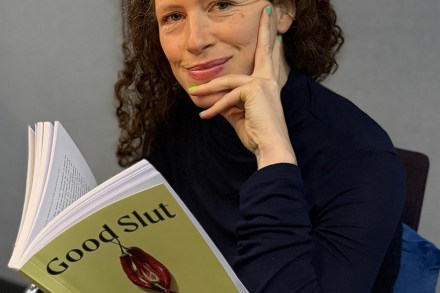
Unfortunately, Zoe Strimpel has a great point in Good Slut. Why unfortunately? Because as much as I sympathise with her basic argument, I cannot see many people being persuaded by this scattershot polemic with its myriad errors and alarming glibness. Team slut deserves a better advocate. Whether I want to count myself as one of team slut is a sensitive point. I’m 44: it feels embarrassing. I had my ‘reclaiming sexist slurs’ phase in the late 1990s when I was an aspiring Riot Grrrl and I realised pretty soon that wearing fishnets and calling myself names was not having the disruptive effect on misogyny that I’d hoped for. Strimpel is 43 and, like me, she’s noted the recent turn to conservatism in sexual politics with some alarm.

Philosophy’s greatest pessimist wasn’t so miserable after all

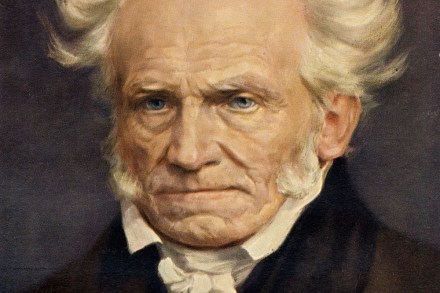
According to the German philosopher Arthur Schopenhauer (1788-1860), people prefer reading books about great thinkers rather than by the thinkers themselves because ‘like is attracted to like and the shallow, tasteless gossip of a contemporary pinhead is more agreeable and convenient to them than the thoughts of great minds’. Thankfully, this contemptuous attitude towards biographers has not deterred David Bather Woods, a professor at Warwick University, from taking a fresh look at one of the most influential yet misunderstood figures in western philosophy. Woods’s prose is clear and compelling, though the book’s thematic structure is confusing. He argues that the defining event in Schopenhauer’s life was the suspected suicide of his father, Heinrich Floris.

Sydney Sweeney, Gwyneth Paltrow and the misogynists

From our US edition

Dear God, please help me. The winged monkeys of incel outrage have mobilized in their millions. Basement warriors have exerted more sputum and energy than the average American would find imaginable. And all because of a 27-year-old actress, best known for starring in a romcom with Glen Powell, who, when I last checked, was spared such opprobrium. But we are in a different age, and if you are a woman, you’re fair game. In the Fifties, there might have been an outraged headline. “Pretty young blonde woman wears denim jeans to promote a product!” But in 2025, Sydney Sweeney is less a thespian and more a product in her own right. In the great carnival of modern celebrity, where every gesture is dissected and every utterance weaponized, she’s a moving target. For the uninitiated, Ms.

Sydney Sweeney

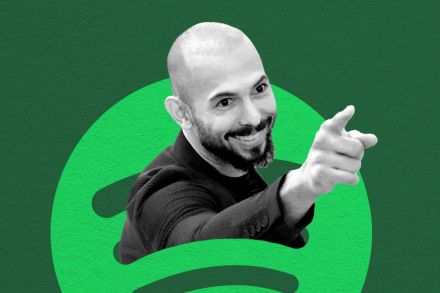
Andrew Tate has no place on Spotify

With more than 250 million subscribers, Spotify is by far the biggest audio streaming platform in the world – and for countless families like mine, it’s the first port of call for music, audiobooks and podcasts for children as well as adults.  In common with many apps, it has a children’s version which blocks inappropriate content for younger audiences. But in common with many parents of secondary school-aged kids, I was persuaded to remove this feature so my 11-year-old son could listen to songs by some of his favourite artists, from Oasis to Harry Styles. I had no idea that this would open him up to exposure to a step-by-step guide on trafficking women.

They weren’t all scheming poisoners: the maligned women of imperial Rome

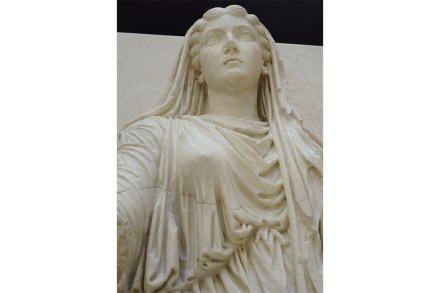
Unfortunately, She Was a Nymphomaniac must be one of the most eye-catching book titles of the year. I assumed it was just a riff on John Ford’s 17th-century tragedy ’Tis Pity She’s a Whore, but apparently it came directly from the mouth of a modern tour guide in a museum in Rome. The man was describing Julia, the daughter of the first Roman emperor Augustus, when Joan Smith stepped in. ‘Julia,’ she corrected him, ‘was not a nymphomaniac.’ The rattled guide, who conceded that he was merely following the (biased) ancient sources, may be relieved to learn that he has not been singled out. Smith, the author of the barnstorming Misogynies, takes many others to task for insensitivity in her new history of 23 women of the Julio-Claudian dynasty.

The stark, frugal world of Piet Mondrian

In September 1940 the Dutch abstract artist Piet Mondrian arrived in New York, a refugee from war and the London Blitz. He was 68, a well known figure in modern art circles in Europe but as yet little appreciated on the other side of the Atlantic. His visas, his travel and his accommodation had been sorted out for him by well-wishers in Britain and he was welcomed in America by Harry Holtzman, an artist some 40 years his junior. On the evening of his arrival, Holtzman entertained the stiff, fastidious, well-dressed Mondrian to dinner in his apartment and introduced him, via the phonograph, to boogie-woogie. He recalled: Mondrian’s response was immediate, he clapped his hands together with obvious pleasure. He sat in complete absorption to the music, saying, ‘Enormous! Enormous!

Mysteries and misogyny: The Empusium, by Olga Tokarczuk, reviewed

Nothing is ever quite as it seems in the world of Olga Tokarczuk. Her latest novel starts with an epigraph taken from Fernando Pessoa: ‘The visible world goes on as usual in the broad daylight. Otherness watches us from the shadows.’ Wild deer were murder suspects in her surreal and beautiful 2018 novel Drive Your Plow Over the Bones of the Dead. This time nature itself plays a significant role. A daily glass or three of schwarmerei restores good cheer, sometimes generating hallucinogenic euphoria Though the novel describes itself as ‘a horror story’, it’s more a salutation to the power of the natural world and a celebration of difference.

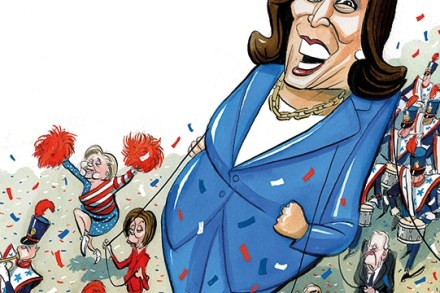
All hail Harris! Can Kamala bluff her way to the top?

36 min listen

This week: All hail Harris! As the Democratic National Convention approaches its climax, The Spectator’s deputy editor Freddy Gray explores vice president Kamala Harris’s remarkable rise to the top of the democratic ticket in his cover article this week. Freddy joins the podcast from Chicago (1:30).Next: live from the DNC. Freddy and Natasha Feroze, The Spectator’s deputy broadcast editor, have been out and about at the convention talking to delegates – and detractors – of the Democratic Party. What do these Americans think? And does Kamala Harris have ‘good vibes’? (7:56). Then: should misogyny really be classified under anti-terrorism laws?

Can you spot an ‘extreme misogynist’?

Can you tell the difference between an extreme misogynist and a moderate misogynist? Hating women has always seemed, to me anyway, a rather extreme position on its own. The label ‘extreme misogynist’ is surely repetitive. A moderate misogynist is an oxymoron. But then the Home Office announced this week that ‘extreme misogyny’ could be added to the list of ideologies the government monitors to tackle terrorism. I’ve been racking my brain, trying to figure out how the police would tell the extremists from the moderates. Does the extreme misogynist hold women in contempt all week long, while the moderate reserves his disdain for weekends? Does a mild misogynist simply begrudge us having the right to vote, rather than campaign to take it away?

Her weird name was the least of Moon Unit Zappa’s problems

On Frank Zappa’s first date with Gail Sloatman, he blew his nose on her skirt. As acts of territory-marking go, it’s hard to imagine something more equivocal. But Gail, a 20-year-old secretary at Los Angeles’s Whisky a Go Go club, must have read it as love. She built her life around the musician, composer and ‘rock’s most committed iconoclast’, as his New York Times obituary described him, for 27 years, until his death from prostate cancer in 1993, aged 52. A year after that first, snot-filled seduction, the Zappas were married, a week before Gail gave birth to Moon Unit, the first of four children. Moon’s name is not a compound noun: Unit is her middle name, given to reflect how her arrival turned two people into a single family – Frank’s idea.

The data-spew about Bob Dylan never ends

When it comes to Bob Dylan, Clinton Heylin is The Man Who Knows Too Much. Since publishing his first biography, 1991’s Behind the Shades, he has become the world’s most committed Dylanologist, doggedly untwining the facts from the artist’s self-serving fictions. When he describes Dylan’s wildly unreliable 2004 memoir Chronicles: Volume One as ‘all a put-on... all a lie’, he has the receipts. As he never tires of pointing out, scholars and diehards are in his debt, but amassing data from sessions, setlists and now 130 boxes of Dylan’s formerly private papers is not the same as telling a good story. For someone innocently hoping to understand one of the cultural giants of the last century, the reading experience might resemble drinking from a firehose.

In defense of catcalling

From our US edition

Nothing says "it’s going to be a fine day" like a catcall. A short line at the coffee shop, great. No pushing and shoving to get on the subway, wonderful. But hearing that whistle when walking past a group of builders up on the scaffolding really makes me smile like nothing else in my morning routine. If I’m lucky, I even get a “looking good, darling.” It’s an act that me and my nameless builder friend have perfected. I blush, he gives me a cheeky smile, we both get on with our day. Yet in London, this morning staple of mine is about to be made punishable by up to two years in prison. Bye bye, builder friend. Late last year, the British government launched their war on ogling.

downtown philadelphia

Prince Harry and Andrew Tate are two sides of the same coin

From our US edition

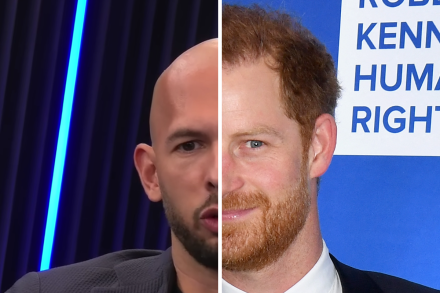
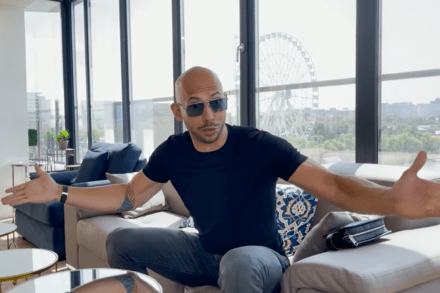
On the face of things, there is little in common between Prince Harry and Andrew Tate. Yet look closer and you see two sides of the same coin: a narcissistic version of modern masculinity that warps what's actually important about manhood for the demands of an addicted audience. Tate is a juvenile accused sex trafficker, who believes his right as an HGH-fueled muscle man entitles him to a Conan the Barbarian Romanian fantasy of Bugattis, baby oil and bitches. Harry is a pussy-whipped blue blood who wields his grief gestalt as a weapon against all comers — be they media or monarchy. Tate's narcissism is more aggressive.

andrew tate prince harry

A history of pioneering women doctors descends into Mills & Boon trivia

The first three women doctors on the medical register in the UK had not only to study harder than their male counterparts but also to contort themselves in almost impossible ways, jumping from city to city and country to country in order to gain the scientific knowledge and clinical skills that would allow them to progress. In fact, even after reaching standards where men could easily have graduated, they had to plead to be allowed to sit the exams. Of course, misogyny was not the only bigotry in the 19th century. To black slave-workers, these wealthy white women, who were encouraged to lead pampered lives rather than work in such a ‘male’ field, were lucky.

My day as a real man

From our US edition

Today, I woke up and felt hungry. In the past I would have eaten breakfast. Cereal perhaps. Some toast. A boiled egg. Not today. What am I? A pussy? My stomach rumbles and I have to feed it right away like I’m some sort of woman? “Breakfast is the most important meal of the day.” Oh, yeah? Says who? I’ll be the judge of that. Besides, I’m not going to make my own sandwiches. I’ve been watching a lot of videos on YouTube. I’ve been watching a lot of videos featuring Andrew Tate. Andrew Tate is a British-American kickboxer (odd mid-Atlantic accent included) who made a lot of money managing a Romanian studio for camgirls and now teaches people how to be real men.

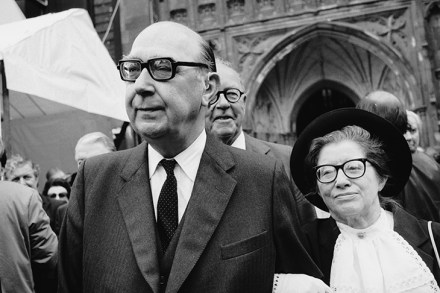
The unfortunate misogyny of Philip Larkin

From our US edition

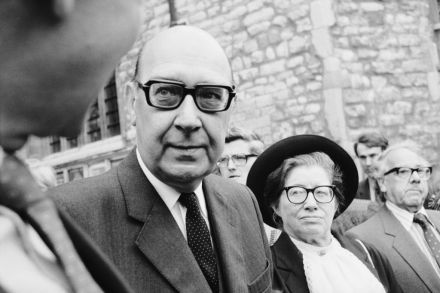
Philip Larkin — whose centenary was this week — was a misogynist. A “casual, habitual racist and an easy misogynist,” according to the literary critic Lisa Jardine. Alan Bennet, Britain’s favorite playwright and supposedly a friend of Larkin’s, even described the poet as looking “like a rapist.” Not content with one insult, he even compared him to the necrophiliac serial killer John Christie. Tough review, that one. The sheer number of reviews, essays, and articles which decry Larkin’s character and attitudes — “a porn-addled, two-timing, racist misogynist” reads the headline for one — seem to suggest this is a settled judgment. And, indeed, the evidence is all but damning.

philip larkin

Startlingly sadistic: Once Upon a Time in Hollywood, by Quentin Tarantino, reviewed

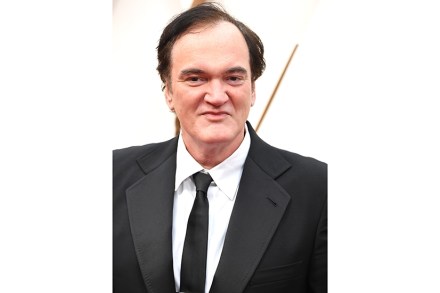
There’s no doubt that Quentin Tarantino is a movie director of brilliance, if not genius. But can he write? Well he can certainly tell a good story. What we have here is Tarantino’s ninth feature film, a 1960s Hollywood yarn about a fictional actor and his stunt double, but rendered in book form. Rick Dalton is the TV and B-movie actor, while his stuntman, Cliff Booth, ruined his own career by beating up Bruce Lee during a shoot. He’s now reduced to being Rick’s driver and drinking buddy. The two of them are on the slide, but things start to look up when Rick lands a role in a new cowboy TV drama.

Two of a kind: Monica Jones proved Philip Larkin’s equal for racism and misogyny

By the time Philip Larkin died in 1985, he’d long since achieved national treasure status: his poems were critically admired as well as widely read; his reticence (‘the Hermit of Hull’) was a matter of affectionate respect; and his cantankerous published remarks about ‘difficulties with girls’, children, left-wing politics, and ‘abroad’ were generally embraced as proof of valiant individualism — or possibly a grouchy kind of joke.