Milton

Reading between the lines: the power of the unsaid

This is the kind of book I wish I had the chance to sit down and discuss with the author. It is accessible without sacrificing academic rigour, astute and ingenious in its close readings and balances breadth with depth admirably. But why on earth does it have a singular title, given that the whole thrust of the argument depends on silence being a multifarious phenomenon? The reader encounters the enigma of silence as rapture, failure, slyness, avoidance, challenge. Silence is both built into literature and a kind of enwrapping, enclosing ocean, out of which words will emerge and back into which they will sink, rather like the primordial chaos at the beginning of Genesis. Speaking or writing about silence is inherently paradoxical. Many years ago I interviewed A.S.
Orlando Reade: The Revolutionary Life of Paradise Lost

36 min listen

My guest in this week’s Book Club podcast is Orlando Reade, whose book What in Me Is Dark: The Revolutionary Life of Paradise Lost describes the life and afterlife of one of the greatest poems in the language. Orlando tells me how Milton’s epic has been read with – and against – the grain over the centuries; how it went from being a totem of English exceptionalism to being an encouragement to postcolonial revolutionaries and political thinkers from Malcolm X to C. L. R. James; how the modernists wrestled with Milton… and how Jordan Peterson gets it wrong.

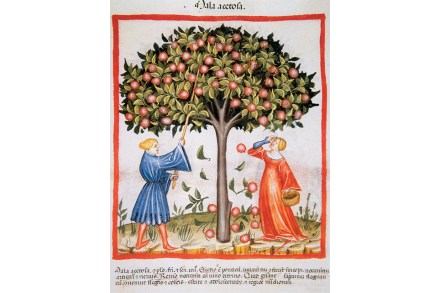
The juicy history of the apple

In Food for Life, Tim Spector’s book on the science of eating, the author gives the chemical makeup of a mystery food, listing more than 30 scary-sounding E numbers, sugars, acids and chemicals, before revealing that it is an… apple. Sally Coulthard’s book shows that it’s the apple’s complexity as well as its familiarity, that makes it the ideal punchline for Spector, and, for Coulthard, a perfect vehicle to carry the history of how we grow, trade, cook and eat together and take responsibility for each other and the environment (or not).

The important business of idle loafing

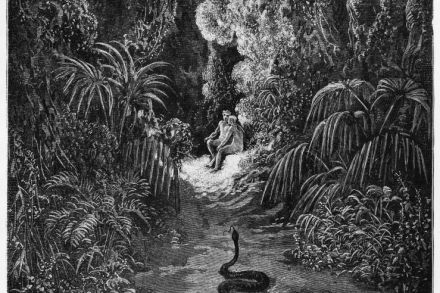
In our godless, post-industrial, hyper-competitive world, rest is seen merely as recuperation: it’s when we man-machines ‘recharge our batteries’, as the cliché goes, before dashing back to the factory or work-station. It’s a negative concept. You rest for a reason, which is to avoid burnout. All you should really do to be happy is read light novels or self-help books, advises Montaigne But as this charming and subtle meditation on the subject from a grand French historian shows, rest used to be far more than just taking time off. It is a religious concept. Take the rest enjoyed by Adam and Eve in Milton’s Paradise Lost.

‘Jerusalem’ is a rousing anthem – but who knows what the words mean?

The spontaneous mass adoption of deep feeling is always interesting. Jason Whittaker has a very good subject, in the journey of the cryptic lyric section of the preface to William Blake’s incomprehensible epic Milton, written and illustrated between 1804 and 1810, to its becoming the de facto national anthem of England. ‘And did those feet...’ only took on its familiar title ‘Jerusalem’ (which has nothing to do with Blake’s poem entitled ‘Jerusalem’) after it was set to music by Hubert Parry on 10 March 1916. The following day, Parry handed over his composition to his colleague Walford Davies, saying insouciantly: ‘Here’s a tune for you, old chap. Do what you like with it.