Memoir

The tiny island in the wild North Atlantic that ‘feels like the safest place in the world’

From our UK edition

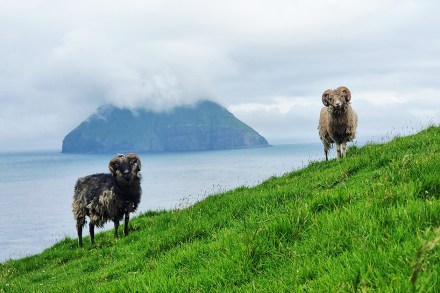
Tim Ecott has always been drawn to islands, and the seas that surround them: ‘I once ran away from England to live in the Seychelles so that I could scuba dive obsessively in the Indian Ocean,’ he writes at the beginning of Eva and the Island. ‘The tropical humidity and seductive blue water drew me into its spell.’ Gradually his love for what he calls ‘the torrid zone’ faded, and he found himself attracted to ‘the higher latitudes’. He decided to spend time on all the inhabited islands in the Faroes, including the smallest, Stora Dimun, ‘a frayed and crumbling chunk of basalt’ covering ‘just over one square mile’, which has ‘the qualities of a secret kingdom’. What better way to spend an evening in good company than eating sheep’s heads and singing?

The intrepid volunteers who risk all to preserve Ukraine’s cultural heritage

‘The nonsense was over at last,’ wrote the Lithuanian-Polish poet Czeslaw Milosz in 1939, as a period of uncertainty gave way to the horrors of the second world war. Charlotte Higgins quotes these words at the beginning of Ukrainian Lessons, describing the outbreak of full-scale war in Ukraine after eight years of ‘local’ warfare in the Donbas and the annexation of Crimea. From the first pages of this profound study of the impact of war on culture, replete with life stories, the author places the Russo-Ukrainian conflict within the context of global cultural history and geopolitics. References to Rwanda in 1994 and the bloody events in Londonderry in 1972 are in no way out of place.

Looking for Katrin: Rory MacLean goes in search of his dead wife

From our UK edition

One September, Rory MacLean’s wife, Katrin, was diagnosed with terminal cancer. Seven months later she was dead. The couple had been married for 32 years. In the wake of his wife’s death, MacLean decided to write a book about the afterlife. He had already written books about Russia and Myanmar, Berlin and Crete, but it was not clear where this journey should begin. ‘Unfortunately, few who entered heaven alive returned with a guidebook.’ Over the next five years, he travelled the globe, learning how different faiths understood the afterlife and exploring various sacred sites and religious rites. At the same time he read a wide range of mystical writers and collected insights into death from science, philosophy and the history of religion.

Revelling in the music of words

There’s a chapter in this mostly illuminating and occasionally irritating book in which the author – the award-winning writer of The Hours and other acclaimed novels – explains why he no longer reads reviews of his work. The decision was prompted first by an ‘excoriating’ hatchet job by Michiko Kakutani, erstwhile lead literary critic of the New York Times. ‘A worse review is difficult to imagine,’ Cunningham notes, claiming that he has ‘mostly repressed the memory’ of its contents, though he does share his rather macabre plan for revenge: to slip a copy of the book into her coffin so that ‘extra-terrestrial archaeologists’ will assume she wanted to be buried with it.

When Mum went marching with the EDL

From our UK edition

Nicola Wilding is a documentary film producer, whose family was originally rural working class. Aged 60, her mother, Sandra, prompted by the hacking to death of the soldier Lee Rigby, unexpectedly joined the English Defence League (EDL) and went on marches headed by Tommy Robinson. During a series of disappointing liaisons with men, including two marriages, she had brought up four children, lived in two different countries, moved often within the UK, got into debt, worked in several low-paid jobs, including one at an Omagh army camp pub, and, despite early heart trouble, ended up as a dedicated employee in care homes throughout Covid. She told her daughter she’d got tired of ‘the bloody lefty media’ which only told one side of a story.

How does the Catholic J.D. Vance justify Trumpian policies?

‘Read Hillbilly Elegy,’ a friend messaged me a decade ago. ‘The author really gets it.’ So I did, and indeed he did. The young and then obscure J.D. Vance showed, through his family travails in Appalachia, how both Republicans and Democrats had in their different ways screwed blue collar, just-about-working-class families like his. The book went platinum and launched his public career. Three things saved the young Vance from the fate that awaited people like him: a fiercely defensive and religious grandmother (‘Mamaw’), enlisting in the US Marines, and evangelical Christianity. He fell away from this last, however, as he discovered that his fundamentalist faith may have had community love in spades but was very short on good answers to big questions.

Southern Gothic: the horror story of Alex Murdaugh, paterfamilias and ‘family annihilator’

The central figure of The Family Man, the lawyer Alex Murdaugh (pronounced ‘Murdock’), spends his life getting implicated in so many heinous, melodramatic crimes that he seems cobbled together by a cabal of tabloid and commercial publishers, crime podcasters and providers of big budget cinematic sleaze. Memorably referred to by psychopathologists and public prosecutors as a ‘family annihilator’ (imagine a little bit of Medea, a little bit of the Menendez brothers and a whole lot of Oedipus Rex), he was arrested in 2021 for slaughtering his wife Maggie and their youngest son Paul with the same sort of high-tech military weaponry that he enjoyed wielding around his family compound to hunt hogs, and which visitors often found lying randomly about his home and gardens.

Small, skewed pictures that cast a spell: the art of Mollie Douthit

From our UK edition

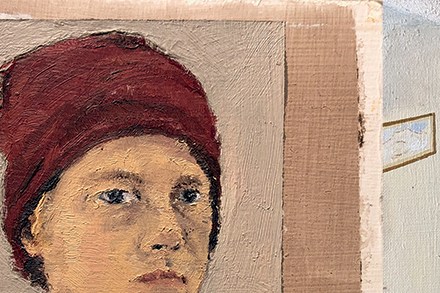
In this clever, moving mosaic of a book, Sara Baume tells us she originally wanted to be an art critic and that she wrote exhibition catalogue copy. It has served her well, as Opening Night is an evolved form of that genre – including 39 excellently reproduced images of paintings by the subject, and one extra – but it is also a form of memoir. By that I do not mean ‘life writing’ or ‘autofiction’, as it is a work of remembering and memorialising, even if that involves recording the gaps and lapses. The lacunae operate like an undercoat: the occluded thing that changes how you see. Just before the pandemic, Baume states in the opening sentence: ‘I met Mollie’s paintings before I met Mollie.

Do single women bother to cook for themselves?

From our UK edition

‘Let us begin with cookbooks. Or, rather, with a rejection of them. I cannot look at mine. They remind me of a person I no longer want to be.’ This is a bold start for a book whose title contains the word ‘cookbook’; but then much of The Spinster Cookbook is a subversion of the domestic and the expected. It is, for starters, not a cookbook (though it does contain a few recipes) but sits in several different realms: it is Eli Davies’s personal narrative, edging into memoir; it is a review of spinster literature from the interwar period onwards, taking in everything from Lolly Willowes to Sex and the City; it is a meditation on what it means to make a home; and it is a manifesto on different visions for co-existing. It is not a paean to cosy solo domesticity.

The joy of chucking little wooden blocks around

From our UK edition

It cannot have escaped the notice of readers of even this most refined of journals that once again the country is enjoying and enduring a legendary summer of sport. As happens every year, there is a World Cup of this, a grand prix of that and a nail-biting tie breaker of something or other. It takes a brave man, or a foolhardy one, to toss his quoit into this bubbling cauldron of balls, especially when the quoit in question is a stick of sustainable, though not inflammable, Finnish wood. But cometh the hour, cometh the memoir. Neil Squires’s amusing account of his year on the Mölkky circuit offers a salutary reminder that he who dares usually loses. Organised sport is notorious for its financial misdeeds, doping scandals and political usefulness.

Witty, lyrical and abstract: the art of Kurt Schwitters

From our UK edition

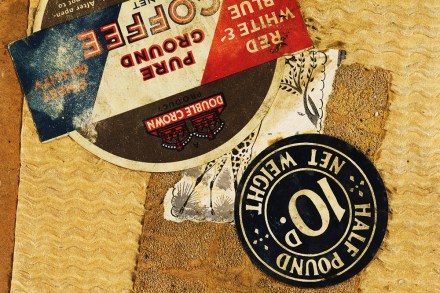
Aged ten, Jennifer Potter moved to Ambleside in the Lake District and was soon aware that one of the giants of modern art, Kurt Schwitters (1887-1948), had lived there some years earlier. He was a German artist associated with Dadaism, the anarchic movement that ushered in Surrealism, who developed his own brand of anti-rational art called ‘Merz’. He assembled urban detritus into two or three dimensions (collages and objects). His work was witty, lyrical and abstract, but also organic. He called art ‘structure’ or ‘creative evidence’, as natural as a plant or a crystal, but reliant, too, on the action of the artist’s imagination. He was a large man, somewhat shambolic in appearance.

Why should it be shameful to study the Classics?

From our UK edition

Mary Beard opens this book with a recollection of her first meaningful encounter with the ancient world. It was 1960, and she was five years old, visiting the British Museum with her mother. Peering into one of the glass cases, she spotted an unassuming, oddly triangular loaf of bread from ancient Egypt. Seeing her struggle to obtain a better view, a curator lifted the object out. ‘Never under-estimate how powerful the simple act of unlocking a museum case can be,’ Beard reflects 66 years on. She describes Talking Classics as ‘more a memoir than a thesis’, but it is also a thought-provoking meditation on wonder. It was thauma, she reflects, that Aristotle held responsible for sparking philosophical thought to begin with.

A weary trek in the steps of Garibaldi and his Redshirts

By the time he died in 1882 at the age of 74, Giuseppe Garibaldi had freed the Italian peninsula from its abhorred Habsburg and Bourbon rulers and united all Italy under the liberally inclined House of Savoy. With his whiskery good looks and wardrobe of red blouses, he was the ideal vehicle for romantic notions of free nationality. When he visited London in 1864, crowds flocked to greet the Risorgimento liberator as he got off the train at Nine Elms. A new football club, Nottingham Forest, adopted Garibaldi red as its colour and a ‘squashed fly’ biscuit was named after him. In Queen Victoria’s estimation, though, Garibaldi was an outlaw figure who threatened to subvert the established order. ‘Garibaldi – thank God – is gone!’ she declared on his departure.

Landscapes of longing in illuminated Books of Hours

From our UK edition

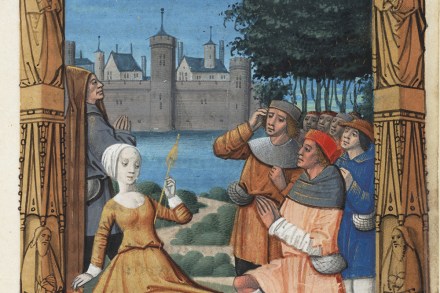
Christopher de Hamel is an outstanding salesman. At Sotheby’s, back in the 1990s, he brokered the sale of the 15th-century Sherborne Missal to the British Library for £15 million, a record-breaking sum. Over the past decade, his reputation as a salesman has fitted a much less conventional mould. In two dazzlingly illustrated books he has set out to sell to the ordinary reader the power and pleasure of medieval manuscripts. His approach combines enthusiasm with scholarly precision and a conversational style that sits surprisingly easily with the fund of knowledge he has gradually accumulated. Conscious that most of us will never encounter these closely guarded treasures at first hand, de Hamel is more than happy to settle down in a library and turn the pages for us.

The harm of dwelling on a traumatic past

From our UK edition

Back in the 1970s, people in Britain were mystified by the enthusiasm of Americans – especially New Yorkers – for shrinks. Since then, the vogue for therapy has spread and advice from non-experts on surviving divorce, bereavement and bankruptcy is now commonplace and not always insightful. By contrast, Gwen Adshead, a psychiatrist who has specialised in trauma, is invariably rewarding. Her previous book, The Devil You Know (2021), on the minds of violent criminals, was written with Eileen Horne, a former drama producer – as is Unspeakable. I wasn’t entirely sure why Adshead needed a collaborator here, being so obviously well-read. There are references to Homer, Shakespeare, Dante, Keats and Yeats, along with C.S. Lewis, T.S.

Living in the shadow of Etna

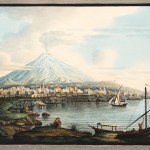
The early Greek inhabitants of Sicily peered into Etna’s crater and declared the volcano to be full of monsters. Its ‘impenetrable darkness’ reminded Coleridge of his opium addiction. Helena Attlee, whose hugely enjoyable The Land where Lemons Grow (2014) won acclaim, brings to her portrait of Etna a softer, more admiring, yet respectful, eye. Unpicking its geological and human history and a landscape ‘cobbled together from the expressions of the Earth’s unrest’ became for her a way of returning to the very beginnings of life. Mount Etna, almost 3,500 metres in height, is Europe’s biggest volcano and one of the most active in the world, grumbling and spewing for many months at a time.

Lloyd Blankfein – guiding light of Goldman Sachs

Goldman Sachs inspires awe and envy in equal measure. Those who survive the Wall Street investment bank’s annual cull earn fortunes. Leavers join an alumni network that makes the Freemasons look like plodders. The ‘Government Sachs’ roll call includes prime ministers (Mark Carney, Mario Draghi, Rishi Sunak and Australia’s Malcolm Turnbull); US Treasury secretaries (Bob Rubin and Hank Paulson); and central bank governors galore, not to mention two recent BBC chairmen (Gavyn Davies and Richard Sharp).  After the global financial crisis, which Goldman navigated more adroitly than rivals, Rolling Stone compared the bank to ‘a vampire squid wrapped around the face of humanity’. New York magazine ran a cover story which asked: ‘IS GOLDMAN SACHS EVIL?

Frederic Prokosch – the man who seemed to know everyone

From our UK edition

One day Frederic Prokosch wrote a novel. He was 27 years old, living with his parents in New Haven, Connecticut, and desperate to be published. Leafing through an old atlas, he had visions of Lebanon and Syria, of the apricot trees of Damascus, the pilgrims travelling from Transcaucasia, and the Orontes River flowing among the rocks. His visions grew more vivid and the voices clearer: ‘I leaned forward in my chair and started to write as though mesmerised.’ The resultant book, The Asiatics, was an immediate success, praised by the likes of Thomas Mann, Albert Camus and André Gide. Others, however, were less sure. How could one write about Asia without ever having been there? Prokosch, it seemed, had quite the imagination.

The sorrows of the young Melvyn Bragg

From our UK edition

The leaves had yet to fall as Melvyn Bragg left his native Cumbria and arrived in Oxford by train in the autumn of 1958 to read Modern History at Wadham College. Weighed down with suitcases, the grammar-school boy admired the town’s medieval core; but his first impression was of ‘effortless wealth and privilege everywhere’. Oxford was still largely dominated by public schoolboys, but it also featured those who had served in uniform, which added a note of gravitas to the atmosphere. On both counts, it was foreign terrain to Bragg, who pined for the familiar sights and sounds of his close-knit hometown of Wigton: ‘I could close my eyes and walk through it – as I often did to get to sleep.

The lost world of the pinball machine

From our UK edition

‘Pinball games, with their flashing lights and unforgettable names, are the one thread that runs together my otherwise fragmentary life.’ So writes Andreas Bernard in the last sentence of this touchingly Proustian memoir. He hymns a life spent flipping small steel balls up and down machines which, despite their clamorous lights, bleeps and honks, amounted to glorified beer coasters and ashtrays, usually in dank corners next to the toilets of some German bar, Italian resort arcade or glum rest stop on California’s Pacific highway. The subtitle is misleading: the book is Bernard’s biography, not the pinball machine’s. He begins his tale as a pre-pubescent, sneaking into Munich bars with his chum Stefan to play these captivating games.