Marriage

The daily I miss every day

Not a day passes in which I don’t regret firing Irena. She was my ‘daily’ from 1991 to 2004. I don’t think I could have asked for anyone better qualified. Until she came to work for me she had been a professor of geology at a Russian university, but she lost her job when the Soviet Union collapsed and became an economic migrant. In spite of this setback, she never displayed any bitterness. On the contrary, she was remarkably stoical — something to do with the Russian soul, no doubt. Her only shortcoming was that she never called me by my correct name. She’d misheard me when I first introduced myself

More nonsense in the newspapers

There’s another one of those fatuous “studies” in the papers today, based upon that favourite newspaper device, the false correlation. This time it’s about marriage; if you want to make your marriage work, move to Dorset, because part of it has the highest number of married couples in the country and they are more likely to stay married. The implication is that there must be something magical about Dorset, and that if you moved to, say, Wimborne, or Curry Rivel, any marital problems you might have had would immediately evaporate. Of course the reason more people are married in Dorset is that the average age of the population there is

Nick Clegg forgets that many married couples struggle to pay their way

The disadvantage of live phone-in radio programmes is precisely that you don’t get to weigh your words. No doubt Nick Clegg would have expressed himself a bit differently on the subject of a transferable married couple’s tax allowance if he hadn’t had the subject thrown at him by a caller. But in response to a question on the issue, he said: ‘The more people will look at this, the more they will think… why should you be giving, whatever it is, £3 a week to married couples?’  Naturally, people took this as indicative of just how out of touch the ruling elite is from everyone else… three pounds a week?

What’s love got to do with it? | 30 January 2013

In her Times column on Monday (£), Libby Purves valiantly attempted to fit together two things that were obviously on her mind. Discussing Pride and Prejudice, which is 200 years old this week, in relation to the modern permutations of marriage was sure to be a delicate operation. Purves argued that the book’s appeal lies in both its wit and the intellectual and emotional foreplay between Elizabeth and Darcy. What might seem ‘subversive’ for modern sensibilities, Purves suggests, is the fluttering of Elizabeth’s heart when she sees the size of Darcy’s pile. Nowadays, she argues, marriage is about ‘love’, of course. It doesn’t matter about class, wealth or gender. That

Happy New Year | 4 January 2013

I hope you all had a splendid Christmas and New Year. Mine was, if you care about these things, more eventful and hectic than I’d planned or otherwise anticipated. Each January I tend to have a Wodehouse Week, returning to the great man for cheery sustenance in the bleak midwinter.  It will be a rum thing, reading Wodehouse while engaged to be married. Anyway, back on the grid now and the great thing about writing and blogging is that it’s a commendable distraction from wedding planning. The grindstone never seemed so appealing. Time too, I suppose, to post the answers to my Christmas Quiz. So here they are. Hope you

Marriage tax breaks would alleviate child poverty, Mr Duncan Smith

The problem about relative poverty is precisely its relativity. The child poverty index, which measures whether a family’s income is below 60 per cent of the average, is a case in point; when incomes go down, bingo, so does child poverty. Which means that one sure fire if controversial way to improve the Government’s child poverty record would be to drive down everyone’s earnings. Iain Duncan Smith, Work and Pensions Secretary, made just this point yesterday when he made a speech about whether the definition should be rather wider than it is. ‘As we saw last year,’ he observed, ‘when the child poverty level dropped by two per cent –

The marriage plot: The Newlyweds by Nell Freudenberger reviewed

Few could accuse literary fiction of not doing its best to perk up the US export sector recently. It has been a truly remarkable year. A quick glance at my shelves reveals some wonderful new finds: The Art of Fielding by Chad Harbach, We the Animals by Justin Torres, Seating Arrangements by Maggie Shipstead and recently Leaving the Atocha Station by Ben Lerner. Joining them this summer – although a second novel rather than a debut like the above – is Nell Freudenberger’s The Newlyweds. Exactly like the others, however, The Newlyweds comes already wreathed with praise from across the pond. And well deserved too. To my mind it draws parallels with

What the government should do to tackle honour violence and forced marriages

It has taken the police nine years to secure convictions for murder against the parents of 17 year old Shafilea Ahmed. Murdered by her parents in an honour killing, they spun a web of lies to conceal the true circumstances of her death for years. A wall of silence surrounded the case until 2007 when police finally made a breakthrough, and charged the parents. Cases like Shafilea’s occasionally capture the public attention and then recede from popular consciousness, but what can authorities do to end honour based violence and forced marriages? There was a distinct lack of political will under the last Labour government to tackle this problem. Most acutely, the problem of honour related crime affects families of

May backs gay marriage

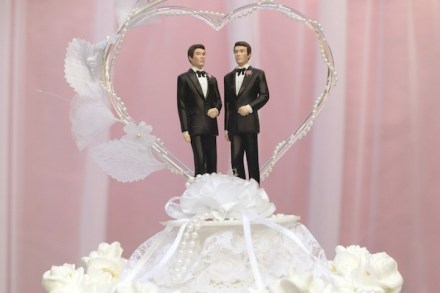
So Theresa May has voiced her support for same-sex marriage, joining Lynne Featherstone, Yvette Cooper and the PM’s Parliamentary Private Secretary Desmond Swayne in recording an Out4Marriage video. Of course, we shouldn’t be too surprised. It’s May’s own department that’s put forward the proposals for same-sex marriage, with a foreword signed by both the Home Secretary and Featherstone saying: ‘We do not think that the ban on same-sex couples getting married should continue. Put simply, it’s not right that a couple who love each other and want to formalise a commitment to each other should be denied the right to marry.’ With Cameron strongly in favour, and the government committed

The folly of Cameron’s gay marriage culture war

For some time now, a growing number of Tory MPs have been quietly informing the whips that they will not be voting to support gay marriage. They’ve been getting letters from their constituents, and even those in favour of the idea know that they can’t afford to support it. When a cabinet member spoke to the whips office recently, he was given a startling reply: don’t worry, it will never come to a vote. The consultation is ongoing, but the agenda is being dropped. The effect it’s having on the morale of the Tory grassroots is calamitous. I look at this fiasco in my Daily Telegraph column today, and here

Obama comes out for gay marriage

video platformvideo managementvideo solutionsvideo player It isn’t just this side of the Atlantic where same-sex marriage is very much on the political agenda. Here, the Prime Minister gave it his support in his October conference speech, and the government is pressing ahead with plans to legislate for it before the next election, under the leadership of Lib Dem equalities minister Lynne Featherstone. Meanwhile, across the pond, Barack Obama gave his support for equal marriage last night. In an interview with ABC News (above), he said: ‘At a certain point I’ve just concluded that for me personally it is important for me to go ahead and affirm that I think same

The case against gay marriage

Last night, we posted Douglas Murray’s conservative argument in favour of same-sex marriage. Here’s the opposite view: Consultations are, for the prudent, an exercise you only engage in when you’re quite sure of the outcome. I’m not sure, then, that Vincent Nichols, the Archbishop of Westminster, is entirely wise to go all out in galvanising the Catholic community into action against the Government’s plans to legalise gay marriage. As the Daily Telegraph reports today, he is issuing a letter to be read out in churches on Sunday to urge congregations to participate in the Coalition’s consultation exercise on the proposal — against. Two can play at consultations, and the very

The conservative case for equal marriage

With some right-wing voices — including Catholic Cardinal Keith O’Brien, Tory MP Peter Bone and the Daily Telegraph — speaking out against same-sex marriage, here’s a piece Douglas Murray wrote for The Spectator in October arguing that conservatives should instead be welcoming it: In America a new generation of Republicans is challenging the traditional consensus of their party on gay marriage. They — as well as some of the GOP old guard like Dick Cheney — are coming out in favour. In Britain the subject is also back on the agenda with the coalition government, at the insistence of the Prime Minister apparently, planning a ‘public consultation’ on the matter.

This Troublesome, Ludicrous Priest

If Cardinal Keith O’Brien objects to being considered an intolerant bigot then he should perhaps cease making arguments that are a) intolerant and b) bigoted. Then again, he’s a member of the College of Cardinals and this is part of the price of membership*. His diatribe against gay marriage is an excellent example of this. I suppose some people are exercised by the precise status of homosexual relationships but the Cardinal’s spittle-flecked prose still seems excessive, even by his church’s standards. It is doubtless a cheap observation to note that neither this Cardinal nor any of his colleagues wrote such furious opeds denouncing their church’s willingness to protect child abusers

The coalition’s marriage troubles

A few months after the coalition was formed, I went for lunch with a close ally of Nick Clegg. After an hour or so of discussing what the coalition’s agenda would be, this Liberal Democrat said to me: ‘now, David Cameron can’t really be serious about this marriage stuff, can he?’ When I replied that I thought he was, he looked at me with total incomprehension. He then launched into a speech about how no ‘liberal’ could possibly want to see the state promote marriage. This is the thinking that lies behind Clegg’s latest attack on the idea of tax breaks for married couple; it has become an identity issue

What phase of the coalition are we in now?

It was not so long ago — the run-up to last May’s AV referendum, to be exact — that we heard the coalition would be entering a new phase. Gone was the happy synthesis of the Tories and Lib Dems that prevailed after the election, and in its place would be a government that spoke more openly, more angrily about its differences. But even if Phase 2.0 had the appearance of being more fractious, it was actually designed to keep the parties together. The idea was that, by highlighting the essential differences between the two sides, their supporters could more easily be kept on board with the overall project. I

Why conservatives should welcome gay marriage

David Cameron just told the Tory conference that he supported gay marriage “because I am a Conservative”. In last week’s issue of the Spectator, Douglas Murray said that the best arguments in favour of gay marriage are conservative ones. For the benefit of CoffeeHousers, here is Douglas’s piece. In America a new generation of Republicans is challenging the traditional consensus of their party on gay marriage. They — as well as some of the GOP old guard like Dick Cheney — are coming out in favour. In Britain the subject is also back on the agenda with the coalition government, at the insistence of the Prime Minister apparently, planning a ‘public consultation’

Willetts tackles the three Ds

How the Conservatives should respond to “disorder, debt, and distrust” is the theme of David Willetts’ speech to the Conservative Policy Forum. Willetts, one of the most cerebral Conservative ministers, argues that the riots, the deficit and the anti-politics mood have come together to create a triple-challenge for the party. But Willetts’ speech is also the Tory response to Ed Miliband’s charge that they are breaking the promise of Britain: the idea that each generation does better than the next. Willetts, who has written a book on the subject, accepts that fairness between the generations is the biggest challenge in politics right now. He cites polling, which I understand to

Compassionate conservatism the key to gay marriage pledge

When David Cameron spoke to the Carlton Club political dinner on Thursday night, he stressed that the Conservatives must not subcontract out compassion to their coalition partners. The Prime Minister’s desire to hold this ground can be seen at the speed with which Downing Street has briefed out that it was Cameron’s personal commitment that was key to the coalition’s decision to consult on how to introduce gay marriage. The message is clear, this isn’t just a bauble for the Lib Dems for the opening day of their conference. Personally, I think that the move on gay marriage is a welcome one. (Although, the legislation must ensure that no religious denomination

To be or not to be married?

My name is Siobhan Courtney and I am a very happily unmarried mother with a five month old son. But this week I’m annoyed – really annoyed. I and thousands of others have been given a slap across the face by Conservative ministers who have now changed their minds about giving cohabiting couples the same rights as married ones. Ken Clarke has rejected proposals put forward by the Law Commission under the last government. And it’s all pretty basic stuff. Childless couples would have been granted automatic inheritance rights if one of them died without a will, no matter how long they had been together. Couples who lived together for