London

Dregs of fake Provence: Whitcomb’s reviewed

Whitcomb’s is in The Londoner hotel on the south-west corner of Leicester Square. The Londoner calls itself ‘the world’s first super boutique hotel’, which may mean that it is the world’s biggest small hotel. Or its smallest big hotel. I don’t know. Whatever its existential status, the developers destroyed an art deco cinema — the dour and lovely Odeon West End — to make it, and it looks like a piece of bright blue infant Lego with lesions for windows. Heritage organisations objected to the cinema’s destruction. Westminster council replied: who cares? We need Lego with lesions, or anything that looks like Lego: look at the Hotel W round the corner. That looks like a giant Lego fridge!

Drinking with James Bond

From our US edition

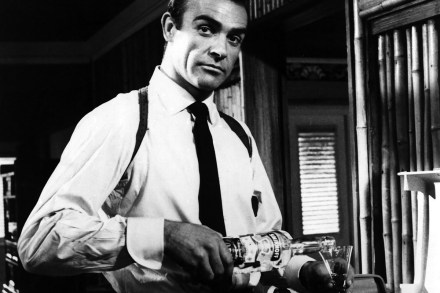
James Bond’s most impressive talent is not his prowess as a spy or his skills of seduction. It’s his ability to always get exactly what he wants at the bar. In the 1954 novel Live and Let Die he orders a round of Old Fashioneds while on a train to meet Felix Leiter, his CIA opposite number. Not only does the buffet car make them for Bond, they even have his preferred brand of bourbon, Old Grand-Dad. You try pulling that sort of thing on the Acela from Penn Station to DC. ‘Sorry Solitaire, they wouldn’t do us a cocktail, but I’ve got a cup of Lipton’s and a bag of pretzels.’ We’d all like to drink like Bond but, lacking his miraculous powers, we need to be in the right sort of bar to do it.

bond

Harriet Harman calls for Cressida Dick to resign

Labour's Harriet Harman has called for Cressida Dick to resign as chief of the Metropolitan Police after Wayne Couzens was sentenced to a whole-life order for the murder, rape and kidnapping of Sarah Everard. He is the first police officer to receive such a sentence. In a letter to the Commissioner, Harman writes that 'women's confidence in the police will have been shattered' by the case and that it is 'not possible for you [Dick] to lead' the changes necessary in the force following this case. It is significant that Harman has called for Dick to go. She is not a bandwagon politician and does not tend to call for scalps, even in high-profile cases such as this.

The real Greek: Lemonia reviewed

Lemonia lives in the old Chalk Farm Tavern in Primrose Hill, which is better known as the set of Paddington. It is not surrounded by fields filled with duellists under a hill of primroses these days, but it is still vast, pale and beautiful: a survivor in the sprawl. There has been a tavern on this site for so long — it was first recorded in 1678 when a corpse was carried to it — that it is possible John Keats drank here. I hope so. It is not a beaker of the warm south – it is slightly too near Camden and its stink of pigeon and bleach for that — but it is close enough. Some restaurants hold memories of pleasure: this is one such place.

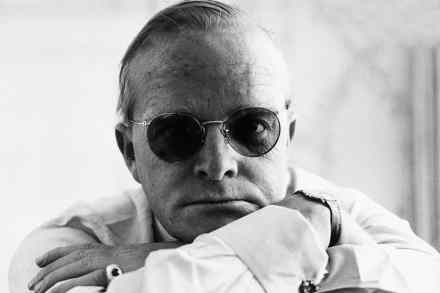
I was the next Truman Capote

It’s nice to be back in London, and Glebe Place is a delight. Mind you, it’s not the mansion I was expecting, just a very nice mews house on a very quiet part of the street away from the King’s Road. The noise of the city gets on my nerves, which means that I’ve lived on an island, and among cows, for too long. Alexandra seems to like London more than I do nowadays, and that’s a switch if ever there was one. Knightsbridge was home for 40-odd years, but the wife hated it. Writing about one’s wife is a bit like kissing your sister and all that, but ensconced at home the other night I asked her: why London all of a sudden. ‘You were playing Don Giovanni all those years, and I found it humiliating to be near those women,’ was her answer.

Americans, London needs you

From our US edition

‘Nobody wants to admit it, but London was boring even before the pandemic — and it’s still boring now!’ I said. We were at a London drinks party. The guy retaliated with a smirk and that old Dr Johnson line, ‘He who is tired of London, is tired of life.’ ‘No,’ I said, ‘I’m not tired of life — I’m tired of people who always quote Dr Johnson when you make some slightly disparaging remark about London!’ I dislike that Dr Johnson quote because it assumes that you can’t be genuinely tired of London; your discontent must be due to your own boring, miserable life and not because London has become an overpriced, culturally exhausted and soulless city — which it has.

London

France’s provocateur is coming to London

Five years ago, London’s affluent French poured their dosh into the campaign of Emmanuel Macron. This time around, supporters of France’s rising provocateur are trying a similar tactic. Eric Zemmour is the Tucker Carlson of French media. A potential rival to Marine Le Pen, he is planning a visit to London in October. His undeclared but badly concealed French presidential campaign has the backing of 'Generation Z', a shadowy group of French political consultants and fundraisers, who are looking at the monied expatriates of South Kensington and seeing potential campaign money. If Macron’s people aren’t spooked by Zemmour, they aren’t acting like it I profiled Zemmour in the magazine in March.

The watery life of the capital

To write about London and its rivers is to enter a crowded literary field. Many aspects of watery life in the capital have been documented for public consumption over the past 150 years, from Hilaire Belloc’s lament for the river’s lost monasteries in The Historic Thames to Peter Ackroyd’s doorstop, London: A Biography. More recently, it is previously unremarked everyday stories which have found a home on many publishers’ lists. The practice of mudlarking especially of sifting objects from the river’s mud has held readers in thrall. Sometimes it sounds as though the Thames foreshore at low tide must be as busy as a King’s Cross platform during a pre-pandemic rush hour.

Scarface’s lair with nibbles: Louie reviewed

A French creole restaurant rises in the sullen ruins of London. It is called Louie, for French king or trumpeter, depending on your wish. It is next to the Ivy — now a private members’ club and franchise stretching to the London suburbs bearing small bowls of shepherd’s pie — and it is infinitely preferable. That is, I can get a table, and no pastiche medieval windows or tabloid photographers are involved. It’s a terrible thing being jostled into a gutter so someone can photograph the former cast of Crossroads. The Ivy is the Love Island of grand restaurants. It is for the spuriously famous, which is now everyone. The zeitgeist cries: we’re going to need a bigger Ivy. Or at least it used to. Louie is a small, golden rebuke.

At last, a dose of up-close culture in London

In London for the first time in 18 months, I was as excited as a child on a birthday outing. We were desperate for a dose of up-close culture after months of Zoom, so we crammed in three exhibitions, two plays and a couple of first-class meals that I didn’t have to cook. Glorious. It helped that we had two of the few blue-sky days of this otherwise wretched summer and that I’d deliberately fallen off the wagon. My husband John says that I’m much nicer when I’m drinking. Apparently, when giving my kidneys a holiday, I’m altogether less joyful. We stayed at the Chelsea Arts Club in Old Church Street. It took ten years to persuade the club that cooking and writing are arts so it should accept me as a member — it prefers painters and sculptors.

The Liberal Democrats have a dangerous vision for the City of London

Liberals have always set great store by laws and declarations. It was joked about Lord Loreburn, the liberal Lord Chancellor in the years before the First World War, that if told the Germans had landed he would immediately have taken steps to obtain an interim injunction from the Chancery Division requiring an immediate withdrawal. These days something similar seems to be happening as regards the Liberal Democrats’ approach to climate change. Last Thursday Ed Davey took aim at the City, which he has decided to add to the party’s growing list of climate change villains.

A glimpse of lost London – before the yuppie invasion

In a 1923 book called Echo de Paris, the writer Laurence Houseman attempted to conjure up in a very slim, elegant volume the atmosphere and especially the conversation of an afternoon a quarter century earlier that he had spent in the company of the exiled Oscar Wilde. It was a conscious act of imaginative recreation, seeking to place the reader at the same boulevard table alongside the participants. As the author explained in his introduction: The scene, as regards its setting — the outside of a Paris restaurant — is true to history; and if, toward the end, a touch of drama has been introduced, the reader will understand that it is more symbolic than actual.

How two literary magazines boosted morale during the Blitz

William Loxley’s lively account of ‘Bloomsbury, the Blitz and Horizon magazine’ begins with W.H. Auden and Christopher Isherwood emigrating to the United States in January 1939 and ends with George Orwell dying in University College Hospital in January 1950. Between these two events Loxley explores the often interconnected professional and personal lives of a number of British writers, publishers and editors — principally Orwell, Leonard and Virginia Woolf, Cyril Connolly, Stephen Spender, John Lehmann and Dylan Thomas — during the second world war and its immediate aftermath.

Can London’s floods be explained by climate change?

It’s climate change again, innit. It didn’t take long for Sunday’s flooding in London to be put together with Canada’s recent heatwave and the floods in Germany and China to be used as ‘evidence’ of ever-accelerating climate change – giving us even less time to save the world than previously thought. ‘More rain as Londoners call out climate change,’ screamed a headline on City A.M., alongside pictures of water pouring through Stratford DLR station and cars stuck on the North Circular.

The clever radical who led the City’s transformation

It’s a vivid example of unintended consequences that the swimming-pool builders of southern England should owe so much to Sir Nicholas Goodison, the former chairman of the London Stock Exchange who has died aged 87 and whose obituaries suggested little inclination to frivolity, poolside or otherwise. Head-and-shoulders the most cerebral of the Exchange’s leading members at the turn of the 1980s, he was also one of its most far-sighted and probably, as a noted connoisseur of 18th-century clocks, its most cultured. A traditionalist majority of his peers were content with the City’s clubbable old ways.

Is London being ‘levelled down’ already?

In his ‘levelling up’ speech in Coventry this week, the Prime Minister insisted time and again that this was no ‘zero sum’ game. Improving the fortunes of the poorer parts of the country would not entail levelling richer parts of the country down, he said: ‘Levelling up is not a jam-spreading operation. It's not robbing Peter to pay Paul.... It's win-win.’ Well, maybe. But there was good cause for his defensiveness. One reason advanced for the Conservatives’ dramatic defeat in last month’s Chesham and Amersham by-election was apprehension that such places would have to help pay the bill for, say, regenerating Hartlepool.

An utterly convincing dreamworld: The Ritz reviewed

The Ritz is still here, and still gaudy. No grand hotel in London feels quite so complete, if pink; as if it landed like a Tardis on Green Park. There is no real life here, and there shouldn’t be. Each guest travels with their own novella. There are jewels in the window and brides on the stairs. Lady Thatcher died here, in a corner suite. Don’t ask which one. They won’t say, to discourage ghouls, party hacks and perverts. You cannot know if you are sleeping in her bed, and that is not even the oddest thing about the Ritz. The staff, who dress like toy soldiers, are charming in that way you don’t find outside Judith Krantz novels. That is, you believe them, and that is rare. The Ritz is a myth, and it is dedicated to itself.

Don’t ‘Kill the Bill’

Are the rights of protesters and the rights of all other citizens fairly balanced? Think back to the Extinction Rebellion protests of April 2019, when climate activists chose to 'peacefully occupy the centres of power and shut them down', as they put it, including the heart of London. The protests, organised globally, were perhaps the most disruptive in history. A small number of people managed to stop hundreds of thousands more going about their daily lives. People could not get to work, see family and friends or go shopping, because the streets were blocked by an extensive series of roadblocks and other tactics. At one point, printing presses were blockaded, undermining the free press.

Don’t pity me for living in London

Londoners have had to learn, more than ever before, to master the art of fielding pity. We’ve been on the receiving end of lots of it this year from people living in the country who care about us, which makes it worse because we’re supposed to be grateful. I’m still smarting from a few recent zingers: ‘I do feel sorry for you, being cooped up in that small house.’ ‘It must be stifling there. We’ve got a nice breeze down here.’ ‘It’s all so lovely and green. Even London must be looking quite green.

My voyage back through the landmarks of my life

I was looking forward to my dinner at Daquise in South Kensington, a Polish restaurant that’s been there for ever yet feels curiously up-to-date; but that wasn’t until 7.30. I’d finished my afternoon’s work, I’d brought in the washing and written two thank-you cards, and it was still only five o’clock. I hate hanging around. By Tube to South Ken is only half an hour — so what to do? ‘Why not go the long way, on foot and by river?’ I thought. My flat is by the Thames in east London, so I could walk along the river to the Canary Wharf jetty and hope for a river bus to Chelsea.