Lockdown

Why UK GDP may have fallen by more than a fifth

Is anyone really surprised that GDP fell by 20.4 percent in April? Perhaps we should be. It doesn’t sound high enough to me. We have just been through a great economic experiment in which most shops have been forced to close, all pubs and restaurants been forced to shut their doors and the public ordered to remain indoors except for essential visits. Road traffic at one point was back to 1950s levels. And yet the economy officially shrank only by a fifth – taking it back roughly to the size it was in 2003. I am not sure that these statistics quite pass the smell test. According to the breakdown provided by the ONS, accommodation and catering fell by 88.1 per cent. It makes you wonder how that 11.

Social distancing destroys our lives as social beings

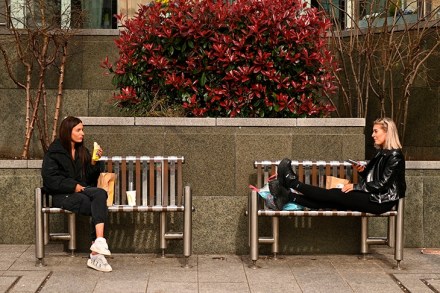
A lockdown diary is an oddly negative thing. At the dinner parties that we aren’t going to, we aren’t discussing all the interesting things that we aren’t doing. This week, I am not heading for the Austrian Alps to walk in some of the finest mountain scenery in Europe and enjoy a week of Schubert, as I like to do in June. The Austrian government has pioneered the technique of allowing facilities to reopen but only on terms that keep them closed. The beautiful concert hall at Schwarzenberg can open, but only with social distancing which reduces its capacity by 75 per cent and makes any performance financially unviable. In England the government plans to reopen pubs on terms that keep them half-empty and unprofitable.

It’s time for the PM to take back control from the scientists

There is a grim inevitability to the trickle of round-robin letters from scientists who feel aggrieved at the government’s handling of the Covid-19 crisis. Right from the beginning, the Prime Minister gave scientific advisers a very public platform at the heart of government. He realised that if it became necessary to impose the most severe restrictions on personal freedom any government has had to introduce in peacetime, it would help if the public could see policy was being shaped by experts who understood the threat. But as time has gone on it has become increasingly clear that there is no such thing as ‘the science’ — a mythical set of incontrovertible truths. Scientists are as divided as politicians and the general public on how to tackle Covid-19.

There were horses loose in a Public Sex Environment

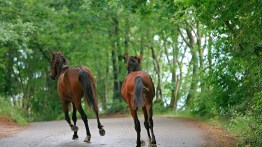
The two horses looked like they had never seen anything like it. They had wound up in a dark car park renowned for the practice known as ‘dogging’ after being found wandering perilously close to the M25. A jockey who just happened to be passing — ahem — was holding on to them as the usual nocturnal customers of this beauty spot carried on doing what they do. The police were out in force, busy trying to solve this baffling crime. We arrived after getting a call from a neighbouring horse owner warning us that horses in our area were loose. After racing to our fields around 9 p.m. to find them all peacefully grazing, our fences and gates intact, we set about joining a group who had gathered to help.

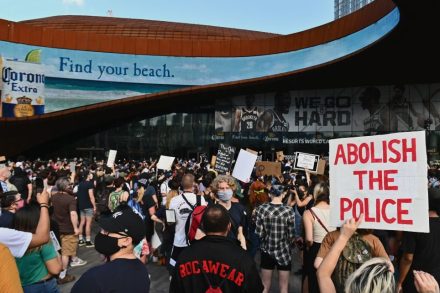
The protestors have brought down the lockdown

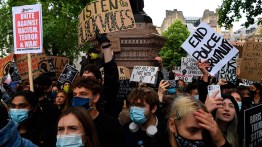
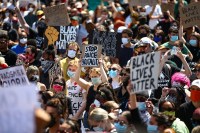
I wasn’t surprised to see that a woman whose father died at a care home in Bicester in April has decided to take legal action against the government. If I had an elderly relative in a nursing home whom I hadn’t been able to visit in the last months of his life because of the lockdown, I too would be angry. And I can imagine that anger turning into incandescent rage as I watched pictures of the Black Lives Matter protests on the nightly news. Why are police officers, who were so zealous about enforcing the social distancing rules until last week, now getting down on one knee to genuflect before the protestors?

What should you charge for a virtual conference?

From time to time, every industry must adapt to some inconvenient technological advance. Suddenly, some part of what you offer can be reproduced or distributed in a new form. The temptation is to ignore the issue and hope it goes away. But if you don’t act, eventually some competitor, existing or new, surely will. Reinvention is a painful process. Hollywood’s reaction to the advent of television followed the five stages of grief: denial, anger, bargaining, depression, acceptance. The same emotions played out in the response of the music industry to the arrival of digital downloads and streaming. Churches will have noticed that online congregations are larger than physical ones In retrospect, some of this looks absurd.

Horse-racing has made a triumphant return

Horse racing, it turns out, wasn’t the first sport back in post-lockdown action: that distinction went to pigeon racing when some 4,400 birds took to the air and raced from Kettering to Barnsley. Nor did the first Classic, the 2,000 Guineas at Newmarket, provide the hoped-for tonic headlines about a new super-horse to succeed the great Frankel. Pinatubo, a scintillating winner of all his six races as a juvenile and the highest-rated two-year-old since 1994, ran a perfectly respectable race to finish third, but the high hopes that the hot favourite was going to prove to be something truly special were dashed. It seems that the bigger, rangier types caught up with Godolphin’s compact little star over the winter.

The dying need real conversation, not false cheeriness

A nurse friend recently finished six weeks in a Covid intensive care unit where she witnessed many deaths and always ensured that nobody died alone. She sat holding a hand, listening, reassuring. Now on leave, she is writing down some of her experiences with the dying. A wise priest I knew said that no matter how strong your faith, your view of what happens at death and ‘the life of the world to come’ should be an agnostic one. But he still recounted some remarkable things he witnessed when sitting with the dying, and my nurse friend described similar experiences.

Marching against racism is too easy

When I first saw the footage of George Floyd being asphyxiated by a policeman’s knee on his throat, my reaction was pretty standard. My eyes bugged. I stood up. I exclaimed something like: ‘Bloody hell!’ We’ve all seen the video dozens of times now, but it’s worth clinging to that initial shock, the better to appreciate that America’s spontaneous collective revulsion in response to such grotesque abuse of power was genuinely commendable. Yet the nationwide marches a fortnight ago had a clear goal: the culprit’s arrest. If late in the day — had a civilian choked a policeman to death, he’d have been handcuffed faster than it takes to say ‘black lives matter’ — Derek Chauvin was charged.

Can Britain avoid a second lockdown?

What comes next, now that the transmission rate and prevalence of Covid-19 have fallen significantly? (Before you shout at me, yes I know there is frustration and some bemusement among scientists that illness incidence and numbers of deaths have not dropped faster in the UK, but they have nonetheless reduced significantly, if not uniformly, everywhere). There are detailed plans from the government for when and how to restart certain businesses and social activities in the coming six weeks. But there is not a clearly articulated strategy for how we are expected to live and work between now and the end of the year (and beyond). So I've tried to piece together what ministers and officials have said privately and publicly about different elements of the longer-term strategy.

Cellar’s market

From our US edition

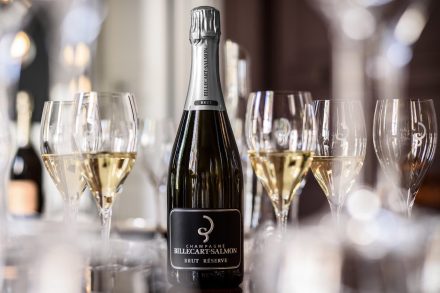
I met Kingsley Amis only once. It was in the bar of the Garrick Club at about three in the afternoon. He had clearly been there for some time. I was with a friend who knew him, so cadged an introduction. I cannot say that we had a truly meaningful exchange. More like 1 Corinthians 13:12: ‘through a glass, darkly’. But the encounter did put me in mind of General Principle Number 1 from Amis’s amusing book on drink, candidly titled On Drink. ‘Short of offering your guests one of those Balkan plonks marketed as wine,’ he advises, ‘go for quantity rather than quality.’ If you had asked my opinion about that advice a couple of months ago, I might have demurred.

cellar lockdown billecart
sweden

Fact check: has Sweden really just renounced its anti-lockdown strategy?

From our US edition

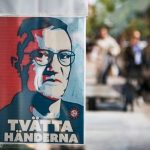
Has the great Swedish mea culpa finally arrived? Anders Tegnell, Sweden’s state epidemiologist, is quoted by the Financial Times saying that his country ‘should have imposed more restrictions to avoid having such a high death toll’. His 'admission', continues the FT, 'is striking as for months he has criticized other countries’ lockdowns'. The Guardian goes just as hard on the story. 'Man Behind Sweden’s Controversial Virus Strategy Admits Mistakes,' screams Bloomberg. But turn to Wednesday's Swedish press and there’s something strange: they seem to have missed the scoop entirely. All the stranger, seeing that Tegnell's remarks were made to Swedish radio. So was something lost — or, rather, added — in translation?

New study suggests Covid infections were falling before lockdown

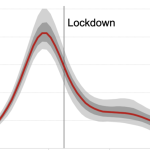
When lockdown was first imposed, there was little science to base it on. The virus was assumed to be growing at an exponential rate, with each infected person passing it on to about four others. The controversial assumption: only mandatory lockdown could stop this. Graphs were drawn, showing the infection rate barely dented by voluntary measures (like handwashing, keeping socially distanced etc.) but lockdown making things safe instantly. Imperial College’s cliff-edge graph had huge traction (the below is a BBC reproduction) and made an open-and-shut case for lockdown. The above assumptions were the basis of a recent Sunday Times investigation entitled 'UK’s lockdown dithering led to worst death toll in Europe.

Why is it that age limits never apply to men?

I’d never have thought I’d be good at doing nothing. Or rather walking the dogs, loafing in the sun, trying to match Paul Hollywood’s tête de brioche (third time of trying), doing jigsaws and reading hefty books. But I’m lovin’ it. The only thing that stresses me — indeed brings me out in lower-deck language most unbecoming to an octogenarian — is doing live shows or podcasts on Zoom or Skype while our broadband buffers, stutters or crashes. And some poor presenter is trying to fill the gap, desperate for me to make the technology work. Calls to Relate have tripled under lockdown I’m told because seeing too much of each other is seriously straining relationships.

The intense pleasures of lockdown

I used to live in Mogadishu for months at a time, cooped up in compounds behind fortified walls. Venturing on to the streets meant a flak jacket, escort vehicle bristling with guns, chain-smoking as we zoomed through smashed districts, militias, ambushes and roadside bombs. Despite the incarceration, Somalia gave me some of my happiest memories. At home on the ranch in Kenya we often make a point of staying away from town for as long as possible. Our record is three months of no shops, offices, crowds or traffic — just cattle, pasture, birdsong and the rarest of visitors dropping by for a beer. And as a child in north Devon during the winter of 1978, I recall the local constable escorting me across fields in a blizzard to my mother’s arms.

The protests have not ended COVID-19

From our US edition

Remember when peaceful protesters of the economic lockdown were smeared for apparently putting lives at risk by utilizing their First Amendment rights?  ‘Many protesters have ignored public health edicts, exposed themselves and others to COVID-19 and put our nation’s hodgepodge efforts to mitigate the pandemic at risk,’ the USA Today editorial board wrote. George Stephanopoulos, an ABC journalist and former senior adviser to President Bill Clinton, appeared to suggest during an April interview with Facebook CEO Mark Zuckerberg that the platform should censor posts promoting protests against the lockdown.‘Facebook also holds its users accountable by continuing to monitor and flag posts for harmful misinformation about the disease,’ he said.

covid

Ofcom shouldn’t be allowed to censor ‘harmful’ opinions

In my capacity as the general secretary of the Free Speech Union, I wrote to the chief executive of Ofcom, Dame Melanie Dawes, on 24 April to complain about its reprimand of Eamonn Holmes. According to the regulator, the breakfast television presenter had said something that ‘could have undermined people's trust in the views being expressed by the authorities on the Coronavirus and the advice of mainstream sources of public health information’. Holmes’s sin, in Ofcom's eyes, was to say on ITV’s This Morning that any theory running counter to the official government line – such as the one linking 5G masts and Covid-19 – deserved to be discussed in the mainstream media.

End the lockdown. Stop the riots

From our US edition

These riots are not just about pent up frustration over police brutality and the murder of George Floyd under the knee of a Minneapolis police officer. In part, they’re about a population being locked up for three months while 40 million people lose their employment.Politicians like New York City mayor Bill de Blasio cracked down on Jewish funerals and schools. They remained silent last night as hundreds of people joined protests which turned into riots in Brooklyn, injuring police officers and resulting in the arrest of several members of the Blac Block anarchist group, antifa.Mayors in Atlanta and Minneapolis condemned the violent crowds which had gathered by the hundreds to turn on corporate businesses and small businesses alike and even the CNN headquarters building.

lockdown

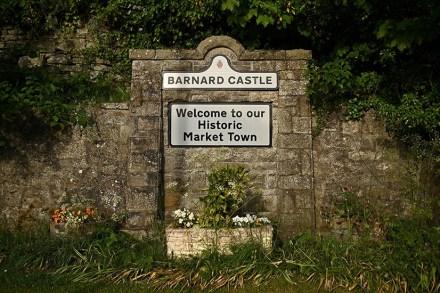
What is there to see in Barnard Castle?

Site test What’s on offer in the town of Barnard Castle? — Ruined 12th-century castle perched high above the Tees, built by Bernard de Balliol and later passed into the hands of Richard III, whose emblem appears above an inner window. — Bowes Museum: magnificent 19th-century French-style gallery built by mine-owner John Bowes and his wife, Josephine. Contains works by El Greco, Goya and Canaletto. Most popular exhibit is a mechanical silver swan which preens itself every day at 2 p.m. — Teeside Way: riverside walk in gorge of River Tees. — Barnard Castle Band: a brass band which has been going since 1860. Signs and symptoms The government broadened the official listed symptoms of Covid-19.