Local elections

Letters: Yvette Cooper for PM!

Bet on Yvette Sir: Were Angela Rayner, Ed Miliband, Andy Burnham or Wes Streeting to succeed Sir Keir (‘After Starmer’, 2 May) as prime minister without first becoming a holder of one of the other three Great Offices of State, this would mark the first time in more than a century that a current or previous holder has not become prime minister in the middle of a parliament when the occasion arose. On the basis of this very strong tradition, the real contenders are David Lammy, Shabana Mahmood, Yvette Cooper and Rachel Reeves. Of these, the only credible potential candidate appears to be Cooper, who could run as a ‘safe pair of hands’ to stop the frontrunners, should sufficient Labour MPs want her to do so.


Which animals are older than David Attenborough?

Travel sickness Three people were reported to have died in an outbreak of hantavirus on a cruise ship returning to Europe from Antarctica. How likely are you to fall ill with an infectious disease on a cruise? A European study that analysed US data on 760 cruises between 2010 and 2013 found an overall illness rate of 2.81 cases per 10,000 traveller-days, while 97% of cases involved norovirus. The rate of outbreaks was highest on ships which had a home port in Cuba or Egypt and lowest on ships with a home port in France, Greece, Italy or the UK. Local difficulties Does a governing party ever do well in local elections?

In the local elections, think local

In March, just before Artemis II rounded the far side of the Moon, the Transport Secretary had her own lunar encounter. Heidi Alexander claims that a ‘moon crater’-sized pothole forced her Mini off the road in Oxfordshire. She is far from alone. Pothole casualties in Britain rose from 270 in 2020 to 393 in 2024, including six dead. An RAC Europe survey found that 62 per cent of British drivers thought European roads are better maintained. Britain’s pothole problem is a story of government dysfunction. Local authorities seem unable to perform their basic duties; meanwhile, council tax continues to rise, bin collection becomes more infrequent and public spaces continue to deteriorate.

March of the Greenshirts: Polanski’s party are the real racists

‘Back us to stop the far right,’ say the Greens. But what if parts of the Greens are the far right? Saiqa Ali, a Green candidate in next week’s elections for Streatham St Leonard’s, Lambeth, posts on her Instagram account a picture of the Earth suffocated by a giant serpent with the Star of David on its skin. She thinks that the British government includes too many ‘Zionists Jews’, and that Donald Trump is ‘owned by Jews’. Not even the Z-word, that last one. Not even Israel. Just… Jews. Ali also posts a picture of an armed man in what looks like a Hamas headband, captioning it: ‘Long live the Resistance.’ If it is a Hamas headband, this may actually be a criminal offence.

With a shudder, I’m voting Labour in the local elections

You may be disturbed by a column urging whites (among others) to vote as a bloc in the coming local elections in the London borough of Tower Hamlets. Tactical voting, but not as we’ve known it. I realise this is delicate. But I’ve been conscious of a dilemma over where to put my cross on the ballot for mayor, which would normally be with the Conservative. And it’s with a shudder that I say that, using my postal vote, I have just voted Labour. For a single, simple reason. Non-Bengali-speakers in the borough must unite if the rascal who has established himself as a favourite son among the Bangladeshi community is to be confounded.

How many people undergo security vetting?

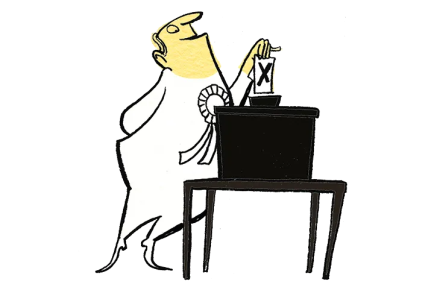
Balls to that Why are elections called ‘ballots’?  — The word ballot comes from the Italian, pallotta, meaning a small ball. In Venice in the 16th century voters deposited a pallotta in a pot. The same system was used in an election in Barnstaple, Devon, in 1689, where voters were given a ball and asked to deposit it in one of two pots. The system allowed people to vote secretly by concealing the ball in one of their fists. They would hold each fist over a pot and discreetly drop it. No one watching could tell which fist had contained the ball. Heavy vetting How many people undergo security vetting?

‘Even Corbyn at his worst never lost here’: how bad will it be for Labour in Wales?

Of all Labour’s heartlands, none has more mythos or magic than Wales. Its history of pits and pulpits produced Nye Bevan and Neil Kinnock; a quarter of the party’s leaders have held seats here. More than a century ago, Keir Hardie forged Labour’s rise from the Valleys in Merthyr Tydfil. In a fortnight’s time, those same valleys could finish his namesake off. A focus group there one recent Friday night reveals just how bad things are for Keir Starmer’s party. In a community centre, surrounded by gym equipment and sports trophies, voters asked where it all went wrong. ‘I had complete faith when Labour got in this time and nothing seems to have happened,’ remarks one woman. Each of the eight voters in the group backed Labour in 2024 – but all were now mulling change.

Does Starmer know what a woman is?

12 min listen

Parliament is back after the Easter holiday and the Supreme Court ruling over what is a woman continues to dominate talk in Westminster. The Prime Minister has changed his tune on trans, declaring he does not think that trans women are women. This has caused some disquiet in the party, with a number of senior MPs breaking rank over the weekend. Was Starmer right to row in behind the ruling? Also on the podcast, as we edge closer to the local elections, they look increasingly important for the two main parties. Pollsters are forecasting a good result for smaller insurgent parties such as Reform and the Greens, with big losses for Labour and the Conservatives. It is not an overstatement to suggest that these could be the most important local elections in recent history.

Why the Lib Dems are aiming for second – with Al Pinkerton MP & Mark Pack

16 min listen

Liberal Democrat peer Mark Pack and MP for Surrey Heath Al Pinkerton join James Heale to explain that it is a matter of 'when not if' the party become the second biggest in local government. Overtaking the Conservatives would be 'seismic' but they see it as inevitable, following a 'long-run of sustained wins' in the post-coalition Lib Dem era. Faced with criticism that the Lib Dems are too focused on community and that leader Ed Davey is more interested in stunts than policy, they explain that a 'rich and varied' diet of political communication has never been more necessary, and that they will never apologise for taking up the causes that matter to their constituents.

Second in local government: who should the Lib Dems target? with Al Pinkerton MP & Mark Pack

Left turn: who should Reform target?

15 min listen

Gawain Towler, Reform UK board member and their former director of communications, sits down with James Heale to talk about Reform's appeal ahead of the local elections. Gawain argues that Reform needs to broaden its appeal as it won't find the votes to win to its right, but points to their anti-establishment, nationalist and pro-business credentials. While acknowledging that some of the negative stories about a minority of Reform councillors is uncomfortable, he argues that the scrutiny that comes with governing is necessary in order for Reform to prove credibility and competency for national government.

Left turn: who should Reform target?

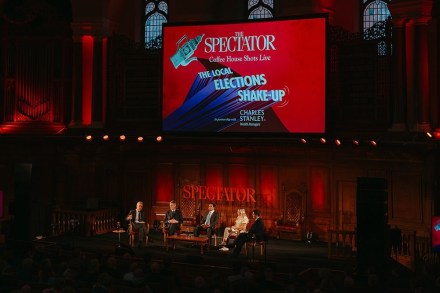
Coffee House Shots Live with Zia Yusuf and Jacob Rees-Mogg

The post-mortem has begun on a historic set of local elections – but where does each party go from here? Is Reform unstoppable? Is Kemi the one to lead the Conservative rebuild? Do Labour really ‘get it’? Michael Gove, James Heale and Lucy Dunn are joined by special guests Zia Yusuf and Jacob Rees-Mogg to unpack these questions – as well as the broader ramifications of the local elections on British politics. Listen for: Zia’s understanding of why Reform did so well; Jacob’s concession that a Tory/Reform pact of some description could be the only way for the Conservatives to avoid extinction; and Michael’s assessment of whether Labour will force us closer to the EU. This podcast was originally recorded live at the Emmanuel Centre in Westminster on Wednesday 7 May.

My apology to Reform

I have read countless commentaries explaining why we shouldn’t take Reform’s victories last Thursday too seriously. They are all wrong. I have the distinct impression that these were the most significant election results for a good few decades. Up here in the north, everyone I know voted Reform. More importantly, when I used to ask people how they voted, they would beckon me to one side and, through a cupped hand, whisper ‘Reform’. Now they say it out loud and proud. And the apology is because I had doubted Reform’s ability to climb above 30 per cent – the crucial figure. I also doubted that they were serious enough about the Blue Labour/SDP levelling-up stuff. And I doubted their ability to make serious inroads into local government. All of this was wrong too.

Local elections live: is Reform unstoppable?

15 min listen

The word ‘unprecedented’ is often overused in politics, but these local elections have proved to be just that. The headline is: sweeping success for Reform.  Nigel Farage's 'teal tsunami' comes at the expense of the main parties – turning the two-party consensus on its head. The recriminations for Labour and the Tories have already begun. On the left, a number of MPs have broken cover and urged the government to shift its position on high-salience issues such as winter fuel. On the right, Kemi Badenoch’s leadership is looking increasingly shaky, with Tory MPs and staff warning that a step change is needed. Where do the main parties go from here? And can anyone stop Nigel?

Local elections: Reform seizes Runcorn in teal tsunami

14 min listen

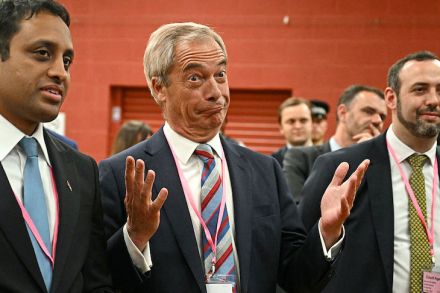
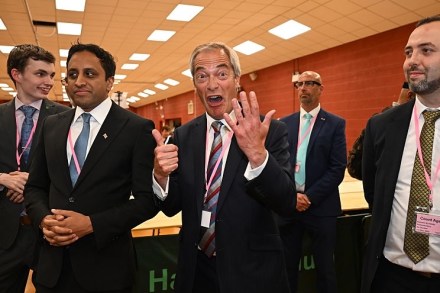
Votes are being counted across England, but there is a clear early winner from these local elections: Nigel Farage. His party triumphed in the Runcorn and Helsby by-election this morning, overturning a 14,000-odd majority and winning by just six votes! Elsewhere, Andrea Jenkyns triumphed in Lincolnshire; Reform came second in a number of mayoral races; and their 38 per cent vote share in Runcorn matches the best-ever performance that Ukip achieved in a by-election. So far, the story is one of teal triumph – at the expense of the two main parties. Labour are already pointing to the difficulty incumbents often face at local elections, and will claim victory after narrowly holding out in three mayoral races: North Tyneside, the West of England and Doncaster.

Michael Gove on how to spin a bad election

12 min listen

Voters have gone to the polls today for a historic set of local elections. The polling indicates a rough night for the two main parties and a good showing for Reform, the Lib Dems and the Greens. So be prepared for a lot of election-night spin from both Labour and the Tories. To talk through the various ways in which politicians can claim victory in the face of defeat, James Heale is joined by our editor, Michael Gove – no stranger to the media round himself. They discuss the best candidates to face up to the media from both the Tories and Labour, as well as some of the greatest examples of post-election spin from history.

‘An era of five-party politics’: John Curtice on the significance of the local elections

20 min listen

Legendary pollster Prof Sir John Curtice joins the Spectator’s deputy political editor James Heale to look ahead to next week’s local elections. The actual number of seats may be small, as John points out, but the political significance could be much greater. If polling is correct, Reform could win a ‘fresh’ by-election for the first time, the mayoralties could be shared between three or more parties, and we could see a fairly even split in terms of vote share across five parties (Labour, the Liberal Democrats, the Conservatives, the Green party, and Reform UK).  The 2024 general election saw five GB-wide parties contest most seats for the first time. These set of local elections could solidify this ‘five-party political system'.

The secret behind Reform’s local election campaign

It is an irony of Brexit that, since we left the EU, British politics has become more European. The local elections on Thursday will put another nail in the coffin of the two-party system that has dominated the UK for 100 years. Labour and the Conservatives now poll a combined 45 per cent of the vote: half the country want someone different. ‘Welcome to the age of five-party politics,’ says one Tory candidate. Alongside 1,600 council wards up for election, there are four metro mayoralties too. The reintroduction of first-past-the-post means that contests in the west of England, Cambridgeshire and Hull are four-horse races. Ten years ago, Ed Miliband’s ‘35 per cent’ strategy for victory was widely mocked; now it would guarantee a landslide.

How the Liberal Democrats conquered Middle England

17 min listen

The Liberal Democrats’ foreign affairs spokesperson Calum Miller, elected as the new MP for Bicester and Woodstock last year, joins James Heale to talk about the ambitions of the party that became the largest third party in Parliament in 100 years at the 2024 general election. They want to overtake the Conservatives to be the second party in local government – could they one day overtake the Tories to become the official opposition?  A former civil servant, Oxford University policy manager and councillor, Calum joins Coffee House Shots to talk about why he got into politics, how Brexit radicalised his desire for good governance and why, for all the fun, there is a serious point behind Ed Davey’s stunts.  Produced by Patrick Gibbons.

How will the parties judge success at the local elections?

14 min listen

With just over two weeks to go until the May elections, the latest national polling suggests an almost three-way split between Reform, Labour and the Conservatives. But will this translate to the locals? And, given these particular seats were last contested in 2021 amidst the 'Boris wave', how will the parties judge success?  The Spectator's deputy political editor James Heale and More in Common's Luke Tryl join Lucy Dunn to discuss. Will the story of the night be Tory losses and Reform  gains? Or will it be about the government's performance against opposition parties? Produced by Patrick Gibbons.

Could the local elections be cancelled?

14 min listen

Labour will reveal plans today to re-design local government, with district councils set to be abolished, and more elected mayors introduced across England. The plans could be the biggest reforms of their type since the 1970s, but with the May 2025 local elections set to be Labour’s first big electoral test since the general election, how will they be impacted? Local government minister Jim McMahon didn’t deny that the elections could be affected, or some even cancelled. Reform UK have called foul – what’s going on? James Heale speaks to Isabel Hardman and Katy Balls. Also on the podcast: rumours abound that a Chinese spy could be named in Parliament today – what does this story tell us about the UK’s complicated relationship with China?