Literature

What lists of our greatest novels get wrong

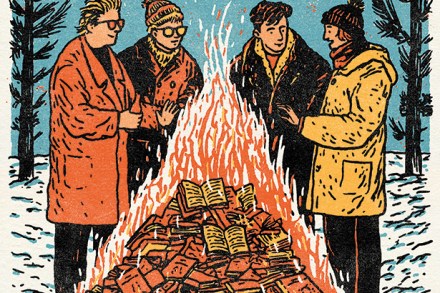
“Where are all my favorite parts?” Arnold Schoenberg asked, on being presented with a severe academic analysis of the Eroica symphony. “Oh, there they are. In the tiny notes.” The tendency of many people, presented with the overwhelming abundance of an art form, is to exclude as much as possible. Reduce the wonderful life of incidental invention to the tiny notes; erect walls excluding the fascinating curiosity, the eccentric, the madly idiosyncratic. Produce a list of the 100 Best Books, sticking to declared Greatness. People have been producing lists of the Best Books for a hell of a long time. When copyright law was reformed in 1774, it enabled publishers to produce collections of novels for the first time.

novels

What lists of our greatest novels get wrong

‘Where are all my favourite parts?’ Arnold Schoenberg asked, on being presented with a severe academic analysis of the Eroica symphony. ‘Oh, there they are. In the tiny notes.’ The tendency of many people, presented with the overwhelming abundance of an art form, is to exclude as much as possible. Reduce the wonderful life of incidental invention to the tiny notes; erect walls excluding the fascinating curiosity, the eccentric, the madly idiosyncratic. Produce a list of the 100 Best Books, sticking to declared Greatness. People have been producing lists of the Best Books for a hell of a long time. When copyright law was reformed in 1774, it enabled publishers to produce collections of novels for the first time.

Why it’s permissible to betray family secrets

From our UK edition

Blake Morrison is the quintessential man of letters. More exactly, he’s a man of genres – poet, novelist, playwright, essayist, librettist and, most notably, memoirist. (Four memoirs so far, each a prize winner and/or bestseller). Although in the introduction to On Memoir he refutes the notion that he established the genre of life writing in the UK (he was professor of creative and life writing at Goldsmiths University, London for 20 years) or that he has ‘encouraged its growth’, he has somehow become its guru, the critic every literary editor turns to on the publication of yet another raw family story or celebrity revelation.

The typo that spelled death in the Soviet Union

From our UK edition

‘As anyone who has gleefully spotted a typo in a prestigious publication, felt a flicker of schadenfreude at a pompous critic’s downfall, or secretly enjoyed a literary scandal knows, it is possible to love books while delighting in their disasters.’ The sentiment expressed in Rogues, Widows and Orphans is familiar to this reviewer. Rebecca Lee, who has been an editor for two decades, knows very well how words ‘get good’ (to quote the title of her earlier book) and what happens when they go wrong. Her new work ‘offers a lick of every flavour of ick lit’, leaving the reader craving more. Errors and omissions in print have consequences for everyone involved.

The cormorant – symbol of gluttony and the Devil

From our UK edition

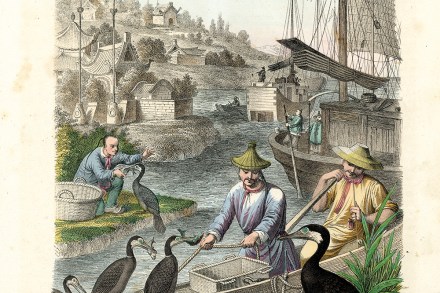
Greed, death, hate and clouds of destruction – this is the cormorant season all right. I was hungry to read Gordon McMullan’s book because I love the birds and looked forward to learning their secrets. But I gathered only a little about the green-glossy, serpentine jewel of a fowl I saw in Hebden Beck recently, hunting in the middle of town where I’d never seen it before. Look elsewhere for the creaturely particulars, such as the spur of bone at the back of the skull from which thick muscles link to the lower mandible, giving the corvus marinus a mighty bitey beak. This book is not concerned with what we know about cormorants but with the cormorants that we ourselves are.

We’ve already given up on novels

From our UK edition

Late last year, I was notified that one or more of my novels might have been fed to an Anthropic large language model, because in a class-action suit the company had reached a copyright settlement with authors who’d never given an AI Goliath permission to gorge on their work. Sure enough, a website verified that 11 of my books had been used as silage for this insatiable digital leviathan. Each of the LLM’s tasty Shriver mouthfuls may merit compensation of about $3,000. But before I take out a loan against that $33,000 sure thing to buy myself a Chinese EV, I should read the fine print: ‘court-approved costs and fees’ will be deducted, meaning I may garner funds sufficient to buy a whole new packet of extra-fine felt-tips. Fees or no, this is chump change for Anthropic.

A literary guide to how to pay your school fees

From our UK edition

Another day, another report on how many children have had to leave their private schools, thanks to Labour’s VAT raid on fees. This particular survey, by wealth management firm, Saltus, found that almost one in ten parents have had to take their children out of the independent sector altogether while 65 per cent of those questioned admitted to making ‘significant changes’ to their circumstances to keep their children in private education.    When belts can only be tightened so far, parents need to get creative.

Bring back the book launch

From our UK edition

Last week, I had the pleasure of heading to the Freud Museum in Hampstead for the launch of Zoe Strimpel’s much-discussed new book Good Slut. Not only was the venue one of the most splendid I’ve been to for a party of this kind, but the guest list – which included The Spectator’s esteemed editor – was suitably glittering for a Thursday evening in early March. Everyone was on top form, much jollity was had, and by the time the author gave a suitably witty speech from the top of the staircase that Sigmund Freud once ascended and descended, a fabulous time had been had by all.  Would that this was the norm for all book launches.

The art of the transatlantic liner

From our UK edition

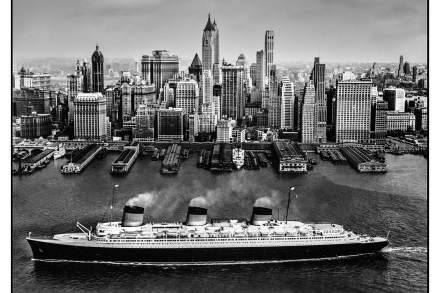
Some time in the next few weeks, a great ocean liner will be lost at sea. One of the greatest, in fact. When the SS United States made its maiden voyage in July 1952, it was the last word in transatlantic liner design. In an age of ocean-going elegance, the ‘Big U’ was the newest, the sleekest and the swiftest. To this day, it holds the Blue Riband – the all-time record for the fastest transatlantic crossing by a passenger ship. Now, after five decades rusting in dock, and a series of unsuccessful preservation attempts, the United States is about to make its final voyage. Stripped of masts, fittings and its massive red, white and blue funnels, it will be towed out and sunk as a diving reef off the Florida coast. It’s heartbreaking to admit that this might be for the best.

Why are Lawrence Osborne’s novels suddenly popular in Hollywood?

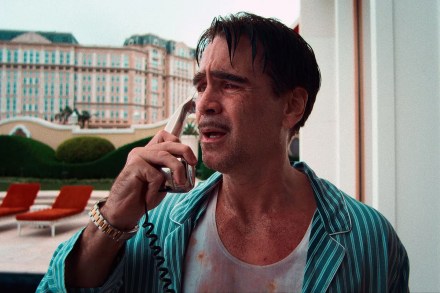
The film Ballad of a Small Player opens with a blast of classical music, a shot of the Macau skyline and Lord Doyle (Colin Farrell) waking up in a hotel suite littered with Champagne bottles, cigarette butts and designer loafers that are starting to show their wear. While he dresses and shaves, a voice-over informs us he has three days to live. A sharp observer might notice he seems to have considerably less than that. Either way, for the next 100 minutes, director Edward Berger (All Quiet on the Western Front and Conclave) treats us to a sumptuous vision of one English con man’s final spree before oblivion. It will take an even sharper-eyed observer to catch, as the final credits snap past, that they have just watched an adaptation of a Lawrence Osborne novel.

slipshod

Slipshod: a short story by Sarah Perry

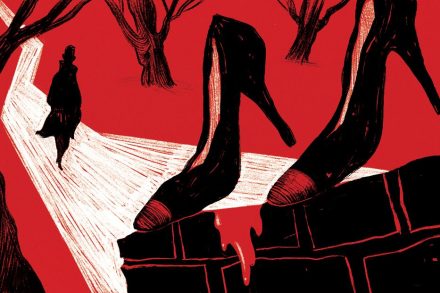
It was months before the difficulty with Marnie and Addison was talked about, or even alluded to. The sight of their names in emails circulated around the department was enough to cause a pall to settle on everything, like ash from fires only just put out. Besides, the nature of the difficulty (that was the word we all used) was both so opaque and so distressing we’d have had trouble talking about it, even if we’d wanted to. It fell to me to piece things together. My brief from Helen was simply to satisfy the university that nobody in the department was to blame. It fell to me because I am, she tells me, part of the furniture: unremarkable, functional, predictable.

The Anthony Bourdain Reader leaves a reader hungry

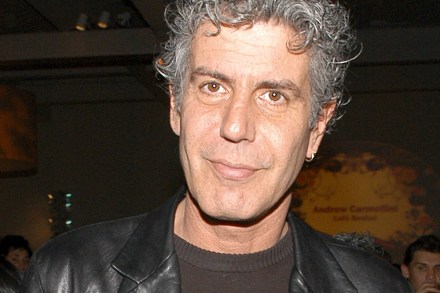
Charismatic, handsome and with a great white shark’s feral cool, Anthony Bourdain was someone that everyone wanted to be. The chef, writer and TV presenter described the premise of his award-winning shows, No Reservations and Parts Unknown, as “I travel around the world, eat a lot of shit and basically do whatever the fuck I want.” They cemented his image as a gadabouting, kamikaze gourmand. Bourdain scarfed down andouillette and warthog anus, drank sun-bear bile and polished off the still-beating heart of a cobra, plonked into a shooter of Vietnamese firewater. He showed Barack Obama the correct way to slurp bún chả noodles on a steamy Hanoi side street, and he and his team watched from their hotel pool as Israeli jets strafed downtown Beirut during the 2006 invasion.

anthony bourdain

From Evelyn Waugh to Elizabeth Day, The Spectator’s enduring place in fiction

From our UK edition

There are decades when The Spectator is shorthand for a trait: sex (2000s), young fogeys (1980s), free trade (1900s). But I was surprised to find Henry James, a writer not given to shorthand, deploying the magazine’s name to give a sketch of Isabel Archer, the title character of his Portrait of a Lady: ‘She had had everything a girl could have: kindness, admiration, bonbons, bouquets, the sense of exclusion from none of the privileges of the world she lived in, abundant opportunity for dancing, plenty of new dresses, the London Spectator, the latest publications, the music of Gounod, the poetry of Browning, the prose of George Eliot.

Do we really need a ‘new spin’ on Jane Austen?

From our UK edition

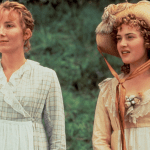
If you like your period dramas butchered, then you are in for a real treat. The 250th anniversary of Jane Austen’s birth falls on 16 December, and we are promised a slew of adaptations, documentaries and lectures to mark it. Inevitably, some of these will try to put a ‘new spin’ on Austen, to make out that she was somehow in line with a particular cause or interest of modernity; Mansfield Park is about saving the whales, Colonel Brandon is actually trans, that sort of thing. This year, Emma Thompson stars in a ‘racy’ new audio drama, Becoming Meg Dashwood, which will focus on the youngest Dashwood sister and her quest for ‘female friendship, sexuality, and liberation’. Oo-er.

The joy of a miserable literary Christmas

From our UK edition

A Christmas Carol is pretty well unavoidable around now, with Little Women trailing somewhat behind. There’s no shortage of alternative literary Christmases among the classics, however, often less sweetly heartwarming and more invigoratingly grumpy. Nigel Molesworth, it will be remembered, foiled all attempts to inflict A Christmas Carol on him. ‘It is just that there is something about the Xmas Carol which makes paters and grown-ups read with grate XPRESION, and this is very embarassing [sic] for all.’ For the Molesworths among us, there are plenty of alternatives to be had. Sometimes these are depictions of Christmas where no Christmas should be occurring.

Tom Stoppard was himself to the end

"Tom Stoppard is dead." For anyone who cares for the theater, the English language, and especially for those of us who knew him, these words are as unthinkable as they are hard to bear. How can such a force of nature, such a generosity of spirit, such a voice of sanity, have fallen silent? And yet he has gone. To the end, his body emaciated by cancer, he was still the old Tom: self-deprecating but full of ideas and plans. He might have one more play inside him, he told me, but his fingers could no longer physically write and dictation somehow stopped the words from flowing. He was cared for by his magnificent wife Sabrina, who entertained us tirelessly.

Anne of Green Gables perfected the kitchen mishap

There’s something wickedly entertaining in reading about other people’s kitchen debacles, whether actual or fictional. They’re just so relatable. The jelly that won’t jell in Louisa May Alcott’s Good Wives is cruelly hilarious, but the best culinary catastrophe in classic fiction, for my money, is in Anne of Green Gables. Stylish guests, including the upper-crust Mrs. Chester Ross, are dining at Green Gables and our ebullient Anne is on her very best behavior. All goes well until Marilla arrives with the pudding and a pitcher of pudding sauce. On spotting the pudding sauce, our heroine’s eyes grow wide and terrified.

kitchen mishap

‘Media Literacy’ and the decline of Woke

What is “woke”? To Jordan B. Peterson it is “postmodern neo-Marxism.” To James Lindsay it is “critical race theory” and latterly “revisionism” in general. These theories of what woke means take for granted that one of its core tenets is a denial of objective truth under the influence of what is broadly called “critical theory,” but the thinking behind contemporary wokeness falls far short of these theoretically exalted standards. Critical theory was a movement, primarily among academics, in the mid 20th century which had a diverse array of followers, but the common denominator was the belief that texts, whether literary works like novels, or historical documents, had no inherently “true” interpretation.

Media Literacy

The folly of psychology

From our UK edition

A young Chinese girl, at school in an English-speaking country, approached me after I gave a talk at a conference and asked for my advice about what she should study. I knew nothing of her, except that she was pretty, with beautiful dark eyes, and was almost certainly of high intelligence. I was touched by her naive assumption that I would answer benevolently and in her best interests. It suggested that she had not yet encountered much of human malignity. ‘What are you interested in?’ I asked. ‘I was thinking of history and psychology.’ ‘Ah,’ I said, ‘definitely not psychology, at all costs not psychology.’ My answer emerged spontaneously, without any reflection – too spontaneously, in fact.

A lack of national identity has killed off the Great American Novel

Is there hope for literature in America this century? The forecast looks grim. One walk through the literary fiction section at a bookstore is a testament to the art form’s cultural bankruptcy. Just about every other book on the new release table is a treatise on your racism masquerading as a tale of collective uplift. Fine, if you want to expiate your sins of privilege – but all in all, a snoozefest. Novels held a central place in America as a vital cultural force; novelists were worshipped as electrifying sages Same goes for most of the books on the New York Times list of the 100 best books of the century so far. The subjects of race, gender and oppression generally dominate.