Lebanon

Patriotism isn’t uncivilised – it’s what makes civilisation possible

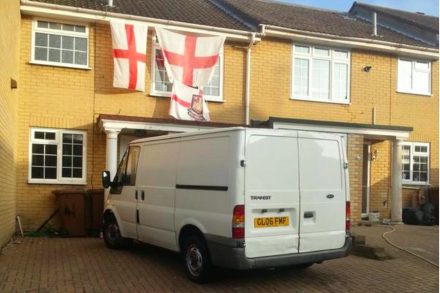
Is it racist to be patriotic? Is patriotism, by definition, small-minded and exclusive? When you strip away the onion layers of sentiment about history and hymns, Shakespeare and lawn clippings, does it have a hateful heart? I ask because, as I’ve written before, I feel patriotic, and until recently I’ve considered this to be a good thing. I felt particularly patriotic at a service in Ravenstonedale, Cumbria, last week. I slid in late and guilty, amid snippy Sunday stares. After the sermon we trooped outside and in the suddenly sunlit graveyard the vicar whipped a trumpet from his cassock and began to play. A pair of starlings began their electric warble, the motes and midges were bright against the dark church wall.
Why I’ve joined Lebanon’s exodus

In early autumn I was on a train travelling from London to Brighton, on the final leg of a journey that began earlier that day in Beirut, and which was taking me back to live in Britain for the first time in 22 years. It was late Friday afternoon and the man opposite me was droning into his mobile phone. He had not drawn breath since he joined at Clapham Junction except to take a swig from one of three bottles of Black Sheep beer he had lined up on the table. Friday night clearly couldn’t start soon enough. Back then, the Islamic State had just begun to pick at the edges of Lebanon. A force of 6,000 fighters from IS and the Nusra Front were scrapping with units of the Lebanese army in and around the Bekaa Valley border town of Arsal.

The Middle East’s own 30 Years War has just begun

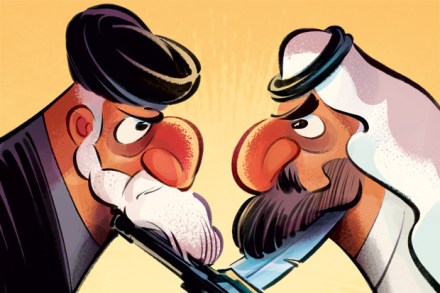
In January, Douglas Murray explained in The Spectator how relations in the Middle East were becoming increasingly tense. With northern Iraq now in turmoil, following the advance of Islamist militant group Isis, Douglas's insight seems prescient. Syria has fallen apart. Major cities in Iraq have fallen to al-Qa’eda. Egypt may have stabilised slightly after a counter-coup. But Lebanon is starting once again to fragment. Beneath all these facts — beneath all the explosions, exhortations and blood — certain themes are emerging. Some years ago, before the Arab ‘Spring’ ever sprung, I remember asking one top security official about the region. What, I wondered, was their single biggest fear?

Lebanon is falling apart on its 70th birthday

It's Lebanon's birthday this month -- 70 years since independence -- but no one's really in the mood to party. Our first birthday present last week came in the form of two suicide bombers belonging to the Al Qaeda-affiliated Abdullah Azzam Brigades who detonated their payloads at the Iranian embassy in Beirut killing 26 people.

The EU fails to ban Hezbollah

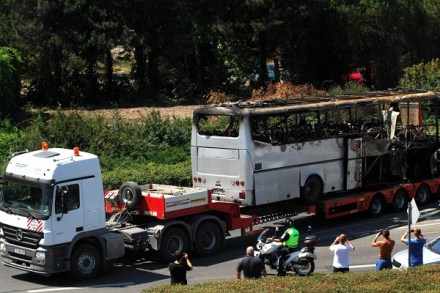
As though the sunny weather and the royal baby were not enough, here comes yet more good news. The European Union has finally banned the military wing of Hezbollah. This is something I have argued for often, including here, here, and here. After recent trials of Hezbollah operatives and Hezbollah operations – including the Bulgaria bombing – on European soil the decision did seem inevitable. Yet there is a cloud on the silver lining - which is that the EU, in somewhat characteristic fashion, has only managed to do a partly good thing. While they have banned the ‘military wing’ of Hezbollah they continue to allow the ‘political’ wing to fundraise and recruit in Europe.

First Syria, then Lebanon

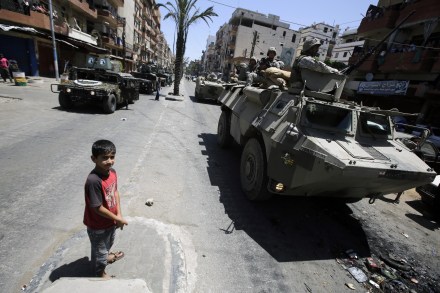
  Beirut On New Year’s Eve 2011, I asked a senior Swedish diplomat, who had just crossed over from Damascus and was ready to see in the New Year Beirut-style, how long he gave Bashar al-Assad as Syrian president. ‘Longer than we think, but not as long as he thinks,’ he said with a wink. That was still in the days of what we naively called the Arab Awakening; we Lebanese assumed we could sit back and wait for Syria’s hated system to fall. But the weeks have turned to years, and not only is Assad still in place, he might just be prevailing. Lebanon, meanwhile, is falling apart.

If there was ever a time to intervene in Syria, it has passed

It is more than ten years since I first sat down with members of the Syrian opposition. Back then they included real moderates, but even these didn’t predict a bloodless transition. ‘We will have to unite the country against the Alawites,’ I remember one saying, referring to the minority from which the Assad dynasty comes. ‘Kill them?’ I asked nervously. ‘Or chase them into the mountains,’ he replied. Now, more than two years into the Syrian civil war, there may still be some Alawites but, as Paul Wood points out opposite, there are hardly any moderates. What good opposition elements there were have been killed, have fallen away or otherwise become insignificant since calls for outside help began.

Don’t trust Hezbollah — whatever Terry Waite says

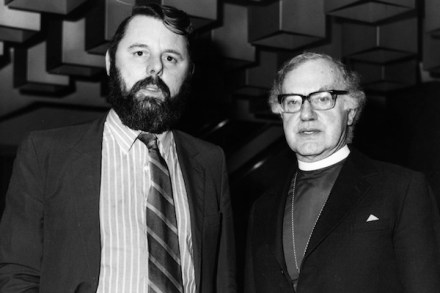
Earlier this month, while he was in Lebanon to highlight the plight of Christians in the Middle East, in particular those fleeing the fighting in neighboring Syria, Terry Waite, the former special envoy to the Archbishop of Canterbury, kissed and made up with Hezbollah, the militant Shia group that held him captive in Lebanon between 1987 and 1991. One probably shouldn’t blame Waite, now 73, for wanting to exorcise any residual demons of his 1,763-day nightmare, but in doing so he unwittingly gave Hezbollah dangerous and unwarranted legitimacy.

Iran keeps saying it’s nuking up – despite what its Western apologists say

The same problem keeps occurring for the megaphones of Iranian propaganda in the West: they keep being let down by their own side.  Every time another op-ed appears in the Guardian or Nation arguing that Iran isn’t seeking a nuclear device (and even if was it would never use it, and even though it doesn’t want a nuke and wouldn’t use it if it did, it does still at least have the ‘right’ to one) another Iranian official or one of their proxies lets slip the truth. The latest person to let the side down is the Hezbollah MP Walid Sakariya.  The MP for the Iranian Revolutionary government’s party in Lebanon told the Hezbollah TV station al-Manar last week that the purpose of Iran’s nuclear project is to annihilate Israel.

With Hitch in Lebanon

One afternoon a couple of years ago Christopher Hitchens, Michael Totten and I had gone for a walk along Hamra street in West Beirut when Hitch spotted a signpost put up by a local fascist group called the Syrian Social Nationalist Party. The SSNP is a Hezbollah ally that does a lot of the Assad regime’s dirty work in Lebanon. Totten was in the middle of telling us about the SSNP’s reputation for for brutality and its skill at making bombs when Hitch took out his pen and started to deface the sign.