Lebanon

It’s little surprise that an Israeli soldier was caught desecrating a crucifix

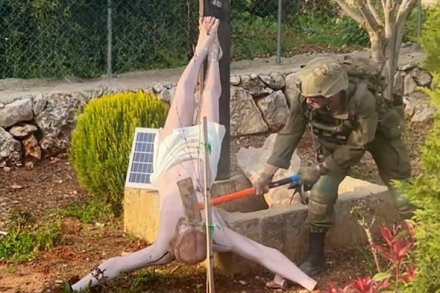
There’s something apposite, I suppose, about the desecration of a crucifix. In this case, it was an Israeli soldier in southern Lebanon who took a sledgehammer to one on private property and smashed the Jesus figure on the cross. The original crucifixion, as anyone who heard the gospels over Easter will recall, was marked by the humiliation of Jesus; this attack on the figure of one who took on suffering willingly was another humiliation, through the image. Mind you, if the charmer with the sledgehammer had reflected that the Christ-figure is, in Christian belief, not just God-made-man but God-made-Jew, he might have eased off a bit.

Who’s actually winning the wars in the Middle East?

If you read the New York Times or watch the foreign policy establishment’s “best and brightest,” you will be told, with imperious certainty, that America is losing the war in Iran and was stupid to begin it. The conspiratorial wing on both the right and left add that it is all the Jews’ fault, although they usually remember to mutter they mean “Israel” instead of all Jews, a gossamer cloak over what they really mean. If, on the other hand, you watch Fox News or read blogs by conservatives or military analysts, you will be told with equal certainty that America and its ally, Israel, are actually winning – and winning decisively.  So, who is right? The answer, of course, is Carl von Clausewitz. What that old Prussian says goes to the heart of the issue.

middle east

Israel won’t stop in Lebanon until Hezbollah is crushed

Direct US-brokered talks between Israeli and Lebanese representatives are set to take place in Washington this week. The Israeli delegation will be headed by Yehiel Leiter, Jerusalem’s ambassador to the US. Lebanon will be represented by Nada Hamadeh, the Lebanese ambassador to Washington. The State Department will host the negotiations. In his statement on Thursday announcing the talks, Israeli Prime Minister Benjamin Netanyahu framed their purpose as "disarming Hezbollah and establishing peaceful ‌relations between ⁠Israel and ⁠Lebanon." Lebanese Prime Minister Nawaf Salam, for his part, expressed his hope that Beirut should become a "demilitarized city.

lebanon

Why Israel is pushing further into Lebanon

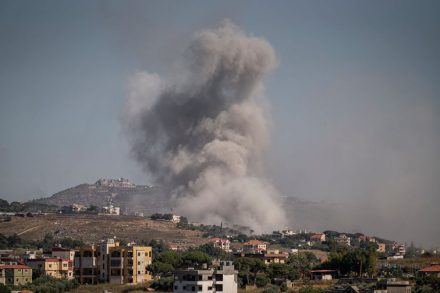
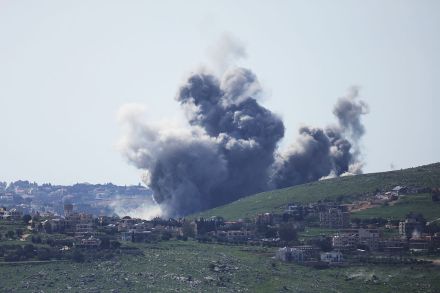
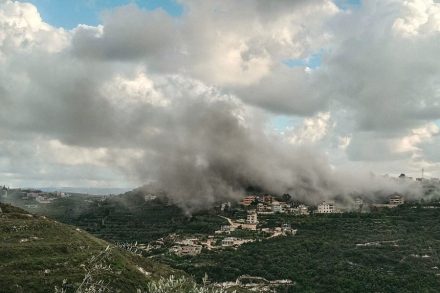
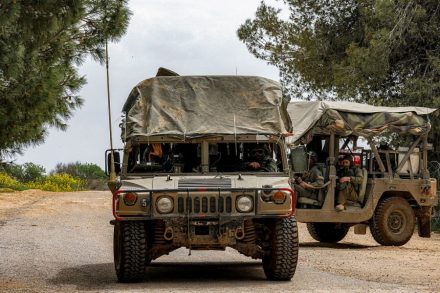
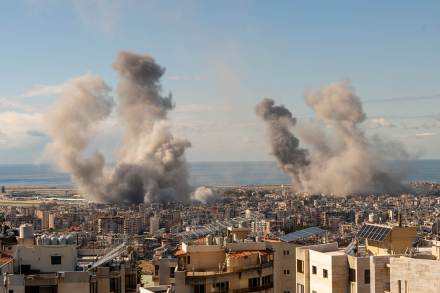
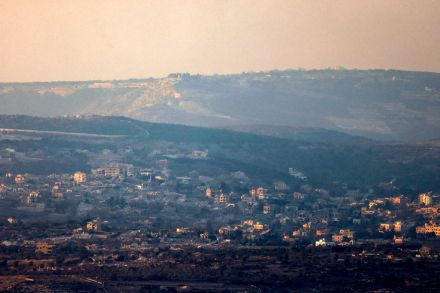
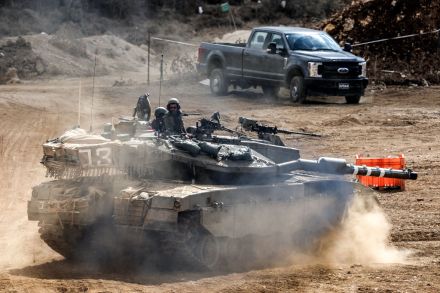
Israel launched a limited ground operation in southern Lebanon this week, intended to expand the de facto buffer zone which it has maintained along the border since the ceasefire of November 2024. At that time, Israel held control of five positions on the Lebanese side of the border. In response to Hezbollah’s decision to re-engage with Israel in the context of the current conflict between Jerusalem and Tehran, the IDF is pushing further into Lebanon.   Israel is now bombing Hezbollah targets throughout the country. Ground forces, meanwhile, are cautiously pushing forward. According to Israeli media reports, the IDF’s goal is to establish 13 additional positions north of the border.

Lebanon

Israel wants to destroy Hezbollah once and for all

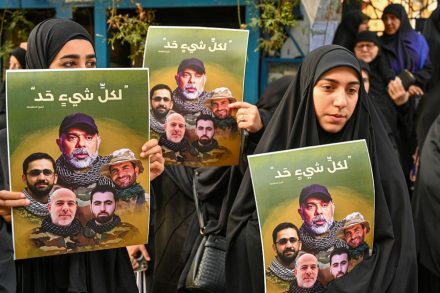
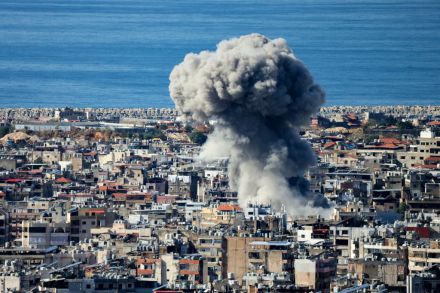
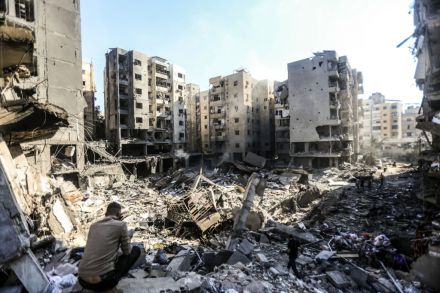
At around 2:30 a.m. on March 2, Israel bombed Beirut’s mostly Shia southern suburbs in response to a Hezbollah rocket attack on northern Israel. The road heading into Beirut from South Lebanon and the city’s southern suburbs was jammed with cars filled with Lebanese fleeing further reprisals. Some 52 civilians were killed and 154 injured, a hefty butcher’s bill even in this part of the world. Most Lebanese are happy Hezbollah has been defanged, even if they wish it wasn’t thanks to Israel Hezbollah’s actions were a demonstration of their ongoing support for Iran, but goading Israel was a cataclysmic miscalculation.

Israel is turning the screws on Hezbollah

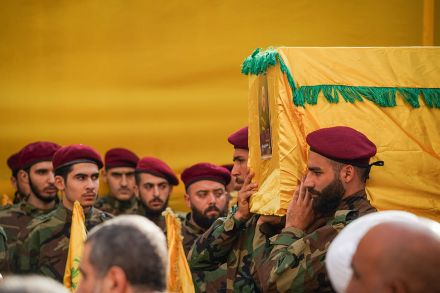
The killing of Lebanese Hezbollah military chief Haytham Ali Tababtabai by Israel this week reflects how much the balance of power between Jerusalem and the Iran-backed Shia Islamist group has shifted since the year-long war between the two in 2023 and 2024. Yet, paradoxically, Tabatabai’s killing also shows that nothing has been finally settled between the two enemies. While Hezbollah has now been shown to be much weaker than Israel, it nevertheless remains stronger than any internal faction in Lebanon, including the official Lebanese government.

hezbollah lebanon

The Israel-Lebanon ceasefire is in danger of shattering

It’s been almost a year since Israel and Hezbollah, the Lebanese militia that arguably held more power in Lebanon than the government itself, signed a ceasefire to end a ferocious two-month long war. The deal couldn’t have come at a better time; thousands of Israeli air and artillery strikes had pulverized southern Lebanon, Hezbollah’s traditional base of operations, leading to a displacement crisis and killing close to 4,000 Lebanese. Whole swaths of northern Israel had been vacated due to Hezbollah missile attacks, forcing the Israeli government of Prime Minister Benjamin Netanyahu to spend money on tens of thousands of civilians bunking in hotel rooms. But the agreement is wearing thin. The ceasefire is really a ceasefire in name only. Will it hold?

lebanon

A shaky truce in Beirut

There was an Israeli drone buzzing over Beirut at 8 a.m. on November 27, four hours after a ceasefire was signed and the shooting stopped. It soon disappeared and a feeling of elation set in. It was the best day we had in months. The Christmas spirit was palpable in Gemmayzeh, a Christian neighborhood in central Beirut. Christmas decorations were going up and the bars were packed that night. Lebanese in the diaspora who’d canceled their holiday trips to Beirut rebooked that day. But the Lebanese also know how to manage their expectations — they always hedge good news with dread. The agreement lays out an initial sixty-day truce, during which Hezbollah is required to withdraw its forces north of the Litani river, and the Lebanese Army is to take its place.

beirut

Where conflict in the Middle East goes from here

Anything written on the Middle East at this moment in history is almost instantly out of date. As Lenin said: “There are decades where nothing happens; and there are weeks where decades happen.” The Arab-Israeli war in 1967, the Iranian revolution in 1979, the invasion of Iraq in 2003...the region may once again be at one of those forks in the road that dictate the fate of nations for years to come. Journalists’ predictions age like milk out of the fridge. Nevertheless, here are some: Israel attacks Iran. This isn’t a hard one. The question is what form that attack will take. The prime minister, Benjamin Netanyahu, has wanted to bomb Iran’s nuclear facilities before, only to be stopped by the US.

Israel’s campaign to kill Nasrallah, Hezbollah and Hamas 

The killing of Hassan Nazrallah is the latest — and most impressive — stage in Israel’s campaign to wipe out Iran’s terrorist proxies on its doorstep. From the Egyptian border to Beirut, the campaign is the most dazzling demonstration of real-time intelligence, high technology and precise military action in the modern era. It will be recounted on screen and studied by military experts for decades to come. James Bond’s gadgets had nothing on the booby-trapped pagers. As the meme put it, “From the liver to the knee.”  The battle started a year ago, when Hamas terrorists in Gaza broke the ceasefire, raped and killed innocent Israelis and took hundreds of hostages for negotiating leverage. It was obvious from the outset that Israel would respond with full force.

israel gaza nasrallah

How Hezbollah was humiliated

Explosions ripped across Lebanon Tuesday afternoon as hundreds of old-fashioned pagers stuffed with an ounce or two of explosives blew up, killing twelve and injuring approximately 3,000 more. On Wednesday, the low-tech carnage resumed, with exploding walkie-talkies killing at least another twenty people and wounding an additional 450.  The targets were militants and allies of Hezbollah, Lebanon’s Shiite Muslim political and military organization which, together with a coalition of political allies, holds a majority in the country’s parliament. Hezbollah and the allied Iranian government, which heavily supports its activities, have blamed Israel, which has been in localized near-daily hostilities with Hezbollah since Hamas’s October 7 attack.

hezbollah

The fight among the olive trees

Rmeich, Lebanon On October 8, 2023, the day after the Hamas massacre further south, Hezbollah started firing rockets into northern Israel, reviving the world’s most dangerous game of chicken. What exactly has been accomplished? Hezbollah’s Shia supporters may be comfortable with their leader Hassan Nasrallah and his Iranian sponsor, head of state Ali Khameini, risking open war. But no one consulted the local Christians, who would never agree to spill Lebanese blood as a supportive gesture to Hamas. “The south [of the country] belongs to Lebanon, and Hezbollah cannot go to war on behalf of the Lebanese,” says Marc Saad, a spokesman for the Lebanese Forces, a Christian political party and Hezbollah opponent.

Hezbollah

Why Blue Line peace is proving elusive

Naquora, Lebanon Tensions along the forty-nine-mile Blue Line that partitions Israel from Lebanon are as high as they’ve been in recent history. Given the stated objectives of Hezbollah, the powerful Shiite militia that controls Lebanon’s South and the IDF, which seeks to repel them beyond striking distance, that's saying a lot. Ten thousand sky-blue helmets stand between the warring sides, protecting a division of international troops from the raining debris of intercepted rockets. Nobody is targeting them, but collateral damage is inevitable in a region that sees fatal exchanges on a daily basis. The United Nations Interim Force in Lebanon was established in 1978 following the Israeli invasion of Lebanon.

unifil un blue line lebanon

Don’t expect much from Biden’s Middle East trip

It took Barack Obama less than three months to fly to the Middle East for a visit, landing in Iraq to visit the tens of thousands of US troops stationed there at the time. Donald Trump’s first overseas trip as president was to the Kingdom of Saudi Arabia (also three months into his tenure), where he basked in the limelight, watched in awe as his face was plastered on buildings in Riyadh, and hovered over a glowing orb with King Salman. Now, eighteen months into his presidency, Joe Biden will be spending a few days this week in the region, making stops in Israel, the West Bank, and Jeddah, Saudi Arabia, for a summit of the Gulf Cooperation Council.

Goodbye, Lebanon

I’m sorry, Lebanon. We love you but we just can’t take it anymore. We’re breaking up with you. We’ve lived in Lebanon, on and off, for almost a decade. Our retreat began over the summer when we decided we couldn’t risk going to the beach with our daughter, who’s almost two. Every year, the Lebanese National Council for Scientific Research puts out a report that says that the seawater around many of Lebanon’s beaches is full of fecal bacteria. Raw sewage is discharged into the sea: you are literally swimming in shit. From some beaches, you can see the pipe and a murky flow of streptococci. We tried. We really did. We visited a private beach club that was supposed to have some of the cleanest water in the country.

lebanon

What happens when your currency collapses?

I’m a millionaire. A million in crisp, new bills is stacked up on the table in front of me. Unfortunately, it’s Lebanese lira and cost me about $75 a week ago. It’s already worth only $65, and by the time you read this, it will be worth even less. The Lebanese currency has lost more than 90 percent of its value over the past 18 months and is continuing its steady decline. It would be foolish to keep more than a few days’ spending money on hand, so everyone has a moneychanger. Mine is Mohammed, who pops round on his moped with ever-fatter stacks of notes with ever more zeros on them. The currency grows physically as it shrinks in value. He passes over a wad of cash and says, smiling: ‘Our leaders are stupid and corrupt.

currency

Emmanuel Macron is a Karen

Cockburn dislikes the latent misogyny behind the rise of this term ‘Karen’, which is used to describe any white woman who is caught being aggressive on social media. Then again, Karens don’t have to be female; plenty of men fit the term perfectly. One of them is the President of France.Yes, Emmanuel Macron lost his rag again on Wednesday, this time berating a French journalist who dared to try to cover the President’s complicated maneuvers in Lebanon.

emmanuel macron

Trump’s Iran gamble

Beirut It seems that American planes were actually on their way to bomb Iranian targets last night when they were called back. That’s what the New York Times was told by a senior official in the administration, speaking anonymously of course. ‘Planes were in the air and ships were in position, but no missiles had been fired when word came to stand down.’ Was this President Trump or the Pentagon? It’s possible that the US military suddenly learned of a vulnerability in some part of their forces spread around the Middle East, in Bahrain, in Iraq, or in Syria, but then again, they’ve had time to prepare. More likely, this was Trump.

iran israel lebanon

The Lebanonization of America

Identity politics has long been the cornerstone of Lebanon’s constitutional system. Seats in parliament and jobs in the government bureaucracy are divided between Christians and Muslims, with a Maronite Christian serving as president, a Shi’ite Muslim as the speaker of the parliament, and a Sunni Muslim as the prime minister. Despite a long and bloody civil war, not to mention major changes in the demographic balance of power, this system has survived more or less intact since 1943.

lebanonization